The Tile Installation: Thinset vs. Mastic for Different Applications
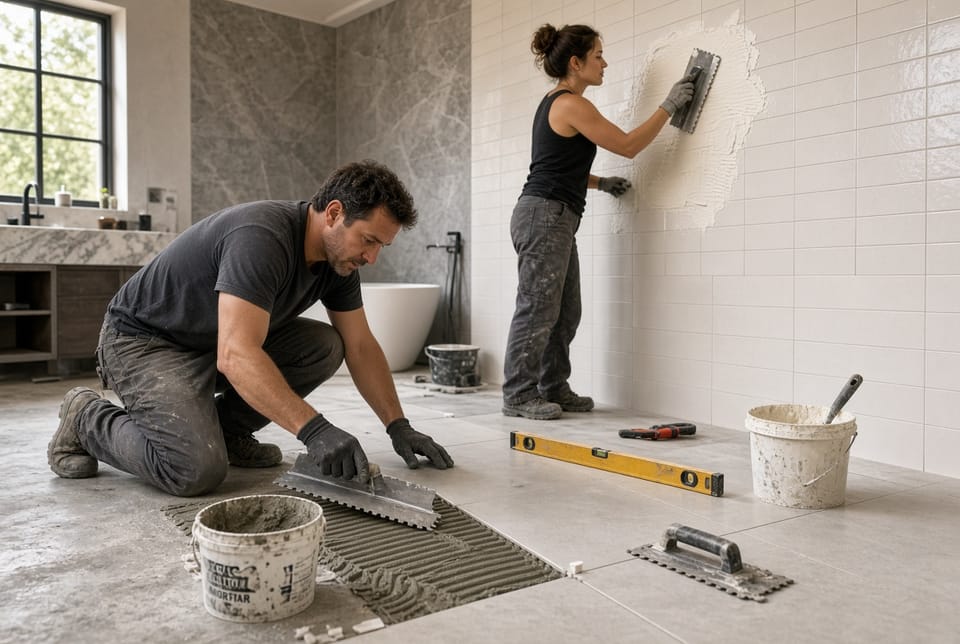
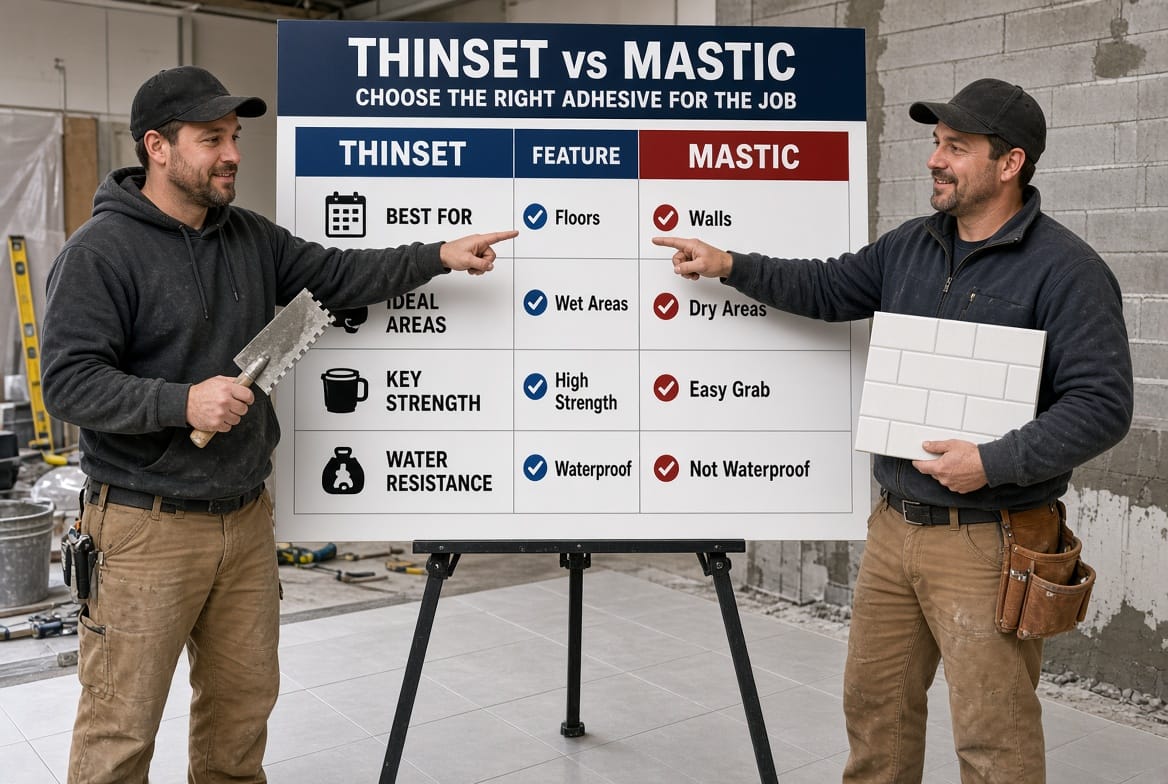
Selecting the correct adhesive is one of the most important decisions in any tile installation. The bond between the tile and the substrate determines whether your floors, walls, or wet-area surfaces will remain beautiful and secure for decades—or fail prematurely. Two primary adhesives dominate residential and commercial work: thinset mortar and mastic adhesive. Each has distinct chemistry, strengths, and limitations. Understanding the difference between cement-based thinset (ideal for floors and wet areas) and organic mastic (suited to walls and dry areas) prevents costly mistakes and delivers professional-grade results.
Get Expert Thinset vs. Mastic Advice – Call Today
This guide compares both products in detail, explains their proper applications, highlights risks, and helps you choose with confidence. When in doubt, professional installation remains the safest path.
What Is Thinset Mortar?
Thinset mortar is a cement-based adhesive mixed on site with water or a liquid latex additive. It consists of Portland cement, fine sand, and water-retention agents. Once mixed to a peanut-butter consistency, it is spread with a notched trowel that creates ridges for maximum contact.
The cement in thinset undergoes a chemical hydration process as it cures. This reaction creates a rigid, mineral-to-mineral bond that is both strong and dimensionally stable. Because it is inorganic, thinset remains unaffected by moisture after it has fully cured.
Primary advantages of thinset include:
- Exceptional compressive and shear strength
- Complete water resistance once cured
- Suitability for large-format and heavy tiles
- Compatibility with concrete, cement board, and properly prepared wood subfloors
- Ability to level minor substrate irregularities
Typical applications for thinset:
- All floor installations (ceramic, porcelain, natural stone, large-format tile)
- Showers, tub surrounds, steam rooms, and other continuously wet areas
- Exterior installations and freeze-thaw environments
- Areas subject to heavy foot traffic or point loads
- Radiant-heated floors
Limitations of thinset:
- Requires mixing and has a limited working time (pot life)
- Slower initial grab; tiles must be supported until the mortar sets
- Not recommended for vertical applications with very large or heavy tiles unless modified and used with proper techniques
- Can be messy if over-watered or applied too thickly
When mixed and applied correctly, thinset mortar produces a bond that often outlasts the tile itself. It is the industry standard for any installation that must withstand moisture, movement, or load.
What Is Mastic Adhesive?
Mastic adhesive is a premixed organic glue, typically acrylic- or latex-based. It comes in tubs ready to use—no mixing required. The product is sticky immediately upon application and provides strong initial grab, which makes it convenient for wall work.
Mastic cures by evaporation of water and solvents rather than by chemical hydration. The resulting film is flexible but remains somewhat thermoplastic and water-sensitive.
Primary advantages of mastic include:
- Ready-to-use convenience
- Excellent initial tack that holds wall tiles in place without slippage
- Smooth, creamy consistency that is easy to spread
- Suitable for small-format tiles and mosaics on dry vertical surfaces
- Faster installation for certain wall projects
Typical applications for mastic:
- Interior dry walls (backsplashes, accent walls, fireplace surrounds in dry rooms)
- Small ceramic or glass mosaic tiles on vertical surfaces
- Lightweight tiles in low-moisture environments
- Quick DIY wall projects where speed matters
Limitations of mastic:
- Not waterproof; prolonged moisture exposure causes the adhesive to soften and lose bond
- Unsuitable for floors, showers, or any wet area
- Poor performance with large-format or heavy tiles
- Can support mold growth if moisture reaches the substrate
- Limited temperature and movement tolerance
Mastic adhesive excels where convenience and initial grab are more important than long-term moisture resistance. Using it outside its intended dry, vertical applications creates significant risk.
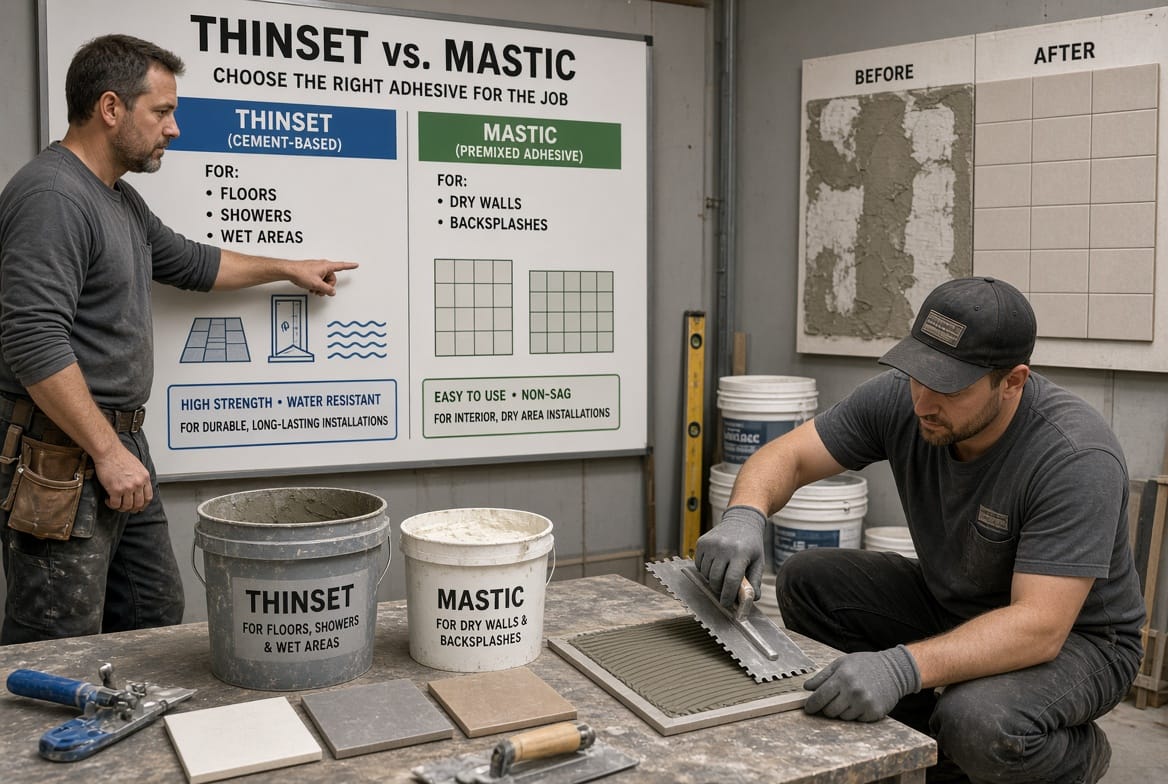
Direct Comparison: Thinset vs. Mastic
The choice between thinset and mastic is not a matter of preference; it is dictated by location, moisture exposure, tile size, and expected load.
Moisture resistance is the single most important differentiator. Thinset becomes waterproof after curing. Mastic never does. Any installation that will see regular water—bathrooms, kitchens near sinks, laundry rooms, or exteriors—requires thinset.
Tile size and weight also matter. Large-format tiles (generally 15 inches or greater on any side) and natural stone demand the superior support and coverage that thinset provides. Mastic’s initial grab is helpful for small wall tiles but insufficient for heavy pieces.
Substrate and location further refine the decision:
- Concrete or cement-board floors → thinset
- Dry interior gypsum-board walls → mastic (or thinset if preferred)
- Cement-board showers or tub surrounds → thinset only
- Exterior or freeze-thaw conditions → thinset only
Working characteristics differ as well. Thinset requires mixing and has a defined open time. Mastic is ready immediately but cannot be used in thick layers without risk of incomplete curing.
When both products could theoretically work (for example, a dry interior wall with small tiles), many professionals still choose modified thinset for its superior long-term performance and peace of mind.
Common Risks and How to Avoid Them
Choosing the wrong adhesive is one of the most frequent causes of tile failure. The consequences range from loose tiles and cracked grout to hidden mold and complete system replacement.
Risks associated with using mastic in wet or floor applications:
- Softening of the adhesive film when exposed to moisture
- Tiles detaching from walls or floors
- Mold growth behind the tile
- Void spaces that collect water and debris
Risks associated with improper thinset use:
- Insufficient coverage leading to hollow spots and cracked tiles
- Mixing too wet or too dry, resulting in weak bond strength
- Failure to use a modified thinset when the substrate or tile requires it
- Applying thinset over an unsuitable or contaminated surface
Best practices that eliminate most failures:
- Always follow manufacturer coverage charts and trowel-notch recommendations
- Achieve at least 80–95 percent adhesive contact (higher in wet areas)
- Allow proper cure time before grouting or exposing the installation to moisture
- Use a membrane or uncoupling system on floors when movement is expected
- Verify substrate flatness and cleanliness before beginning
These steps, combined with the correct adhesive, produce installations that remain serviceable for 20–50 years or longer.
Professional Installation Considerations
Even the best adhesive performs only as well as the preparation and technique behind it. Surface inspection, proper primer or membrane use, consistent trowel angle, and timely tile placement all influence the final bond.
Modified thinsets that contain polymer additives offer improved flexibility and freeze-thaw resistance compared with unmodified versions. In most residential floor and wet-area work, a quality modified thinset is the recommended choice.
For walls, some installers still prefer mastic for its grab on small tiles, but many have switched to thinset even on dry walls because of its reliability. The extra mixing step is offset by the knowledge that the installation will not be compromised by future humidity or accidental water exposure.
Temperature and humidity during installation also affect both products. Thinset should be mixed and applied within the manufacturer’s recommended range; mastic should not be used in very cold or very humid conditions that slow evaporation.
Making the Right Choice for Your Project
Ask three simple questions:
- Will the tiled surface ever get wet on a regular basis?
- Is the installation on a floor or a wall?
- How large and heavy are the tiles?
If the answer to the first question is yes, or the second answer is “floor,” choose thinset mortar. If the surface is a dry interior wall and the tiles are small and lightweight, mastic adhesive may be acceptable.
When the project includes both floors and walls, or when any wet area is present, using thinset throughout simplifies the job and eliminates compatibility concerns.
Homeowners who value longevity and want to avoid future repairs consistently benefit from professional assessment. An experienced installer evaluates substrate condition, moisture levels, tile specifications, and intended use before recommending an adhesive.
Conclusion: Lasting Results Begin with the Correct Adhesive
Thinset mortar and mastic adhesive are both useful products when applied within their intended limits. Thinset’s cement-based chemistry makes it the clear choice for floors, wet areas, large tiles, and any installation that must resist moisture and load. Mastic’s organic formula offers convenience and grab for dry wall applications with smaller tiles.
Matching the adhesive to the application protects your investment and delivers the durable, attractive finish you expect. Shortcuts or mismatched products create hidden weaknesses that appear months or years later.
Choose the right adhesive for your tile. A brief conversation with a qualified professional can confirm the best product for your specific project and give you complete confidence in the finished result.
Schedule Your Tile Adhesive Consultation – Call Now