The Wet Insulation Removal: Why Flooded Insulation Must Be Replaced
When floodwaters recede, the visible damage often feels overwhelming. Yet one of the most critical — and frequently overlooked — steps in true restoration is wet insulation removal. Leaving compromised insulation in place is not a cost-saving measure; it is a direct threat to your home’s structural integrity, indoor air quality, and long-term value.
Don’t Risk Mold – Call for Wet Insulation Removal Today
At the heart of every successful water damage recovery is the decisive removal of flooded insulation. This essential process allows the building envelope to dry completely, prevents hidden mold colonies from taking root, and restores the thermal performance your home was designed to deliver. In this comprehensive guide, we explain exactly why wet insulation must be replaced, the science behind the risks, and the professional steps that deliver lasting results.
Understanding Why Wet Insulation Loses Its Protective Power
Insulation exists to create a thermal barrier. Its effectiveness is measured by R-value — the resistance to heat flow. Once insulation becomes saturated, that R-value drops dramatically, sometimes by as much as 50 % or more. Water is an excellent conductor of heat, turning your once-efficient walls and ceilings into pathways for energy loss.
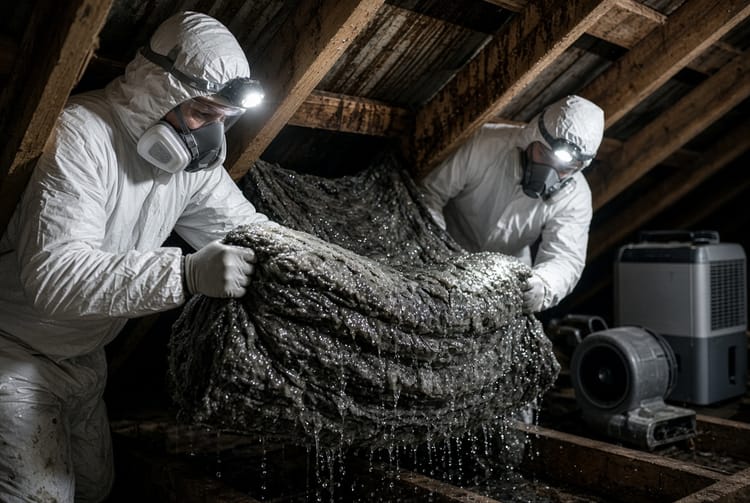
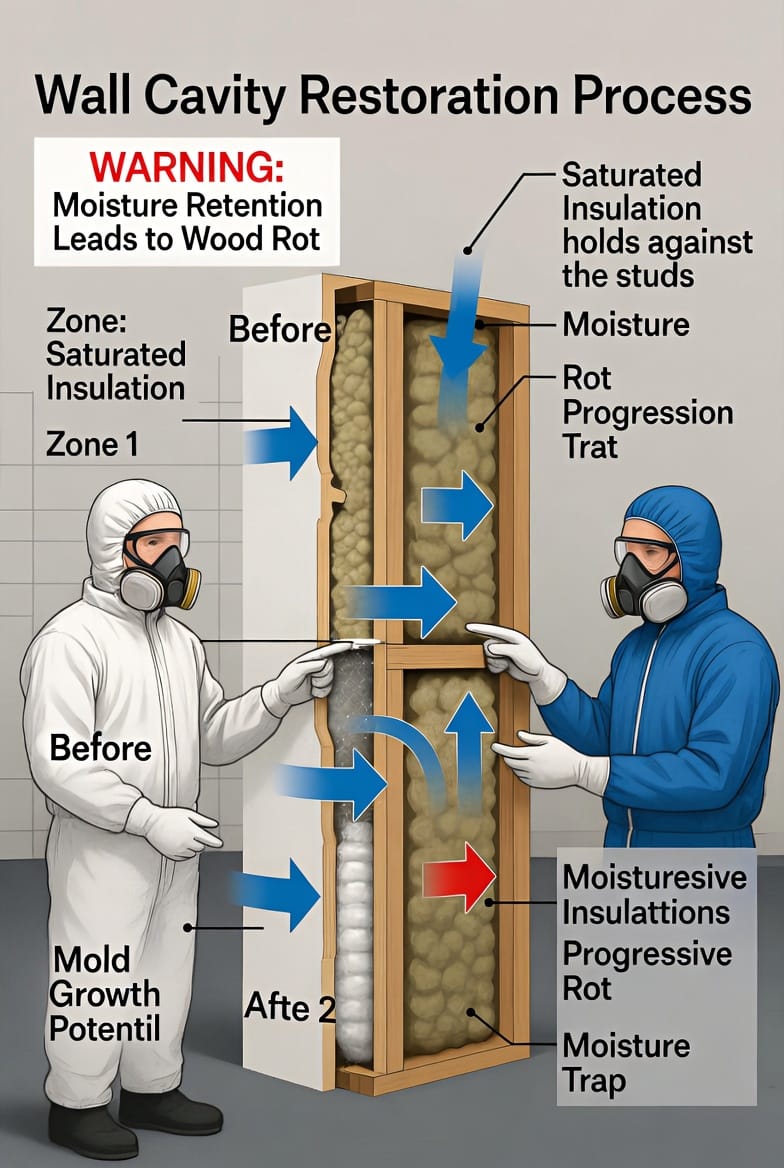
Beyond reduced efficiency, wet insulation acts like a sponge that refuses to release its burden. Fiberglass batts, for example, can absorb many times their weight in water. Even after surface drying, moisture remains trapped deep within the fibers. This residual dampness continues to migrate toward cooler surfaces, especially wooden framing members.
Key risk: Prolonged contact between wet insulation and studs or joists creates the perfect environment for wood rot. The framing begins to soften and lose strength long before visible signs appear. Homeowners who delay wet insulation removal often discover expensive structural repairs months later — repairs that could have been prevented with prompt professional action.
How Flooded Insulation Traps Moisture and Fuels Mold Growth
Moisture loves to hide. When insulation stays in place after a flood, it prevents proper airflow and drying of the wall cavity. Vapor barriers and the insulation itself hold water against the framing, creating a dark, damp, oxygen-rich microclimate.
Mold spores are already present in most homes. They only need sustained moisture levels above 16 % to activate. Wet insulation provides exactly that condition for weeks or months if left untouched. The resulting mold growth is not merely unsightly; it compromises indoor air quality and can trigger respiratory issues, allergies, and other health concerns.
Bullet-point risks of keeping wet insulation:
- Accelerated wood rot in load-bearing studs and joists
- Hidden mold colonies that spread behind drywall
- Reduced indoor air quality affecting family health
- Persistent musty odors that no air freshener can eliminate
- Lowered property value during future inspections or sales
- Increased energy bills from permanently compromised R-value
These are not hypothetical dangers — they are documented outcomes when flooded insulation remains in place. Professional wet insulation removal eliminates the fuel source for these problems and gives your home the fresh start it needs.
The Non-Negotiable Need for Complete Wet Insulation Removal
Proper drying cannot occur until the moisture reservoir is removed. Restoration professionals follow strict industry protocols that require wet insulation removal before any new materials are installed. This step is not optional; it is the foundation of a successful remediation.
Once the saturated insulation is extracted, technicians can thoroughly inspect, clean, and dry the framing. Air movers, dehumidifiers, and sometimes heat assist the drying process to reach moisture content levels below 15 %. Only then can new insulation be installed with confidence that it will perform as designed and remain mold-free.
Skipping this critical step may appear to save time or money upfront. In reality, it almost always leads to secondary damage that costs significantly more to correct. Wet insulation removal is the responsible, authoritative choice that protects your investment and your family’s health.
Insulation Types and Salvageability After Water Damage
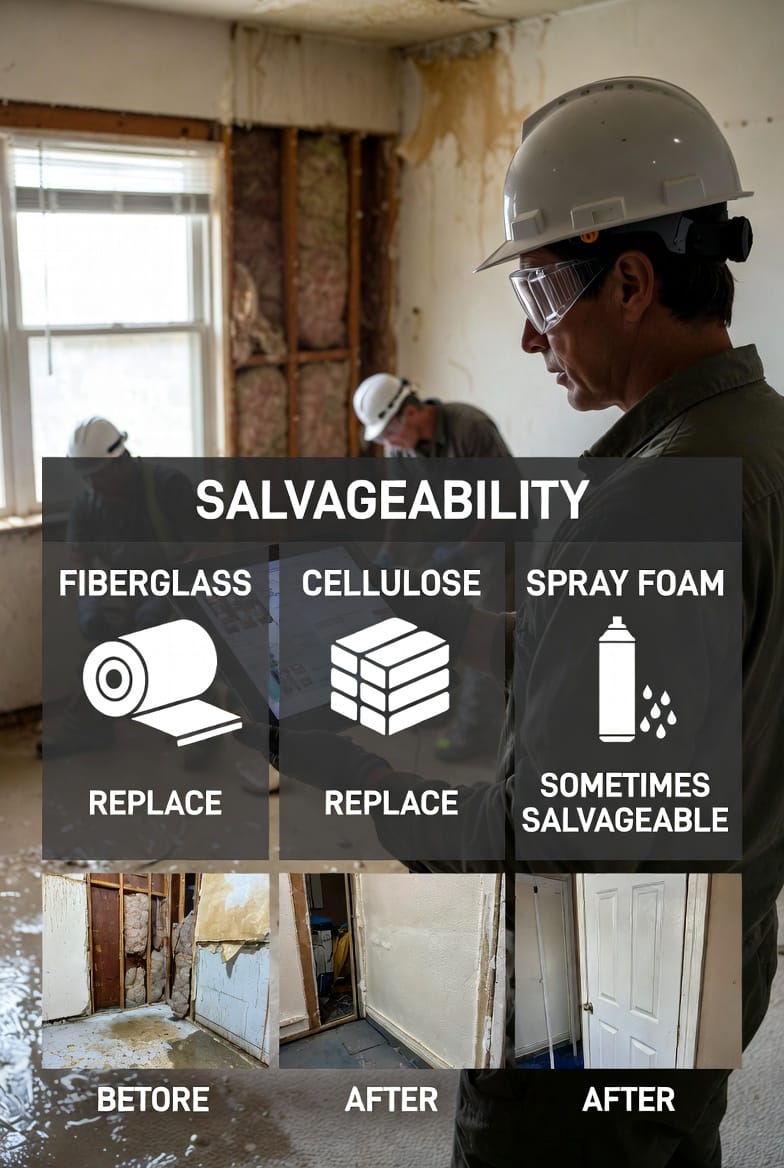
Not every insulation material reacts the same way to flooding. Understanding these differences helps homeowners appreciate why professionals make decisive calls during wet insulation removal.
Fiberglass batts and rolls: Highly absorbent and nearly impossible to restore once wet. Compression and contamination make reuse unsafe. Full replacement is required.
Cellulose (loose-fill or dense-pack): Made from recycled paper treated with fire retardants. When saturated, it clumps, loses loft, and becomes a heavy, mold-prone mass. Complete removal and replacement is standard practice.
Spray foam (closed-cell): More resistant due to its water-repellent nature. In some cases where exposure time is short and contamination is minimal, closed-cell spray foam may be salvageable after professional cleaning and testing. Open-cell foam, however, behaves more like fiberglass and usually requires wet insulation removal.
The Professional Wet Insulation Removal Process: Step by Step
Experienced restoration teams approach wet insulation removal with precision and safety in mind:
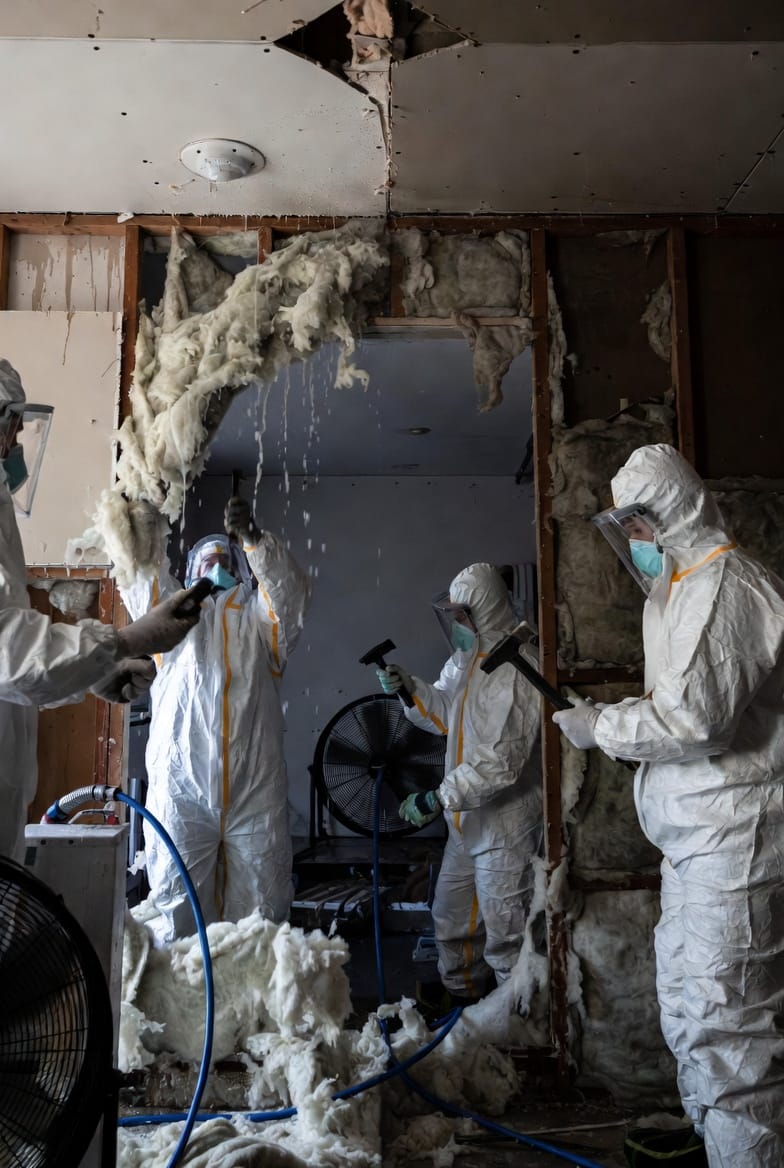
- Safety first — Technicians wear appropriate PPE and establish negative air pressure to contain airborne particles.
- Controlled demolition — Drywall or paneling is removed only as far as necessary to access all wet material.
- Systematic extraction — Saturated insulation is carefully removed without spreading debris.
- Cavity cleaning — All debris is vacuumed and antimicrobial treatments applied where appropriate.
- Structural drying — Advanced equipment brings framing moisture levels to industry standards.
- Verification — Moisture meters and thermal imaging confirm the cavity is truly dry.
- Re-insulation — New, high-performance insulation is installed to restore or even improve original R-value.
This methodical approach ensures no moisture is left behind and sets the stage for a successful rebuild.
Long-Term Benefits of Choosing Proper Removal
When flooded insulation is professionally removed and replaced, homeowners enjoy:
- Restored thermal efficiency and lower energy costs
- Peace of mind knowing hidden mold risks have been eliminated
- Protected structural framing that will last for decades
- Improved indoor air quality for the entire family
- Full compliance with insurance documentation and building codes
These outcomes are only possible when the job is done correctly the first time.
Don’t Wait — Act Decisively on Wet Insulation
Every hour that saturated insulation remains in your walls increases the chance of irreversible damage. The science is clear, the risks are real, and the solution is straightforward: wet insulation must be replaced.
Emergency CTA:
Don’t keep wet insulation. Our experienced team is ready 24/7 to restore your home safely, thoroughly, and permanently.
By choosing professional wet insulation removal, you protect your property, your health, and your peace of mind. The investment you make now prevents far greater expenses later. Your home deserves the best possible recovery — and that begins with removing what the flood left behind.
Professional Wet Insulation Removal – Call Now for Fast Help