The Carpet Pad Replacement: Why Padding Rarely Survives Water Damage
When water invades your home, the focus naturally falls on the visible carpet fibers above. Yet experienced water damage restoration professionals know a vital truth: even when the carpet itself can be saved, the carpet padding beneath almost never survives. This is one of the most common – and most important – facts in the restoration industry. Carpet pad replacement is not an optional upgrade; it is a necessary step to protect your home’s air quality, structural integrity, and long-term comfort.
Replace the Pad & Save Your Carpet – Call Now!
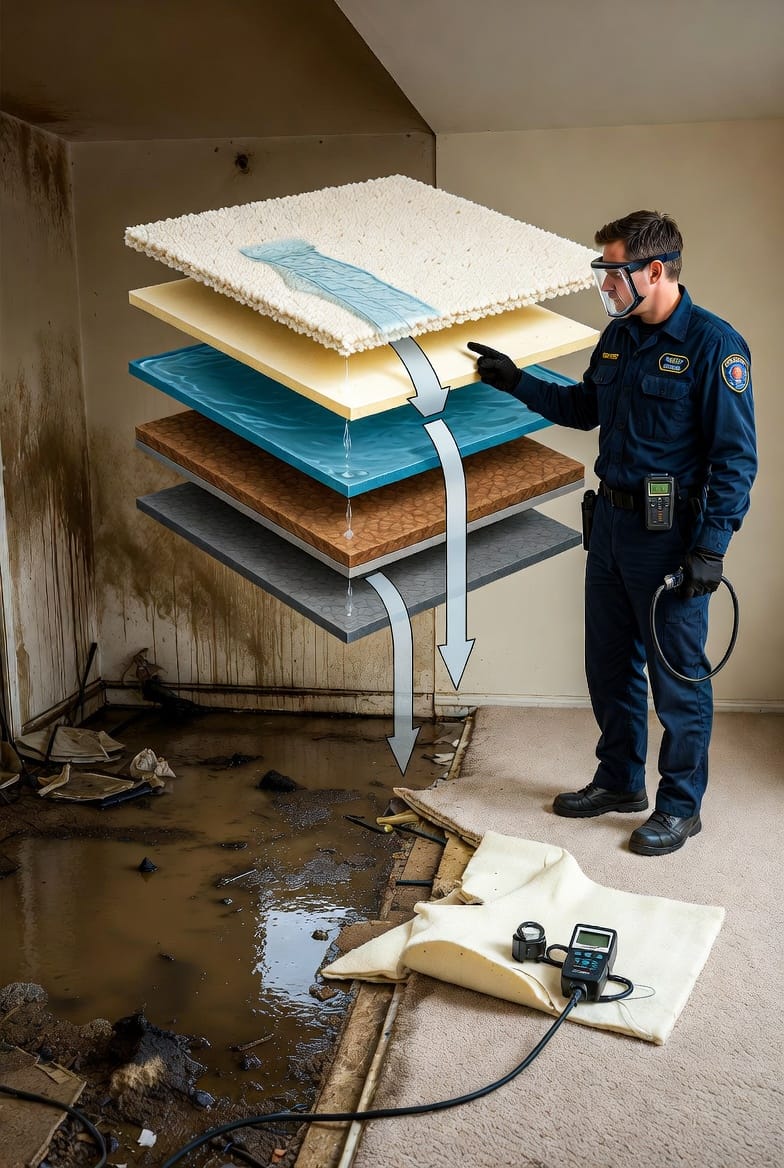
Carpet padding acts as the invisible foundation under your carpet. It provides cushioning, insulation, and support while allowing the carpet to breathe. Most modern padding is made from foam or bonded materials designed for everyday comfort – not for surviving a flood, burst pipe, or appliance leak. Once saturated, these materials behave in ways that make full replacement the only safe and effective choice.
In this comprehensive guide, we explain exactly why carpet padding rarely dries properly, how it traps contaminants, and what professional water damage restoration teams do to keep your family safe while saving every possible square foot of carpet.
The Critical Role of Carpet Padding in Your Home
Carpet padding is far more than a soft layer. It absorbs foot traffic impact, reduces noise, and helps regulate temperature. Without it, even the highest-quality carpet feels hard and wears out faster. Most residential padding falls into a few categories: foam, bonded polyurethane, rubber, or felt. Each serves a purpose under normal conditions, yet every type reacts dramatically when exposed to water.
Homeowners often assume that if the carpet looks salvageable after extraction and cleaning, the padding underneath must be fine too. This misconception can lead to hidden problems months later. Professional restorers have seen it countless times: a seemingly dry carpet installed over a compromised pad that continues to harbor moisture and odors.
How Water Damage Transforms Carpet Padding
Water does not simply pass through carpet padding – it saturates it completely. Foam and bonded padding are porous by design. Their open-cell structure soaks up liquid like a sponge, pulling in gallons of water across large areas. Once soaked, the material expands, loses its shape, and begins to break down.
Worse still, padding does not release that water easily. Unlike carpet fibers that can be thoroughly cleaned and dried from both sides, padding sits directly against the subfloor. Moisture becomes trapped between the padding and the carpet backing, creating a perfect environment for hidden issues. Even powerful drying equipment struggles to reach these deep layers effectively.
Contaminants are another major concern. Floodwater, sewage backups, or even clean water from a broken supply line quickly picks up dirt, bacteria, and organic matter. Carpet padding acts like a filter, holding these particles deep inside its structure. Standard drying methods cannot remove them completely. Over time, this leads to persistent odors, mold growth, and potential health risks for your household.
Why Padding Rarely Dries Properly – Even With Professional Equipment
The science is straightforward. Carpet padding has low permeability once wet. Airflow from dehumidifiers and fans moves across the surface but cannot penetrate the dense, compressed material fully. Moisture meters may read acceptable levels on the carpet, yet the pad below remains damp for days or weeks.
This prolonged dampness creates conditions where bacteria and mold thrive. Even small amounts of trapped moisture can produce volatile organic compounds that cause musty smells and respiratory irritation. Replacing the pad eliminates this risk entirely and allows the restored carpet to perform as it was originally intended.
Professional water damage restoration teams understand these dynamics. They never rely on surface-level drying alone when padding is involved. Instead, they follow a proven process that prioritizes complete removal of compromised materials.
Types of Carpet Padding and Their Salvageability After Water Exposure
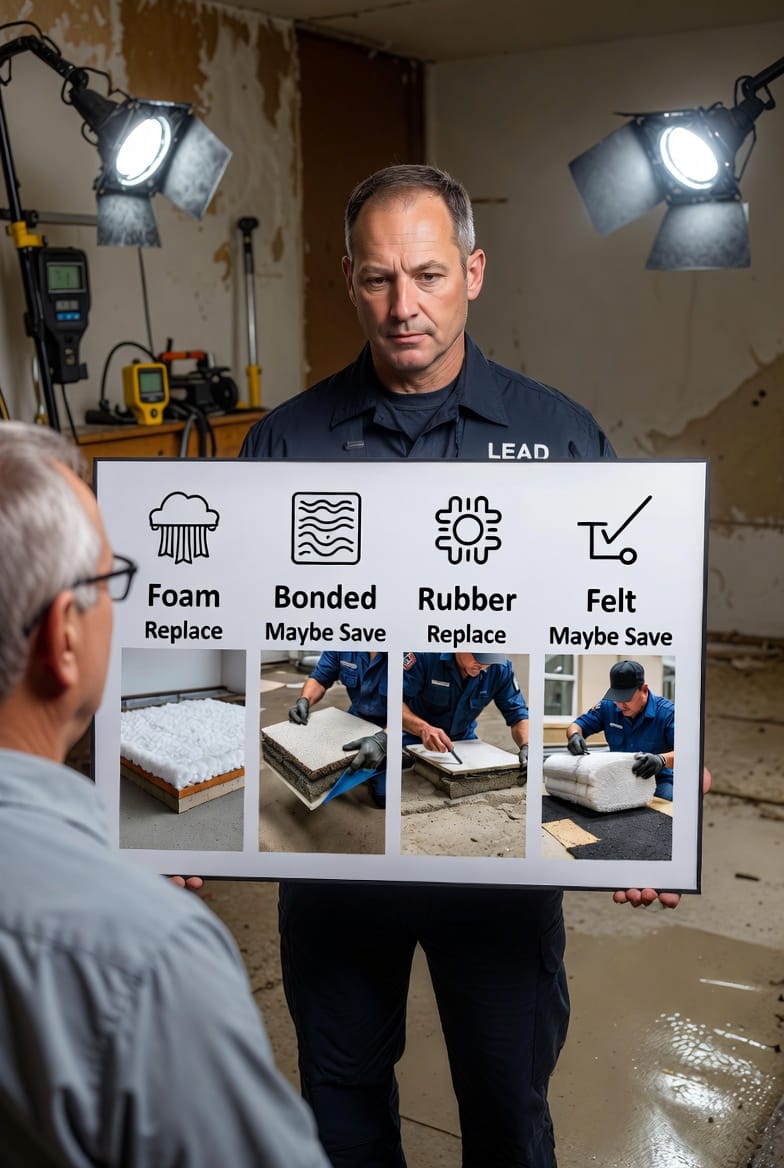
Not all padding responds the same way to water, but the majority require replacement. Here is a clear breakdown:
- Foam padding (most common in homes): Highly absorbent and prone to compression when wet. It rarely returns to its original resilience and must be replaced.
- Bonded polyurethane padding: Dense and durable under normal use, yet it holds water aggressively and traps contaminants. Full replacement is standard.
- Rubber padding: More water-resistant than foam or bonded types. In some cases with minimal exposure and rapid professional intervention, it may be salvageable after thorough cleaning and drying – but only when inspected by experts.
- Felt padding: Natural fibers make it extremely absorbent. It warps, shrinks, and becomes a breeding ground for mold. Replacement is always recommended.
Understanding these differences helps homeowners appreciate why restoration professionals make specific recommendations based on the type of padding and the extent of the damage.
The Professional Restoration Process: Saving the Carpet, Replacing the Pad
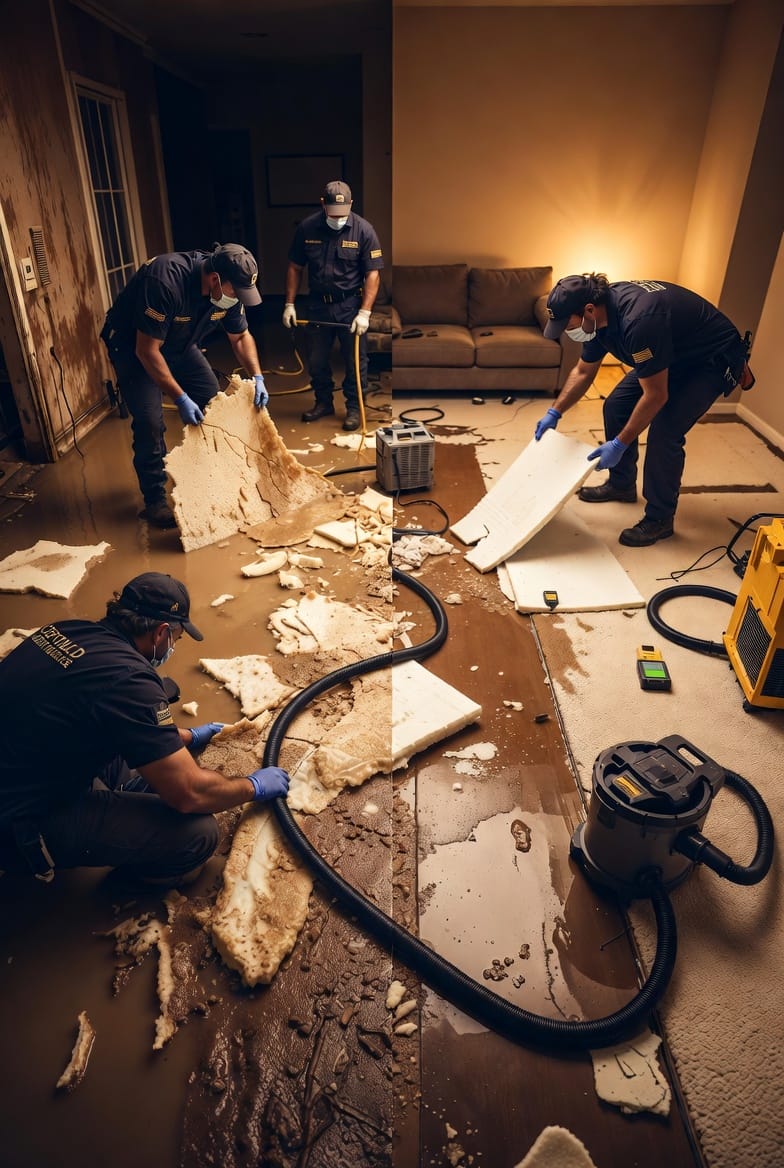
When you call a trusted water damage restoration team, the process is methodical and designed to minimize disruption while maximizing results. Here is what happens:
- Rapid water extraction removes standing water within hours of arrival.
- Carpet removal and inspection allows technicians to assess the padding and subfloor directly.
- Thorough padding extraction eliminates the saturated layer completely.
- Subfloor cleaning and sanitizing prevents secondary damage and mold.
- Carpet cleaning and drying on both sides using specialized equipment restores the visible carpet.
- Installation of new premium padding matched to your carpet type and traffic level.
- Professional reinstallation ensures a seamless, like-new finish.
This approach saves the carpet in the vast majority of cases while guaranteeing a healthy, dry foundation. Homeowners often report that the new padding actually improves the feel and longevity of their existing carpet.
Hidden Risks of Leaving Damaged Padding in Place
Attempting to dry and reuse compromised carpet padding introduces several serious risks:
- Mold and mildew growth that can spread to walls, furniture, and air ducts.
- Persistent odors that no amount of air freshener can eliminate.
- Allergen and bacteria exposure affecting children, elderly family members, and anyone with respiratory sensitivities.
- Premature carpet failure as the old pad compresses unevenly and causes wrinkles or bald spots.
- Higher long-term repair costs when hidden damage eventually surfaces.
Professional replacement avoids all of these issues and provides peace of mind that your home is truly restored.
The Benefits of Timely Carpet Pad Replacement
Choosing carpet pad replacement as part of your recovery plan delivers immediate and lasting advantages. New padding restores the luxurious cushion your carpet was designed to deliver. It improves energy efficiency by adding insulation and reduces noise transmission between floors. Most importantly, it protects your family’s health by eliminating hidden moisture and contaminants.
Many clients discover that the investment in proper padding pays for itself through extended carpet life and lower utility bills. The reassurance of knowing your floors are sound and safe is priceless.
When Every Minute Counts – Act Fast for the Best Outcome
Water damage progresses quickly. Within 24 to 48 hours, the risk of permanent issues increases dramatically. The sooner professional help arrives, the greater the chance of saving your carpet and minimizing replacement needs elsewhere in your home.
Our experienced teams are equipped to respond rapidly, assess the situation accurately, and execute a complete restoration plan that includes expert carpet pad replacement where necessary.
Save the Carpet, Replace the Pad
The carpet can often be saved. The padding rarely can – and that is simply the reality of water damage restoration. By trusting trained professionals, you protect your investment, your health, and your home’s value.
Save the carpet, replace the pad. Our team stands ready to restore your peace of mind one floor at a time.
Save Your Carpet, Replace the Pad – Call for Fast Help