The Basement Flooding Prevention: Sump Pumps, Backwater Valves, and Drainage
Basement flooding ranks among the most expensive and stressful home problems. Water can ruin flooring, furniture, stored belongings, and electrical systems while creating conditions for mold growth and long-term structural damage. The good news is that most basement flooding is preventable. A combination of sump pumps, backwater valves, French drains, and proper grading forms a reliable defense that keeps groundwater, stormwater, and sewer backups out of the living space.
Call Now for Expert Flood Prevention Installation
Prevention costs far less than restoration. Acting before the next heavy rain or rapid snowmelt protects both the home and the family’s peace of mind. This guide explains how each system works, why they complement one another, and how professional installation delivers lasting results.
Why Basements Flood and Why Prevention Matters
Water reaches basements from several directions. High groundwater tables push moisture through foundation cracks. Heavy rainfall overwhelms surface drainage and saturates soil against the walls. Clogged gutters and short downspouts dump water next to the foundation. Municipal sewer systems can surcharge during storms and force wastewater backward through drain lines. Poor yard slope directs runoff toward the house instead of away from it.
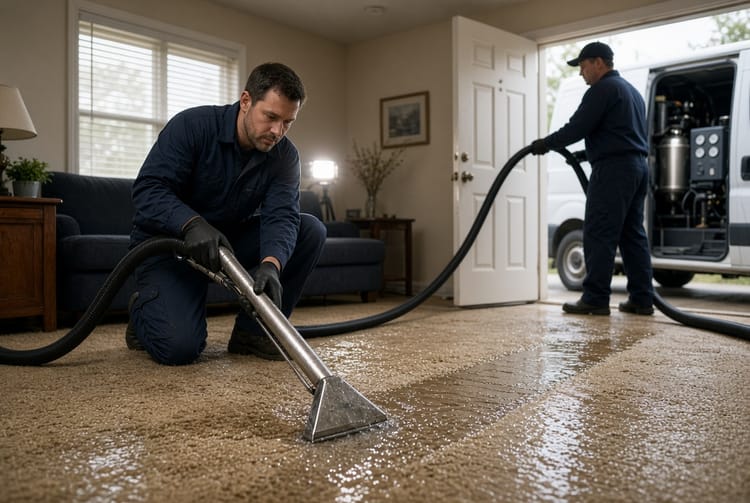
Once water enters, damage multiplies quickly. Drywall, insulation, carpet, and stored items absorb moisture. Electrical outlets and HVAC equipment face corrosion risks. Mold can begin growing within 24 to 48 hours in damp conditions. Insurance claims often involve deductibles, documentation, and delays. The most effective strategy is to stop water before it crosses the threshold.
Key risks include:
- Rising groundwater after prolonged rain or snowmelt
- Sewer surcharge during intense storms
- Surface runoff from improperly sloped yards
- Foundation cracks and unsealed penetrations
- Power outages that disable unprotected pumps
A layered approach using interior and exterior systems addresses these risks simultaneously.
Sump Pumps: The Interior Workhorse
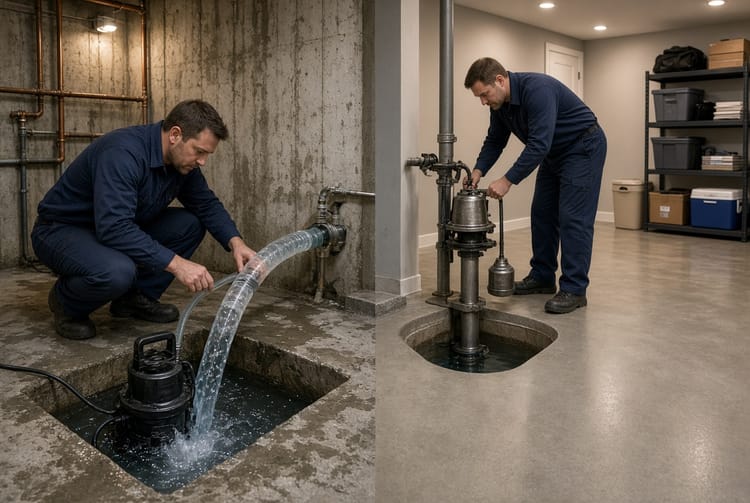
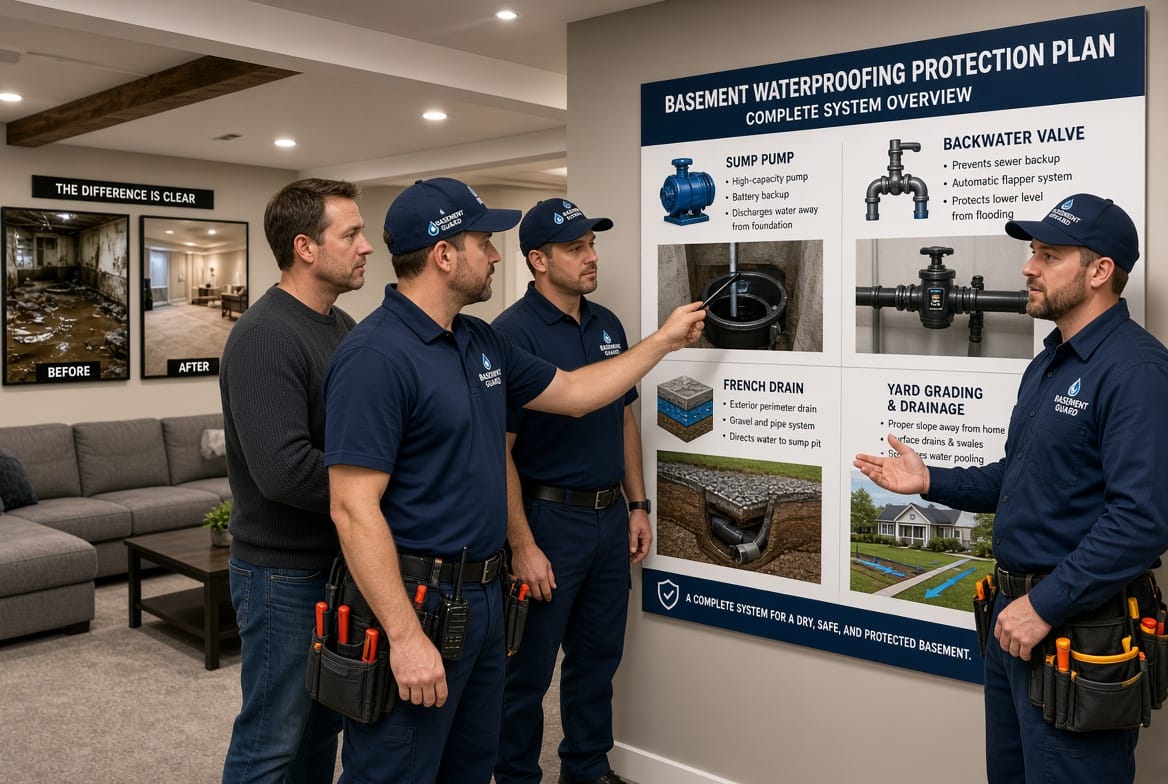
A sump pump is the most common and effective interior defense against groundwater. Installed at the lowest point of the basement or crawl space, the pump sits inside a lined pit that collects water seeping through the floor or walls. When the water level rises, a float switch activates the pump and discharges the water through a pipe that exits the house and releases it a safe distance away.
Two main styles exist. Submersible pumps sit fully inside the pit and operate quietly; they are the preferred choice for finished basements. Pedestal pumps mount the motor above the pit and can be easier to service in some older installations. Both types require a dedicated discharge line that slopes away from the foundation and includes a check valve to prevent water from flowing back into the pit.
Battery backup or a water-powered backup system is essential. Storms that cause flooding frequently knock out electricity. A primary pump without backup leaves the basement unprotected at the worst moment. Modern systems also include high-water alarms that notify homeowners if the pump cannot keep up.
Regular testing and maintenance keep the system ready. Homeowners should pour water into the pit monthly to confirm the float switch and pump cycle correctly. The discharge pipe must remain clear of debris, ice, or landscaping that could restrict flow. Professional inspection once a year verifies electrical connections, check-valve function, and pit cleanliness.
When sized and installed correctly, a sump pump handles the majority of groundwater intrusion and gives homeowners a reliable first line of defense.
Backwater Valves: Stopping Sewer Backup
Sewer backup is a different threat from groundwater. During heavy rain, municipal lines can fill beyond capacity. Pressure then forces wastewater backward through household drain pipes and into basement floor drains, toilets, and showers. The result is contaminated water that creates both property damage and health hazards.
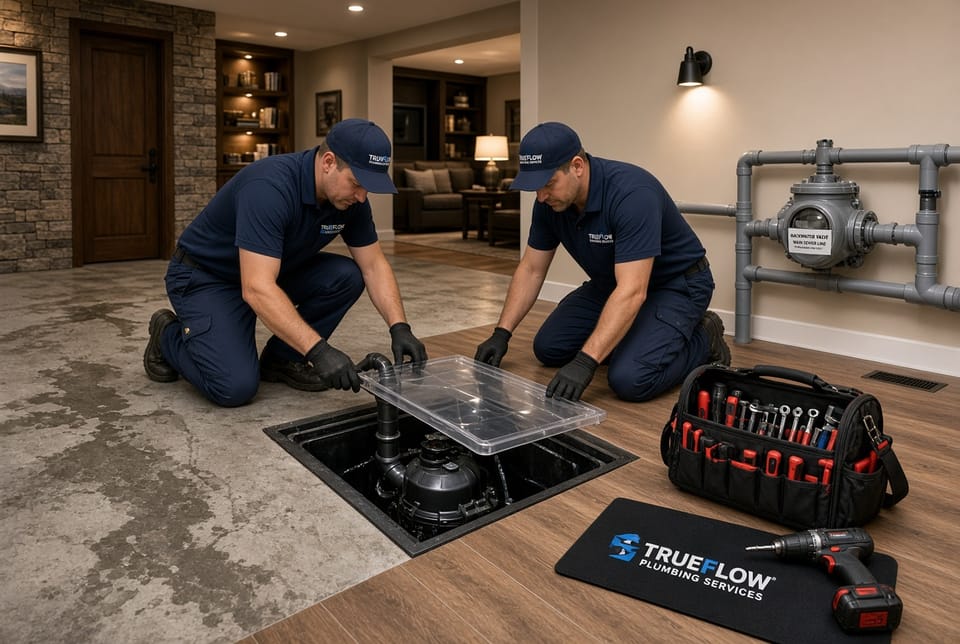
A backwater valve solves this problem with a one-way mechanism installed on the main sewer line. Wastewater from the house flows freely out toward the municipal system. When pressure reverses, a flap or gate closes and blocks the incoming flow. The valve is typically installed in an accessible cleanout so it can be inspected and maintained.
Not every home needs a backwater valve, but properties in older neighborhoods, low-lying areas, or cities with combined storm-and-sanitary sewers benefit greatly. Local plumbing codes often require the device on new construction or major renovations in flood-prone zones. Professional installation ensures the valve is placed at the correct elevation and that the line remains properly vented.
Homeowners should never attempt to block floor drains with makeshift plugs as a substitute. Those methods fail under pressure and can create additional plumbing problems. A properly fitted backwater valve provides a code-compliant, reliable barrier against sewer surcharge.
French Drains and Exterior Water Management
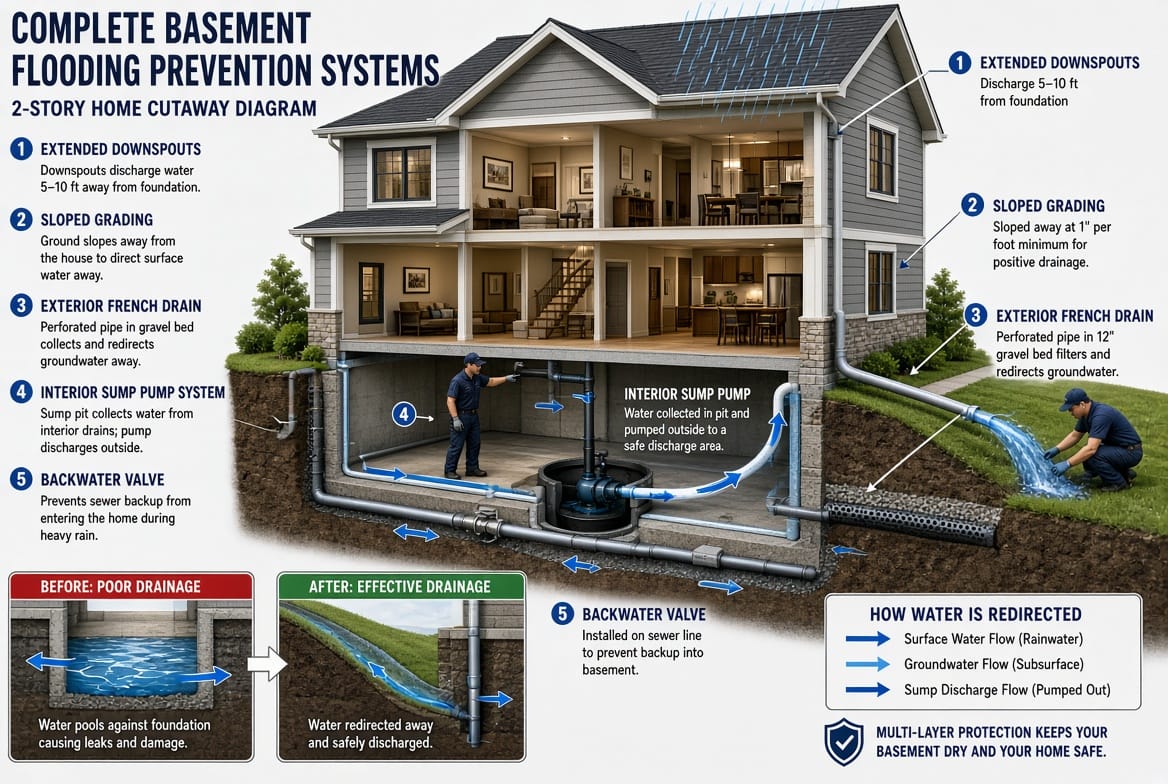
Interior pumps handle water that has already reached the foundation. Exterior systems intercept that water before it arrives. A French drain is a gravel-filled trench containing a perforated pipe wrapped in filter fabric. The trench is sloped so collected groundwater and surface water flow toward a safe discharge point or into the sump pit.
Exterior French drains typically run around the perimeter of the foundation at footing level. They relieve hydrostatic pressure that would otherwise force water through walls and floors. Interior French drains, sometimes called drain tile systems, sit beneath the basement slab and channel water to the sump pit. Many comprehensive installations use both.
Proper design matters. The pipe must maintain a consistent slope, the gravel must be clean and adequately sized, and the filter fabric must prevent soil from clogging the system. Discharge must occur well away from the house or into an approved storm connection. Poorly installed drains can settle, clog, or simply move the problem to another part of the yard.
When combined with a sump pump, a well-built French drain dramatically reduces the volume of water the pump must handle and lowers the risk of overflow during extreme events.
Proper Grading: The Simplest Exterior Defense
Proper grading is one of the most cost-effective yet frequently overlooked prevention methods. The ground immediately surrounding the foundation should slope away from the house. A drop of at least six inches over the first ten feet is the standard recommendation. This slope directs rainwater and melting snow away from the walls instead of allowing it to pond or saturate the soil against the foundation.
Over time, soil settles, landscaping changes, and walkways or patios can reverse the intended slope. Homeowners should inspect the grade after major storms or landscaping projects. Adding compacted soil or regrading low spots restores the protective slope. Care must be taken not to bury the siding or interfere with existing drainage pipes.
Grading works hand-in-hand with gutters and downspouts. Gutters must stay clear of leaves and debris so water reaches the downspouts. Downspout extensions should carry water at least six to ten feet from the foundation—preferably farther on sloped lots. Splash blocks alone are rarely sufficient in areas with heavy rainfall.
Together, proper grading and extended downspouts form the first exterior barrier that keeps large volumes of surface water from ever reaching the foundation.
Additional Layers of Protection
Several supporting measures strengthen the core systems. Foundation waterproofing coatings or membranes on the exterior walls reduce seepage through concrete. Interior sealants can help in limited situations but do not replace exterior drainage. Window wells should include covers and their own drains that connect to the French drain or sump system so they do not become collection bowls.
Crack repair and proper flashing around pipes and utility penetrations close entry points. In some climates, a dehumidifier and good ventilation reduce residual moisture even after the major water sources are controlled.
No single product solves every scenario. The most resilient homes use a coordinated system: surface water is directed away by grading and downspouts, subsurface water is intercepted by French drains, groundwater that still reaches the interior is removed by the sump pump, and sewer backup is blocked by the backwater valve.
Professional Installation and Long-Term Reliability
Correct sizing, placement, and connection of these systems require experience. A pump that is too small will cycle constantly or fail during peak inflow. A backwater valve installed at the wrong elevation may not close when needed. A French drain without adequate slope or filter fabric will clog within a few seasons. Local codes, permit requirements, and soil conditions also influence the design.
Licensed plumbers and waterproofing specialists evaluate the specific property—soil type, water table, existing plumbing, and historical flooding patterns—before recommending a combination of solutions. They also ensure electrical work for pumps meets safety standards and that discharge locations comply with municipal rules.
After installation, a simple maintenance routine preserves performance:
- Test the sump pump monthly
- Inspect and clean the pit annually
- Check the backwater valve according to manufacturer guidelines
- Keep gutters clear and downspout extensions in place
- Re-evaluate grading after landscaping or soil settlement
These steps take little time yet prevent the majority of avoidable failures.
Taking Action Before the Next Storm
Basement flooding is not inevitable. Homes in every climate and soil type can stay dry when the right combination of sump pumps, backwater valves, French drains, and proper grading is installed and maintained. The systems work quietly in the background until they are needed, then they perform exactly as designed.
Waiting until water appears on the floor turns a manageable project into an emergency restoration. The wiser course is to evaluate the property now, address weak points, and put proven protections in place.
Prevent basement flooding before it happens.
A professionally designed and installed system delivers both immediate protection and long-term value. The basement remains usable storage or living space, belongings stay safe, and the family avoids the disruption and expense that follow a flood. With the right plan, the next heavy rain becomes just another weather event instead of a household crisis.
Keep Your Basement Dry – Call for Professional Help