The Water Leak Detection Discount: Saving Money with Smart Sensors

Water damage remains one of the most common and costly risks facing homeowners. A single unnoticed leak can quietly destroy floors, walls, and personal belongings, leading to claims that raise premiums for years. Fortunately, a growing number of insurers now reward proactive protection. By installing smart water leak sensors, homeowners can qualify for meaningful premium reductions while dramatically lowering the chance of catastrophic loss. This water leak detection discount typically ranges from 5-15% and is available for both individual sensors and whole-home automatic shutoff systems. The following guide explains exactly how the incentive works, which devices qualify, and how to claim the savings with confidence.
Unlock Your Water Leak Detection Discount Today
Why Insurers Offer the Water Leak Detection Discount
Insurance carriers understand that prevention costs far less than repair. Traditional policies have long covered water damage, yet repeated claims strain the system. Smart sensors change the equation by detecting moisture within minutes and alerting owners before minor drips become major disasters. When a policyholder demonstrates this level of risk reduction, the insurer can safely lower the premium.
The incentive is straightforward. Documented installation of approved leak-detection technology signals lower expected losses. In return, the carrier applies a discount that appears on the annual statement. Most programs require professional or verified DIY installation, continuous monitoring capability, and sometimes a whole-home shutoff feature for the highest savings tier. The result is a rare win-win: the homeowner pays less while the insurer faces fewer large claims.
How Smart Water Leak Sensors Actually Work
Modern sensors use a combination of moisture probes, flow analytics, and wireless connectivity. When water contacts a probe or when flow patterns deviate from normal household use, the device immediately sends an alert. Many systems also trigger an automatic valve that stops water at the main supply line within seconds.
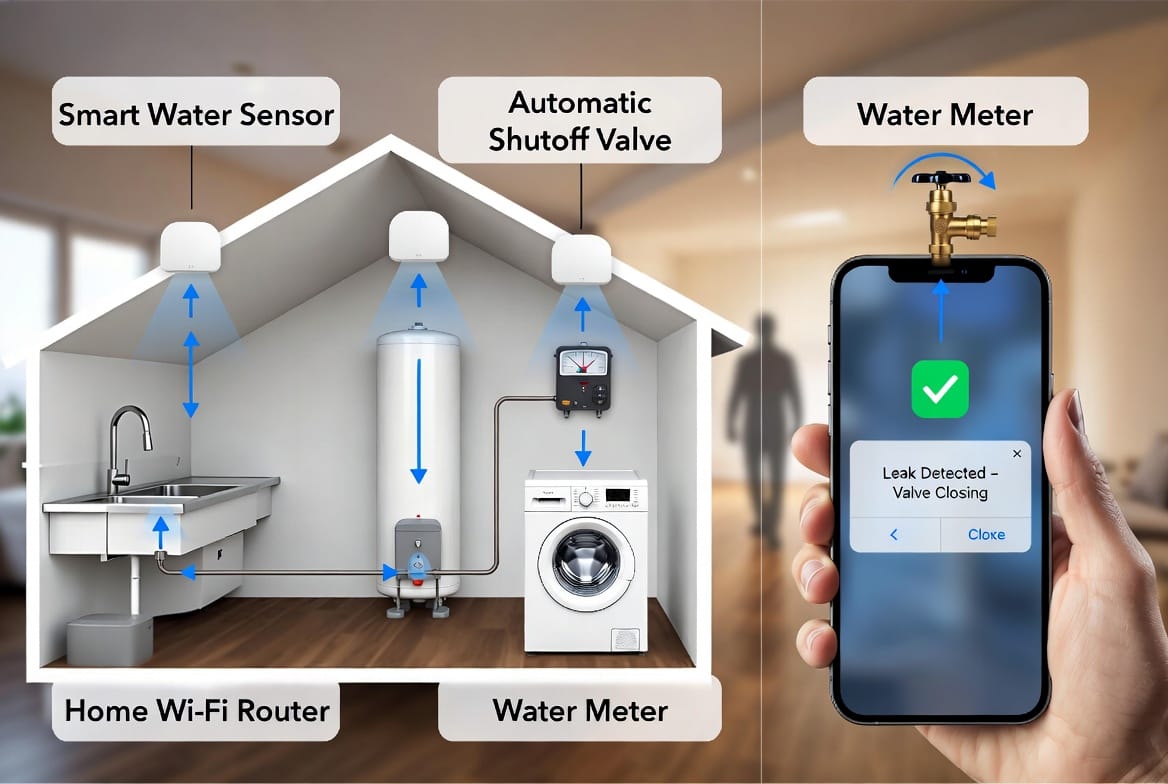
Individual sensors sit in high-risk zones—under sinks, behind toilets, beside water heaters, and near appliances. They detect standing water or high humidity and push notifications to a phone app. Flow-monitoring devices attach to the main water line and learn normal usage patterns; any continuous flow that exceeds a set threshold triggers an alarm. The most advanced systems combine both approaches with a motorized shutoff valve that isolates the entire home supply the moment a problem is confirmed.
These technologies operate on low-power batteries or hardwired connections and communicate via Wi-Fi, Z-Wave, or cellular backup. Battery life commonly exceeds two years, and most units self-test daily to ensure readiness. Because the systems work even when the homeowner is away, they close the largest gap in traditional protection—unattended property.
Qualifying Devices: Individual Sensors, Flow Monitoring, and Automatic Shutoff
Not every gadget earns the discount. Insurers maintain lists of approved equipment that meet reliability and performance standards. The three primary categories are:
- Individual moisture sensors – Compact probes placed in specific locations. They must send real-time alerts and retain event logs.
- Flow-monitoring systems – Devices that continuously measure water volume and duration at the main line. They detect both sudden bursts and slow, hidden leaks.
- Automatic shutoff valves – Motorized or solenoid valves that close the main supply upon confirmed detection. These systems often deliver the highest discount percentages because they actively stop damage rather than merely report it.
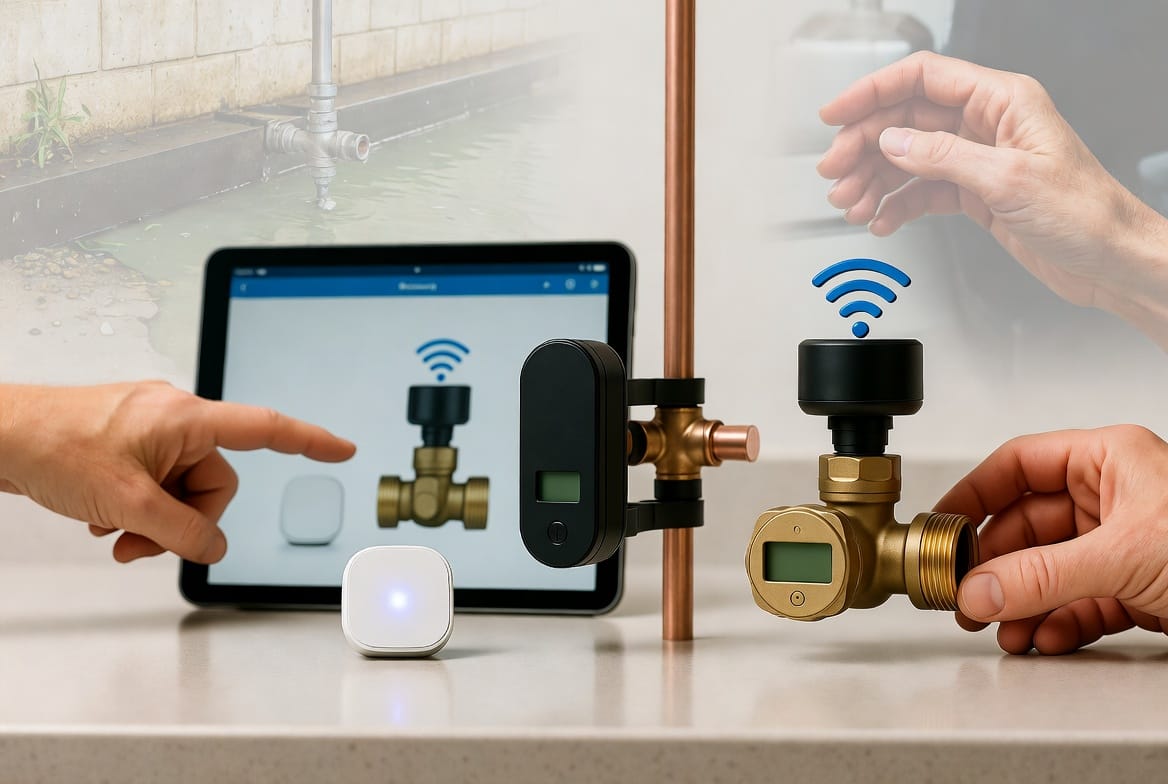
Many carriers accept combinations. A homeowner who installs several individual sensors plus a flow monitor with shutoff capability usually qualifies for the full 5-15% range. Always confirm the exact model numbers with the insurance provider before purchase; some require specific certifications or professional installation documentation.
Typical Savings: Understanding the 5-15% Range
The size of the water leak detection discount depends on the scope of protection and the insurer’s underwriting guidelines. Basic individual sensors often secure the lower end of the scale—around 5%. Systems that include continuous flow monitoring and automatic whole-home shutoff frequently reach 10-15%. A few carriers offer tiered credits that increase as more zones or features are added.
For a homeowner paying $1,800 annually for dwelling coverage, a 10% discount translates to $180 in first-year savings. Over a five-year period the cumulative reduction can exceed $900, even before considering the avoided cost of a single water-damage claim. Claims involving water routinely average several thousand dollars; preventing just one event more than pays for the technology many times over.
Discounts are usually applied at renewal and remain in force as long as the system stays active and functional. Some policies require an annual self-certification or remote diagnostic check. Failure to maintain the equipment can result in loss of the credit, so homeowners should treat the sensors as permanent infrastructure rather than temporary gadgets.
Beyond Premium Savings: The True Value of Early Detection
While the insurance discount provides immediate financial relief, the greater benefit is damage prevention. Water that escapes for only a few hours can warp hardwood, saturate drywall, and foster mold growth that is expensive and time-consuming to remediate. Smart sensors interrupt that timeline.
Consider a classic scenario: a supply line under a second-floor bathroom begins to weep while the family is at work. Without detection, water migrates through the ceiling, ruins flooring below, and triggers a large claim. With sensors in place, the homeowner receives an alert within minutes, remotely closes the main valve if needed, and returns to a dry home. The difference is measured not only in dollars but in avoided stress, temporary relocation, and prolonged repair schedules.
Additional advantages include:
- Continuous monitoring while traveling or at the office
- Detailed usage data that can reveal inefficient appliances
- Peace of mind for second homes or rental properties
- Potential eligibility for broader smart-home discounts when combined with security or fire systems
These secondary benefits reinforce the authoritative case for installation even when the pure discount percentage appears modest.
Selecting and Installing the Right System
Choosing equipment begins with a simple risk assessment. Identify every location where water is supplied or drained—kitchens, bathrooms, laundry rooms, mechanical spaces, and outdoor hose bibs. Place individual sensors at the lowest points under sinks and appliances. For comprehensive coverage, add a main-line flow monitor and automatic shutoff valve near the water meter or main shutoff.
Professional installation is recommended for whole-home shutoff systems to ensure correct orientation, pressure testing, and code compliance. Many electricians and plumbers now specialize in these integrations. DIY placement of individual sensors is straightforward for most homeowners; the devices typically adhere with adhesive or rest on the floor and pair to a hub via a smartphone app in minutes.
After installation, register the system with the manufacturer and enable all alert channels—push notifications, text messages, and email. Test the sensors by placing a damp cloth against the probes and confirming that alerts arrive promptly. Document the model numbers, serial numbers, and installation date; this paperwork becomes essential when applying for the insurance discount.
Claiming the Discount with Your Insurer
The process is usually simple. Contact the insurance agent or carrier and request the current water leak detection or smart home credit guidelines. Provide proof of installation—photographs, receipts, and system registration confirmation. Some carriers accept a short online form; others schedule a brief verification call or remote system check.
Once approved, the credit appears on the next renewal declaration page. Keep the documentation in a safe place; carriers occasionally request reconfirmation after a claim or policy change. If the home is refinanced or the policy is rewritten with a new company, the same equipment can often be re-submitted for continued savings.
Homeowners who already carry high-deductible policies or live in older properties stand to gain the most, because those profiles traditionally carry higher water-damage exposure. Even newer homes benefit, as manufacturing defects or installation errors can still produce hidden leaks years after construction.
Long-Term Protection and Ongoing Best Practices
Sensors are only as effective as the attention they receive. Replace batteries on schedule, keep firmware updated, and periodically test the automatic shutoff valve by triggering a controlled alert. Review the system’s event log every few months; unusual patterns may indicate a developing issue such as a running toilet or failing appliance valve.
Pair the technology with routine visual inspections. Check supply lines under sinks quarterly, examine the water heater for corrosion, and listen for unexplained hissing near pipes. The combination of automated detection and human oversight creates layered defense that pure reliance on either method cannot match.
When remodeling or adding appliances, extend sensor coverage to the new areas. Insurers look favorably on comprehensive systems and may increase the discount percentage as protection expands.
Taking the Next Step Toward Savings and Security
The water leak detection discount represents one of the clearest opportunities available to homeowners today: reduce annual insurance costs while simultaneously hardening the property against one of its most frequent threats. Approved smart sensors—whether individual units, flow monitors, or full automatic shutoff systems—deliver documented savings in the 5-15% range and, more importantly, stop damage before it starts.
Protect the investment that is the home. Install qualifying technology, notify the insurer, and enjoy both lower premiums and greater peace of mind. Save on insurance and prevent damage—start the conversation today.
Protect Your Home & Lower Premiums – Call Today