The Replacement Cost Coverage: Why It's Worth the Extra Premium

Homeowners insurance exists to protect one of the largest investments most families will ever make. Yet many policyholders discover only after a fire, theft, or storm that their coverage does not actually put them back in the same position they occupied before the loss. The difference often comes down to a single choice: actual cash value versus replacement cost coverage.
Call Now to Upgrade from Actual Cash Value
Replacement cost coverage pays to replace damaged or stolen property with new items of similar kind and quality. Actual cash value pays only the depreciated worth of those items. That distinction can mean thousands of dollars out of pocket at the worst possible moment. Understanding why the extra premium for replacement cost coverage is usually money well spent can spare families significant financial and emotional strain.
Why Coverage Type Matters After a Loss
A homeowners policy is a contract. The wording determines how much the insurer will pay when something is damaged or destroyed. Two common valuation methods appear in personal property and sometimes dwelling sections:
- Actual cash value (ACV) subtracts depreciation.
- Replacement cost does not.
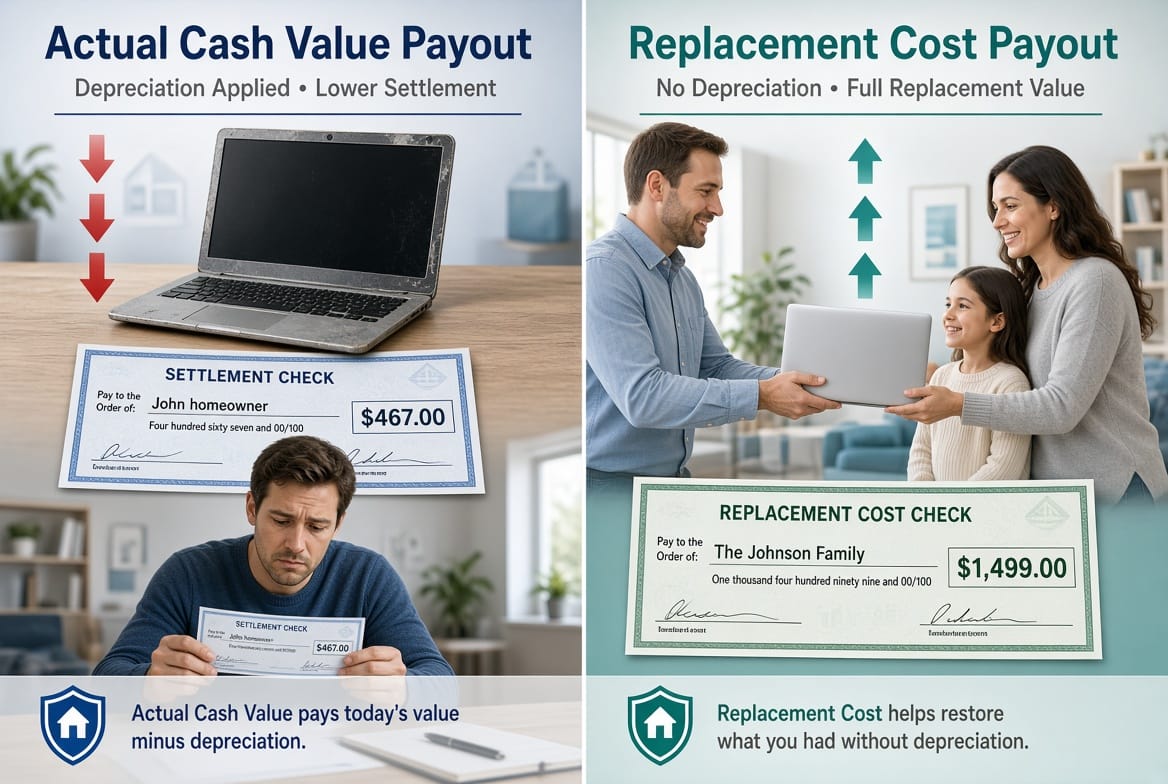
Depreciation reflects age, wear, and obsolescence. A five-year-old sofa, refrigerator, or laptop has already lost a portion of its original value. Under an ACV settlement the insurer pays only what the item was worth the day before the loss. The homeowner must then cover the difference to buy a comparable new item.
Replacement cost coverage changes the outcome. After the claim is approved, the policyholder can purchase a new equivalent item and receive reimbursement up to the policy limits without a depreciation deduction. The result is closer to “new for old.”
This extra protection costs more in premium. The question is whether that extra cost is justified. For most households the answer is yes.
What Actual Cash Value Really Means
Actual cash value is the market value of property immediately before the loss. Insurers typically calculate it as:
Replacement cost minus depreciation.
Depreciation schedules vary by item category. Electronics often depreciate quickly. Furniture and appliances follow their own tables. A ten-year-old washing machine that originally cost $900 might have an ACV of $250–$400 depending on condition and local market.
When a claim is settled on an ACV basis the check arrives for the depreciated amount. The homeowner who wants a functioning, current-model appliance must pay the remainder. That gap grows with every year the item has been in use.
ACV policies are less expensive because the insurer’s potential payout is lower. The savings look attractive at renewal time. They look far less attractive after a kitchen fire or a burglary that takes every electronic device in the house.
What Replacement Cost Coverage Provides
Replacement cost coverage obligates the insurer to pay the amount needed to replace the damaged property with new property of like kind and quality, subject to policy limits and any deductible. Depreciation is not subtracted from the settlement for covered personal property when this endorsement or policy form is in force.
The process usually works in two steps. First the insurer may issue an ACV payment. After the homeowner replaces the item and submits receipts, the insurer pays the recoverable depreciation — the difference between ACV and actual replacement cost. Some policies now offer replacement cost without that two-step process, but the financial outcome is the same: the insured can obtain a new equivalent item without absorbing depreciation.
This “new for old” principle is the core advantage. It restores function and appearance rather than merely compensating for used-item value.
Key Differences That Affect Your Wallet
The practical differences appear most clearly at claim time.
- Payout amount: ACV pays depreciated value. Replacement cost pays current replacement price (up to limits).
- Out-of-pocket exposure: ACV often requires the homeowner to add personal funds. Replacement cost minimizes that gap.
- Timing of full payment: Some replacement-cost policies reimburse depreciation only after replacement occurs.
- Premium: Replacement cost coverage carries a higher premium because the insurer accepts greater risk.
- Peace of mind: Families know they can restore their household without shopping used or settling for inferior substitutes.
Consider a living-room set destroyed by water. Original cost three years earlier: $4,200. Current replacement cost for similar quality: $4,500. Depreciation under a typical schedule: 35 percent. An ACV settlement might be roughly $2,730 before deductible. The family must find another $1,770 plus deductible to furnish the room again. Under replacement cost coverage the recoverable amount is closer to the full $4,500 (minus deductible).
Multiply that example across electronics, kitchen appliances, bedroom furniture, and clothing after a major loss and the difference becomes substantial.
Why the Extra Premium Is Usually Justified
The additional premium for replacement cost coverage on personal property is frequently modest relative to the protection it buys. Many insurers price the endorsement as a small percentage increase or a flat monthly amount. In exchange the policyholder transfers the depreciation risk to the insurance company.
Several factors make the extra cost worthwhile:
Financial recovery speed. After a fire or theft families need functioning appliances, beds, and computers immediately. Waiting to save extra money delays normal life.
Inflation protection. Replacement prices rise. An item bought five years ago often costs more today even before quality upgrades. Replacement cost coverage tracks current prices rather than historic depreciated values.
High-depreciation categories. Technology, certain furniture styles, and appliances lose value quickly. These are exactly the items most households cannot easily live without.
Emotional load. A claim is already stressful. Discovering that the settlement will not cover new equivalents adds another layer of difficulty. Replacement cost coverage removes that particular worry.
Dwelling versus contents. Many standard homeowners policies already provide replacement cost on the structure itself when the home is insured to value and rebuilt. The contents (personal property) portion is frequently written on an ACV basis unless the homeowner specifically adds replacement cost. That is the endorsement most families should evaluate.
The extra premium is not wasted money. It is a transfer of a known, calculable risk — depreciation — from the household balance sheet to the insurer.
Household Items Where Replacement Cost Matters Most
Certain categories produce the largest gaps between ACV and replacement cost.
Electronics
Televisions, laptops, tablets, gaming systems, and smartphones depreciate rapidly. A three-year-old television that cost $1,200 may have an ACV of a few hundred dollars while a comparable new model still costs close to the original price.
Furniture
Sofas, mattresses, dining sets, and bedroom suites show wear. Style changes also reduce resale value even when the pieces remain functional. Replacing an entire living-room grouping after smoke damage can easily exceed an ACV settlement.
Appliances
Refrigerators, washers, dryers, dishwashers, and ranges are expensive to replace. Depreciation schedules often assign significant reductions after only a few years of use. A family that loses every major appliance in a kitchen fire faces a large unexpected bill under ACV coverage.
Clothing, tools, sports equipment, and window treatments add further shortfalls when the loss is total.

How Claims Typically Unfold
When a covered loss occurs the homeowner reports the claim and documents damaged items. An adjuster evaluates the loss. Under an ACV policy the settlement check reflects depreciated values. Under replacement cost coverage the insurer usually pays ACV first, then reimburses the difference once receipts for new purchases are submitted.
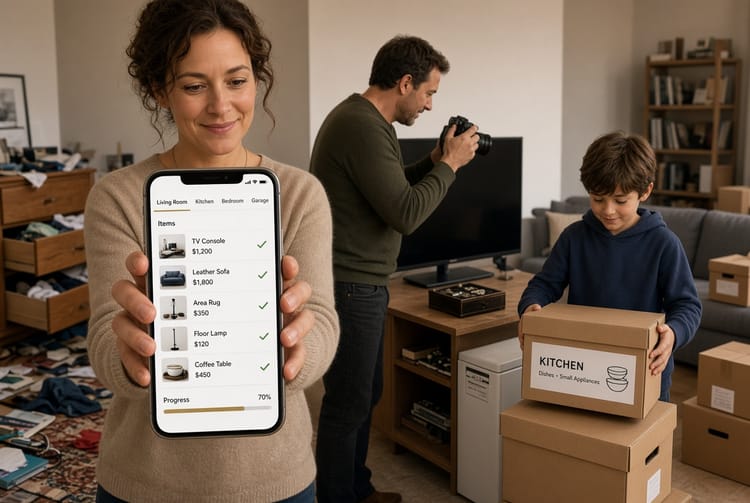
Keeping receipts, photographs, and a home inventory before a loss occurs makes the process smoother. Many insurers now accept digital inventories. The extra documentation effort is small compared with the benefit of a full replacement-cost settlement.
Policy limits still apply. Replacement cost coverage does not create unlimited funds. It simply removes depreciation from the calculation within those limits. Adequate coverage amounts remain essential.
Common Misunderstandings
Some homeowners assume every policy automatically includes replacement cost. Others believe the extra premium is always large. Neither is true.
Standard HO-3 policies often provide replacement cost on the dwelling when insurance-to-value requirements are met, yet personal property defaults to ACV unless an endorsement is added. The cost of that endorsement varies by insurer, location, and coverage amount, but it is frequently a fraction of the overall premium.
Another misconception is that replacement cost means “betterment.” Insurers pay for like kind and quality. A basic refrigerator is replaced with a basic refrigerator, not a luxury model, unless the original item was already high-end.
Understanding these distinctions prevents disappointment at claim time.
Evaluating Your Current Policy
Review the declarations page and the policy form. Look for language such as “actual cash value,” “replacement cost,” or “personal property replacement cost endorsement.” If the wording is unclear, contact the agent or insurer and ask two direct questions:
- Is my personal property covered on a replacement-cost or actual-cash-value basis?
- What would it cost to add replacement cost coverage if it is not already included?
Many companies will quote the difference in minutes. Compare that figure with the potential out-of-pocket exposure after a moderate or large loss. For most families the arithmetic favors the endorsement.
Keep coverage limits realistic. Replacement cost protection is only as strong as the dollar limits on the policy. Underinsurance remains a separate risk.
The Broader Value of Adequate Protection
Home insurance is not merely a legal or lender requirement. It is a financial backstop that allows a household to recover. Choosing the valuation method that actually restores the household — rather than merely reimbursing used-item value — is one of the most practical decisions a homeowner can make.
The extra premium buys more than dollars. It buys the ability to walk into a store, select current models of the items that were lost, and return the home to a livable, familiar state without a second financial shock.
Storms, fires, and thefts do not wait for convenient timing. When they occur, the difference between an ACV check and a replacement-cost settlement can determine whether the family rebuilds quickly or spends months patching gaps with personal savings.
Conclusion: Choose Restoration Over Depreciation
Replacement cost coverage is not an extravagance. It is the mechanism that turns an insurance policy from a partial reimbursement into a genuine restoration tool. The modest additional premium transfers the cost of depreciation away from the household at the moment it can least afford another expense.
Review your current homeowners policy. Confirm whether personal property is written on an actual-cash-value or replacement-cost basis. If the former, obtain a quote for the upgrade. The peace of mind that accompanies knowing a loss will be settled on a new-for-old basis is difficult to overstate.
Choose replacement cost coverage for peace of mind.
Call Now for Home Insurance That Replaces, Not Depreciates