The Home Insurance for Wildfires: Coverage and Prevention
Wildfires no longer feel like distant seasonal events. They have become a persistent threat to homes in many regions, driven by drought, high winds, and expanding development near wildlands. For homeowners, the combination of physical danger and financial exposure can feel overwhelming. The good news is that a well-structured home insurance policy, paired with proven prevention measures, gives families a practical path to protection.
Get Wildfire Coverage Answers Today – Call Now
This article explains a specific wildfire risk that many policies and homeowners still underestimate, details what typical wildfire insurance coverage includes for fire, smoke, and ash damage, and outlines the prevention steps insurers and fire officials consistently recommend—especially defensible space and fire-resistant materials. The goal is straightforward: help you understand both the coverage you already have (or need) and the actions that reduce the chance of a claim in the first place.
The Specific Risk: Ember Ignition and Rapid Fire Spread
One of the most underestimated risks is not a towering wall of flame reaching the house, but ember ignition. Wind-driven wildfires throw burning embers—sometimes called firebrands—hundreds of yards or even miles ahead of the main fire front. These embers land on roofs, in gutters, under decks, against siding, or in nearby vegetation and can start new fires while the main blaze is still far away.
Homes in the wildland-urban interface (the zone where neighborhoods meet forests, grasslands, or chaparral) face this risk most directly. Dry vegetation, wooden fences, accumulated pine needles in gutters, and combustible mulch create ready fuel. Once a small ignition takes hold, flames can spread to the structure in minutes. Even when the house itself does not burn to the ground, smoke and ash can infiltrate through vents, windows, and HVAC systems, causing extensive interior contamination.
This pattern explains why some properties suffer total or near-total losses even when the fire front never directly touches the lot. It also explains why prevention work focused on the immediate perimeter of the home is so effective: it interrupts the path embers use to reach the structure.
Understanding this mechanism helps homeowners and insurance professionals speak the same language. Insurers evaluate not only location but also how well a property is prepared to resist ember attack. That preparation directly influences both insurability and the likelihood of a covered loss.
What Home Insurance Typically Covers After a Wildfire
Standard homeowners policies generally treat wildfire as a covered peril under the fire coverage section. Coverage is not automatic in every situation, however, and the exact wording, limits, and exclusions matter. The following sections describe common protections found in many policies.
Direct Fire Damage
When flames reach the dwelling, the policy typically pays to repair or rebuild the structure up to the dwelling coverage limit. This includes the house itself, attached structures such as garages, and often certain building materials and labor costs at current prices. Detached structures (sheds, fences, or guest houses) may fall under a separate other structures limit, usually a percentage of the dwelling amount.
Contents coverage reimburses personal property destroyed or damaged by fire—furniture, clothing, electronics, and similar items—subject to the policy’s personal property limit and any special sub-limits. Some policies offer replacement cost rather than actual cash value, which can make a meaningful difference after a total loss.
Smoke and Ash Damage
Smoke damage and ash infiltration are frequently covered even when the house does not burn. Smoke can discolor walls, ceilings, and furnishings; it can also leave persistent odors and residue that require professional cleaning or replacement of drywall, insulation, and HVAC components. Ash that settles on surfaces or enters the home through vents can be abrasive and corrosive.
Coverage for these losses usually falls under the same fire peril. Insurers commonly authorize professional restoration companies to perform smoke and soot remediation. Documentation is essential: photographs, inventories, and restoration estimates help support the claim.
Additional Living Expenses and Related Protections
If the home becomes uninhabitable, many policies include additional living expenses (also called loss of use). This can cover temporary housing, extra meal costs, and other necessary increases in living expenses while repairs are completed. Time limits and dollar caps apply, so reviewing those details in advance is wise.
Some policies also address debris removal, landscaping within specified limits, and ordinance-or-law coverage that pays extra costs to bring a rebuilt home up to current building codes—an important consideration in fire-prone areas where codes have tightened.
Important Limitations and Practical Realities
Coverage is not unlimited. Deductibles apply; some carriers now use separate or higher wildfire deductibles in high-risk zones. Policy limits must be adequate; underinsurance remains a frequent problem after large fires because reconstruction costs rise quickly. Certain items (high-value jewelry, collections) may need scheduled endorsements.
Availability itself has become a challenge in some markets. Carriers have restricted new policies or non-renewed existing ones in the highest-risk areas. State-backed plans or surplus-lines options sometimes fill the gap, though they can carry higher premiums and different coverage terms. Reviewing your declarations page and speaking with an agent annually helps confirm that limits, deductibles, and endorsements still match current replacement costs and local risk.
Prevention Steps That Reduce Risk and Support Coverage
Insurance pays after a loss. Prevention reduces the chance the loss occurs. Fire officials and many insurers emphasize two foundational practices: creating and maintaining defensible space, and using fire-resistant materials on and around the home. These steps do not guarantee a home will survive every fire, but they measurably lower ignition potential and can influence underwriting decisions.
Creating Defensible Space
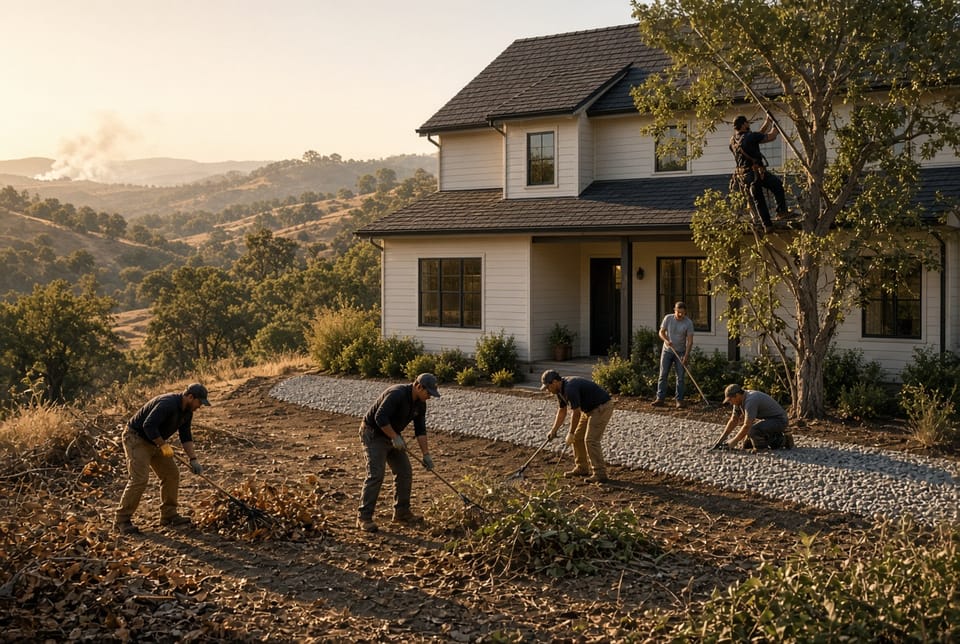
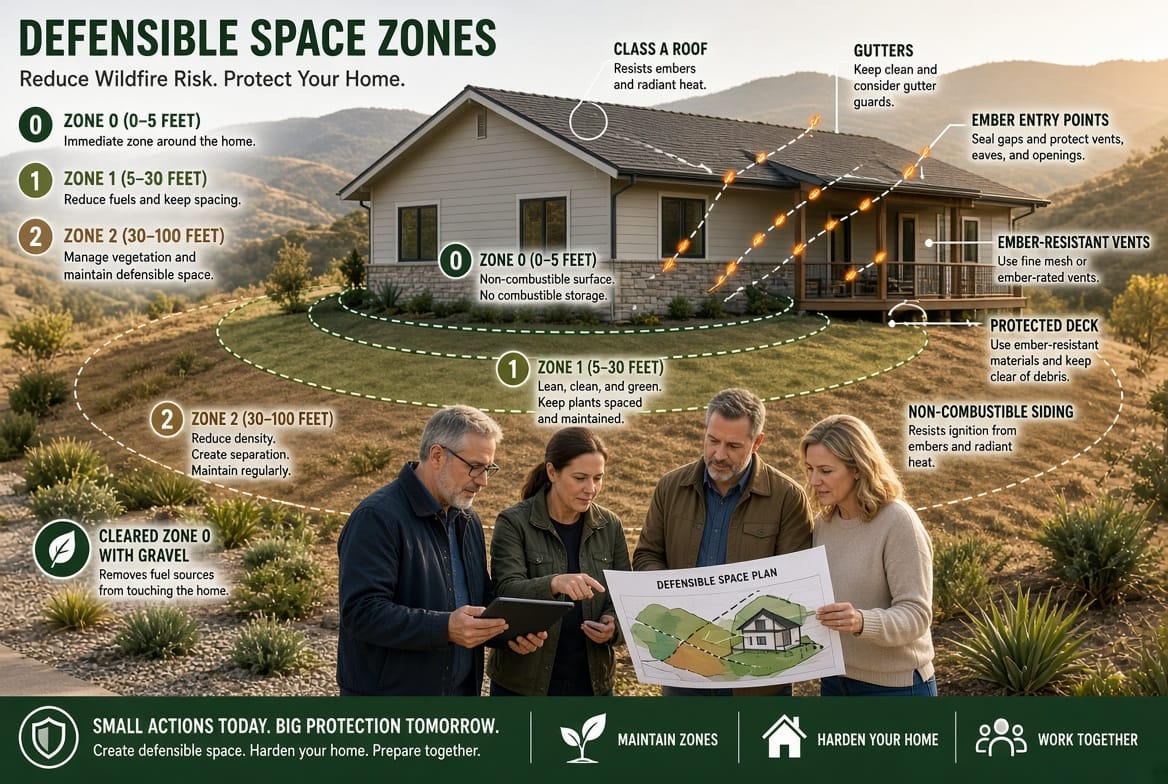
Defensible space is the buffer you create between the house and surrounding vegetation. It is usually organized in zones:
- Zone 0 (0–5 feet from the home): Keep this area free of combustible materials. Use gravel, pavers, or bare soil instead of mulch. Remove dead plants, leaves, and firewood. Choose non-combustible furniture and keep it away from walls.
- Zone 1 (5–30 feet): Reduce continuous fuel. Space trees and shrubs so fire cannot easily climb or jump. Prune lower branches, mow grass short, and keep plants well-watered and healthy. Relocate wood piles and propane tanks farther from the structure.
- Zone 2 (30–100 feet or to the property line): Thin vegetation, remove dead material, and maintain horizontal and vertical separation between plants so fire intensity drops as it approaches the home.
Regular maintenance is as important as the initial work. Seasonal cleanup after wind events or drought periods keeps the space effective. Many communities now offer inspections or rebate programs that help homeowners meet these standards.
Choosing Fire-Resistant Materials
Building and remodeling choices matter. Fire-resistant materials slow or prevent ignition from embers and radiant heat:
- Roofing rated Class A (the highest fire rating) performs better than untreated wood shakes.
- Non-combustible or ignition-resistant siding (fiber-cement, stucco, brick, or certain treated products) reduces wall ignition.
- Ember-resistant vents with fine mesh screens limit the entry of burning particles into attics and crawl spaces.
- Dual-pane windows with tempered glass and metal screens offer more resistance than single-pane units.
- Decks and fences built with ignition-resistant or non-combustible materials, or detailed to keep embers from accumulating underneath, close common ignition points.
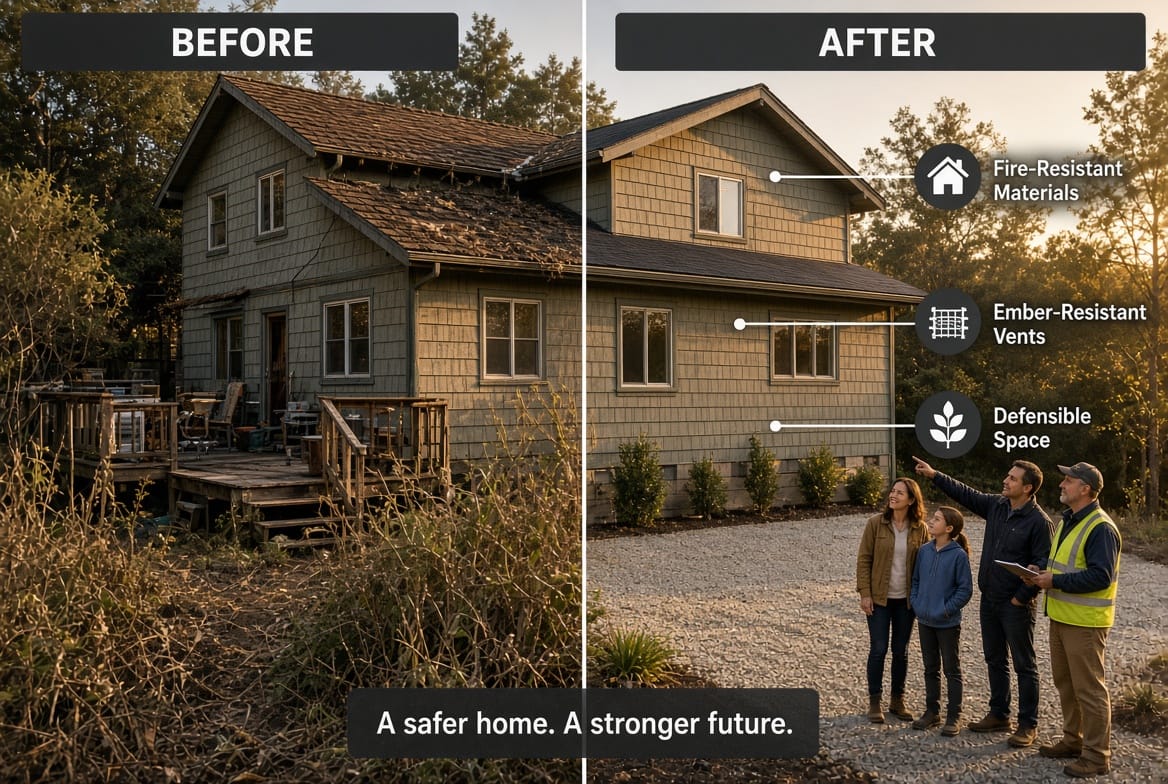
When replacing a roof, siding, or deck, ask contractors about products that meet current wildfire-resistant building standards. These upgrades often qualify for insurance discounts in some markets and improve the home’s overall resilience.
Complementary Actions
Additional practical steps reinforce the two core strategies:
- Keep gutters and roofs clear of leaves and needles.
- Enclose or screen undersides of decks and porches.
- Store firewood and flammable liquids well away from the house.
- Maintain access for firefighters (clear driveways, visible address numbers).
- Prepare a family evacuation plan and a “go bag” so decisions can be made quickly if a fire approaches.
These measures work together. A fire-resistant roof is far more effective when the surrounding vegetation has been managed. Insurers increasingly request photographs or inspection reports documenting this work because it changes the property’s risk profile.
Reviewing Your Policy and Working With Professionals
Prevention and insurance are complementary, not interchangeable. After completing defensible-space work or material upgrades, contact your agent or insurer. Many companies will re-evaluate the property and may adjust premiums or terms. Keep records—receipts, before-and-after photos, and inspection reports—because they support both underwriting and any future claim.
If you live in a high-risk area and receive a non-renewal notice, act promptly. Shop coverage, ask about state-supported plans, and continue prevention work; documented mitigation can help when applying to a new carrier. An independent agent familiar with wildfire markets can compare options without pressure.
Annual reviews should include:
- Confirmation that dwelling limits reflect current reconstruction costs.
- Verification of smoke and additional-living-expense provisions.
- Discussion of any wildfire-specific deductibles or exclusions.
- Updates after home improvements.
Authoritative sources such as local fire departments, state forestry agencies, and insurance regulators publish free checklists that align with the steps described here. Using those resources keeps recommendations consistent and practical.
Moving Forward With Confidence
Wildfire risk is real, but it is also manageable. Understanding that ember ignition can threaten a home even when flames are distant clarifies why both insurance and prevention matter. Typical policies respond to fire, smoke, and ash damage, yet they work best when the property itself has been prepared with defensible space and fire-resistant materials.
These actions do more than satisfy an underwriter. They give families a greater chance that their home will still be standing when the fire season ends. Combined with adequate coverage limits and a clear claim-documentation habit, they form a complete approach: reduce the probability of loss, and ensure financial recovery if a loss nevertheless occurs.
Protect your home from wildfires.
Protect Against Ember Risk – Call for Coverage