The Water Backup Loss Prevention: Devices That Qualify for Insurance Discounts
Water backup issues rank among the most devastating and expensive hazards homeowners face. When sewer systems overflow or heavy rains overwhelm drainage, basements and lower levels can flood rapidly, leading to structural damage, mold growth, ruined belongings, and sky-high repair bills. Fortunately, proactive loss prevention devices not only shield your property but can also unlock meaningful home insurance discounts.
Get Insurance Discounts on Water Backup Protection – Call Today!
In this comprehensive guide, we explore the most effective devices for preventing sewer backups, how they reduce risk, and the ways insurers reward responsible homeowners who install them. By investing in these solutions, you protect your home while potentially lowering your premiums – a true win-win for peace of mind and your wallet.
Understanding Water Backup Risks and Why Prevention Matters
Sewer backups occur when water flows backward through your plumbing system, often due to blockages, heavy storms, or overwhelmed municipal sewers. Unlike standard water damage from burst pipes, many standard homeowners insurance policies exclude or severely limit coverage for sewer and drain backups unless you carry a specific water backup endorsement.
The financial impact can be severe: average claims often exceed $10,000–$50,000 depending on the extent of flooding. Beyond money, health risks from contaminated water and long-term mold issues threaten your family’s well-being.
Risk reduction begins with understanding these vulnerabilities and taking targeted action. Installing certified prevention devices demonstrates to insurers that you are a lower-risk policyholder, which frequently translates into premium discounts ranging from 5% to 15% or more, depending on the carrier and your location.
Key Devices That Prevent Sewer Backups and Qualify for Discounts
Several proven technologies stand out for their effectiveness and insurer approval. Here are the primary devices that deliver both protection and potential savings:
Backwater Valves: Your First Line of Defense Against Reverse Flow
A backwater valve is a specialized check valve installed on your home’s main sewer line. It allows wastewater to exit normally but automatically closes if pressure from the municipal system reverses, preventing sewage from entering your property.
- How it works: The valve features a flap or gate that stays open during normal flow and seals tightly during backups.
- Benefits: Dramatically reduces the chance of catastrophic flooding from sewer issues.
- Installation considerations: Professional plumbers typically install these on the main line, often requiring a cleanout access point. In Dallas-area homes with older infrastructure, this is especially valuable.
- Insurance angle: Many carriers offer discounts for verified backwater valve installations because they directly mitigate high-cost claims.
Pro Tip: Combine with regular maintenance to ensure the valve operates smoothly for years.
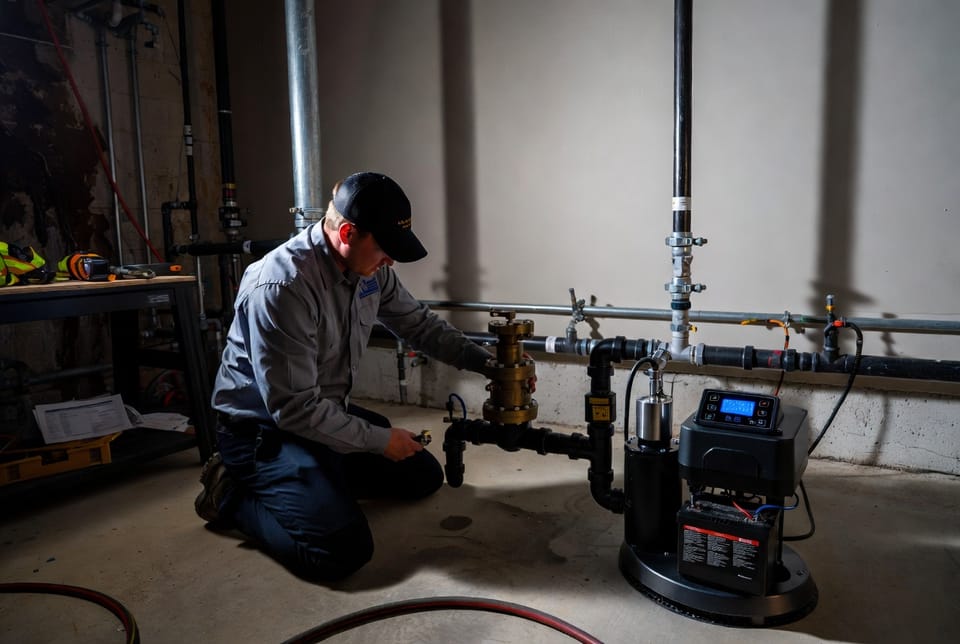
Battery Backup Sump Pumps: Reliable Power When You Need It Most
Sump pumps remove groundwater that collects around your foundation, but they become useless during power outages – precisely when storms cause the most backups. A battery backup sump pump system provides secondary power, keeping water moving even when the grid fails.
- Key features: Automatic switchover to battery or generator power, high-capacity pumps, and alarms for low battery or high water levels.
- Risk reduction: Prevents basement flooding during severe weather events common in Texas.
- Insurer recognition: Carriers view these as critical loss prevention tools and often provide discounts for homes equipped with reliable backup systems.
Water Leak Detectors and Smart Sensors: Early Warning Systems
Water leak detectors use sensors placed near high-risk areas (basements, water heaters, washing machines) to alert you instantly via app notifications or audible alarms at the first sign of moisture.
- Advanced options: Integrate with smart home systems for automatic shut-off valves.
- Prevention power: Catching small leaks before they escalate into major backups or secondary water damage.
- Discount potential: Insurers increasingly reward connected leak detection systems as part of broader water damage mitigation programs.
How These Devices Work Together for Comprehensive Protection
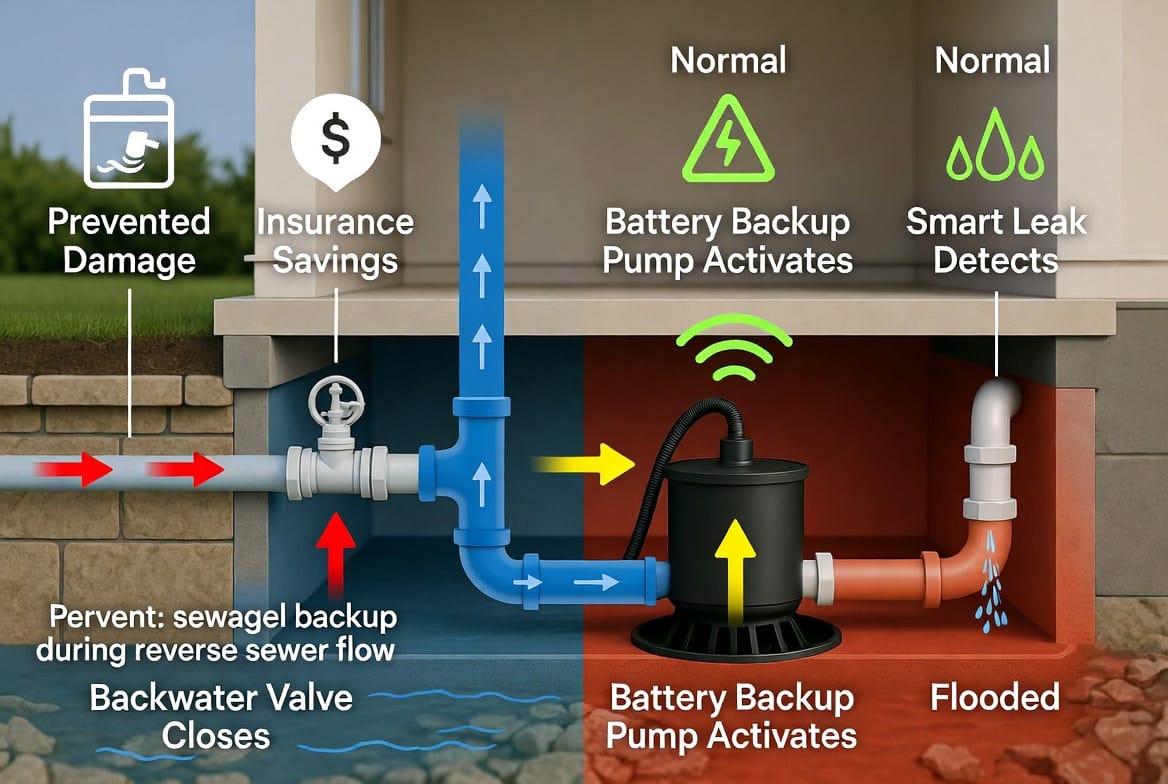
No single device provides complete coverage. The most effective strategy combines backwater valves, battery backup sump pumps, and water leak detectors into an integrated system:
- Backwater valves block incoming sewer problems.
- Sump pumps with backups handle groundwater and overflow.
- Sensors provide early detection and alerts.
This layered approach significantly lowers the probability of a claim while creating a robust defense tailored to regional risks like heavy Texas rains and aging sewer infrastructure.
Homeowners who implement these solutions report greater confidence during storm seasons and smoother interactions with insurance providers during policy renewals.
Insurance Discounts: What to Expect and How to Qualify
Insurance companies use loss prevention credits to encourage risk-reducing behaviors. Installing approved devices signals proactive maintenance, which can lead to:
- Direct premium reductions on your home insurance policy.
- Eligibility for enhanced water backup coverage at lower rates.
- Potential bundling discounts when combined with other safety upgrades (smoke detectors, security systems, etc.).
Steps to secure your discount:
- Consult your insurance agent about qualifying devices.
- Hire licensed professionals for installation and obtain documentation.
- Submit proof (photos, invoices, inspection reports) to your insurer.
- Ask specifically about discounts for sewer backup prevention.
Call (833) 502-4269 today to discuss how these upgrades fit your policy and property.
Installation Best Practices and Maintenance Tips
Proper installation maximizes both protection and discount eligibility:
- Professional expertise: Always use licensed plumbers familiar with local codes.
- Permits and inspections: Many municipalities require permits for sewer line modifications.
- Regular maintenance: Test systems seasonally, replace batteries, and clean valves to maintain performance.
- Integration with smart home tech: Modern systems offer remote monitoring for added convenience.
For Dallas homeowners, consider soil type, water table levels, and local climate when planning installations.
Real-World Impact: Stories of Prevention and Savings
Consider a suburban Dallas family who installed a full suite of devices before a major storm season. When heavy rains caused widespread backups in the neighborhood, their home remained dry thanks to the backwater valve and active sump pump. Their insurance company not only approved a smooth claim-free renewal but applied a significant multi-device discount.
Such stories highlight the tangible benefits: avoided repairs, preserved belongings, and lower long-term costs.
Additional Considerations for Comprehensive Risk Management
Beyond the core devices, enhance protection with:
- Regular sewer line camera inspections.
- Proper grading and drainage around your foundation.
- Elevated utilities in flood-prone areas.
- Reviewing your policy annually for adequate water backup coverage.
These steps, combined with the devices discussed, create a comprehensive loss prevention strategy.
Conclusion: Invest in Protection and Enjoy the Rewards
Protecting your home from water backup damage doesn’t have to be overwhelming. By installing backwater valves, battery backup sump pumps, and water leak detectors, you gain powerful defense against one of the most common and costly home hazards while positioning yourself for valuable insurance discounts.
Don’t wait for the next storm or unexpected backup to take action. Proactive measures deliver immediate peace of mind and long-term financial benefits.
Save on insurance while preventing sewer backup.
Ready to safeguard your home? Contact a trusted professional today and start your journey toward lower premiums and greater security.
Stop Sewer Backups Before They Start – Free Consultation!