The Washing Machine Suspension Rods: Why Your Machine Shakes Violently
A washing machine that suddenly begins to shake violently can turn an ordinary laundry day into a startling experience. The floor vibrates, the machine rattles loudly during the spin cycle, and in severe cases the entire unit may even begin to “walk” across the floor. While unbalanced loads are a frequent culprit, the deeper and more persistent cause often lies with the suspension rods. These critical components are designed to absorb vibration and keep the tub stable. When they wear out, the machine loses its ability to control movement, leading to excessive shaking, loud spinning, and potential long-term damage.
Stop Your Washer from Shaking – Call Now!
Understanding how suspension rods function, recognizing the early signs of wear, and knowing when replacement with a quality rod kit is necessary can save homeowners from costly repairs and frustrating interruptions. This comprehensive guide explains the role of these parts, the symptoms that signal failure, the safe replacement process, and the practical steps that restore quiet, reliable performance.
What Suspension Rods Actually Do
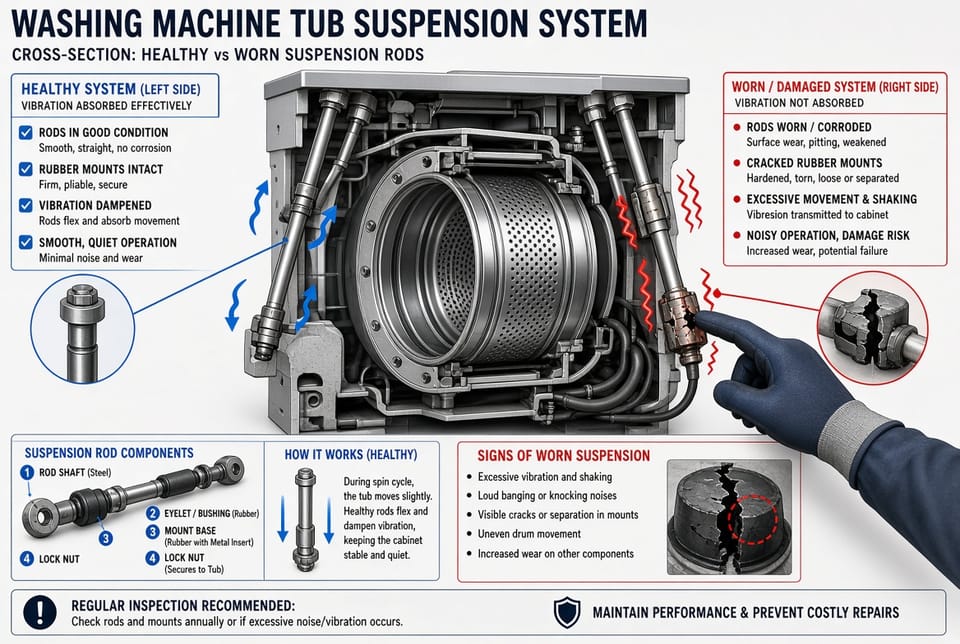
Inside every modern top-loading or certain front-loading washing machines, the wash tub is suspended by a set of suspension rods (sometimes called damper rods or shock rods). Their primary job is to absorb vibration generated during the wash and especially the high-speed spin cycle. As the drum rotates rapidly with a heavy, wet load, centrifugal force creates significant movement. The rods act like sophisticated shock absorbers: they allow controlled vertical travel while dampening side-to-side and front-to-back motion.
Each rod typically consists of a sturdy metal shaft, a spring or damper mechanism, and rubber or polymer mounts that connect to the cabinet and the outer tub. When functioning correctly, the system keeps the tub centered and isolates the rest of the machine—and the floor—from disruptive energy. The result is a relatively quiet, stable cycle that does not transmit excessive force into the surrounding structure.
Over years of repeated use, constant stress, moisture, detergent residue, and normal material fatigue gradually degrade the rods. The damping ability diminishes, springs lose tension, and mounts crack or harden. At that point the machine can no longer control the tub’s motion effectively, producing the violent shaking that alarms so many owners.
Clear Signs That Suspension Rods Are Wearing Out
Recognizing the symptoms early prevents secondary damage to the tub bearings, outer cabinet, and even the floor or cabinetry. The most common indicators include:
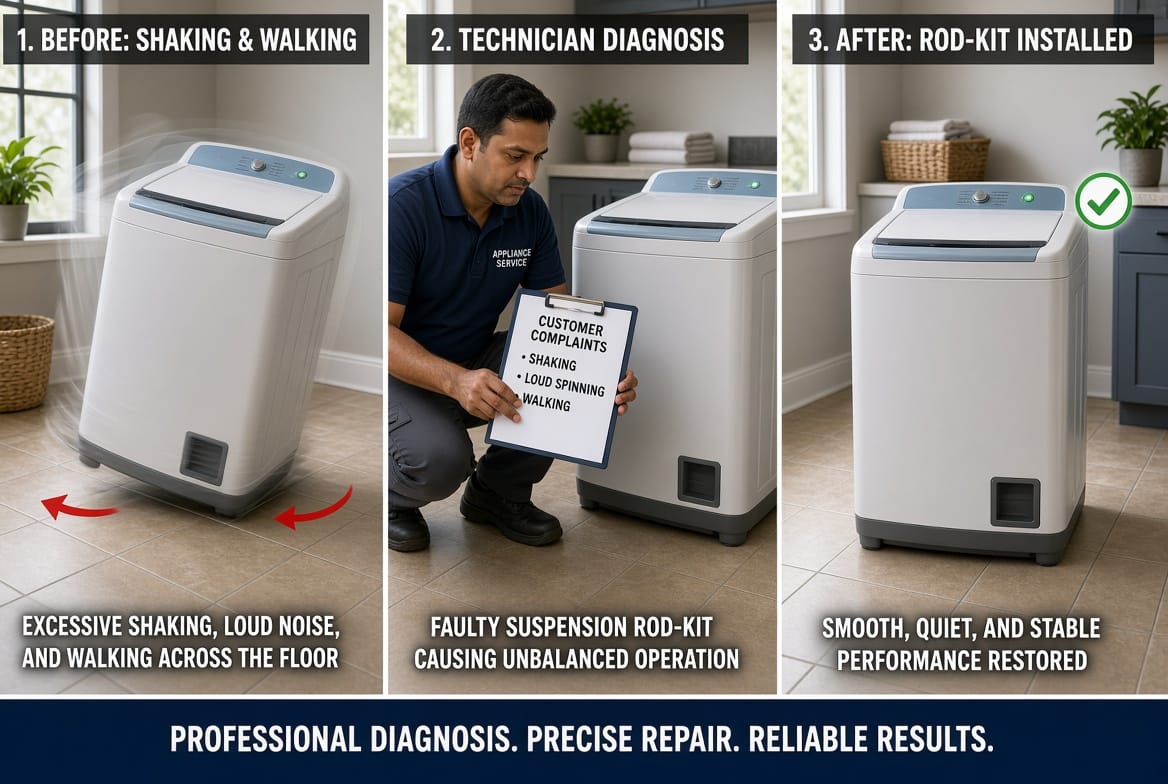
- Excessive shaking that intensifies during the spin cycle, often feeling stronger than a normal unbalanced load.
- Loud spinning noises—thumping, banging, or metallic rattling that was not present when the machine was new.
- The entire washer walking across the floor, shifting several inches during a single cycle.
- Visible movement of the cabinet or control panel that seems disproportionate to the load size.
- Unusual vibration transmitted through the floor into adjacent rooms.
- Clothes that remain excessively wet after the spin cycle because the tub cannot reach full speed safely.
These symptoms frequently appear together. A machine that once operated smoothly may suddenly begin to dance across the laundry room once the rods have lost their damping capacity. Ignoring the problem rarely makes it better; continued operation under severe vibration accelerates wear on other components and can lead to more expensive repairs.
Why Suspension Rods Fail Over Time
Several factors contribute to the gradual decline of these components. High spin speeds generate repeated stress cycles that fatigue the metal and damping materials. Moisture and residual detergent can corrode metal portions or degrade rubber elements. Hard water minerals may build up and stiffen moving parts. In some households, consistently overloading the machine places additional strain on the rods, shortening their service life. Even normal aging after eight to twelve years of regular use is often enough to reduce effectiveness.
Geographic location can play a role as well. Homes in areas with high humidity or temperature extremes may see faster deterioration of the polymer and rubber elements. Regardless of the exact cause, the outcome is the same: reduced ability to absorb vibration and the onset of violent shaking.
The Risks of Continuing to Run a Shaking Washer
Operating a machine with worn suspension rods is more than an inconvenience. Persistent vibration can loosen other fasteners, damage the tub bearings, crack the outer plastic or metal cabinet, and create stress fractures in the floor or supporting structure. In extreme cases the machine may tip or shift far enough to disconnect hoses, leading to water leaks. The loud noise itself can disturb household members and neighbors, while the incomplete spin leaves laundry damper than it should be, increasing drying time and energy use.
From a safety standpoint, a washer that walks across the floor poses a tripping hazard and risks damaging nearby cabinetry or appliances. Addressing the issue promptly protects both the machine and the home environment.
Diagnosing the Problem Accurately
Before assuming the suspension rods are at fault, perform a few simple checks. First, redistribute the load evenly and run a spin cycle with a balanced, medium-sized load. If the shaking disappears, the original problem was likely an unbalanced load. If the violent motion continues even with carefully balanced clothing, the rods are the probable cause.
Next, inspect the machine visually while it is empty and unplugged. Open the lid or door and gently press down on the tub in several locations. Excessive free play, uneven resistance, or a clunking sound can indicate worn rods. Some models allow limited visual access to the rods from the top or by removing the rear panel; look for cracked rubber boots, broken springs, or rods that appear bent or corroded.
When visual inspection is difficult or the symptoms remain ambiguous, professional diagnosis is the safest route. Technicians use specialized tools and experience to confirm that the rods—not the bearings, motor mounts, or leveling legs—are the root cause.
Replacement with Suspension Rod Kits
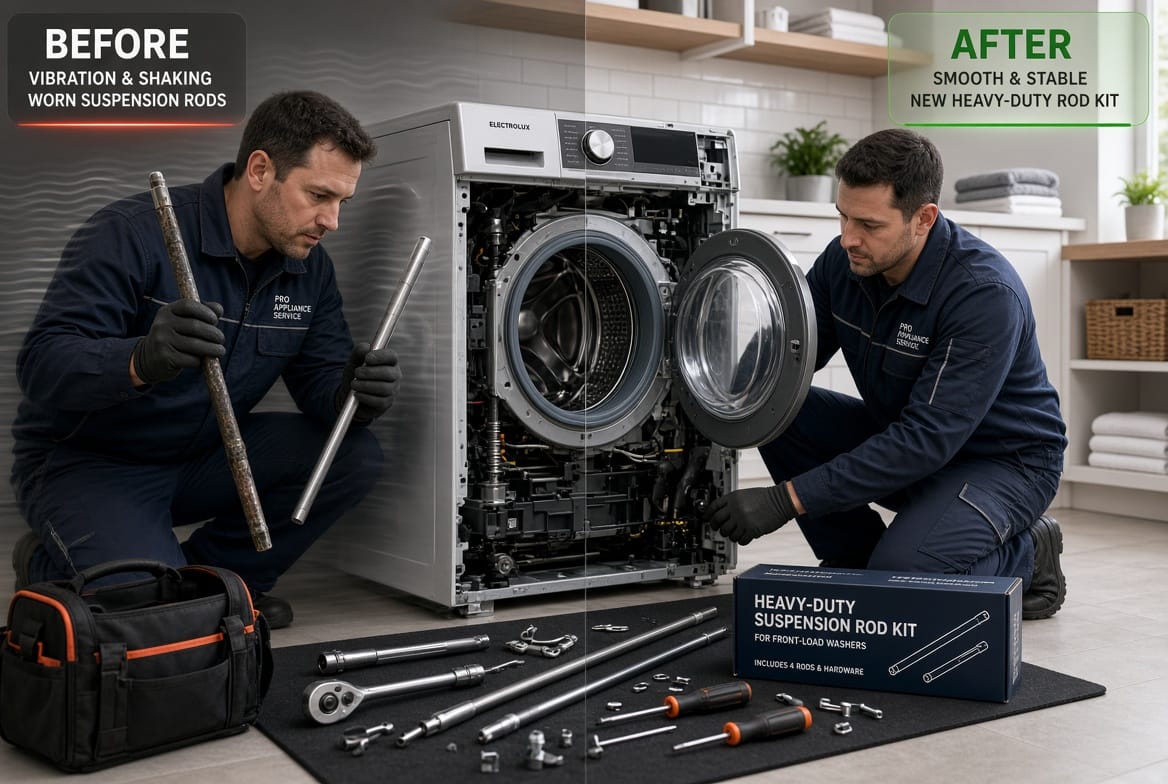
Fortunately, worn suspension rods are a well-understood repair. Most manufacturers and aftermarket suppliers offer complete rod kits that include all necessary rods, mounts, and hardware matched to specific machine models. Replacing the entire set rather than individual rods ensures balanced performance and prevents the remaining older rods from failing soon afterward.
The replacement process typically involves:
- Disconnecting power and water supply for safety.
- Removing the top or rear access panels to reach the rod mounting points.
- Carefully detaching the old rods from the tub and cabinet.
- Installing the new rods in the correct orientation and torque specifications.
- Reassembling the machine and testing with an empty and then a loaded spin cycle.
Because the rods support the weight of the tub and must be installed with precise alignment, many homeowners prefer professional service. Incorrect installation can leave residual imbalance or create new stress points. Certified technicians complete the job efficiently, verify proper function, and often provide a warranty on both parts and labor.
Benefits of Timely Rod Replacement
Once new suspension rods are installed, the transformation is immediate and noticeable. The machine returns to quiet, controlled operation. Vibration drops dramatically, the spin cycle reaches full speed without drama, and laundry emerges properly damp rather than soaking wet. The floor stays still, noise levels fall, and the risk of secondary damage disappears. Homeowners often report that the washer feels “like new” again, restoring confidence in a major household appliance.
Beyond comfort, the repair extends the overall life of the machine. By eliminating the destructive forces of unchecked vibration, bearings, seals, and other components experience less stress and last longer. The modest investment in a quality rod kit and professional installation frequently postpones the need for a full replacement by several years.
Practical Prevention Tips
While suspension rods will eventually wear, several habits can maximize their lifespan:
- Avoid consistently overloading the washer; respect the manufacturer’s capacity guidelines.
- Balance loads by mixing large and small items and distributing weight evenly.
- Use the appropriate water level and cycle settings for each load size.
- Keep the machine level on a solid, even floor; recheck leveling legs periodically.
- Address minor vibration promptly rather than allowing it to worsen.
- Schedule occasional professional maintenance checks, especially after five to seven years of service.
These simple practices reduce cumulative stress on the rods and help maintain smooth performance.
When Professional Help Is the Smart Choice
Although some experienced do-it-yourselfers successfully replace suspension rods, the job requires mechanical aptitude, the correct model-specific kit, and careful attention to safety and alignment. For most households, calling a trained technician offers peace of mind. Professionals arrive with the right parts, specialized tools, and the expertise to diagnose related issues that might otherwise be overlooked. They also ensure the machine is tested thoroughly before leaving, confirming that the violent shaking has been eliminated.
In addition, professional service often includes a warranty that covers both the new rods and the labor. Should any related problem appear within the coverage period, the technician returns at no additional cost. This reassurance is especially valuable for busy families who rely on their washer daily.
Restoring Calm and Confidence to Laundry Day
A washing machine that shakes violently is not merely noisy—it is a clear signal that the suspension rods can no longer absorb vibration effectively. The signs—excessive shaking, loud spinning, and the machine walking across the floor—are unmistakable once understood. Timely replacement with a complete rod kit restores balance, quiet, and reliability.
By addressing the problem promptly, homeowners protect their appliance investment, prevent secondary damage, and reclaim the convenience of smooth, predictable laundry cycles. Whether the machine is relatively new or has given many years of service, correcting worn suspension rods is one of the most effective repairs available.
Restore Smooth Operation – Call Appliance Experts