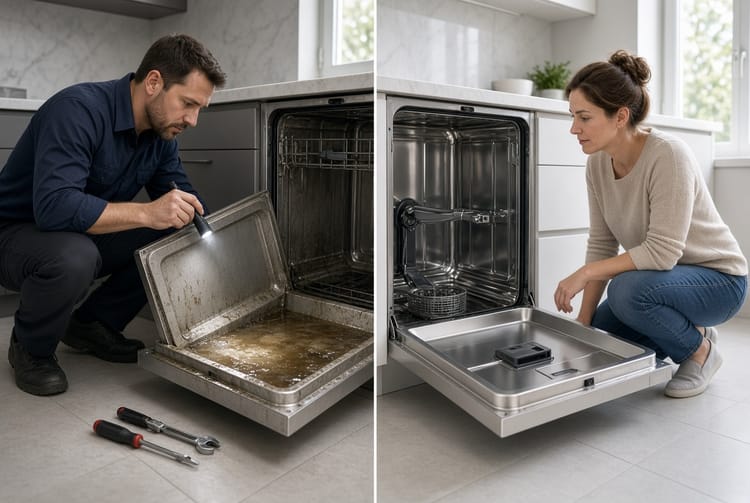
The Dryer Vent Cleaning: Preventing Fires and Improving Efficiency
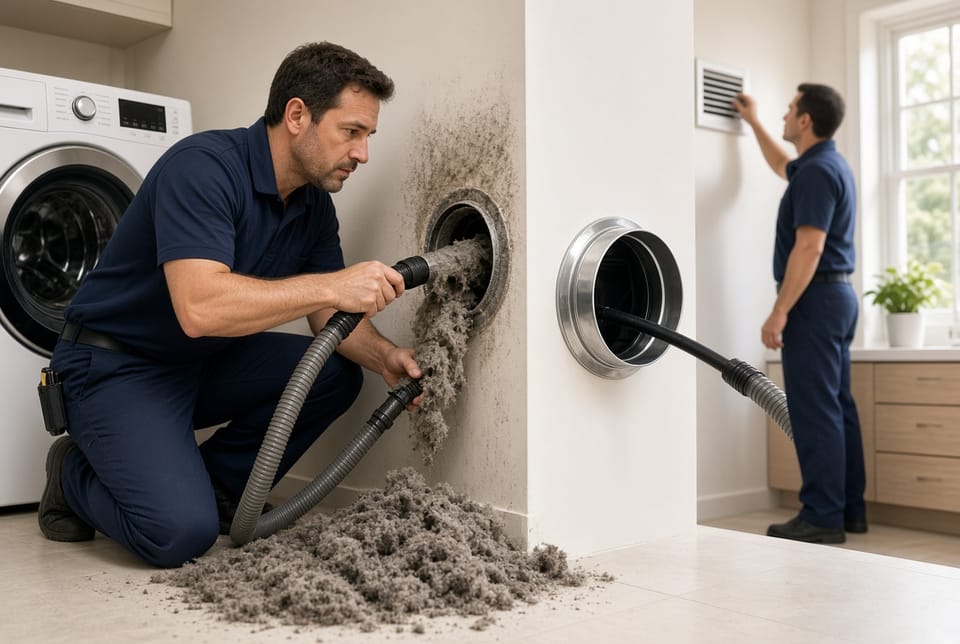
A well-maintained dryer is one of the most important safety and efficiency features in any home. Yet many households overlook the dryer vent until performance declines or a warning sign appears. Lint buildup inside the vent system is more than an inconvenience. It is a documented fire hazard that also forces the appliance to work harder, consume more energy, and wear out sooner. Regular dryer vent cleaning protects your family, lowers utility costs, and keeps laundry days predictable.
Restore Dryer Efficiency – Schedule Cleaning
This guide explains why vents clog, how to recognize the warning signs, the safest ways to clean them, and when professional help is the smarter choice. The goal is straightforward: keep your dryer running safely and efficiently year after year.
Why Dryer Vents Clog: The Lint Problem
Every load of laundry releases tiny fibers. The lint trap inside the dryer captures a large portion, but it never captures everything. Remaining particles travel with the hot, moist air through the flexible or rigid ductwork and toward the exterior vent cap. Over time those particles settle, compact, and form a dense layer of lint buildup.
Several factors accelerate the process:
- High-volume laundry households produce more lint per week.
- Long or poorly routed ducts create extra surfaces for lint to stick.
- Crushed, kinked, or uninsulated flexible foil ducts restrict airflow and trap debris.
- Outdoor vent caps that lack a proper damper or screen allow debris and pests to enter while slowing exhaust.
- Infrequent cleaning of the interior lint screen leaves more material to travel downstream.
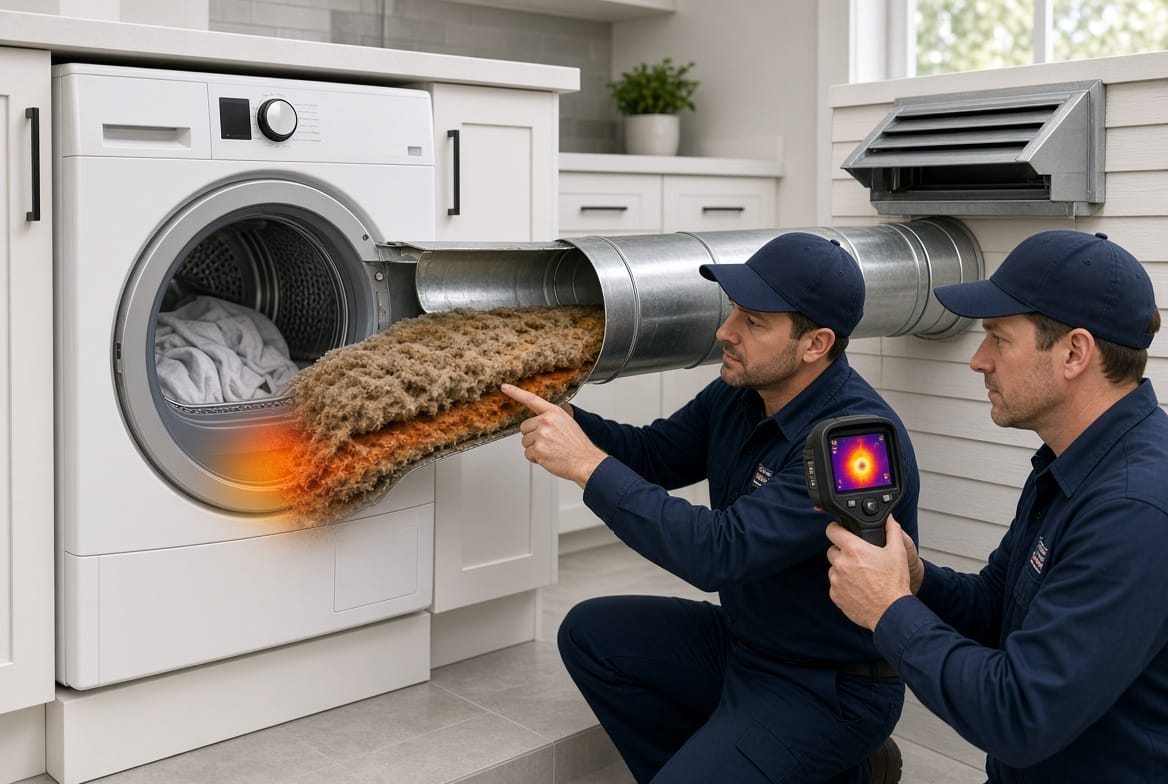
Restricted airflow has two immediate consequences. First, moisture and heat stay inside the dryer longer, increasing wear on heating elements, belts, and sensors. Second, the trapped lint itself becomes fuel. The U.S. Fire Administration and appliance manufacturers have long identified dryer vents as a leading cause of residential dryer fires. Preventing fires begins with understanding that lint is both an efficiency thief and a combustible material sitting next to a heat source.
A clean vent allows hot air to exit quickly. A clogged vent forces the dryer to cycle longer, run hotter, and in some cases overheat to the point of scorching nearby materials. That is why annual maintenance is not optional—it is a basic home-safety practice.
Signs of a Clogged Dryer Vent
Early detection saves time, money, and risk. Watch for these common indicators:
- Clothes take significantly longer drying times than they used to, even on the same settings.
- The dryer exterior or the laundry-room wall feels unusually warm or hot during a cycle.
- A persistent burning smell or faint scorching odor appears, especially near the end of a cycle.
- The lint screen fills unusually fast or looks unusually packed after only one or two loads.
- The exterior vent flap stays closed or barely moves while the dryer is running, showing weak exhaust.
- The appliance shuts off mid-cycle or displays overheating or error codes.
- You notice excess humidity or condensation in the laundry area.
Any one of these signs warrants inspection. Multiple signs together indicate a restriction that should be addressed promptly. Do not ignore a burning smell; it is one of the clearest warnings that lint is overheating.
How to Clean a Dryer Vent Safely
Homeowners can perform basic maintenance if they follow careful steps and respect the limits of DIY work. Always unplug the dryer or switch off its dedicated breaker before any work begins. Never run the dryer while the vent is disconnected.
Interior Lint Screen and Immediate Area
Remove and wash the lint screen with warm water and a soft brush. Allow it to dry completely before reinstalling. Vacuum the cavity behind the screen and the area around the drum opening.
Disconnecting and Inspecting the Duct
Pull the dryer away from the wall with care. Disconnect the vent hose or rigid pipe from the dryer and from the wall. Inspect for crushed sections, tears, or heavy lint. Replace damaged flexible foil duct with smooth-walled rigid or semi-rigid metal duct whenever possible; it resists crushing and reduces lint adhesion.
Vacuum and Brush-Kit Method
Use a vacuum with a hose attachment to remove loose lint from both ends of the duct. For deeper cleaning, a dryer-vent brush kit—a long, flexible rod with a specialized brush head—reaches farther into the line. Work the brush from the dryer end toward the exterior and then reverse direction. Follow with another vacuum pass. Repeat until little additional lint appears.
If the run is short and accessible, this method can restore good airflow. After reconnection, run a short cycle and check that the exterior flap opens freely and that exhaust feels strong and warm.
Limitations of DIY Cleaning
Long runs, multi-story homes, roof or high-wall terminations, and heavily compacted lint often exceed what a homeowner can reach safely. Hidden kinks behind finished walls or insulation also remain unseen. Over-aggressive brushing can damage duct joints. When in doubt, stop and schedule professional service.
When to Call a Professional
Professional appliance repair and vent-cleaning technicians bring specialized equipment: rotary brushes powered by drills, high-powered vacuums, inspection cameras, and knowledge of local building practices. They can:
- Clean the entire length of the duct, including vertical rises and exterior caps.
- Identify and correct crushed, disconnected, or undersized ductwork.
- Test airflow and temperature after service.
- Advise on proper duct material and routing for future reliability.
Call a professional if you notice any combination of longer drying, overheating, or a burning smell, if the vent run is long or inaccessible, or if it has been more than a year since the last thorough cleaning. Regular professional service is especially valuable for households that run the dryer daily.
Efficiency Gains and Long-Term Protection
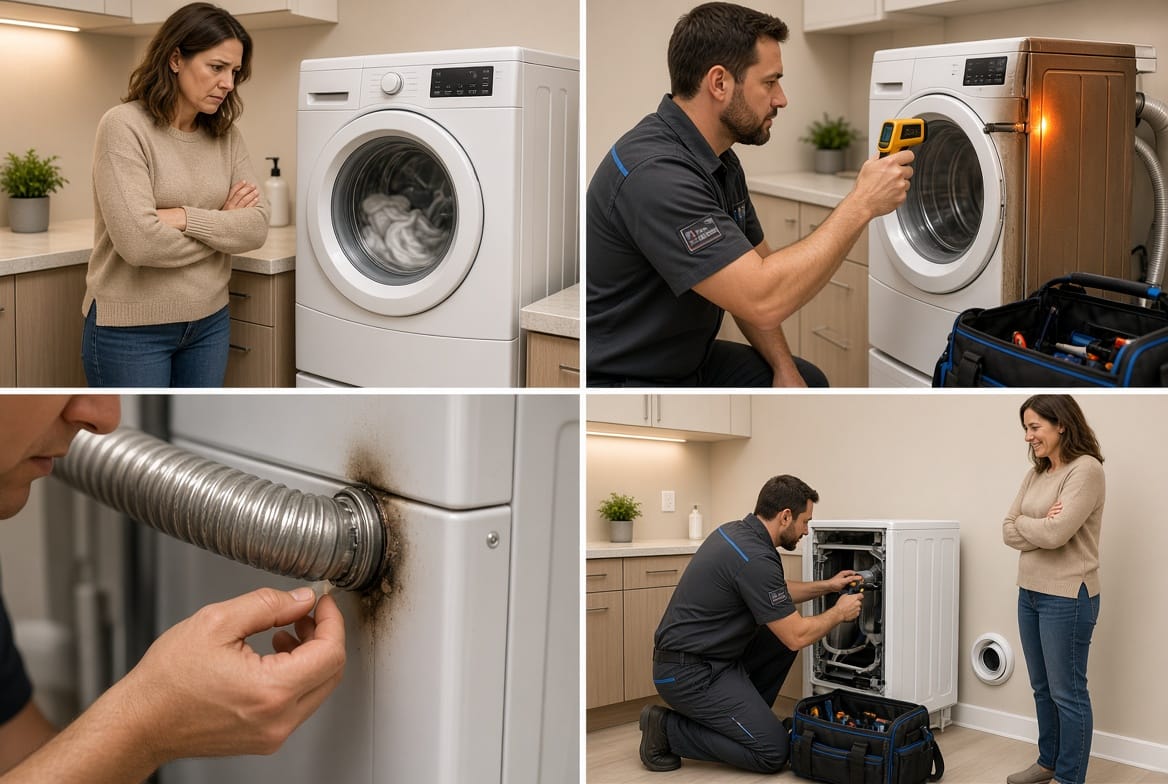
A clean vent does more than reduce fire risk. It shortens cycle times, which lowers energy use and reduces wear on the motor, belt, and heating system. Clothes come out drier and less wrinkled. The laundry room stays cooler and less humid. These benefits compound: an efficient dryer lasts longer and costs less to operate.
Most manufacturers and fire-safety organizations recommend cleaning the dryer vent at least annually. Homes with large families, pets that shed, or frequent towel and bedding loads may benefit from twice-yearly service. Pair vent cleaning with routine lint-screen care after every load for the best results.
Additional Safety Practices
- Keep the area around the dryer free of boxes, clothing, and flammable items.
- Use only metal ducting approved for dryer exhaust; avoid plastic or cheap foil that collapses easily.
- Ensure the exterior termination has a working damper and is clear of nests, leaves, or snow.
- Have the appliance itself inspected if it shows electrical or mechanical issues beyond the vent.
- Never leave a running dryer unattended for long periods, especially overnight.
These habits complement vent cleaning and further lower risk.
Final Advice
Clean your dryer vent annually. Consistent maintenance is the simplest way to prevent fires, restore efficiency, and extend the life of your appliance. If you see warning signs or prefer a complete, camera-verified cleaning, professional technicians are ready to help.
A scheduled service visit restores safe airflow, documents the condition of the system, and gives you peace of mind that the most common dryer fire risk has been addressed.
Regular attention to this often-forgotten component keeps your home safer and your laundry routine efficient. A few hours of proper care each year protects far more than the appliance—it protects the people who live with it.
Book Annual Dryer Vent Cleaning Today