The Oven Igniter: Why Your Gas Oven Won't Heat
A gas oven that refuses to heat is one of the most frustrating kitchen problems a household can face. Dinner plans stall, baking projects sit unfinished, and the appliance that should be reliable suddenly feels unreliable. In the majority of these cases the culprit is not the entire oven. It is a single, relatively small component: the oven igniter.
Stop Waiting on a Cold Oven – Call Now for Igniter Servic
This article explains exactly what the igniter does, why it fails, the clear signs that it has reached the end of its service life, and why replacement is often a straightforward swap for a trained technician. The goal is to give you authoritative, practical information so you can decide the safest next step.
What the Oven Igniter Actually Does
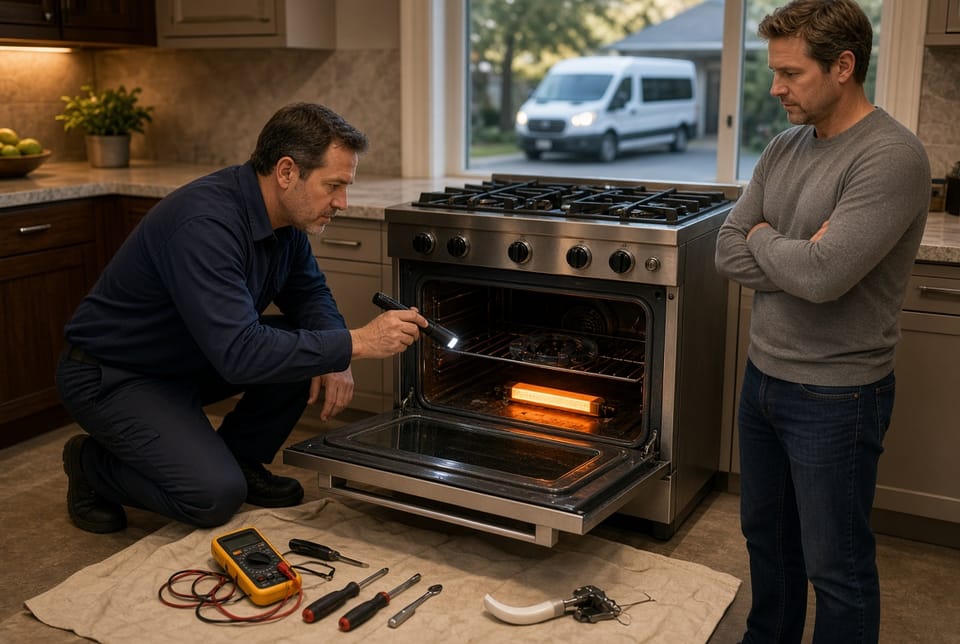
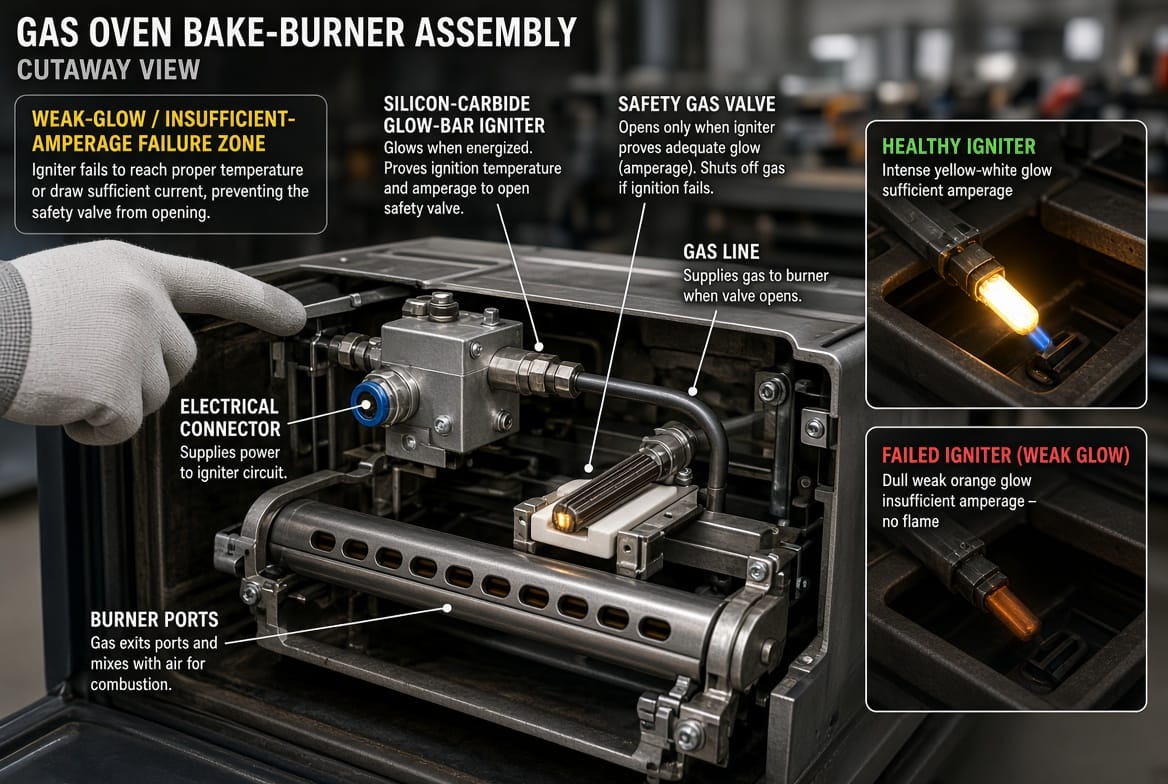
The gas oven igniter is a safety-critical heating element, usually a silicon-carbide or silicon-nitride “glow bar.” When you set the oven temperature, electricity flows through the igniter. The bar heats until it glows bright orange or yellow-white. That intense heat performs two jobs at once:
- It ignites the gas that will flow to the burner.
- It signals the safety gas valve that conditions are correct to release gas.
A properly functioning igniter must reach a specific temperature and draw a specific amperage before the valve opens. If the igniter only glows weakly, the valve stays closed. Gas never reaches the burner, so the oven never produces heat. This dual role—ignition plus valve control—is why a weak or failing igniter is the number-one reason a gas oven won’t heat.
How a Gas Oven Igniter Works Step by Step
Understanding the sequence removes mystery and helps you recognize failure.
- You turn the oven on and select a temperature.
- Voltage reaches the igniter circuit.
- The igniter begins to heat and glow.
- Once the igniter draws enough current (typically in a narrow amp range), the safety valve opens.
- Gas flows across the hot igniter and ignites into a steady blue flame.
- The oven cavity begins to rise toward the set temperature.
- The igniter cycles on and off as needed to maintain heat.
When any part of that chain breaks, the oven stays cold. The most frequent break occurs at step 4: the igniter glows but never draws sufficient current to open the valve.
Common Signs Your Oven Igniter Is Failing
Watch for these reliable indicators. They appear gradually and become more obvious over weeks or months.
- The igniter glows but produces no flame.
- The glow is weak, dull orange, or uneven instead of bright and intense.
- Preheat times stretch from the usual 10–15 minutes to 30 minutes or longer.
- The oven never reaches the set temperature or takes an unusually long time to recover after the door is opened.
- You smell a faint gas odor that never ignites (the valve may still be closed, but any odor warrants immediate caution).
- The broiler works while the bake function does not, or vice versa, pointing to a specific igniter.
A weak igniter will not open the gas valve. That single sentence explains most “oven won’t heat” service calls.
Why Igniters Wear Out
Igniters live in a harsh environment. They endure repeated heating and cooling cycles, exposure to grease vapor, and occasional food spills. Over time the ceramic or carbide material degrades. Resistance changes, current draw drops, and the igniter can no longer generate the heat required to satisfy the safety valve.
Age is the primary factor. Most quality igniters last many years, yet they are consumable parts. Heavy use, frequent self-cleaning cycles, and power fluctuations can shorten that lifespan. None of these causes is a reflection on how carefully you maintain the oven; they are simply the physics of a component that must glow white-hot thousands of times.
Safe Diagnosis Before Any Repair Attempt
Never ignore a gas odor or attempt internal work if you are uncomfortable around gas appliances. A few external observations, however, can confirm the igniter is the likely suspect:
- Open the oven door and watch the igniter through the bottom or side access (model-dependent).
- Note whether it glows brightly within 30–60 seconds.
- Observe whether a flame appears after the glow is established.
- Compare preheat time against the manufacturer’s stated range.
If the igniter glows dimly and no flame follows, the diagnosis is highly probable. At that point the safest course is professional replacement rather than continued use.
Replacing the Oven Igniter: Usually a Simple Swap
For a qualified technician the repair is often a direct exchange. The old igniter is unplugged or unscrewed from its mounting bracket, the new OEM or exact-spec part is installed, connections are secured, and the oven is tested through a full preheat cycle. Many models allow access from the oven cavity or a bottom panel without major disassembly.
That “simple swap” description should not be read as an invitation for untrained work. Gas valves, electrical connections, and proper amperage matching require experience. An incorrectly installed igniter can leave the valve closed, create an incomplete burn, or, in the worst case, allow unburned gas to accumulate. Professional service eliminates those risks and restores the oven to factory-safe operation.
After replacement, most ovens return to normal preheat times immediately. The new igniter glows brightly, the valve opens on schedule, and even heat returns.
When You Should Call for Professional Service
Call as soon as you notice any of the signs listed earlier. Continuing to run an oven with a failing igniter wastes energy, delays meals, and keeps a compromised safety device in the circuit. A technician can:
- Confirm the igniter is the only failed part.
- Source the correct replacement that matches your exact model.
- Test gas pressure and electrical supply while on site.
- Verify the oven reaches and holds temperature after the swap.
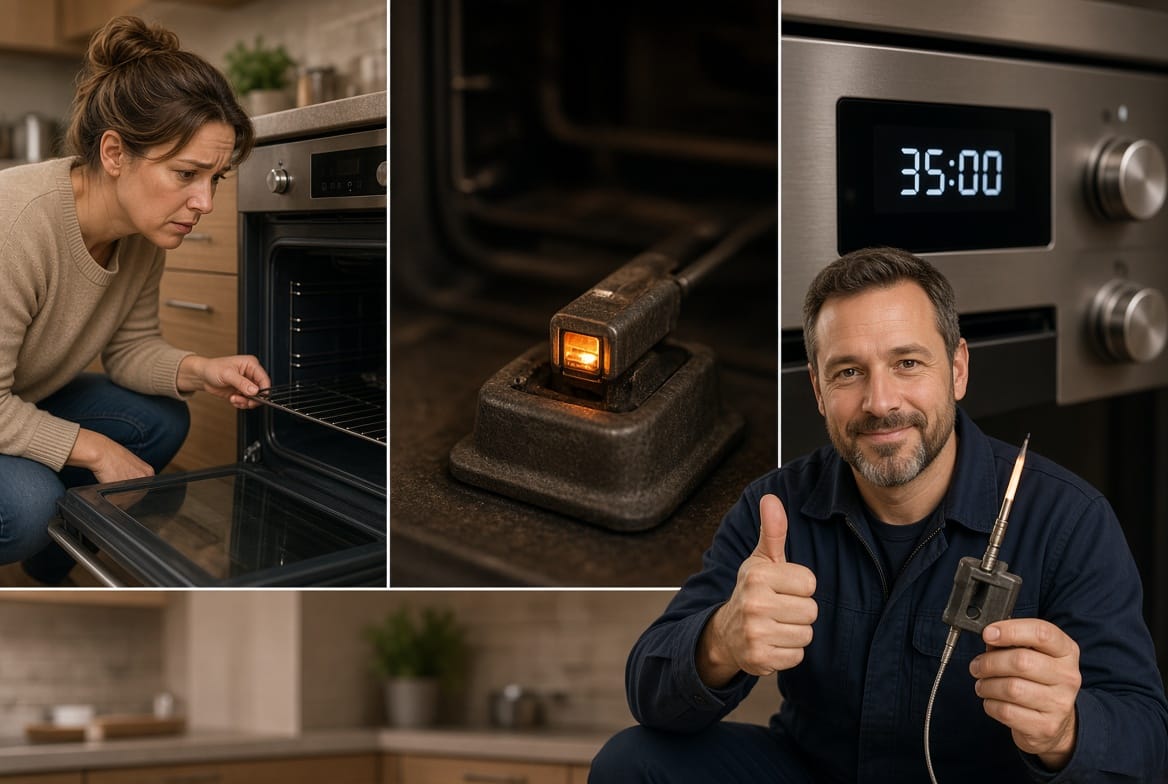
The phone number for prompt, licensed appliance repair is (855) 321-3582. Mention that the oven glows but will not heat so the technician arrives with the likely part already in the truck.
Everyday Habits That Help an Igniter Last Longer
While no igniter lasts forever, a few habits reduce unnecessary stress:
- Avoid slamming the oven door, which can jar the igniter mounting.
- Wipe spills promptly so grease does not bake onto the igniter or burner.
- Use the self-clean cycle only when needed; the extreme heat accelerates wear.
- Keep the oven level so the igniter sits in its designed position relative to the gas ports.
These steps are modest, yet they support the component that stands between you and a cold oven.
Final Advice
A weak igniter will not open the gas valve. That is the mechanical reality behind almost every “gas oven won’t heat” complaint. The glow you see is not enough; the igniter must also draw the precise current the safety system requires. Once that current drops, heat production stops.
Replacement is typically a clean, same-day swap when handled by a trained technician. You regain a fully functional oven, restore normal preheat times, and return the appliance to its designed safety margins.
If your gas oven glows without producing flame, shows a weak orange bar, or takes far too long to reach temperature. A short diagnostic visit followed by an igniter exchange is usually all that stands between a cold oven and reliable, even heat again.
Call Now to Replace a Failing Oven Igniter