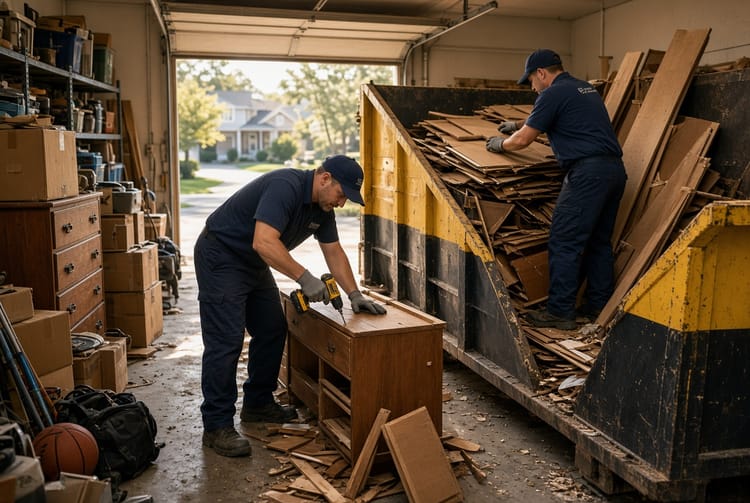
The Warehouse Inventory Cleanout: Disposing of Obsolete Stock
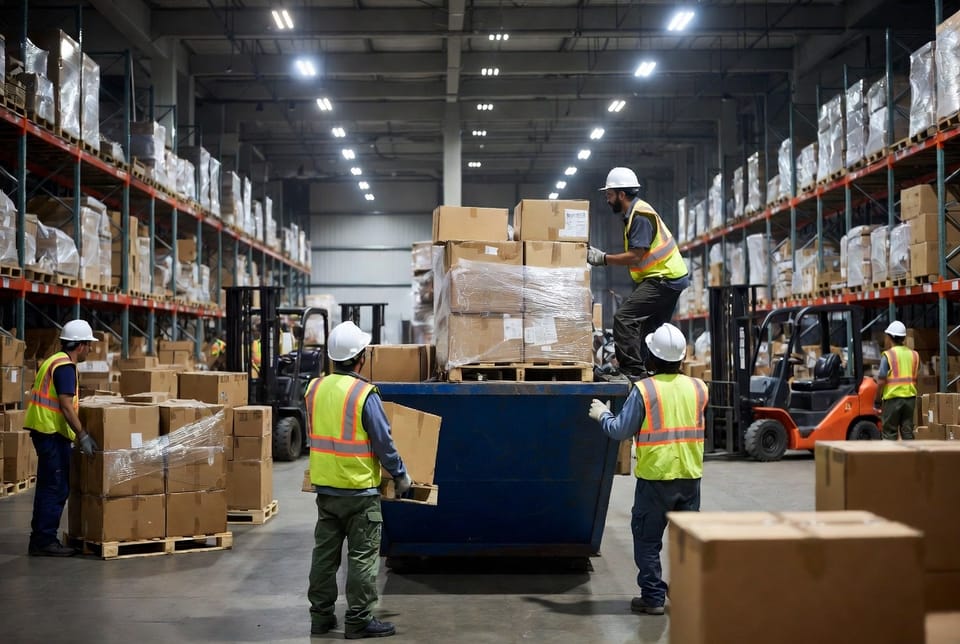
Warehouse space is valuable. When obsolete stock, old returns, and damaged goods begin to pile up, that space stops working for your business and starts costing you money. Every square foot occupied by unsellable inventory represents lost opportunity, higher storage expenses, and growing operational friction. A thorough warehouse inventory cleanout restores efficiency, improves cash flow, and creates a safer, more productive environment.
Get Your Inventory Cleanout Dumpster Fast – Call Now
Businesses across manufacturing, retail, distribution, and e-commerce eventually face the same challenge: what to do with inventory that no longer moves. The solution is not simply throwing everything away. A professional approach balances recycling, donation, and dumpster disposal so that usable materials are recovered, community benefit is created where possible, and only truly unsellable items head to proper disposal. This process protects both the bottom line and environmental responsibility.
Why Obsolete Inventory Becomes a Business Problem
Inventory becomes obsolete for many reasons. Product lines are discontinued. Styles change. Technology advances. Customer preferences shift. Seasonal goods lose relevance. Damaged items return from shipping or customer use. Over time these items accumulate, creating clutter that slows picking, packing, and receiving operations.
The risks are real. Excess inventory ties up working capital. It increases insurance premiums. It raises the chance of workplace accidents when aisles become blocked. It can even attract pests or create fire hazards if packaging deteriorates. Left unaddressed, the problem compounds. A proactive inventory cleanout prevents these issues and returns the warehouse to peak performance.
Commercial dumpster rental services play a central role in this process. When the volume of unsellable material exceeds what regular trash service can handle, a dedicated dumpster provides the capacity and convenience needed for a complete cleanout. Choosing the right size and scheduling timely pickup keeps operations running smoothly without interrupting daily workflows.
Assessing Your Inventory Before Disposal
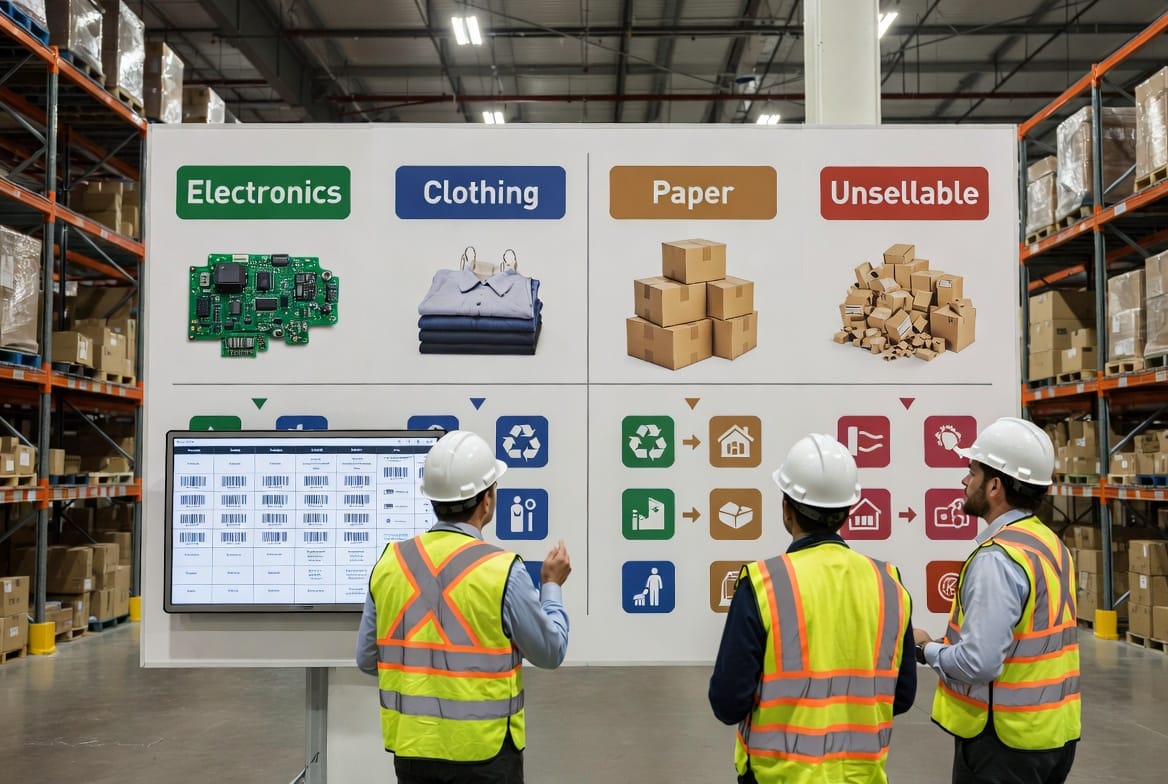
The first step in any successful cleanout is a clear assessment. Walk the warehouse with a structured checklist. Identify categories of stock and determine the best path for each.
- Electronics and technology: Old computers, monitors, printers, and components often contain recoverable metals and must follow specific recycling rules.
- Paper and packaging: Cardboard, manuals, and excess packaging materials are highly recyclable.
- Clothing and soft goods: Apparel, textiles, and fabric items that remain in usable condition can frequently be donated.
- Damaged or defective products: Items with broken packaging, missing parts, or quality issues usually require disposal.
- Returns and overstock: Goods that came back from customers or never sold may still have secondary-market value or donation potential.
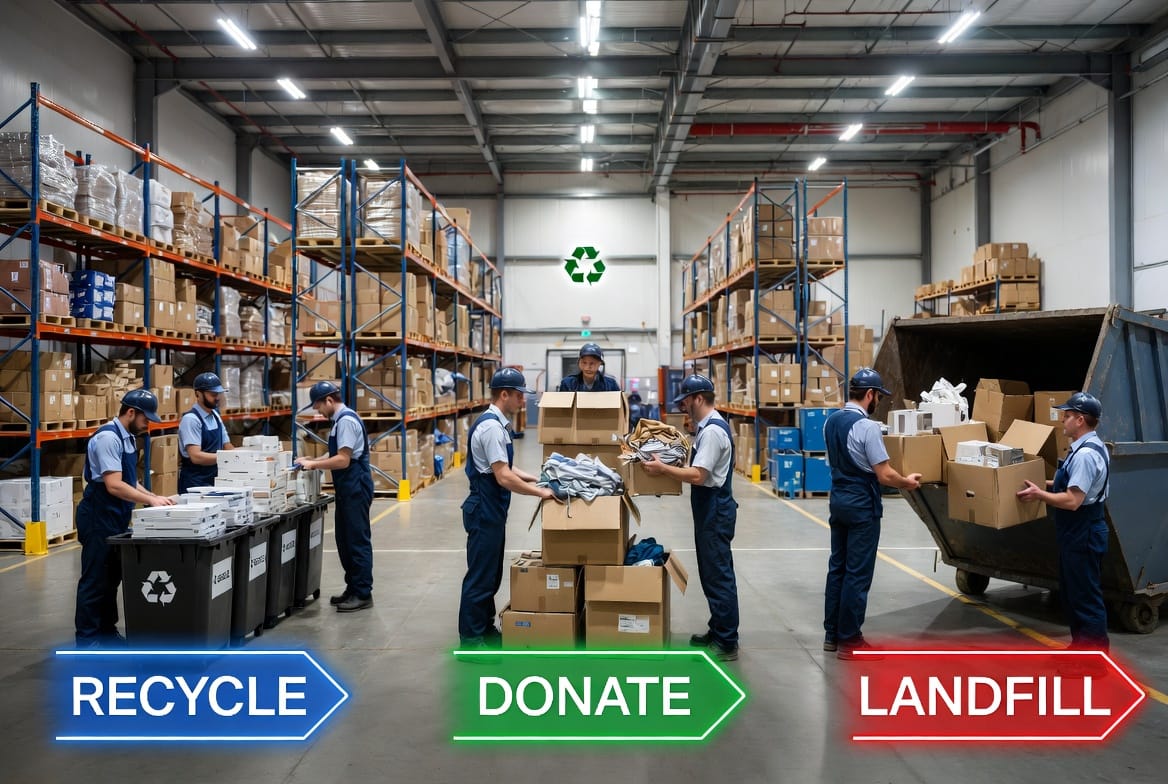
Create simple sorting zones on the warehouse floor. Label areas clearly: Recycle, Donate, Dispose. This visual system speeds the process and reduces errors. Involve warehouse staff early so everyone understands the plan and the safety requirements.
The Three Pathways for Obsolete Stock
Not every item belongs in a dumpster. A thoughtful warehouse inventory cleanout maximizes value recovery while minimizing landfill impact.
Recycling Opportunities
Many materials can be recycled rather than discarded. Electronics fall under e-waste programs that recover copper, aluminum, gold, and plastics. Paper, cardboard, and certain plastics have established commercial recycling streams. Some metal fixtures, shelving components, and equipment housings also qualify.
Partnering with certified recyclers ensures compliance with local regulations and often reduces disposal costs. Documenting the recycled volume can support sustainability reporting and strengthen your company’s environmental credentials. When volume is high, a dedicated dumpster for recyclables keeps materials clean and separated from general waste.
Donation of Usable Items
Usable inventory that no longer fits your product lineup can still serve a purpose. Clothing, household goods, office supplies, and non-perishable items are frequently welcomed by local charities, schools, and community organizations. Donation generates goodwill, may provide tax benefits, and keeps usable products out of the waste stream.
Coordinate pickup or delivery with the receiving organization in advance. Provide clear inventories of donated goods for both parties’ records. This step turns potential waste into community support and reinforces a responsible corporate image.
Dumpster Disposal for Unsellable Material
Despite best efforts, a portion of obsolete stock will have no practical recycling or donation path. Damaged goods, contaminated packaging, expired products, and certain mixed materials require proper disposal. This is where commercial dumpster rental becomes essential.
A properly sized dumpster allows teams to clear large volumes efficiently. Workers can load items continuously without multiple trips to transfer stations. The dumpster stays on site for the duration of the cleanout, then is hauled away on a scheduled date. This convenience keeps the project on timeline and minimizes disruption to regular warehouse activity.
Safety remains paramount. Train staff on proper lifting techniques, use of personal protective equipment, and awareness of any hazardous materials that may require special handling. Never overload the dumpster beyond its rated capacity. Keep the area around the unit clear for safe access by both workers and the collection truck.
Planning the Cleanout Project
Successful projects begin with clear planning. Estimate the volume of material to be removed. Measure the approximate cubic yards of obsolete stock. This figure determines the dumpster size needed. Common commercial sizes range from 10-yard to 40-yard containers. Larger warehouses or full-building cleanouts often require multiple units or staged placements.
Select a placement location that offers easy truck access while staying clear of fire lanes, loading docks in active use, and high-traffic pedestrian paths. Confirm any site-specific requirements such as permits or surface protection. Schedule the delivery and pickup window around your operational calendar so the dumpster is available exactly when the team is ready to work.
Assign roles. Designate a project lead, sorting supervisors, and loading teams. Provide clear written guidelines so every participant understands which items go where. Build in short safety briefings at the start of each shift. Progress tracking—daily volume cleared versus remaining—keeps the project accountable and on schedule.
Cost Considerations and Value Recovery
The true cost of obsolete inventory extends beyond storage fees. It includes the labor required to manage cluttered aisles, the risk of damaged goods during routine operations, and the opportunity cost of space that could house fast-moving products. A structured cleanout converts these hidden costs into measurable gains.
Dumpster rental fees are straightforward and predictable when sized correctly. Recycling and donation pathways often reduce the total volume sent for disposal, lowering overall expense. In some cases, scrap value from metals or bulk cardboard provides a modest offset. The greater return, however, comes from restored operational efficiency and the ability to reallocate space to higher-value uses.
Businesses that treat the cleanout as a strategic project rather than a one-time chore typically achieve better results and lower long-term costs.
Safety and Compliance During the Cleanout
Warehouse cleanouts involve physical work and heavy materials. Prioritize safety at every stage. Require appropriate footwear, gloves, and high-visibility clothing. Use mechanical aids—pallet jacks, forklifts, conveyor rollers—whenever possible to reduce strain. Keep walkways clear and maintain good lighting in the work zones.
Be aware of any regulated materials. Certain electronics, batteries, chemicals, or aerosol products may require special disposal methods. When in doubt, separate those items and consult local guidelines or a professional service provider. Proper documentation protects the business from future liability and demonstrates due diligence.
A clean, organized process also protects employee morale. Teams work more effectively and safely when the plan is clear and the tools are adequate.
After the Cleanout: Maintaining Inventory Discipline
Once the obsolete stock is gone, the warehouse feels different. Aisles open up. Picking routes shorten. Visibility improves. The next challenge is preventing the same accumulation from returning.
Implement regular inventory reviews. Set thresholds that trigger smaller, more frequent cleanouts before volumes become overwhelming. Strengthen receiving protocols so damaged goods are identified and quarantined immediately. Improve demand forecasting to reduce overstock in the first place. These habits keep the warehouse lean and productive year after year.
Technology can help. Inventory management systems with aging reports and slow-moving alerts give managers early warning. Cycle counts focused on older stock reveal problems before they grow.
Choosing the Right Commercial Partner
Not every hauling service understands the specific needs of warehouse cleanouts. Look for a provider experienced with commercial volumes, flexible scheduling, and reliable equipment. The ability to deliver the right dumpster size on time, place it safely, and remove it promptly after the project matters. Clear communication about weight limits, prohibited materials, and final invoicing prevents surprises.
A trusted partner becomes an extension of your operations team. They can advise on volume estimates, suggest staging strategies for multi-day projects, and ensure the process remains compliant with local regulations. When the cleanout is complete, the warehouse is ready for its next chapter of productive use.
The Long-Term Benefits of a Thorough Cleanout
Beyond the immediate recovery of floor space, a well-executed inventory cleanout delivers lasting advantages. Employees move more freely and safely. Order fulfillment speeds improve. Inventory accuracy rises because the remaining stock is current and visible. The business presents a more professional image to visitors, auditors, and new hires.
Sustainability goals receive a tangible boost when recycling and donation volumes are tracked and reported. Leadership gains clearer insight into purchasing patterns that previously led to excess stock. These insights feed better decision-making across the supply chain.
In competitive markets, operational excellence is a differentiator. A clean, efficient warehouse supports that excellence every day.
Getting Started with Your Next Cleanout
Begin with a walkthrough. Quantify the obsolete material. Decide which items can be recycled or donated. Determine the dumpster capacity required for the remainder. Engage a reliable commercial service early so equipment and timing align with your internal schedule.
Communicate the plan clearly to the entire team. Provide the tools, training, and support needed for a safe and complete job. Track progress daily. Celebrate the restored space when the work is finished.
Obsolete inventory does not have to remain a permanent burden. With a structured approach that combines recycling, donation, and professional dumpster disposal, businesses reclaim control of their warehouses and free resources for growth.
Call Now for Reliable Warehouse Cleanout Dumpsters