The Spring Cleaning Dumpster: Decluttering Your Home

Spring arrives with longer days, warmer air, and an unmistakable urge to refresh every corner of the house. Closets overflow with clothes that no longer fit, garages hide furniture that has outlived its purpose, and basements collect appliances that stopped working years ago. Traditional trash bags and repeated trips to the landfill quickly become exhausting. A spring cleaning dumpster changes the entire process. It gives homeowners a single, convenient container that handles bulky items, mixed debris, and seasonal waste in one efficient rental period. This guide explains exactly how a dumpster supports thorough decluttering, how to sort donations from recyclables and true trash, and how to complete the project safely and affordably.
Get Your Spring Cleaning Dumpster Delivered – Call Now
Why a Dumpster Makes Spring Cleaning Realistic
Most households underestimate the volume of items that accumulate over winter. A typical family can easily generate two to three cubic yards of unwanted furniture, textiles, and household goods once they begin opening storage spaces. Multiple car loads to the dump waste time, fuel, and energy. A rented dumpster sits on the driveway or in a designated spot for several days, allowing everyone to work at a comfortable pace.
Key advantages include:
- Capacity for oversized pieces such as sofas, mattresses, and broken appliances
- Reduced physical strain compared with lifting items into a personal vehicle
- A clear deadline that motivates the whole household to finish the project
- Professional hauling that keeps the neighborhood tidy
Homeowners who schedule a dumpster early in the season often report finishing their entire spring clean-out in a single weekend rather than stretching the work across several weeks.
Typical Items That Fill a Spring Cleaning Dumpster
Spring projects produce a predictable mix of materials. Understanding what commonly ends up in the container helps you choose the correct size and plan the sorting process.
Old furniture ranks among the heaviest contributors. Worn sofas, cracked dining chairs, sagging mattresses, and particle-board bookshelves occupy significant space. Many of these pieces cannot be donated because of stains, broken frames, or outdated styles.
Clothes and textiles appear in surprising volume. Seasonal wardrobe changes, children’s outgrown garments, and linens that have thinned over time quickly fill bags. Some items remain suitable for donation; others are too worn for reuse.
Appliances that have reached the end of their service life—microwaves with failed doors, vacuum cleaners that no longer suction, and small kitchen gadgets—add both weight and bulk. Larger units such as washers or refrigerators may require special handling or extra fees, so confirm restrictions before loading.
Yard waste generated during outdoor spring tasks—pruned branches, last year’s dried leaves, and broken planters—often joins the indoor debris. Combining indoor and outdoor clean-up in one dumpster rental maximizes efficiency.
These four categories together create the core of most spring-cleaning loads. Planning for them in advance prevents last-minute size upgrades or extra trips.
A Practical Three-Pile Sorting System
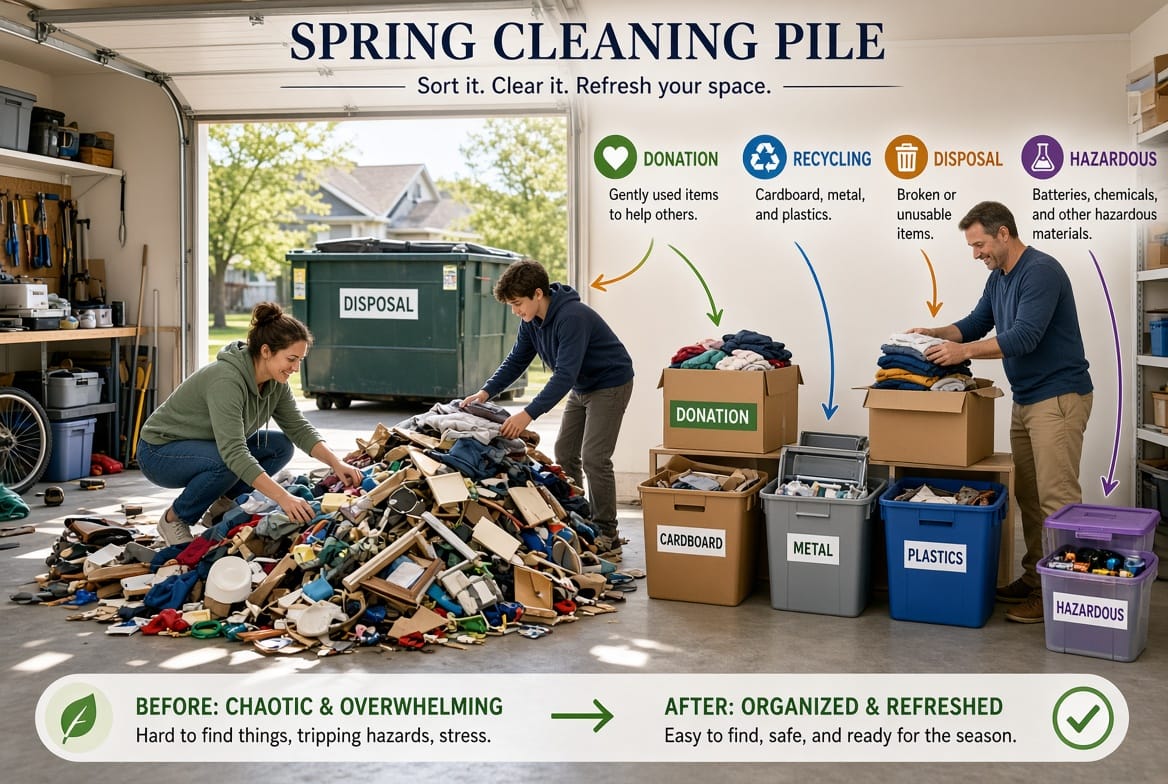
Successful spring cleaning depends on decisions made before anything enters the dumpster. Create three distinct piles or zones inside the house or garage: Donate, Recycle, and Dispose. This simple system reduces landfill waste, supports local charities, and keeps prohibited materials out of the rental container.
Donate First
Walk through each room with donation in mind. Gently used clothing, working small appliances, and sturdy furniture that still has life can find new homes. Many organizations accept drop-offs or even schedule pick-ups during spring. Keep a running list of items that meet donation standards so you can call charities before the dumpster arrives. Removing these pieces first shrinks the volume that must be hauled away and gives the project a positive, community-minded start.
Recycle What the Municipality Accepts
Cardboard boxes from winter storage, metal frames from old furniture, and certain plastics belong in recycling streams rather than the dumpster. Check local guidelines; some programs accept mixed paper and clean metal on the same day as regular trash collection. Setting recyclables aside early prevents them from mixing with general debris and potentially contaminating an entire load. Clean, flattened cardboard also takes far less space than bulky, intact boxes.
Dispose of the Rest Responsibly
Everything that cannot be donated or recycled—stained mattresses, broken particle-board furniture, non-working appliances without hazardous components, and mixed yard waste—goes into the dumpster. Avoid placing prohibited items such as wet paint, motor oil, batteries, or electronics that contain heavy metals. These materials require separate hazardous-waste events or specialized recycling centers. Loading them into a standard dumpster can result in extra fees or rejection of the entire container.
A well-executed sorting session typically reduces dumpster volume by 20–30 percent, which often allows a smaller, less expensive rental size.
Choosing the Right Dumpster Size and Rental Period
Dumpsters are measured in cubic yards. Common spring-cleaning sizes range from 10-yard to 20-yard containers. A 10-yard unit suits a single-room clean-out or a modest household. A 15- or 20-yard dumpster handles whole-house projects that include furniture, appliances, and yard debris.
Consider these factors when placing an order:
- Estimated volume of furniture and appliances
- Length of the rental window (most companies offer 7-day periods)
- Driveway space and local permit requirements
- Weight limits—overloading can trigger additional charges
Place the dumpster on a flat, accessible surface away from low-hanging wires or underground utilities. Many rental providers include drop-off and pick-up in the quoted price, so confirm the exact service window when you call.
Safety and Efficiency Tips During Loading
Work smarter, not harder. Start with the heaviest items so they sit at the bottom and create a stable base. Break down furniture when possible; removing legs from tables or taking apart bed frames saves valuable cubic yards. Wear gloves and closed-toe shoes. Keep children and pets at a safe distance while loading.
Distribute weight evenly. Piling everything on one side can make the container difficult to haul and may violate weight restrictions. Cover the load with a tarp if rain is forecast; wet debris adds unexpected pounds.
Schedule the pick-up for a weekday if possible. Weekend demand is higher, and some companies charge a premium for Saturday or Sunday service. A mid-week collection also gives you extra days to finish last-minute rooms without rushing.
Environmental Responsibility and Local Regulations
Responsible disposal protects both the environment and your wallet. Many landfills now charge extra for mixed loads that contain recyclable materials. By sorting first, you keep the dumpster contents within acceptable limits and often qualify for standard rather than premium rates.
Some municipalities require a permit for dumpsters placed on public streets. If your driveway cannot accommodate the container, ask the rental company about permit assistance. They usually know the local rules and can handle the paperwork for a modest fee.
Yard waste may be subject to seasonal restrictions. In certain areas, grass clippings and leaves must go to a composting facility rather than a landfill. Confirm these rules before mixing outdoor debris with indoor items.
Completing the Project and Restoring Order
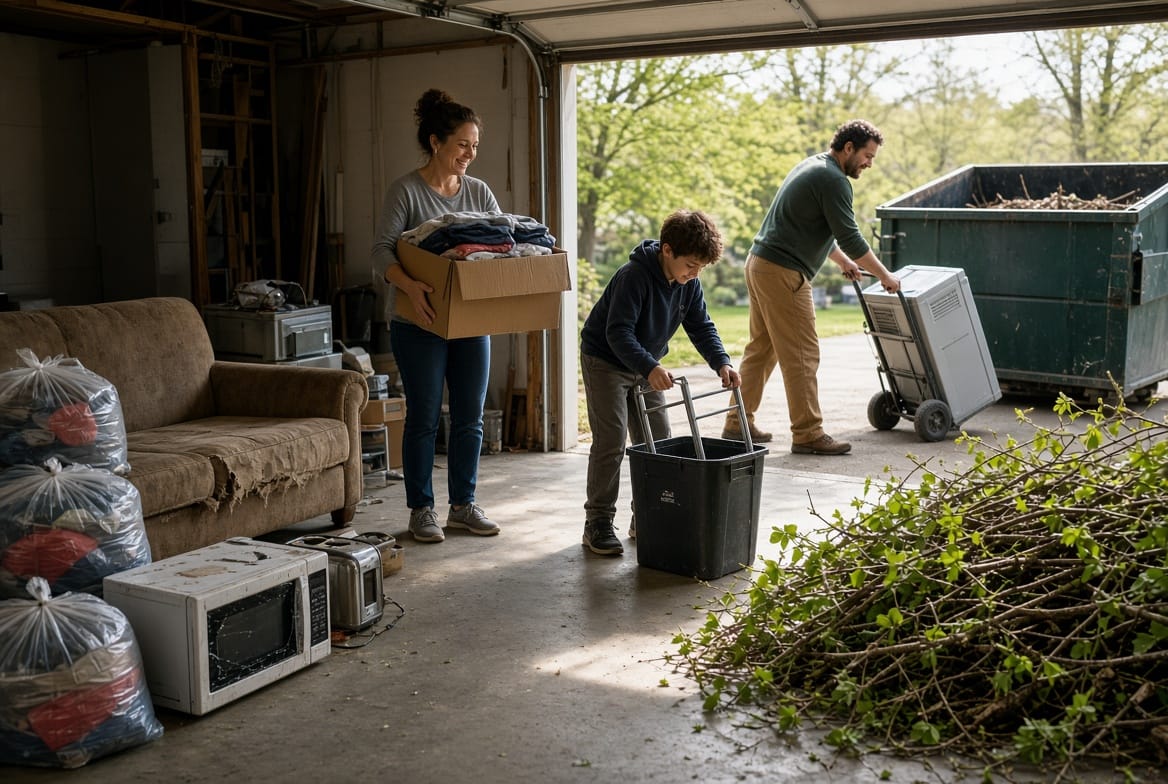
Once the dumpster is full and the house feels lighter, take a final walk-through. Check closets, attics, and storage rooms for stray items that belong in one of the three piles. Sweep the area around the container so the rental company can remove it without leaving debris behind.
The empty space that remains after a thorough spring clean-out often surprises homeowners. Rooms look larger, storage feels organized, and the entire home carries a sense of renewal that lasts well into summer. Many families discover they no longer need extra storage units or overflowing garages because they have finally let go of items that served no purpose.
Final Thoughts on Seasonal Decluttering
Spring cleaning no longer needs to feel overwhelming. A well-timed dumpster rental, combined with a simple donate-recycle-dispose system, turns a mountain of accumulated belongings into a manageable weekend project. Families who adopt this approach report less stress, more usable space, and a genuine sense of accomplishment when the container is hauled away.
The process also instills better habits. Once the big purge is finished, many households keep a small “outgoing” box in a closet so future donations and recyclables never pile up again. The dumpster itself becomes a once-a-year tool rather than an emergency solution. Simplify your spring cleaning.
Spring Clean Without the Hassle – Call for Dumpster Rental