The Construction Debris Dumpster: What Can and Cannot Go In
A construction project generates a surprising volume of leftover material. Knowing exactly what belongs in a construction debris dumpster and what must stay out protects your timeline, your budget, and the environment. This guide explains accepted items such as wood, drywall, roofing, and concrete, lists prohibited materials including hazardous waste, liquids, tires, and appliances with Freon, and offers practical sorting tips so your dumpster rental stays compliant from the first load to the last.
Get Clear Dumpster Rules Today – Call Now
Proper disposal is not optional. Landfills and recycling facilities operate under strict rules. A single prohibited item can trigger extra fees, a rejected load, or even a fine. The good news is that most construction waste is perfectly acceptable when it is clean, dry, and properly sorted. Follow the guidelines below and you will keep the project moving without surprises.
Why Correct Dumpster Use Matters
Construction debris is different from household trash. It is bulky, often heavy, and sometimes mixed with materials that require special handling. When you rent a dedicated construction dumpster, the hauler plans the route and the disposal destination based on the expected contents. Mixing in banned items changes that plan and can create safety or environmental problems.
Risks of improper loading include:
- Additional contamination fees
- Delayed pickup
- Possible regulatory citations
- Extra labor to remove banned items
Benefits of following the rules include:
- Faster project close-out
- Lower overall disposal cost
- Cleaner, safer job site
- Peace of mind that the waste is handled responsibly
The rules are straightforward once you understand the two categories: accepted construction materials and prohibited items. Let’s examine each group in detail.
Accepted Construction Debris
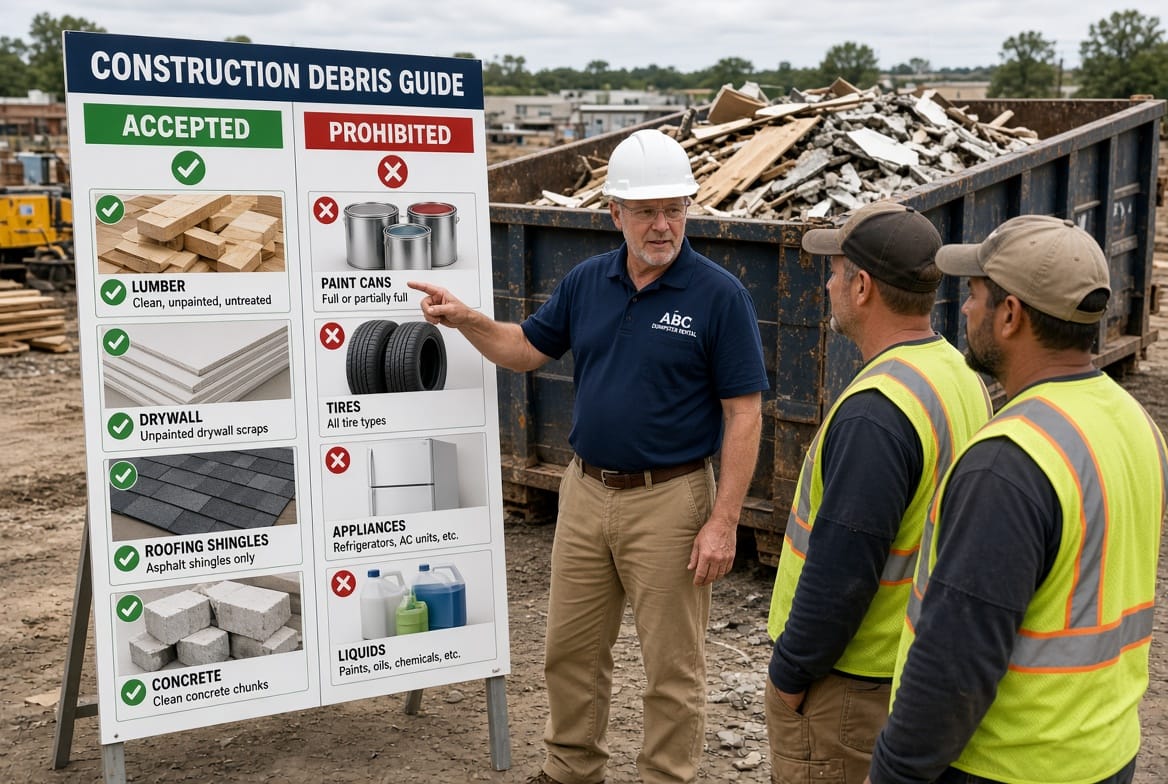
Most clean, inert building materials can go into a construction debris dumpster. The key word is clean. Materials should be free of paint overspray that contains lead, free of asbestos-containing products, and free of liquids.
Wood Waste
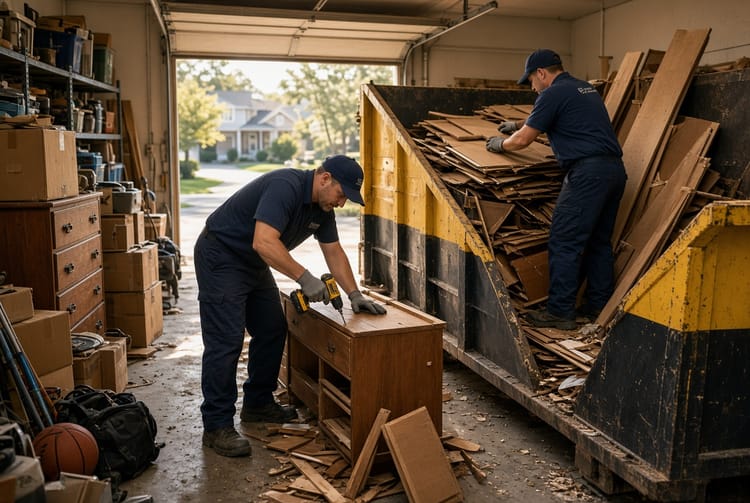
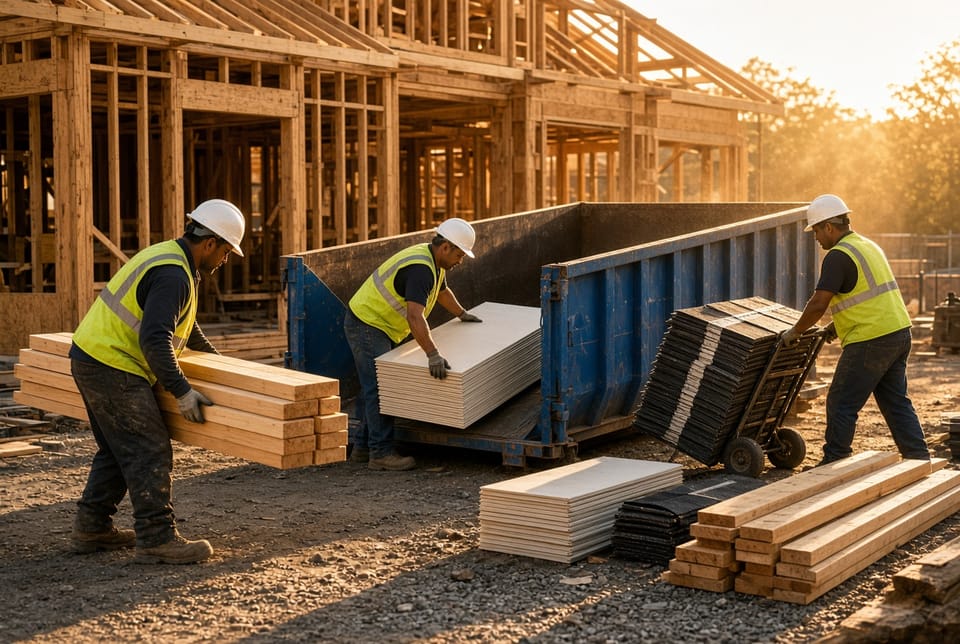
Framing lumber, plywood, OSB, particleboard, pallets, and untreated dimensional lumber are routinely accepted. Remove large metal connectors when possible, but small nails and screws are usually fine. Painted wood is acceptable in many locations provided it is not lead-based paint from pre-1978 structures. If you are unsure about the age of the paint, set that wood aside and ask for guidance.
Drywall and Gypsum Board
Standard gypsum drywall, including green board and some moisture-resistant varieties, is accepted when it is reasonably clean. Scrape off heavy joint compound clumps if they contain additives you cannot identify. Paper facing can stay attached. Avoid loading wet, moldy drywall in large quantities because excess moisture can create weight and odor issues.
Roofing Materials
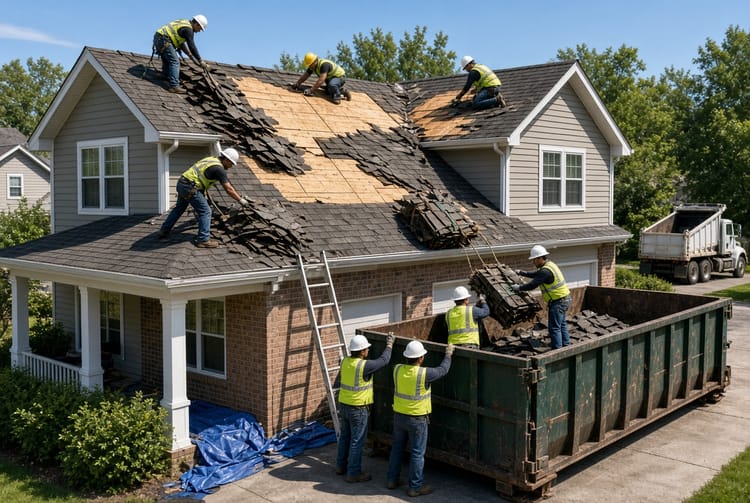
Asphalt shingles, felt underlayment, and wood shakes are common accepted items. Tear-off debris from a re-roofing job can fill a dumpster quickly. Keep the load as dry as possible. Metal flashing and drip edge can usually ride along with the shingles. Clay or concrete tiles are also accepted in most construction dumpsters, though their weight adds up fast.
Concrete, Brick, and Masonry
Broken concrete, brick, block, and stone are accepted in many construction dumpsters, often with a weight limit or a requirement to keep them separate from lighter debris. Large chunks should be broken down so they sit lower in the container and do not create voids. Mortar and small amounts of dirt mixed with masonry are typically allowed.
Other Commonly Accepted Items
- Metal studs, rebar, and miscellaneous scrap metal
- Vinyl siding and trim (clean)
- Insulation that is not wet or contaminated
- Cardboard and packaging from building products
- Plastic pipe and fittings that are empty and dry
- Ceramic tile and thin-set residue
These materials form the bulk of a typical construction load. When they are kept separate from banned items, the dumpster can be processed efficiently at the receiving facility.
Prohibited Items That Must Stay Out
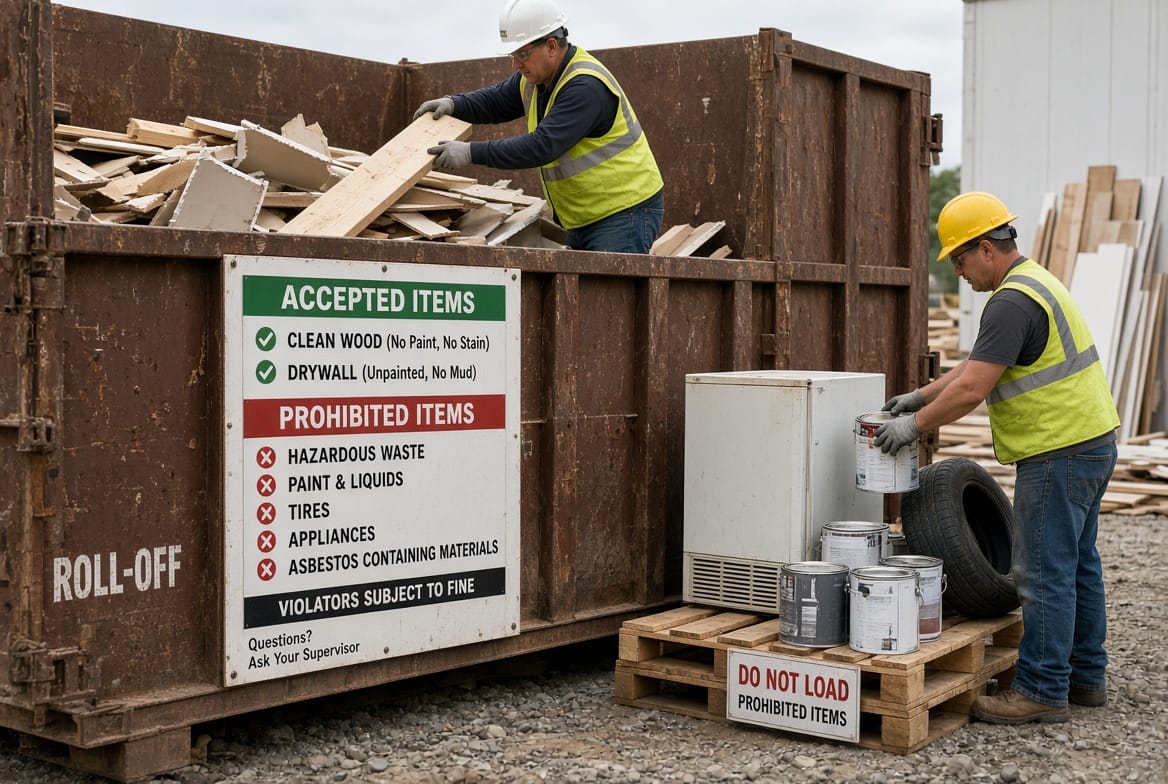
Certain materials are banned because they pose fire, chemical, or environmental hazards, or because they require specialized recycling streams. Placing them in a standard construction dumpster is one of the most common—and costly—mistakes.
Hazardous Waste
Hazardous waste includes oil-based paints, solvents, stains, thinners, adhesives with flammable components, pesticides, and any container that still holds residue of these products. Even empty cans that once held hazardous liquids can be rejected if they are not completely dry and open. Asbestos-containing materials such as old pipe wrap, certain floor tiles, or popcorn ceiling texture must never go into a regular construction dumpster. These items require licensed abatement and special disposal.
Liquids of Any Kind
Liquids are almost universally prohibited. This includes leftover paint (even water-based if still liquid), dirty water, oil, grease, and wet concrete slurry. Liquids can leak during transport, contaminate other waste, and create slip hazards. Absorb or solidify small amounts of water-based material if local rules allow, but when in doubt, keep all liquids out.
Tires
Whole tires or large pieces of rubber are banned in most construction dumpsters. Tires do not compact well, they can trap water, and they have their own recycling programs. Cut-up tire pieces may still be rejected. Set tires aside for a separate tire-recycling drop-off.
Appliances Containing Freon
Refrigerators, freezers, air-conditioning units, and dehumidifiers that still contain Freon (or other refrigerants) cannot go into a construction dumpster. Federal rules require that certified technicians recover the refrigerant first. Even after recovery, some facilities still treat the appliance as a special item. Plan to have these units handled by an appliance recycler or a metal scrap yard that is licensed for refrigerant recovery.
Additional Banned or Restricted Items
- Automotive batteries and rechargeable tool batteries
- Electronics and computer equipment
- Propane tanks and compressed-gas cylinders
- Medical waste or sharps
- Food waste or household garbage mixed in large amounts
- Railroad ties or other creosote-treated wood in some jurisdictions
- Dirt or soil in quantities that exceed the dumpster’s weight rating when mixed with debris
When an item falls into a gray area, the safest action is to keep it out of the dumpster and ask the rental company for direction.
Practical Tips for Sorting Debris
Sorting on the job site is easier than trying to correct a mixed load later. A few simple habits keep the dumpster compliant and maximize the space you paid for.
- Designate a small “questionable items” pallet or tote at the start of the project. Anything you are unsure about goes there first.
- Keep a laminated checklist taped to the dumpster door. Review it with every new crew member.
- Break down large pieces so they lie flat. Long boards and full sheets of drywall waste vertical space.
- Load heavier materials such as concrete and brick first, then add lighter wood and drywall on top. This improves stability and compaction.
- Cover the dumpster at the end of each day if rain is expected. Wet debris adds weight and can turn drywall into a soggy mess.
- Separate metals when possible. Many haulers offer a credit or reduced rate for clean scrap metal.
- Schedule a mid-project check-in with the rental company if the mix of materials changes.
These habits take only a few extra minutes each day and prevent expensive corrections at the end of the job.
Common Loading Mistakes and How to Avoid Them
Even experienced crews occasionally make avoidable errors. The most frequent problems are:
- Tossing a few paint cans “just this once.” One can is enough to contaminate the load.
- Overfilling past the top rail. Overloaded dumpsters cannot be legally transported and will be left on site until the excess is removed.
- Mixing household trash with construction debris. Food waste and general garbage attract pests and can change the waste classification.
- Assuming “it looks like construction waste so it must be okay.” Always verify rather than assume.
A quick visual inspection before the hauler arrives saves time and money.
Weight, Volume, and Planning Considerations
Construction debris is dense. Concrete and brick can reach the weight limit of a dumpster long before the container looks full. Wood and drywall are lighter but bulky. Discuss expected materials with the rental company when you order so they can recommend the right size—typically 10-yard, 20-yard, or 30-yard containers for most residential and light-commercial jobs.
If your project includes both light demolition and heavy masonry, consider two smaller dumpsters or a scheduled swap rather than one oversized container that risks overweight charges.
Environmental and Regulatory Responsibility
Responsible disposal is good business. Many communities now require documentation that construction waste was handled according to local ordinances. Using a reputable dumpster service that knows the receiving facilities in your area simplifies compliance. Recyclable materials such as clean wood, metal, and concrete are often diverted from landfill, reducing the project’s environmental footprint.
The rules exist to protect groundwater, prevent fires at transfer stations, and keep recycling streams clean. When everyone on the site understands the difference between accepted and prohibited items, the entire process becomes smoother.
Final Checklist Before Pickup
Walk around the dumpster and confirm:
- No liquids or leaking containers
- No tires or Freon-containing appliances
- No obvious hazardous waste
- Load is below the top rail
- Debris is reasonably dry and stable
If everything checks out, the hauler can remove the container on schedule and the project stays on track.
Knowing the difference between accepted construction materials and prohibited items is one of the simplest ways to keep a job site efficient and compliant. Wood, drywall, roofing, and concrete belong in the dumpster when they are clean. Hazardous waste, liquids, tires, and appliances with Freon do not. A few minutes of sorting each day prevents costly problems later.
Know what goes in your dumpster.
Reserve Your Construction Dumpster – Call Today