The Tree Watering Schedule: How Much and How Often
A healthy tree begins with consistent, informed watering. Many property owners assume rainfall is enough or that a quick spray from a hose will suffice. In reality, trees require a deliberate watering schedule that matches their age, soil conditions, and local climate. Getting the amount and frequency right prevents stress, encourages strong root systems, and protects your investment in the landscape. This guide explains deep watering, recommended timing for new and established trees, and the clear signs of both under-watering and over-watering so you can care for your trees with confidence.
Call Today to Protect Your Trees with the Right Watering Schedule
Why a Consistent Watering Schedule Protects Tree Health
Trees cannot move to find water. Their roots occupy a defined zone that expands as the tree maturs. Shallow, frequent sprinkling trains roots to stay near the surface, leaving the tree vulnerable to heat, wind, and drought. In contrast, a well-planned schedule that delivers water slowly and deeply encourages roots to grow downward and outward. Those deeper roots access more stable moisture and anchor the tree more securely.
Proper watering also reduces the risk of secondary problems. Drought-stressed trees attract borers and become more susceptible to cankers. Constantly saturated soil invites root rot and fungal pathogens. By following a schedule tailored to the tree’s stage of life, you support vigorous growth, better foliage color, and greater resistance to pests and storms. The goal is never to keep the soil wet at all times; it is to recharge the root zone thoroughly and then allow the upper soil to dry slightly between applications.
New Trees Versus Established Trees: Different Needs, Different Rhythms
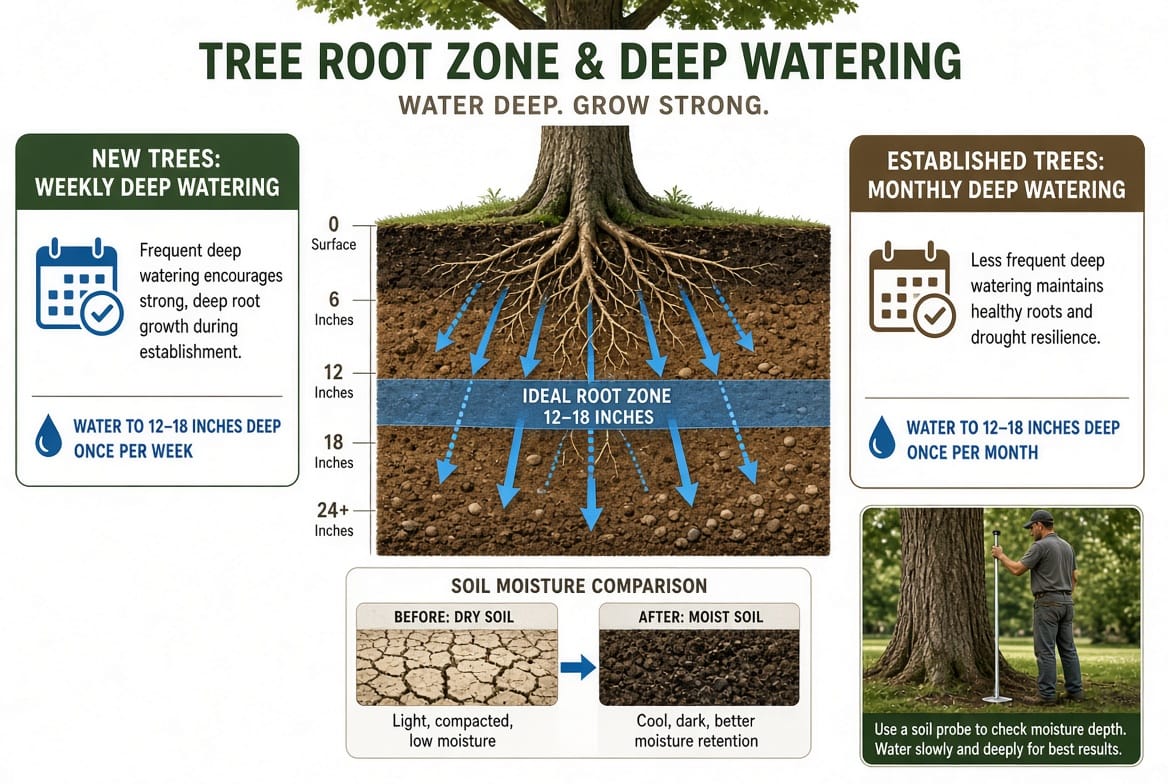
Newly planted trees have a limited root system still confined to the original root ball or planting hole. They cannot yet draw moisture from a wide area. For the first one to two growing seasons, these trees need weekly deep watering. Apply enough water to soak the entire root ball and a surrounding ring of soil. In hot, dry weather you may need to water twice in the same week, always checking soil moisture first.
Established trees—those that have been in the ground three years or longer and show consistent annual growth—develop extensive root networks. Once established, most trees thrive with monthly deep watering during periods without significant rainfall. The exact interval still depends on soil type, temperature, and recent precipitation. Clay soils hold moisture longer; sandy soils drain quickly and may need more frequent attention. Always verify actual soil conditions rather than watering by calendar alone.
The transition from weekly to monthly watering should be gradual. In the second year, stretch the interval from seven days to ten or fourteen days while watching the tree for any signs of stress. This tapering process trains the roots to seek moisture at greater depths.
The Power of Deep Watering
Deep watering means applying water slowly enough that it penetrates 12 to 18 inches into the soil, reaching the majority of absorbing roots. Surface wetting that lasts only a few minutes does little good and can even harm the tree by encouraging shallow rooting and fungal issues on the trunk.
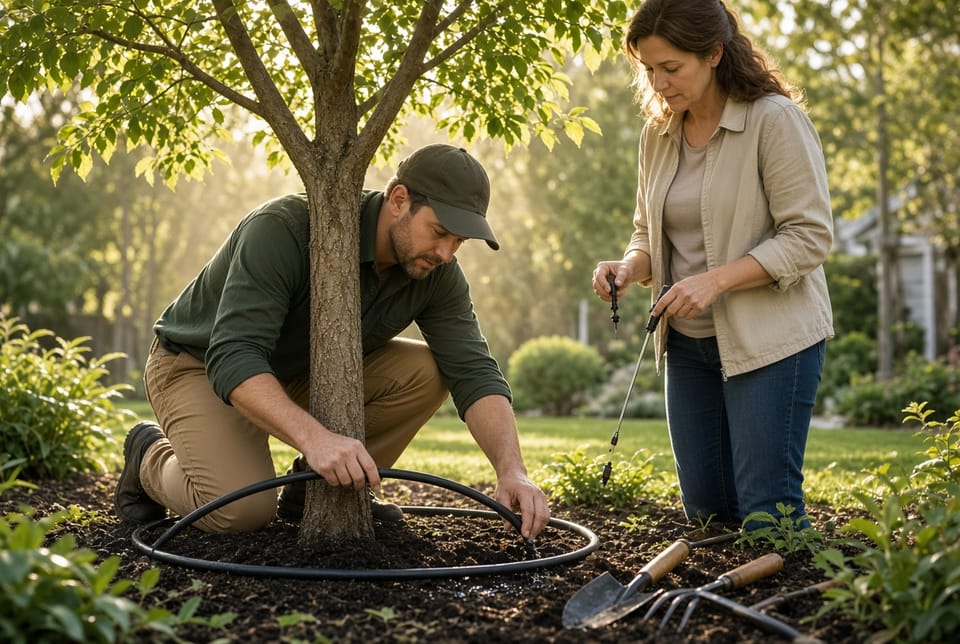
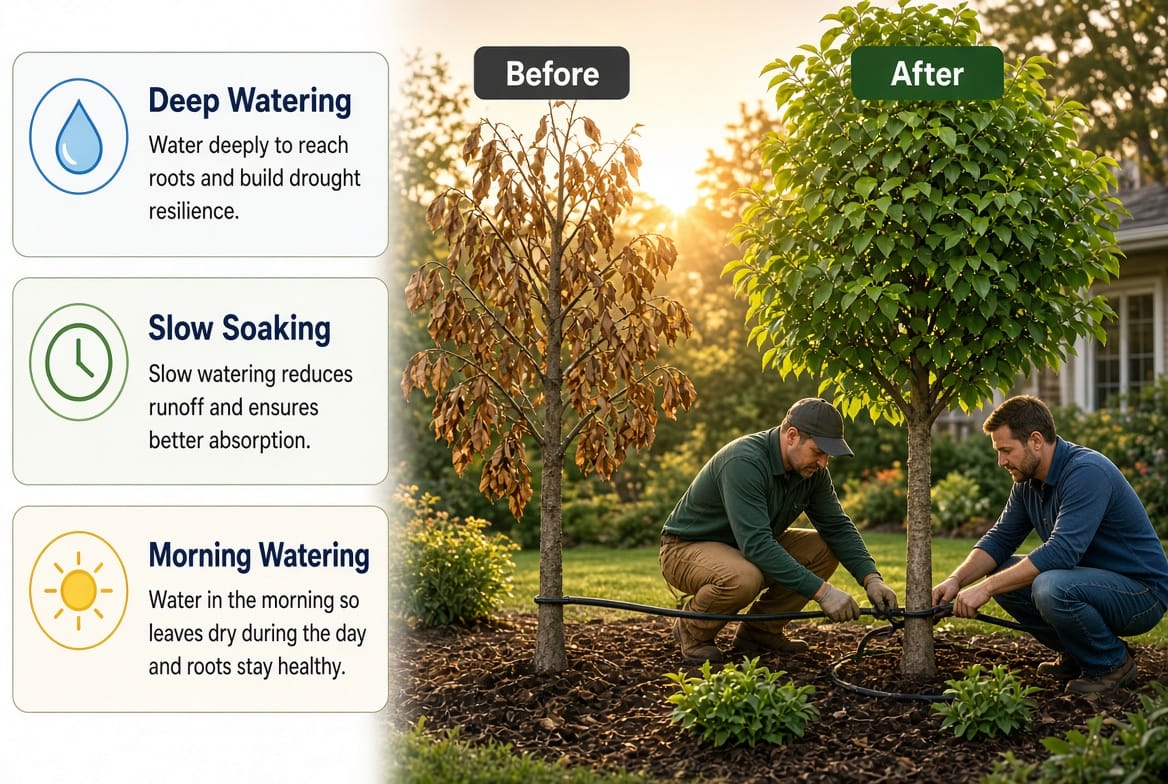
Use a soaker hose or drip-irrigation system laid in a circle beneath the canopy, starting a foot or two from the trunk and extending to the drip line. Let the water run for several hours so it has time to infiltrate rather than run off. A simple test is to push a long screwdriver or soil probe into the ground after watering; it should slide in easily to the desired depth. If it meets resistance, more water or a slower application rate is needed.
Avoid spraying the trunk or foliage with a high-pressure hose. Direct water onto the soil surface where roots can absorb it. Mulch two to four inches deep around the tree (keeping it a few inches away from the bark) helps retain moisture, moderate soil temperature, and suppress weeds that compete for water.
How Much Water Does a Tree Actually Need?
A practical starting point is 10 gallons of water per inch of trunk diameter measured at chest height. A two-inch-caliper new tree therefore needs roughly 20 gallons applied slowly each week. Larger established trees require more total volume but far less often. The water must reach the entire root zone, which for most trees extends well beyond the visible drip line.
Soil texture changes the picture. Sandy soil may need the same volume applied more frequently because it drains rapidly. Clay soil holds water longer, so the same volume can last weeks if temperatures are moderate. Always combine volume guidelines with a hands-on moisture check. Dig or probe six to eight inches down; the soil should feel cool and slightly moist, like a wrung-out sponge, not soggy or dusty dry.
Rainfall counts. After a soaking rain of one inch or more, you can often skip the next scheduled watering. Keep a simple rain gauge near the tree to track actual precipitation rather than relying on weather-app estimates.
Building a Practical Watering Schedule
Begin with the age of the tree and then adjust for season and weather.
- Spring and fall: Moderate temperatures reduce evaporation. New trees still need weekly attention; established trees may need watering only every four to six weeks if rain is regular.
- Summer: Heat and wind increase demand. Monitor new trees twice a week and established trees every two to four weeks. Early-morning watering minimizes loss to evaporation.
- Winter: Dormant trees use less water, yet evergreen species and newly planted trees can still dry out in windy, rainless periods. Water during thaws when the ground is not frozen.
Create a simple reminder system—phone calendar or notebook—so watering does not become haphazard. Consistency matters more than perfection.
Best Practices That Maximize Every Gallon
- Water in the early morning so foliage dries quickly and less water evaporates.
- Apply water slowly with soaker hoses or drip emitters to prevent runoff.
- Focus on the soil beneath the canopy, not the trunk.
- Maintain a two-to-four-inch layer of organic mulch.
- Check soil moisture before every watering session.
- Expand the watering circle as the tree grows.
These habits reduce waste, lower disease risk, and produce stronger trees.
Recognizing Under-Watering Before Damage Becomes Severe
An under-watered tree shows progressive symptoms. Leaves may wilt during the hottest part of the day and fail to recover by evening. Leaf edges turn brown and crisp. New growth is sparse or stunted. In advanced cases, entire branches die back from the tips. The soil several inches down feels dry and hard.
Act promptly. Increase watering frequency or volume and add mulch if it is missing. Most trees rebound if the deficit is corrected before major limb loss occurs. Persistent drought stress, however, can invite insects and weaken the tree’s structure.
Spotting Over-Watering and Root Problems
Over-watering is equally harmful. Leaves yellow and drop while the soil stays constantly wet. You may notice a sour smell or visible fungus at the base. Roots begin to rot, reducing the tree’s ability to take up oxygen and nutrients. Mushy bark near the soil line is a late warning sign.
If you suspect over-watering, stop scheduled irrigation and allow the soil to dry to a depth of several inches. Improve drainage if possible by avoiding compaction and keeping mulch from piling against the trunk. In severe cases a professional assessment can determine whether root damage requires treatment.
Frequent Mistakes That Undermine Even Good Intentions
Many well-meaning owners water too lightly and too often, creating a shallow root system. Others water only at the trunk, missing the feeder roots farther out. Using a sprinkler that wets the leaves for hours raises disease risk. Ignoring soil type or recent rain leads to either drought or saturation. Finally, removing mulch or allowing grass to grow right up to the trunk increases competition for moisture.
Correcting these habits is straightforward once you understand the tree’s actual needs.
Seasonal Fine-Tuning and Long-Term Success
Watch the weather and the tree rather than following a rigid calendar. After a week of triple-digit heat, even an established tree may benefit from an extra deep soaking. Conversely, a cool, rainy month may let you skip watering entirely. Evergreen trees continue to lose moisture through their needles in winter and may need occasional watering during dry spells.
As the tree matures, its watering needs generally decrease. The same tree that required weekly attention as a sapling may thrive on monthly watering plus natural rainfall once its roots have spread. Periodic professional inspection helps confirm that the schedule still matches the tree’s size and the site conditions.
Need Help Watering New or Established Trees? Call Now