The Right Tree for the Right Place: Planting to Avoid Future Removal
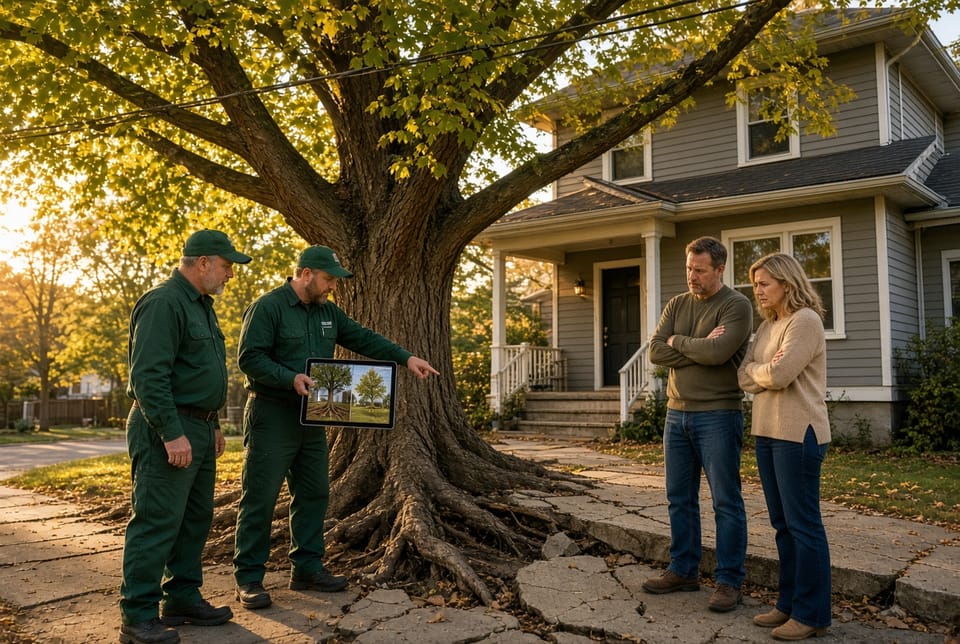
Choosing and planting a tree is one of the most lasting decisions a homeowner can make. A well-placed tree adds beauty, shade, privacy, and value for decades. A poorly placed tree, however, often leads to foundation damage, utility conflicts, safety hazards, and ultimately costly removal. The good news is that almost every future removal can be prevented with thoughtful planning at the start.
Call for Smart Planting That Protects Foundations
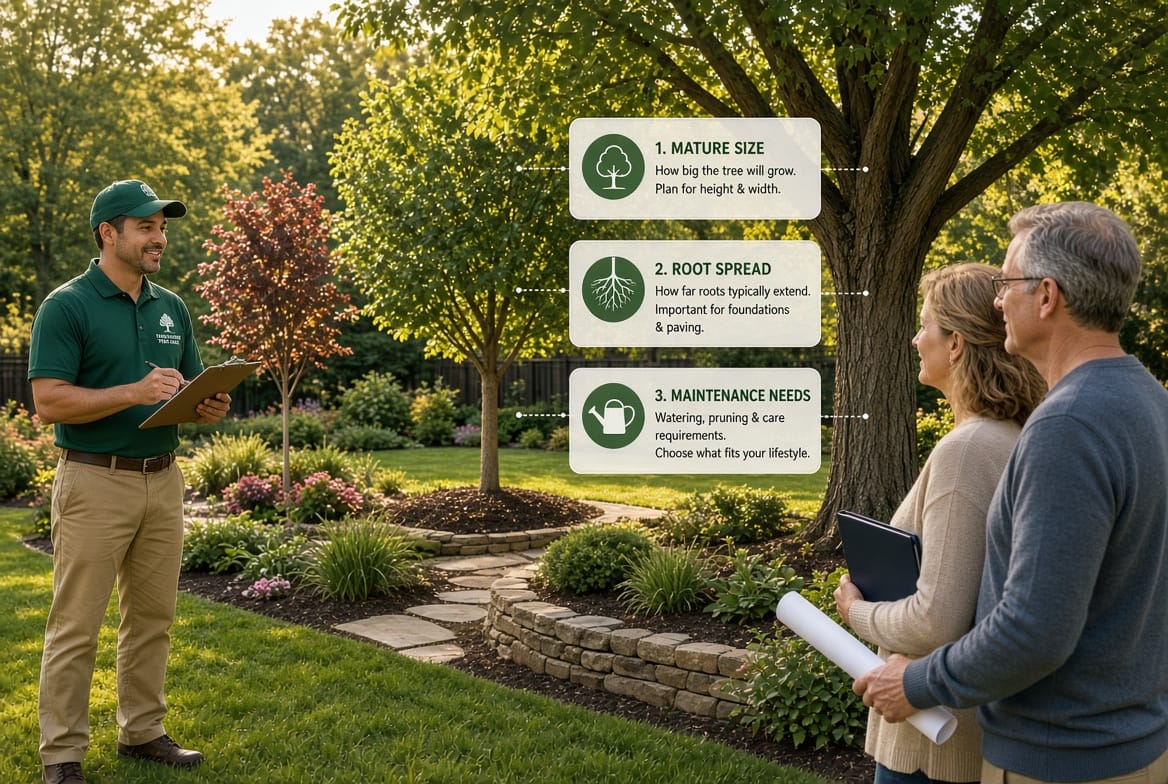
This guide explains how to match the right tree to the right place by considering size at maturity, root spread, and maintenance needs. Follow these principles and you will enjoy healthy trees without the regret of watching them grow into problems.
Why Prevention Beats Removal Every Time
Trees are living investments. Once planted, they cannot be easily relocated. Roots extend far beyond the visible canopy, and the mature height and width of a tree are often two to three times what you see in a nursery pot. When those hidden dimensions collide with a house, driveway, septic system, or power line, the result is almost always the same: the tree must come down.
Preventive planting protects both your property and your budget. Removal of a large tree near structures can cost thousands of dollars and leave an empty space that takes years to fill. By selecting species and locations with the finished landscape in mind, you avoid that cycle entirely.
Homeowners who take time to plan report greater satisfaction and fewer emergency calls. The process is straightforward once you understand three core factors: how large the tree will become, how far its roots will travel, and how much ongoing care it will require.
Understanding Size at Mature Height and Canopy Spread
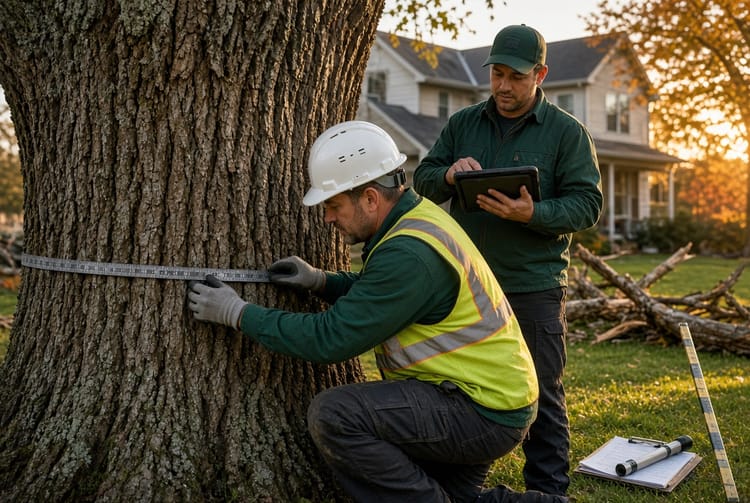
The single most common mistake is judging a tree by its size in the nursery. A five-foot sapling can become a sixty-foot giant. Always research the mature height and mature canopy width before you buy.
- Small trees (under 25 feet tall at maturity) work well near patios, under utility lines, or in compact yards.
- Medium trees (25–50 feet) need more breathing room and suit larger side yards or open lawns.
- Large trees (over 50 feet) belong only in spacious properties well away from buildings and overhead wires.
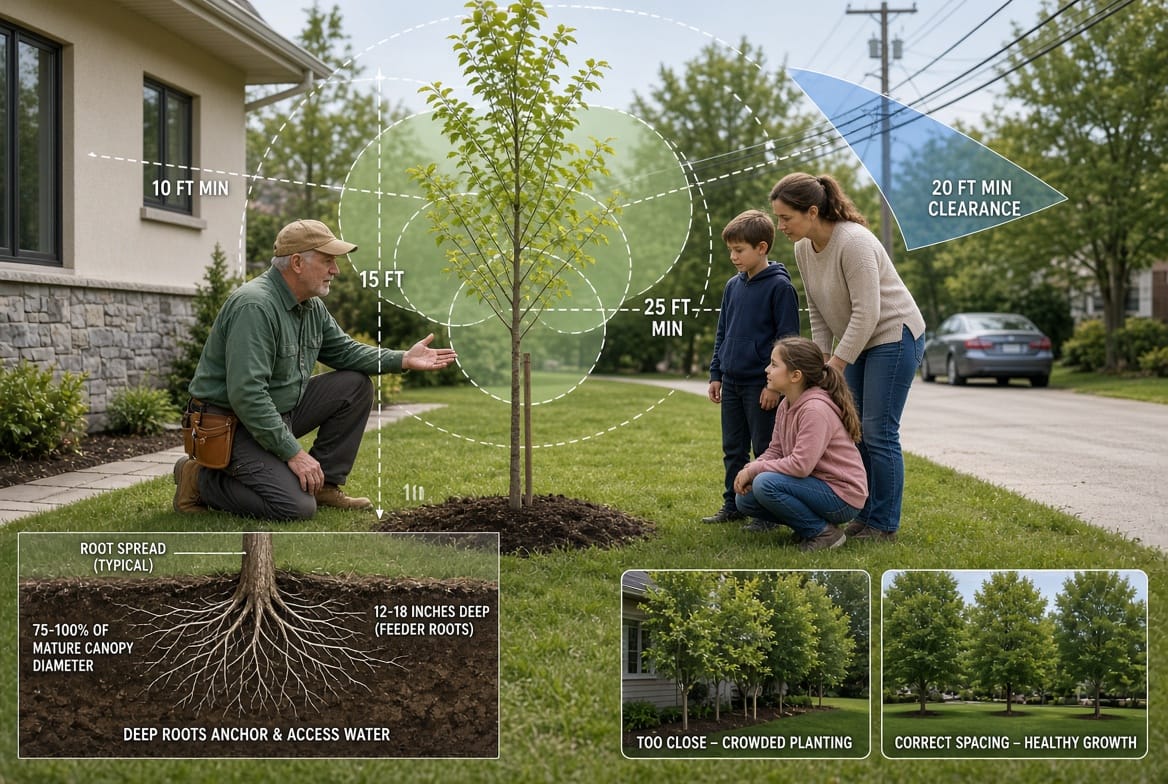
Measure the available space from the planting hole to the nearest structure, sidewalk, and utility line. Then add a generous buffer. A reliable rule is to plant so the mature canopy edge stays at least 10–15 feet from the house for small trees and 20–30 feet or more for large specimens.
Consider the shape as well as the size. A narrow, upright tree occupies less horizontal space than a broad, spreading one of the same height. Matching the natural form to the site reduces future pruning and conflict.
Root Systems: The Hidden Factor That Causes Most Problems
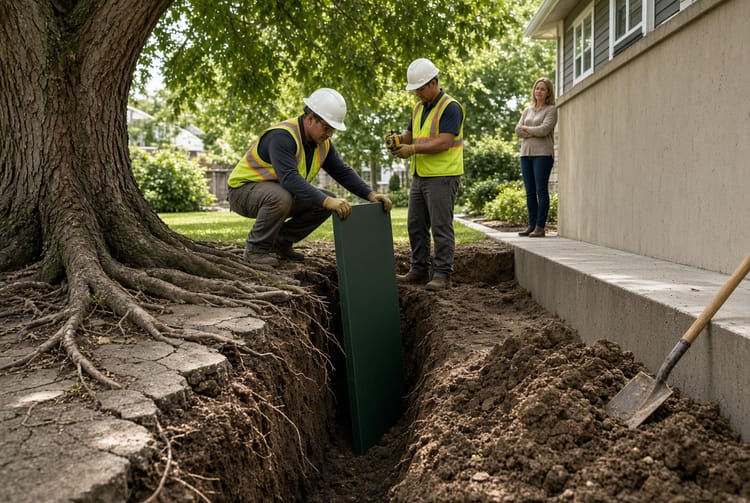
What you cannot see is often more important than what you can. Tree roots typically spread two to three times the width of the canopy and stay in the top 12–18 inches of soil. Aggressive or shallow-rooted species can lift sidewalks, crack foundations, and invade pipes.
High-risk root behaviors include:
- Surface roots that heave pavement
- Water-seeking roots that enter sewer or septic lines
- Fast-growing roots that undermine retaining walls
Species known for vigorous roots (certain maples, willows, and poplars) should never be planted near foundations, driveways, or underground utilities. Choose instead trees with more contained or deeper root systems when space is limited.
Always locate underground utilities before digging. A simple call to your local locating service prevents accidental damage and reveals how much room the roots will actually have.
Avoiding Conflicts with Foundations, Power Lines, and Structures
Every hard surface on your property has a safe planting distance. Foundations need the most protection because repairing structural damage is expensive and disruptive.
Keep these minimum clearances in mind:
- Small trees: at least 8–10 feet from the foundation
- Medium trees: 15–20 feet
- Large trees: 25–40 feet depending on species
Overhead power lines require even greater caution. Never plant a tree that will reach the height of the lines. Utility companies routinely prune or remove trees that grow into conductors, often leaving unsightly “V” cuts or complete removal. Choose low-growing ornamentals or plant well to the side of the easement.
Other structures deserve the same respect. Decks, fences, pools, and septic drain fields all have recommended setbacks. When in doubt, increase the distance rather than decrease it. A tree that looks a little far away today will look perfectly placed in twenty years.
Matching Maintenance Needs to Your Lifestyle
Even a correctly sized tree can become a burden if it demands more care than you want to give. Consider these ongoing needs before you plant:
- Leaf, flower, or fruit drop that requires frequent cleanup
- Susceptibility to pests or diseases that need regular treatment
- Pruning requirements to maintain shape or clearance
- Water needs during establishment and drought
Low-maintenance choices exist for almost every climate. Native species adapted to local rainfall and soil usually require less intervention once established. If you prefer a tidy landscape, avoid trees that produce large seed pods, messy fruit, or excessive litter.
Think also about seasonal interest versus year-round upkeep. A tree that looks spectacular for two weeks of flowers but drops debris for months may not be the best long-term fit.
A Simple Process for Choosing the Right Tree
Follow these steps and you will dramatically reduce the chance of future problems:
- Measure the planting site and note nearby structures, utilities, and traffic patterns.
- Research the mature dimensions and root habits of candidate species.
- Match those dimensions to the available space with extra room for growth.
- Evaluate maintenance demands against the time and budget you are willing to invest.
- Select a healthy specimen from a reputable nursery and plant it at the correct depth.
- Water and mulch properly during the first two years so the tree establishes without stress.
When the site is tight or the choices feel overwhelming, professional advice pays for itself many times over. An experienced arborist can walk the property with you, recommend species that thrive in your soil and climate, and mark exact planting locations that respect every constraint.
Common Planting Mistakes and How to Avoid Them
Even well-intentioned gardeners make predictable errors. Planting too close to the house “for shade” is the most frequent. Another is choosing a fast-growing tree without considering its ultimate size. Fast growth often comes with weak wood and aggressive roots—exactly the combination that leads to early removal.
Over-mulching, planting too deep, or ignoring soil compaction also shorten a tree’s useful life. These issues are easy to prevent with basic knowledge and a little patience at planting time.
Remember that a tree is not an impulse purchase. Treat the decision with the same care you would give to adding a room or a driveway. The extra hour spent measuring and researching saves years of frustration.
Long-Term Benefits of Getting It Right
When a tree is matched to its site, everyone wins. The tree grows into a strong, attractive specimen instead of a liability. Your home stays structurally sound. Utility companies stay out of your yard. And you avoid the emotional and financial cost of cutting down a tree you once loved.
Neighborhoods filled with well-placed trees enjoy higher property values, cooler summer temperatures, and greater curb appeal. Your single thoughtful planting contributes to that larger picture.
Planting the right tree in the right place is an act of foresight. It is also an act of respect for the living organism you are introducing to your landscape. Give that tree the space and conditions it needs, and it will reward you for generations.
Plant smart to avoid future removals.
Choose the Right Tree, Skip Future Removal