The Tree Cavity Nesting: Managing Wildlife in Dead Trees
Dead trees are frequently viewed as problems to be removed as quickly as possible. In reality, many of them are among the most valuable structures in a landscape. When a tree dies, it does not immediately cease to support life. Instead it enters a long second chapter as a snag—a standing dead tree that offers food, shelter, and nesting sites for a remarkable range of species. Understanding tree cavity nesting and the broader ecological role of dead wood allows property owners to make informed decisions that protect both people and wildlife.
Keep Habitat, Remove the Hazard – Call Now
This article focuses on the ecological considerations that should guide every conversation about dead-tree management. It explains how cavities form and who uses them, when removal is truly necessary for safety, and which practical alternatives preserve habitat without compromising risk management.
Why Dead Trees Matter Ecologically
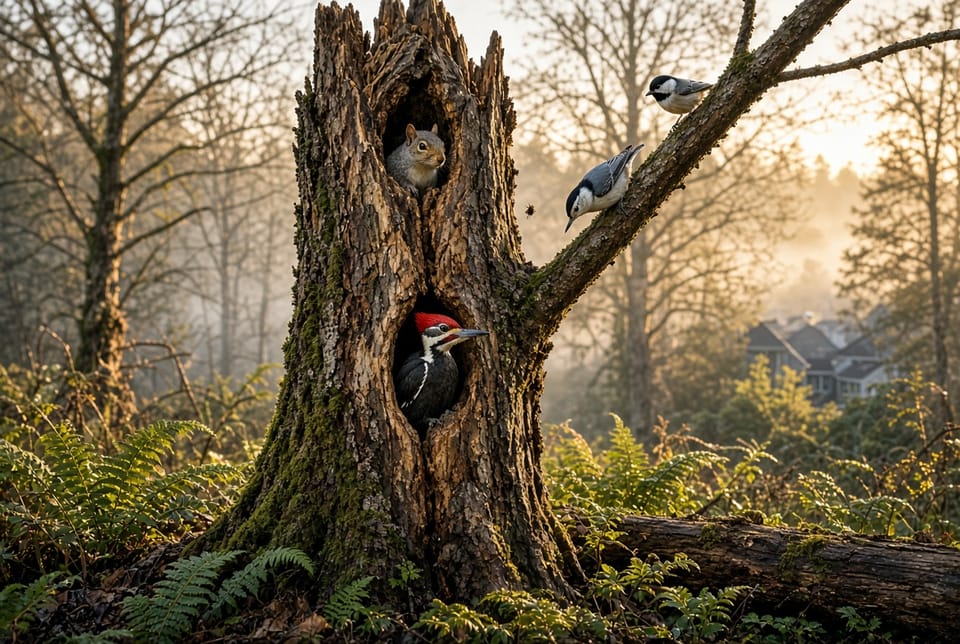
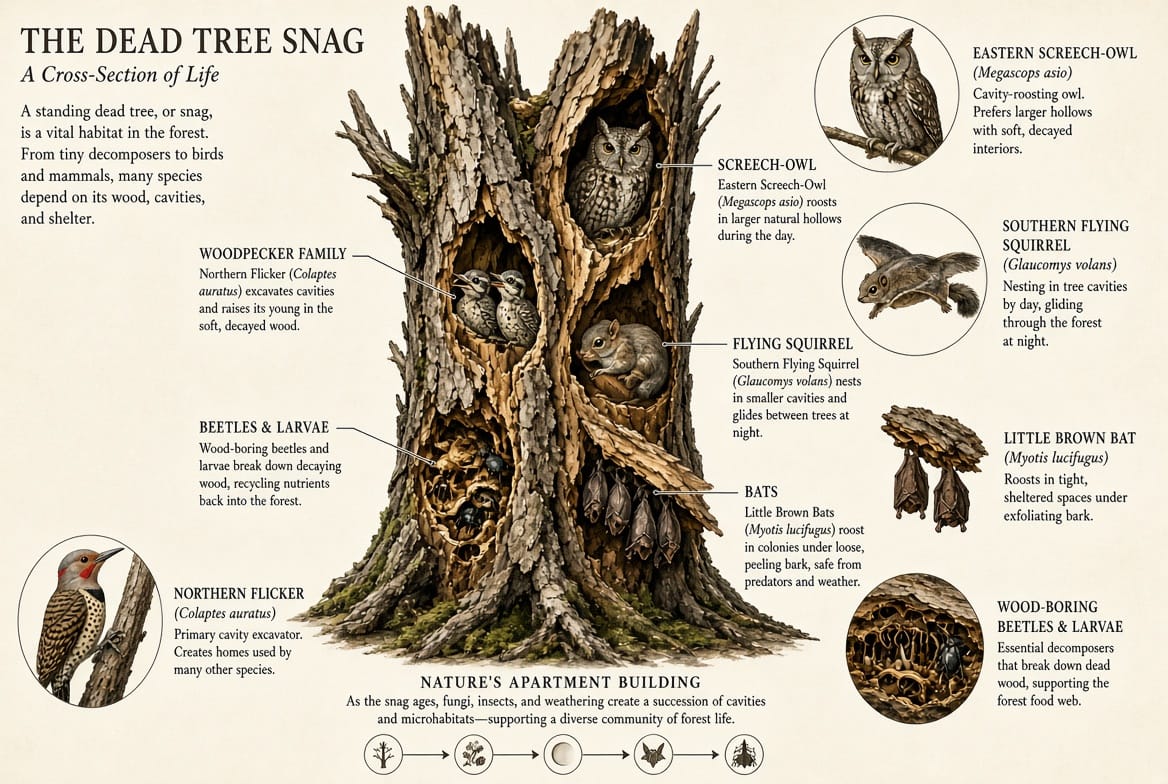
A living tree stores carbon, produces oxygen, and offers shade. A dead tree continues to deliver ecosystem services in a different form. Fungi, bacteria, and insects begin the process of decay. Softening wood becomes easier for primary cavity excavators—chiefly woodpeckers—to chisel. Those excavated holes are later used by dozens of secondary cavity nesters that cannot create their own cavities.
Dead wood also hosts a rich community of invertebrates. Many of those insects become food for birds, bats, and small mammals. The slow release of nutrients as the tree eventually falls enriches the soil. In short, a dead tree is not empty space; it is a multi-story apartment building, pantry, and nursery rolled into one.
Leaving appropriate snags in place supports biodiversity at a local scale. Even a single well-placed wildlife tree can increase nesting success for cavity-dependent species in an otherwise manicured yard or park.
Birds That Depend on Tree Cavities
Woodpeckers are the engineers of the cavity world. Species such as the downy, hairy, red-bellied, and pileated woodpecker excavate new holes each breeding season. They prefer trees with heart rot or softening sapwood because the work is easier and the resulting cavity is more insulated.
Once abandoned, those cavities become homes for:
- Eastern bluebirds and tree swallows
- Black-capped chickadees and white-breasted nuthatches
- House wrens and Carolina wrens
- Screech-owls, barred owls, and American kestrels
- Wood ducks and hooded mergansers (in larger cavities near water)
Many of these birds also forage on the insects living in and on the dead wood. Removing every snag therefore reduces both nesting sites and food supply at the same time.
Cavity height, entrance size, and surrounding cover all influence which species will use a particular hole. A professional assessment can identify which cavities are active and which trees still provide high-value habitat.
Mammals and Other Vertebrates
Birds receive most of the attention, yet mammals rely on dead trees just as heavily.
- Flying squirrels and gray squirrels nest in larger cavities and use them as winter dens.
- Raccoons and opossums occupy spacious hollows in mature snags.
- Several bat species roost behind loose bark or inside cavities during the day and raise young there.
- Even small mammals such as mice and voles use basal hollows or root cavities.
These animals contribute to seed dispersal, insect control, and nutrient cycling. A landscape stripped of all standing dead wood loses this functional group.
Insects, Fungi, and the Food Web
The hidden majority of life in a dead tree is invertebrate. Bark beetles, wood-boring beetles, carpenter ants, and countless larvae inhabit different decay stages. Fungi break down lignin and cellulose, creating the soft wood that excavators need. This community is not a sign of “infestation” in the ecological sense; it is the normal process that turns a tree into habitat and, eventually, soil.
Many cavity-nesting birds time their breeding to the emergence of these insects. Removing a snag therefore removes both shelter and a concentrated food source.
When Removal Is the Responsible Choice
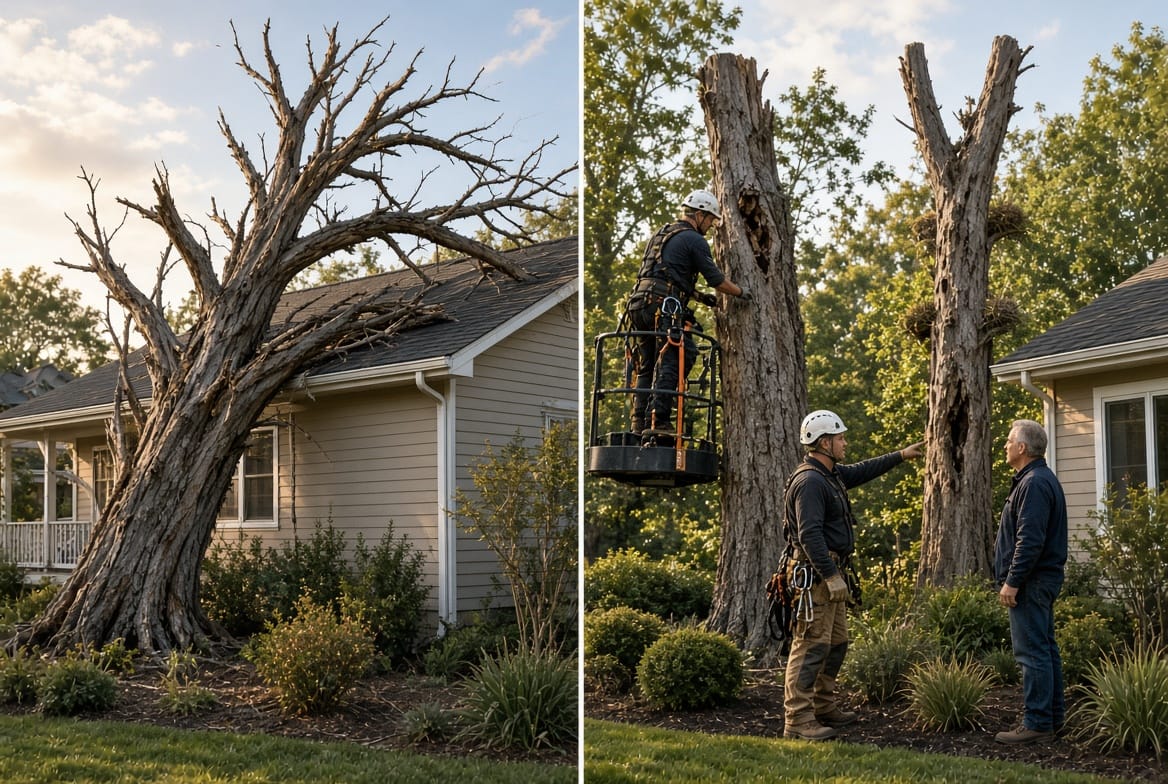
Ecological value does not override safety. A dead tree becomes a safety hazard when it poses a foreseeable risk of failure onto people, structures, or high-use areas.
Common indicators that removal or significant reduction is warranted include:
- Large dead limbs hanging over roofs, driveways, play areas, or power lines
- Visible cracks, splits, or lean that has increased
- Extensive decay at the base or root plate instability
- Fungal fruiting bodies that indicate advanced structural compromise
- Recent storm damage that has left the remaining stem unbalanced
- Location in a high-traffic public space where even a low-probability failure is unacceptable
In these cases, full or partial removal protects lives and property. The goal is not to eliminate every dead tree, but to eliminate unacceptable risk.
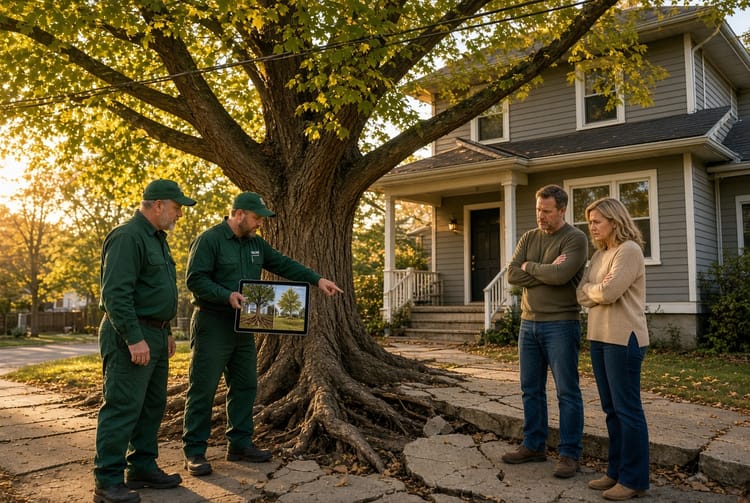
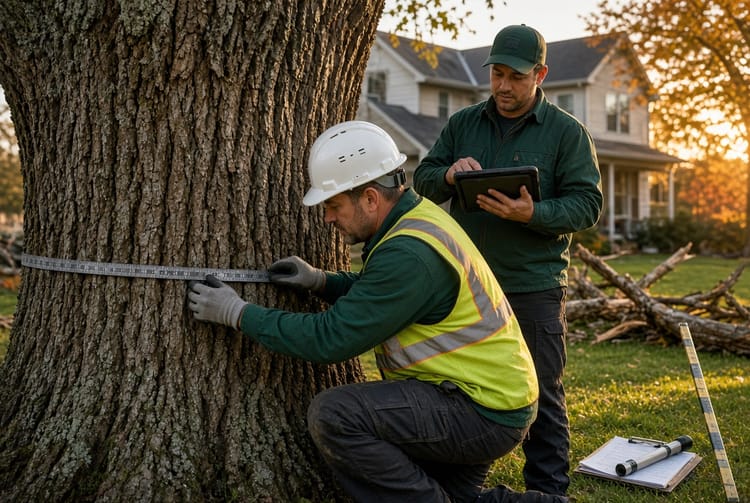
A qualified arborist can distinguish between a tree that is merely dead and a tree that is structurally unsound. Visual inspection, sounding, and sometimes resistograph or tomograph testing provide the data needed for a defensible decision.
Alternatives That Preserve Habitat
Complete removal is not the only option. Several well-established techniques reduce risk while retaining ecological function.
Retaining Safe Snags
If the tree is located away from targets and the stem is still reasonably sound, it can be left as a snag. Height can be reduced to a safer level (often 15–25 feet depending on species and site) while keeping the most valuable cavity-bearing section.
Creating Wildlife Trees
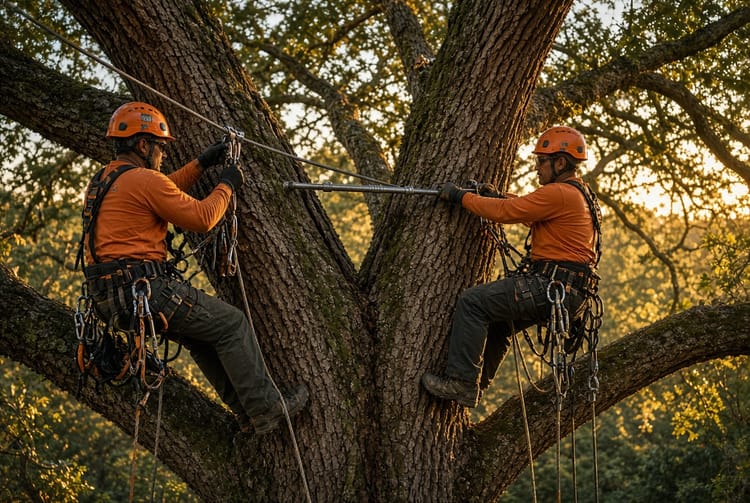
Arborists can convert a hazardous tree into a wildlife tree by:
- Topping or reducing the crown to a stable height
- Creating additional cavities or perch sites with specialized tools
- Leaving jagged “natural” breaks that mimic storm damage
- Girdling selected trees in wooded areas where falling risk is low
The resulting structure continues to decay in place and often remains useful for a decade or more.
Nest Boxes as Supplements
When a tree must be removed entirely, well-designed nest boxes can offset some of the lost cavities. Boxes should match the entrance diameter and interior volume preferred by target species, be placed at appropriate heights, and be maintained annually. They are a supplement, not a full replacement, because they lack the thermal mass, insect prey, and micro-habitats of real decaying wood.
Other Low-Impact Practices
- Pruning hazardous limbs while leaving the main stem
- Relocating small snags (rarely practical but possible for modest specimens)
- Creating brush piles or leaving fallen logs from the removed tree to support ground-dwelling species
Each site is different. The best solution is the one that matches the tree’s condition, the surrounding land use, and the wildlife already present.
Best Practices for Property Owners
Begin with observation rather than immediate action. Note whether cavities are being used, whether woodpeckers are present, and whether the tree stands over a genuine target. Photograph the tree from several angles and record any changes after storms.
Next, obtain a written assessment from a credentialed arborist experienced in wildlife habitat. Ask specifically about:
- Structural stability and remaining safe useful life
- Active or potential cavity use
- Feasibility of reduction versus removal
- Timing that avoids peak nesting season when possible
Work performed outside the primary nesting window (generally late winter or after fledging) reduces disturbance. In some jurisdictions, active nests of certain species receive legal protection; a professional will know the relevant rules.
Document the decision. A short report that explains why a particular tree was retained, reduced, or removed helps future owners and demonstrates due diligence.
Integrating Habitat Into Everyday Landscapes
Homeowners, land managers, and municipalities can plan for cavity habitat instead of treating it as an afterthought. When planting new trees, include a mix of species that develop cavities readily as they age. In wooded portions of a property, designate a few trees in low-risk locations as future wildlife trees. After storms, evaluate whether some damaged trees can be converted rather than hauled away.
These small planning steps compound over years. A property that once had zero snags can, with modest effort, support a resident pair of chickadees, visiting woodpeckers, and occasional owl use.
The presence of dead wood does not mean a landscape is neglected. On the contrary, a thoughtfully managed mix of living trees, safe snags, and created habitat features is a sign of ecological literacy.
Conclusion: Balance Safety with Wildlife Habitat
Dead trees occupy a unique position at the intersection of risk management and conservation. They are neither automatically dangerous nor automatically sacred. The responsible path is careful evaluation followed by the least-destructive action that still protects people and property.
When a tree must come down, the wood can still serve a purpose as logs or chips. When it can stay, even in reduced form, it continues to house the cavity nesters that keep insect populations in check and add life to the canopy.
Balance safety with wildlife habitat. A professional tree assessment identifies which trees can remain as snags or wildlife trees and which must be addressed for safety.
Expert Snag & Wildlife Tree Options – Call Now