The Tree Appraisal: Valuing Trees for Insurance and Legal Claims
Trees represent far more than decorative elements on a property. Mature specimens deliver shade, privacy, erosion control, wildlife habitat, and measurable increases in real-estate value. When those living assets are damaged, removed, or placed at the center of a disagreement, their worth must be translated into a defensible dollar figure. That translation is the purpose of a tree appraisal—a specialized professional service that assigns monetary value to trees using established horticultural and economic criteria.
Protect Your Insurance Claim – Call an Arborist
This article explains what a tree appraisal is, the circumstances that make it necessary, the factors used in the calculation, and why engaging a qualified arborist protects both financial recovery and legal standing. The information is presented so property owners, insurance adjusters, attorneys, and estate planners can understand the process and act with confidence.
What a Tree Appraisal Actually Is
A tree appraisal is the systematic assignment of a fair-market or replacement-based monetary value to an individual tree or group of trees. It is not a casual guess or a simple nursery-price lookup. Instead, a trained arborist evaluates the specimen against industry-recognized standards that consider biological characteristics, current health, and the contribution the tree makes to its specific site.
The resulting figure can be used as supporting documentation for insurance settlements, court testimony, estate inventories, or municipal negotiations. Because a large tree may have taken 40–80 years to reach its present size, the appraisal recognizes that instantaneous replacement is often impossible and that the loss of function (shade, screening, aesthetics) carries real economic weight.
Professional appraisals produce a written report that typically includes photographs, measurements, condition ratings, species data, location analysis, and a clear statement of value. That report becomes an objective record rather than an opinion that can be easily challenged.
Why Accurate Valuation Matters
An undervalued tree can leave a property owner absorbing thousands of dollars in unreimbursed loss. An overvalued claim risks denial or prolonged dispute. Accurate tree appraisal therefore serves as both protection and evidence. It demonstrates that the owner has taken a measured, professional approach rather than an emotional or inflated one.
Insurers and courts look for methodology that is transparent and repeatable. When the appraisal follows recognized guidelines, the numbers carry greater weight and the process moves more efficiently toward resolution.
When a Tree Appraisal Is Needed
Several recurring situations trigger the need for a formal valuation.
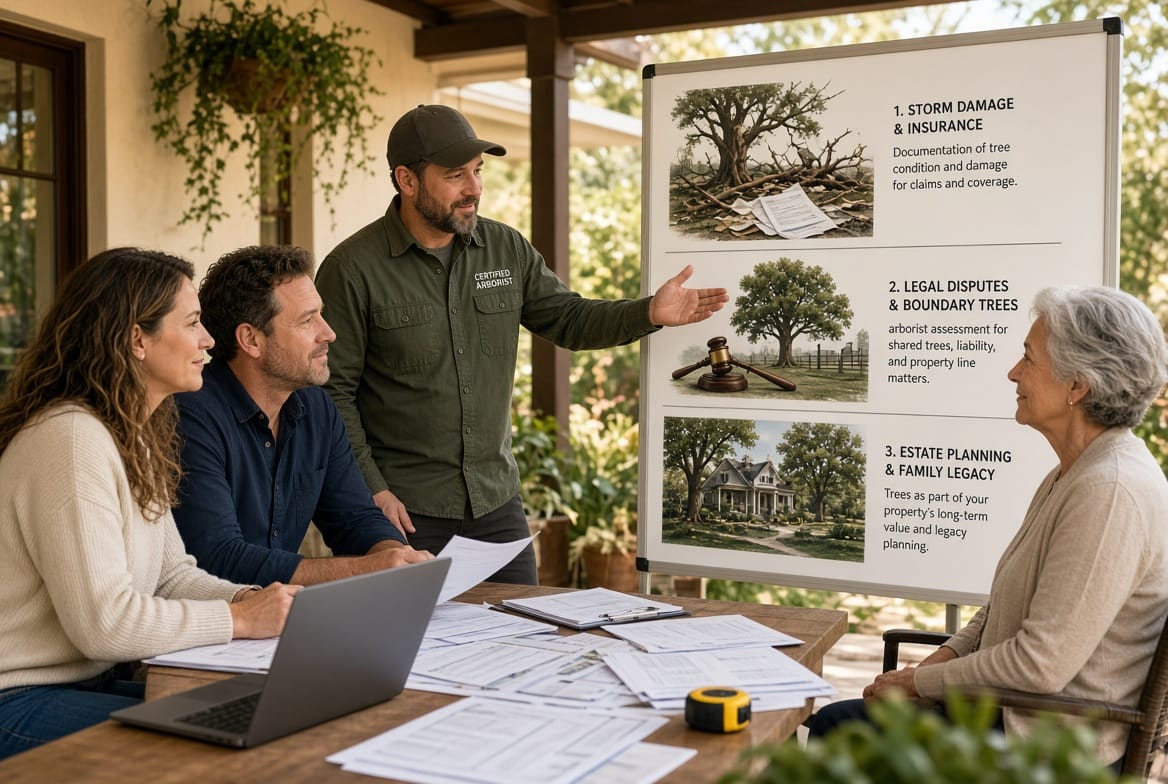
- Storm damage and natural disasters. High winds, ice, lightning, or flooding can snap leaders, uproot root plates, or leave trees in hazardous condition. Insurance policies frequently cover such losses, but they require documented value rather than a homeowner’s estimate.
- Insurance claims. Whether the policy is a standard homeowners form or a specialized rider, adjusters expect an independent appraisal before issuing payment for tree repair, removal, or replacement.
- Legal disputes. Boundary-tree disagreements, construction damage from neighboring work, or alleged trespass cases often hinge on the dollar value of the affected tree. An expert appraisal supplies the court with an impartial number.
- Estate planning and property transfers. Trees of significant size or rarity can constitute notable assets. Appraisals help executors distribute value fairly and help sellers present an accurate picture of landscape worth.
- Condemnation, easements, and development. Public projects or private construction that require tree removal may entitle the owner to compensation based on appraised rather than replacement-only figures.
In each of these scenarios the common thread is the need for a figure that can withstand scrutiny. A professional appraisal supplies that figure and the supporting rationale.
How Tree Appraisals Are Calculated
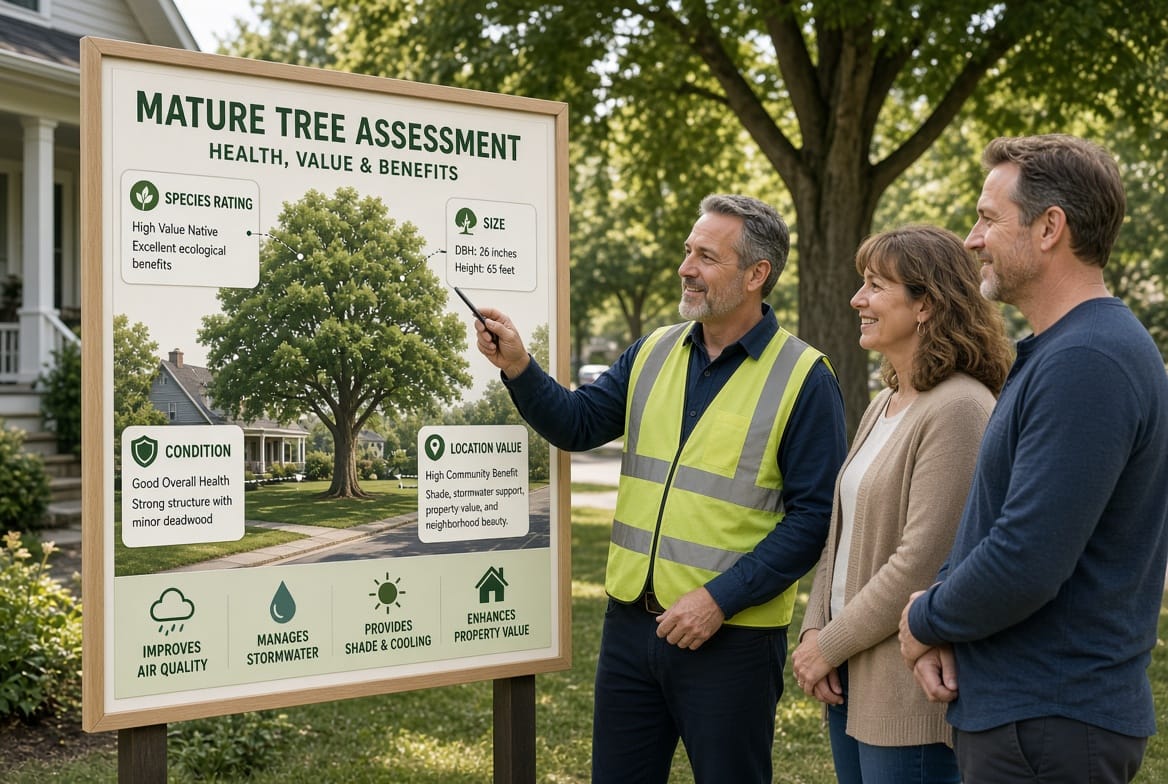
Valuation rests on four primary factors that are evaluated together rather than in isolation.
Species
Different species carry different desirability and rarity ratings. A long-lived, structurally sound oak or a regionally prized native generally receives a higher species rating than a short-lived or weedy species. The rating reflects both market preference and biological performance in the local climate.
Size
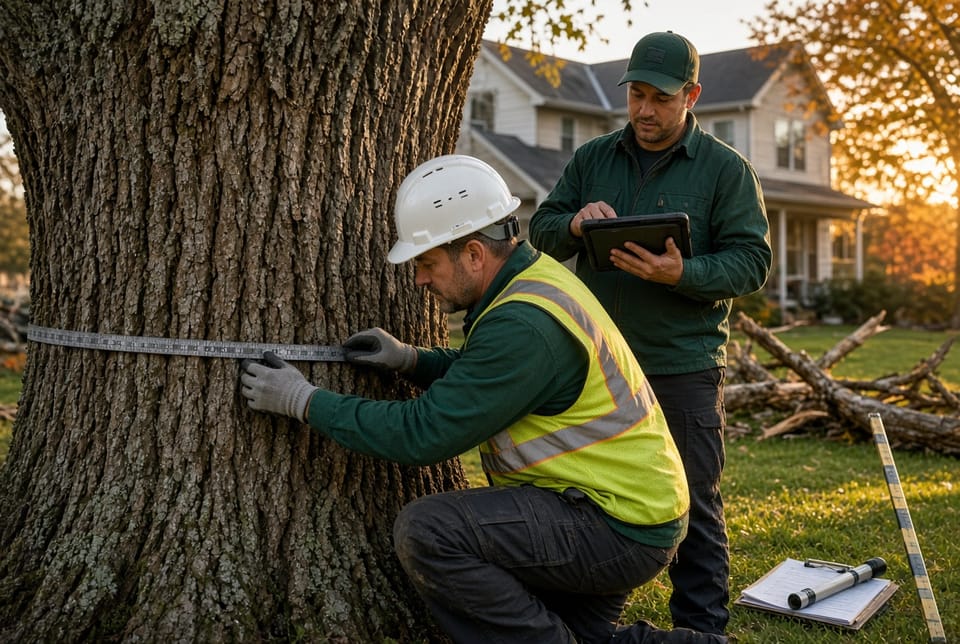
Size is measured by trunk diameter at breast height (typically 4.5 feet above grade), overall height, and canopy spread. Larger, older trees receive higher base values because they cannot be quickly replaced. Measurements are taken with calibrated tapes and height poles or laser devices to ensure accuracy.
Condition
Condition assesses health and structural integrity. The arborist examines foliage density and color, presence of decay or pests, lean, included bark, root-plate stability, and prior pruning or injury. A tree in excellent condition retains a high percentage of its potential value; one with significant defects is discounted accordingly.
Location
Location captures the tree’s functional contribution to the property. A specimen that frames the front entrance, screens an unsightly view, or shades a living area is worth more than an identical tree growing in an unused rear corner. Proximity to structures, streets, and utilities is also considered because it affects both amenity value and risk.
These four elements are combined according to accepted professional formulas. For smaller trees a replacement-cost approach may be used. For larger specimens a trunk-formula or similar method adjusts a base unit value by the species, condition, and location ratings. The arborist documents every measurement and rating so the final number can be reconstructed if questioned.
The Professional Appraisal Process
A typical engagement follows a clear sequence.
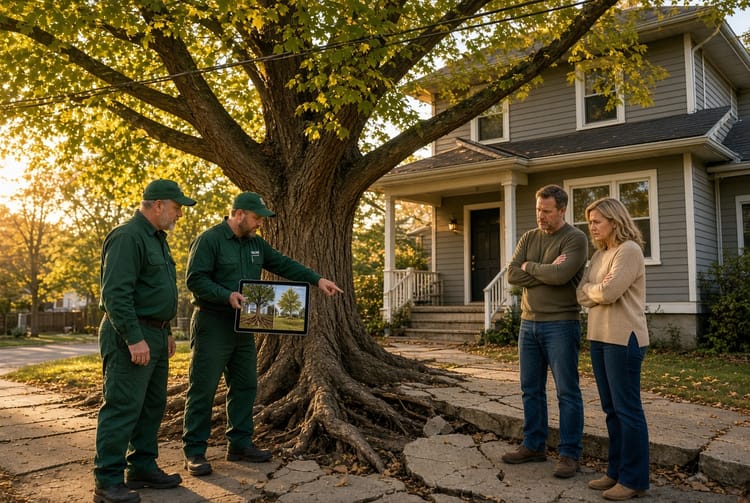
The arborist first conducts an on-site inspection, photographing the tree from multiple angles and recording measurements. Soil conditions, nearby construction, and competing vegetation are noted. Next the species is confirmed, often with supporting botanical references. Condition is rated using standardized scales. Location contribution is evaluated in the context of the entire property.
Office work then converts the field data into a written report that states the appraised value, explains the ratings, and includes photographs and diagrams. The report is prepared so that an insurance adjuster or attorney can follow the logic without specialized training.
Throughout the process the arborist remains available to answer questions and, if required, to provide testimony. This combination of field accuracy and clear documentation is what distinguishes a professional appraisal from an informal estimate.
Risks of Skipping a Professional Appraisal
Property owners sometimes attempt to value trees themselves or accept the first figure offered by a contractor. That approach carries several risks:
- Undervaluation that leaves the owner under-compensated.
- Claim delays or denials when documentation is incomplete or inconsistent.
- Legal vulnerability if an opposing party presents a more rigorous appraisal.
- Missed functional value when only replacement cost is considered and amenity or ecosystem services are ignored.
A qualified appraisal reduces these exposures by supplying a transparent, supportable number.
Benefits of Working with a Certified Arborist
Certified professionals bring both technical knowledge and credibility. They stay current with industry guidelines, carry appropriate insurance, and understand how to present findings to insurers and courts. Their reports are written in language that non-specialists can follow while still meeting expert-witness standards.
Owners gain peace of mind knowing the valuation rests on measurements rather than opinion. Insurers gain a file that can be reviewed quickly. Attorneys gain an exhibit that can be defended. The result is a smoother path to fair resolution.
Moving Forward with Confidence
Trees that have stood for decades deserve a valuation process that is equally careful. A professional tree appraisal supplies that process. It converts biological and aesthetic qualities into a monetary figure that insurance companies, courts, and estate documents can accept.
Whether the immediate need is storm recovery, a boundary disagreement, or long-term planning, the same principles apply: accurate measurement, documented ratings, and a clear written report.
Get professional tree appraisals.
Call Today to Document Storm-Damaged Tree Value