The Tree Stump Removal: Grinding vs. Chemical vs. Manual
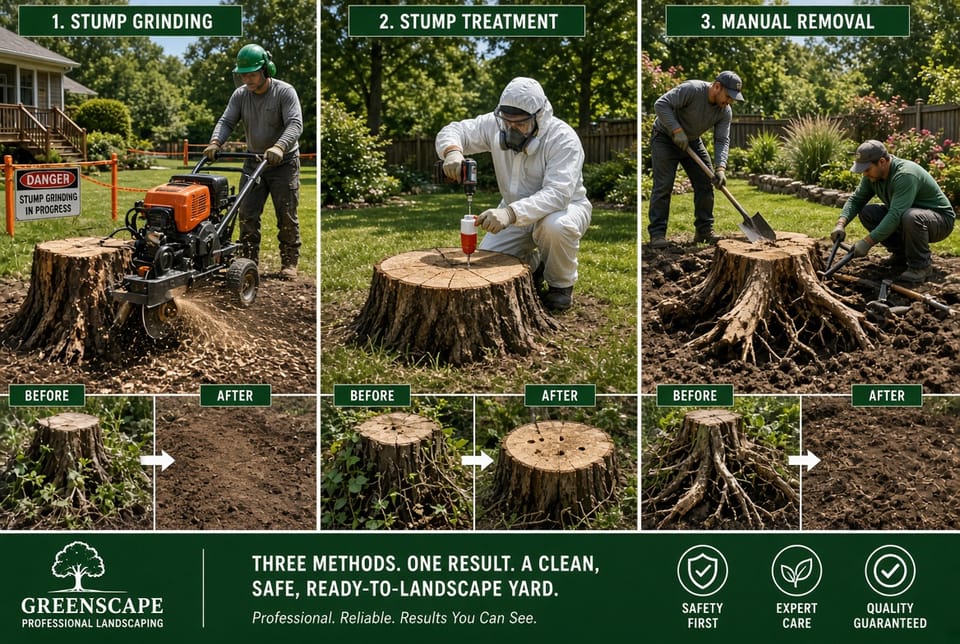
Removing a tree stump is one of the most important final steps after tree cutting. Leaving a stump in place creates ongoing problems for any property owner. It occupies valuable space, becomes a tripping hazard, attracts pests, and prevents new planting or construction. Choosing the correct tree stump removal method protects your landscape, saves time, and avoids unnecessary expense. Three primary approaches dominate professional and do-it-yourself efforts: stump grinding, chemical removal, and manual removal. Each method differs in speed, equipment requirements, labor intensity, cost, and long-term results. Understanding these differences allows homeowners and property managers to select the option that matches their timeline, budget, and site conditions.
Choose the Right Stump Removal Method – Call for Expert Advice!
This guide examines every aspect of the three techniques in clear, practical detail. You will learn how each process works, the tools and skills required, realistic time frames, approximate costs, safety considerations, and environmental impact. By the end you will know exactly which approach delivers the best outcome for your specific situation.
Why Prompt Stump Removal Matters
A leftover stump is never truly inactive. Roots continue to draw moisture and nutrients from the soil. Over months or years the decaying wood becomes a breeding ground for insects, fungi, and even small animals. In residential yards the stump interferes with mowing and creates an uneven surface that can damage equipment. In commercial settings it reduces usable space and can lower property appeal. Professional stump removal restores full access to the land and eliminates these hidden risks. Acting quickly after tree felling also prevents the stump from hardening, which makes later removal more difficult and expensive.
Stump Grinding: The Fast Professional Standard
Stump grinding uses specialized heavy machinery to chip the stump into small wood fragments. A high-powered rotating cutter wheel fitted with carbide teeth lowers onto the stump and systematically reduces it below ground level. Operators typically grind six to twelve inches beneath the surface so the remaining chips can be mixed with soil or removed. The process leaves a shallow depression that is easily filled and seeded or covered with new turf.
Equipment is essential. Commercial grinders range from compact walk-behind units suitable for tight residential spaces to large self-propelled machines that handle stumps several feet in diameter. Professional operators wear protective clothing, eye and ear protection, and maintain a clear work zone because flying chips and dust are common. Access for the machine must be planned; fences, narrow gates, or delicate landscaping may require temporary removal or careful maneuvering.
Time is the greatest advantage. Most residential stumps are completely ground in one to three hours once the machine is on site. Larger commercial stumps or multiple stumps in the same yard may take a full day. Because the work is mechanical, weather delays are minimal as long as the ground is firm enough to support the equipment.
Cost reflects the speed and specialized gear. Average pricing for a single medium-sized stump falls between several hundred dollars and just over one thousand dollars, depending on diameter, root complexity, and location accessibility. Multiple stumps on the same property often receive package discounts. The higher upfront expense is offset by immediate results and the ability to reuse the area the same day or the next.
Safety remains high when trained crews perform the work. The primary risks involve equipment operation and flying debris, both of which professionals manage through experience and protective measures. Homeowners without proper training and machinery should never attempt grinding themselves; the power of the cutter wheel can cause serious injury.
Environmentally, grinding produces clean wood chips that can stay on site as mulch or be hauled away. No chemicals enter the soil, and the root system is severed so regrowth is rare. The method works on virtually any species of tree and in almost any soil type.
Chemical Removal: The Slow and Patient Approach
Chemical removal relies on commercial stump-killer products that accelerate natural decay. The process begins by drilling a series of deep holes into the top and sides of the stump. Granular or liquid chemicals containing potassium nitrate or similar compounds are poured into the holes. The stump is then covered to retain moisture. Over weeks or months the chemicals break down the lignin and cellulose, turning the wood soft and spongy. Once the structure weakens, the remaining material can be broken apart with hand tools or burned where local regulations allow.
Labor is front-loaded. Drilling and applying the product take only an hour or two for an average stump. After that the homeowner must wait. Complete softening typically requires four to twelve weeks, sometimes longer in dry climates or with dense hardwoods. During this period the stump remains visible and continues to occupy space. Additional applications may be needed if the first treatment does not fully penetrate.
Cost is the lowest of the three methods. A bottle or bag of quality stump remover usually costs under fifty dollars and can treat one or more stumps. No expensive equipment is required beyond a sturdy drill and bits. The trade-off is time and repeated effort. Because the process is gradual, property owners must remain patient and monitor progress.
Safety considerations center on chemical handling. Protective gloves, eye protection, and careful measuring prevent skin or eye contact. Children and pets should be kept away from the treated stump until the product has fully absorbed. Some formulations can affect nearby plants if runoff occurs, so application on calm days and proper covering are important.
Environmentally the impact is mixed. The chemicals are designed to stay within the stump, yet any excess can leach into surrounding soil. Organic alternatives exist but work even more slowly. Chemical removal is best reserved for situations where machinery access is impossible and immediate results are not required.
Manual Removal: Digging and Root Cutting by Hand
Manual removal is the most physically demanding option. Workers dig a trench around the stump, exposing the major lateral roots. Each root is then cut with axes, pruning saws, or reciprocating saws. Once the roots are severed, the stump is rocked, levered, or pulled free using come-alongs, winches, or pure muscle. Remaining root fragments are dug out to prevent suckering. The resulting hole is backfilled with clean soil.
Tools are simple: shovels, mattocks, axes, hand saws, and possibly a small winch. No heavy machinery or chemicals are involved. The method can be performed in confined spaces where grinders cannot fit and where chemical use is restricted.
Time varies dramatically. A small stump with shallow roots may take two skilled workers half a day. Large stumps with deep, interlocking roots can require several full days of hard labor. Rocky soil, clay, or extensive root systems multiply the effort. Fatigue becomes a real factor, and progress slows as the day continues.
Cost appears low if labor is free, yet hiring professionals for manual work often equals or exceeds grinding prices because of the hours involved. Tool rental or purchase adds further expense. For most property owners the true cost is measured in physical strain and lost weekends.
Safety risks are higher than with the other methods. Heavy lifting, awkward postures, and sharp tools increase the chance of back injury, cuts, or strains. Working in hot weather raises heat-related concerns. Proper technique, frequent rest breaks, and adequate hydration are essential.
Environmentally manual removal is clean. No chemicals are introduced and no large equipment compresses the soil. The complete extraction of roots virtually eliminates regrowth. The method suits organic properties or sites where every trace of the tree must disappear.
Direct Cost and Time Comparisons
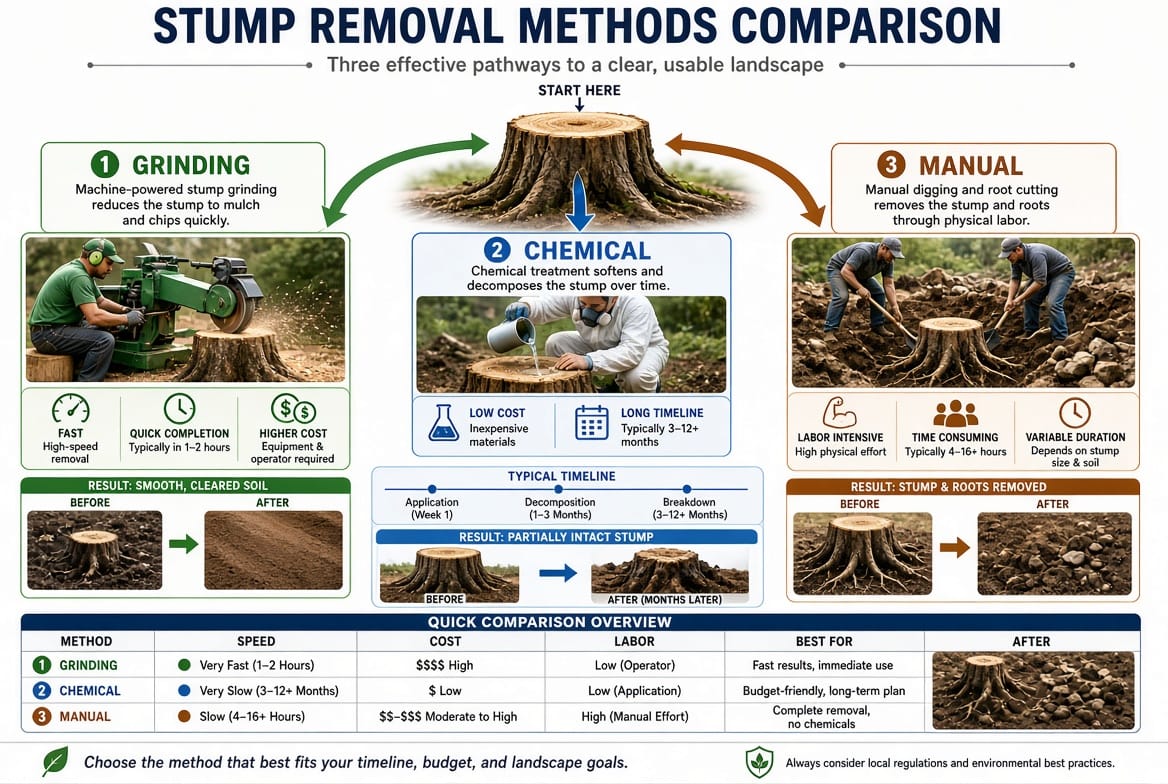
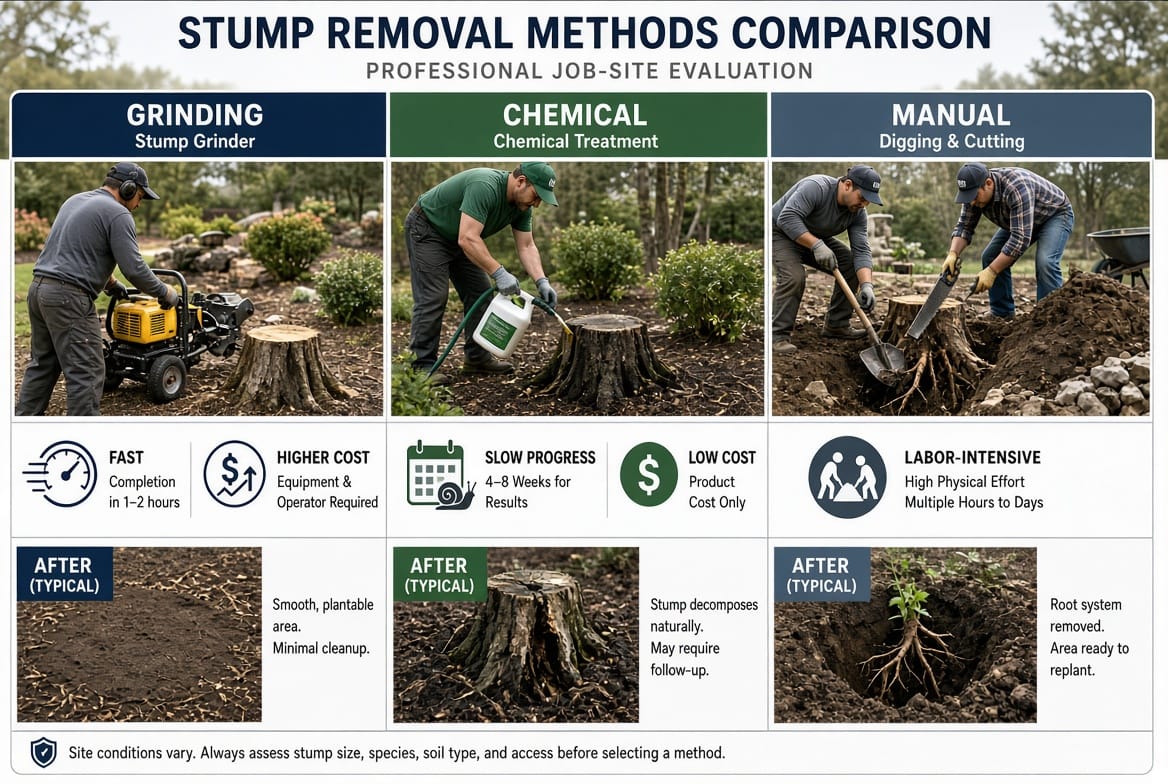
Accurate planning requires side-by-side numbers. Stump grinding usually finishes in one to four hours and costs several hundred to a bit more than one thousand dollars per stump. Chemical removal demands only a couple of hours of active work but stretches over one to three months and costs under fifty dollars in materials. Manual removal can consume anywhere from four hours to several days of intense labor; professional rates often reach or surpass grinding prices while do-it-yourself efforts cost mainly time and physical energy.
Accessibility changes the equation. Tight backyards or slopes favor chemical or manual methods. Open yards with good machine access make grinding the clear winner. Stump size also matters. Softwoods and smaller diameters respond well to any technique. Massive hardwoods or stumps with extensive root plates favor grinding for efficiency.
Choosing the Right Method for Your Property
Several practical questions guide the decision. How soon do you need the space usable again? If the answer is within days, stump grinding is the only realistic choice. Is budget the primary constraint and time unlimited? Chemical treatment becomes attractive. Are chemicals restricted or is complete root extraction mandatory? Manual work may be required.
Site conditions further refine the choice. Rocky or heavily compacted soil slows both grinding and digging. Nearby underground utilities demand careful location before any digging or grinding begins. Local regulations may limit burning of chemically treated wood or the operation of noisy machinery during certain hours.
Many property owners ultimately hire professionals for grinding because the combination of speed, cleanliness, and guaranteed results outweighs the higher cost. Reputable crews carry insurance, arrive with the correct machine size, and leave the site ready for immediate use. They also handle chip disposal or redistribution according to the homeowner’s preference.
Additional Practical Tips for Success
Regardless of method, preparation improves outcomes. Mark the location of irrigation lines, cables, and septic systems. Clear brush and obstacles from the work area. After grinding or manual extraction, fill the hole with a mix of topsoil and compost, then water thoroughly to settle the fill. Overseeding or laying sod completes the restoration.
For chemical projects, choose a product specifically labeled for stump treatment and follow the manufacturer’s drilling pattern exactly. Keep the stump moist during the waiting period to speed decay. When the wood softens, remove it promptly to prevent new weed growth in the soft material.
Manual crews should work in pairs whenever possible. One person digs while the other cuts roots. Rotate tasks to reduce fatigue. Dispose of large root sections properly; many municipal green-waste programs accept them.
Long-Term Landscape Benefits
Once the stump is gone the property gains immediate flexibility. New trees, shrubs, or hardscape features can be installed without waiting for natural decay. Lawn care becomes simpler and safer. Property value often rises because the yard appears well maintained and fully usable. Preventing pest infestations and fungal spread protects remaining trees and plants.
Choosing the proper technique the first time avoids repeated effort and extra cost. A poorly executed chemical treatment may still leave a hard core that requires later grinding. Incomplete manual digging can allow suckers to appear months later. Professional grinding performed to the correct depth rarely needs follow-up.
Final Considerations and Professional Support
Every property is unique, yet the principles remain constant. Match the method to your timeline, budget, access constraints, and tolerance for physical work. When speed and reliability matter most, stump grinding delivers unmatched results. When cost must stay minimal and waiting is acceptable, chemical treatment works. When restrictions eliminate the other two options, careful manual removal remains viable.
Trained professionals eliminate guesswork. They assess stump size, soil type, and surrounding features, then recommend the most efficient approach. Many companies offer free on-site estimates and can complete the job the same week.
Choose the right stump removal method.
Compare & Choose Your Stump Method – Call Now for Help!