The Tree Stump Grinding Depth: How Deep Should the Grinder Go?
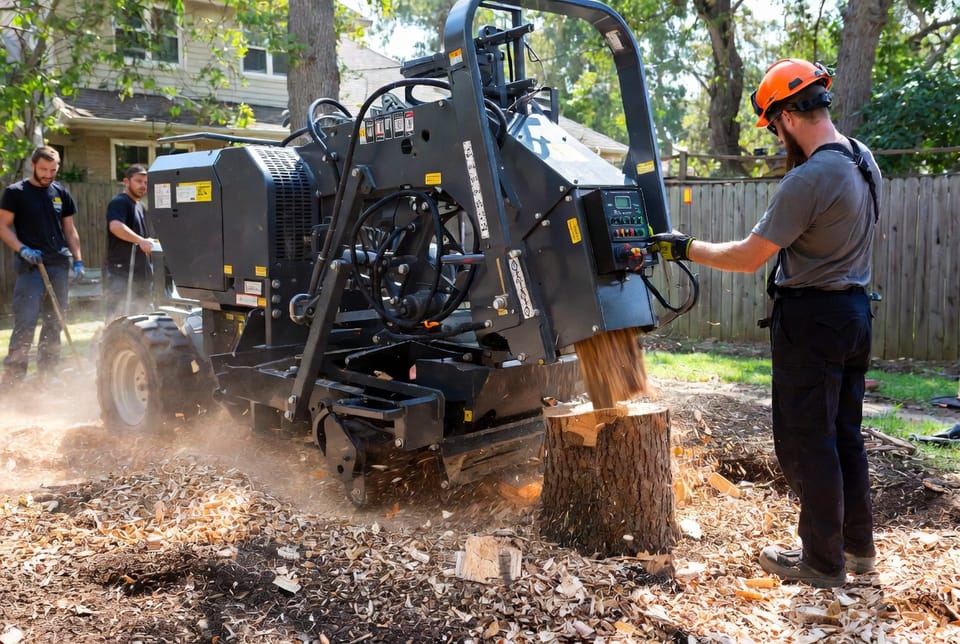
When dealing with a stubborn tree stump after removal, one critical decision determines the success of your landscape project: how deep should you grind it? Stump grinding depth isn't a one-size-fits-all solution. It directly impacts future usability, safety, aesthetics, and long-term costs.
Get Perfect Stump Grinding Depth – Call Now!
Choosing the right depth ensures your property remains functional and beautiful for years to come. Whether you're preparing for a lush lawn, new planting beds, or hardscaping, understanding stump grinding depth is essential for homeowners and property managers alike.
In this comprehensive guide, we'll explore everything you need to know about achieving the perfect grinding depth for your specific needs.
Why Stump Grinding Depth Matters
Tree stump grinding removes the visible portion of the stump and extends below ground level to eliminate the root flare and major roots. The depth you choose affects everything from grass growth to structural integrity for new builds.
Grinding too shallow leaves unsightly remnants that interfere with mowing, landscaping, and future plantings. Going too deep unnecessarily increases costs and equipment time without added benefits for your project.
Key benefits of proper depth include:
- Prevention of regrowth: Deeper grinding targets the root system more effectively.
- Smooth surface for future use: Creates a level area ready for sod, seed, or construction.
- Enhanced safety: Eliminates tripping hazards and potential pest habitats.
- Improved aesthetics: Blends seamlessly with surrounding landscape.
Professional arborists and stump grinding specialists recommend tailoring depth to your end goal. This targeted approach saves time and money while delivering superior results.
Understanding Standard Grinding Depths
Industry standards for stump grinding depth vary based on intended land use. Here's what professionals typically recommend:
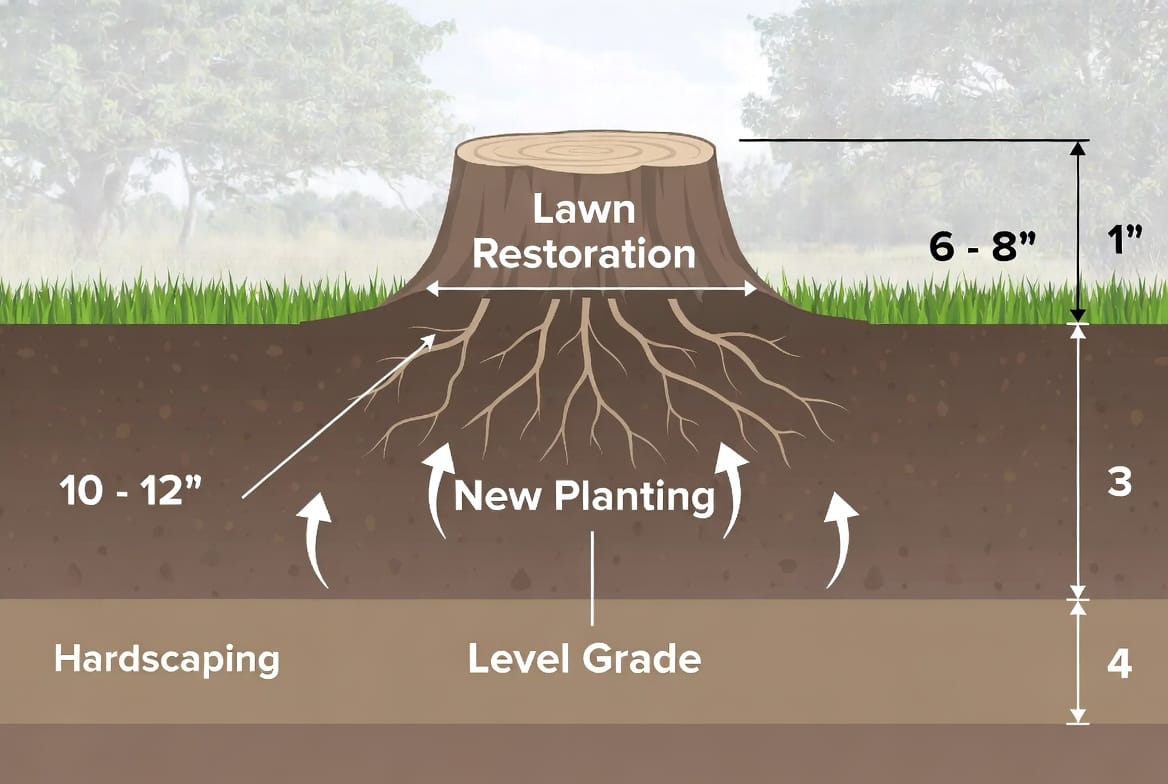
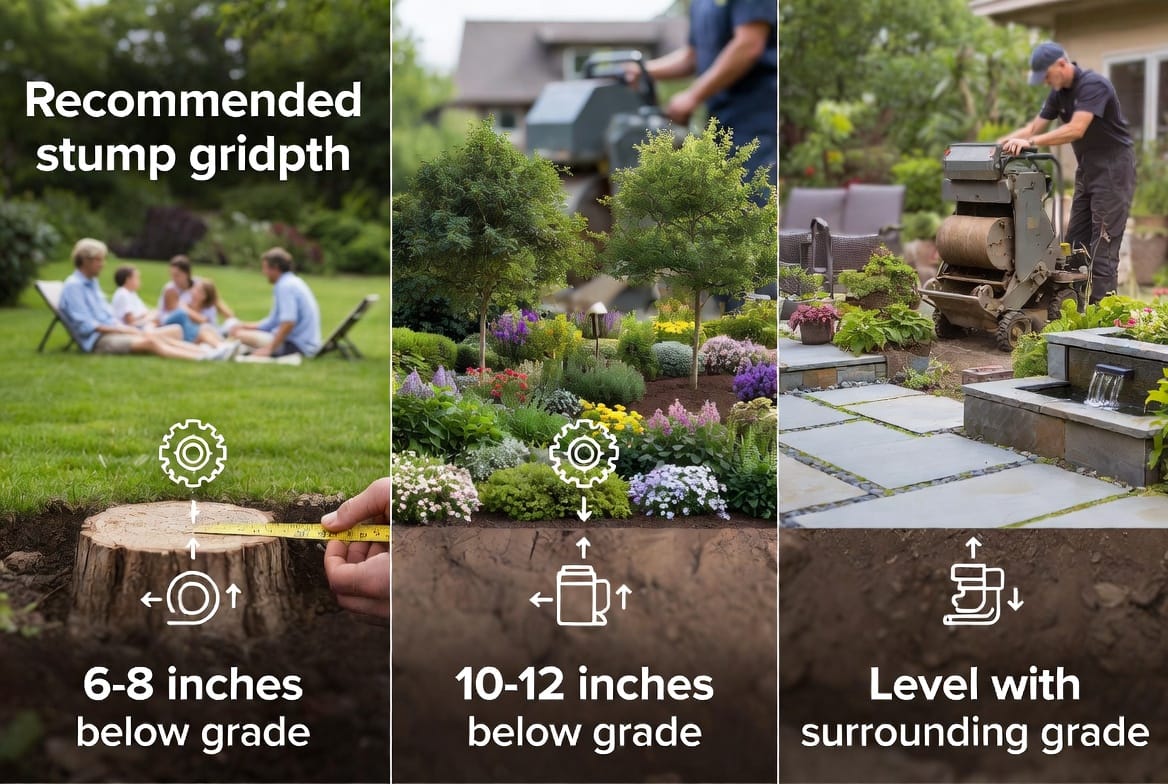
- For lawns and turf areas: 6-8 inches below grade is usually sufficient. This allows roots to decompose naturally while providing enough depth for healthy grass establishment.
- For new plantings or gardens: 10-12 inches or deeper ensures ample space for root development without competition from decaying wood.
- For hardscaping or structures: Grinding level with surrounding grade or slightly below supports stable foundations for patios, driveways, or sheds.
These recommendations balance effectiveness with practicality. Deeper grinding requires more powerful equipment and skilled operators, which influences pricing.
How to Measure Stump Grinding Depth for Your Project
Accurate measurement ensures you achieve the desired results without over- or under-grinding. Follow these professional steps:
- Assess your future plans — Determine primary use for the area (lawn, garden, patio, etc.).
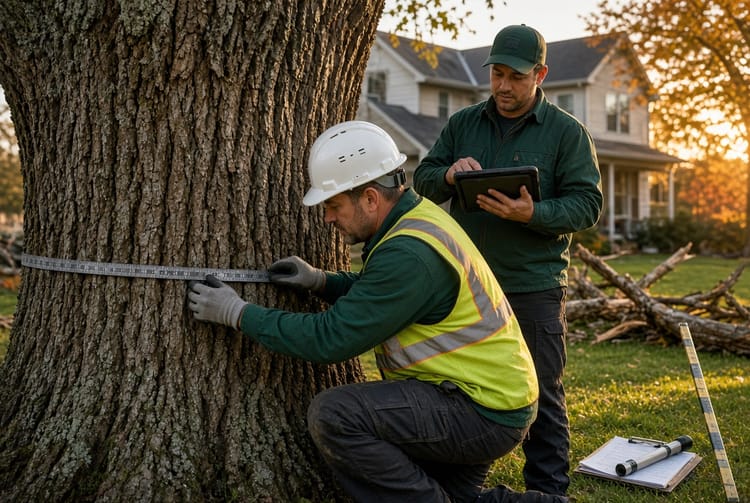
- Measure current grade — Use a long level or laser level across the surrounding soil.
- Mark target depth — Calculate inches below existing grade based on your needs.
- Account for backfill — Plan for topsoil replacement after grinding.
- Consider root system — Larger trees may require deeper grinding around the perimeter.
Pro tip: Always consult with certified stump grinding professionals who use specialized equipment with precise depth controls. They can evaluate site-specific factors like soil type, stump size, and root density.
Cost Implications of Different Grinding Depths
Deeper grinding costs more due to increased machine time, fuel consumption, and labor. However, investing in the right depth upfront often proves more economical than future corrections.
Typical factors affecting pricing:
- Stump diameter and number of roots
- Depth requirements
- Site accessibility
- Soil conditions (rocky soil increases difficulty)
- Debris removal and cleanup
While shallow grinding (6-8 inches) may cost less initially, inadequate depth can lead to expensive rework. Professionals provide accurate quotes after on-site assessment, ensuring transparent pricing tailored to your project.
Recommended Depths by Landscape Application
Preparing for a New Lawn
For seeding or sod installation, grinding to 6-8 inches below grade creates an ideal base. This depth allows:
- Proper topsoil layering
- Healthy root establishment
- Easy mowing without scalping
- Natural decomposition of remaining roots
Homeowners report significantly better grass coverage when following this guideline.
Garden Beds and Tree Planting
Deeper grinding of 10-12 inches (or more for large specimens) prevents competition between old roots and new plants. Benefits include:
- Better nutrient availability
- Reduced risk of fungal issues
- Ample space for expansive root systems
- Long-term plant health
Hardscaping Projects
When installing patios, walkways, or foundations, grind to level with surrounding grade or slightly below. This ensures:
- Stable base preparation
- Proper drainage
- Seamless transitions
- Compliance with building standards
Professional Techniques for Achieving Precise Depth
Experienced operators use advanced stump grinders equipped with depth indicators and hydraulic controls. They employ systematic patterns:
- Start at the center and work outward
- Make multiple passes at incremental depths
- Monitor progress with measuring tools
- Verify final depth across the entire area
Safety remains paramount. Professionals wear protective gear and follow strict protocols to protect your property and surrounding vegetation.
Common Mistakes to Avoid
- Guessing depth instead of measuring
- Choosing cheapest option without considering future use
- Ignoring soil type and drainage needs
- Attempting DIY on large stumps without proper equipment
- Neglecting cleanup of grindings and backfilling
Avoiding these pitfalls ensures satisfactory results and prevents costly issues down the line.
Environmental and Long-Term Benefits
Proper stump grinding depth supports eco-friendly landscaping. Remaining wood chips can be used as mulch, promoting soil health. Correct depth minimizes disruption to beneficial soil organisms while eliminating unwanted regrowth.
Many property owners appreciate the clean, professional finish that enhances curb appeal and property value.
When to Call the Experts
While small stumps might tempt DIY approaches, professional stump grinding services deliver precision, efficiency, and warranty-backed results. Experts assess your unique situation and recommend optimal depth for your goals.
They handle all aspects — from initial evaluation to final cleanup — allowing you to focus on enjoying your transformed landscape.
Preparing Your Property for Stump Grinding
Before the crew arrives:
- Clear the area of obstacles
- Mark underground utilities
- Trim nearby vegetation
- Plan for debris disposal
- Discuss depth requirements with the team
This preparation maximizes efficiency and ensures smooth project completion.
Post-Grinding Care and Maintenance
After achieving the target depth:
- Remove all wood chips or use them beneficially
- Add quality topsoil
- Level the surface carefully
- Water thoroughly if planting
- Monitor for settling over time
These steps lock in your investment and promote successful landscape establishment.
Choosing the Right Stump Grinding Service
Look for companies with:
- Experienced operators trained on depth control
- Modern equipment with precise settings
- Comprehensive insurance and safety records
- Positive customer reviews
- Transparent depth recommendations
Reputable services provide free estimates and educate clients on best practices.
Seasonal Considerations for Optimal Results
Timing your stump grinding project influences outcomes. Spring and fall often provide ideal soil conditions for precise depth control and minimal property disruption. Summer grinding works well for urgent projects but may require additional watering during backfill. Winter offers frozen ground advantages in some regions but limits accessibility.
Professionals adjust techniques based on weather and soil moisture to maintain accuracy regardless of season.
Technical Aspects of Modern Stump Grinders
Today's equipment features advanced depth gauges, carbide teeth for efficiency, and computer-assisted controls. These innovations allow operators to achieve consistent depths across irregular stumps and challenging terrain. Understanding this technology helps homeowners appreciate the precision possible in professional work.
Integrating Stump Grinding into Overall Property Management
Stump grinding depth decisions should align with your broader landscape vision. Consider drainage patterns, future expansions, and neighboring properties when planning. Comprehensive planning maximizes value from your investment.
Frequently Asked Questions About Grinding Depth
How deep is deep enough for most homeowners?
For standard lawn restoration, 6-8 inches below grade provides excellent results in most cases.
Can I grind deeper later if needed?
Yes, but initial proper planning avoids the expense and disruption of secondary visits.
Does deeper grinding always mean better?
Not necessarily. Match depth to your specific future use for optimal efficiency and cost-effectiveness.
Achieve the Right Grinding Depth – Call for Professional Service