The Tree Stump Burning: Safe and Legal Considerations for Removal
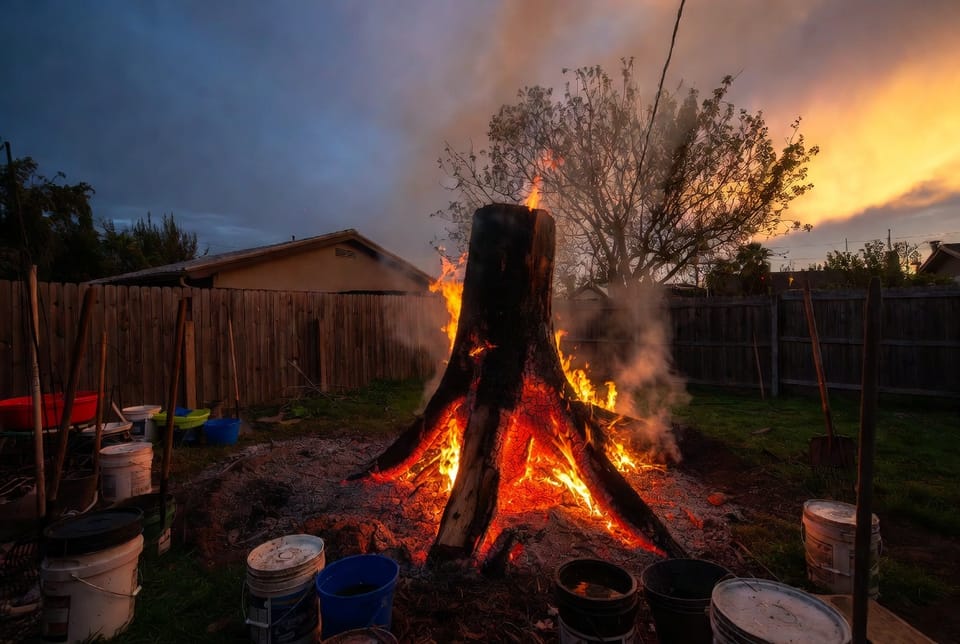
Tree stumps left behind after tree removal can become major eyesores and hazards in your yard. They interfere with mowing, attract pests, and may even sprout new growth. While many homeowners consider tree stump burning as a cost-effective removal method, it requires careful planning, strict adherence to safety protocols, and full compliance with local regulations.
Remove Your Stump Safely Today – Call Now!
In this comprehensive guide, we explore the stump burning method, its step-by-step process, critical legal considerations, essential safety measures, and better professional alternatives when burning isn't suitable.
Tree stump burning remains a popular DIY approach for many property owners, but understanding both its benefits and limitations ensures you make the right decision for your landscape and community safety.
What Is Tree Stump Burning?
Stump burning involves using controlled fire to gradually consume the remaining wood of a tree stump and its major roots. Unlike simply lighting a fire on top of the stump, the proper technique accelerates the process by creating channels for oxygen and fuel.
This method works best for smaller to medium-sized stumps that are thoroughly dried out. Fresh stumps with high moisture content burn poorly and may require additional preparation time.
Key benefits of stump burning include:
- Lower cost compared to professional grinding
- Effective for deep root systems
- Minimal heavy equipment required
However, it demands patience, proper preparation, and respect for both safety and legal boundaries.
Step-by-Step Guide to Safe Stump Burning
The stump burning process requires methodical preparation. Here’s how professionals approach it:
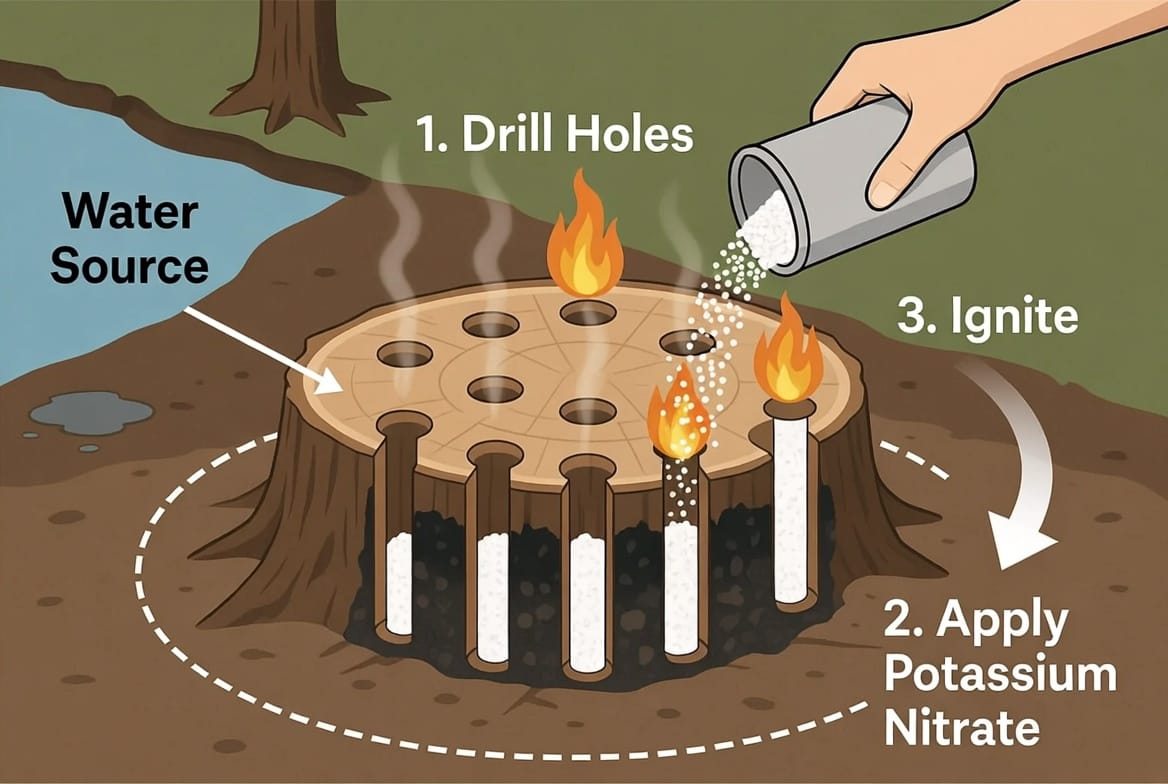
- Drill Multiple Holes: Use a large drill bit (at least 1 inch diameter) to create deep holes throughout the stump, approximately 8-12 inches apart. Drill down as far as possible, ideally 8-12 inches deep.
- Apply Accelerant: Pour potassium nitrate (saltpeter) into each hole. This chemical helps break down the wood fibers and promotes sustained burning. Let it soak for several days or weeks, adding water periodically to help absorption.
- Prepare the Surrounding Area: Clear all debris, dry leaves, and flammable materials within a 10-15 foot radius. Ensure the ground is moist or covered with fire-resistant materials.
- Ignite Carefully: Once prepared, light the stump using kindling in the holes. Monitor continuously until the fire establishes itself.
- Maintain and Extinguish: Keep a consistent burn while ensuring it doesn’t spread. Have a water source or hose ready throughout the process.
This method can take several hours to days depending on stump size and dryness. Never leave a burning stump unattended.
Legal Considerations for Stump Burning
Legal restrictions represent one of the most important factors in tree stump burning. Many municipalities, counties, and states have strict regulations regarding open burning due to air quality concerns, fire risks, and environmental impact.
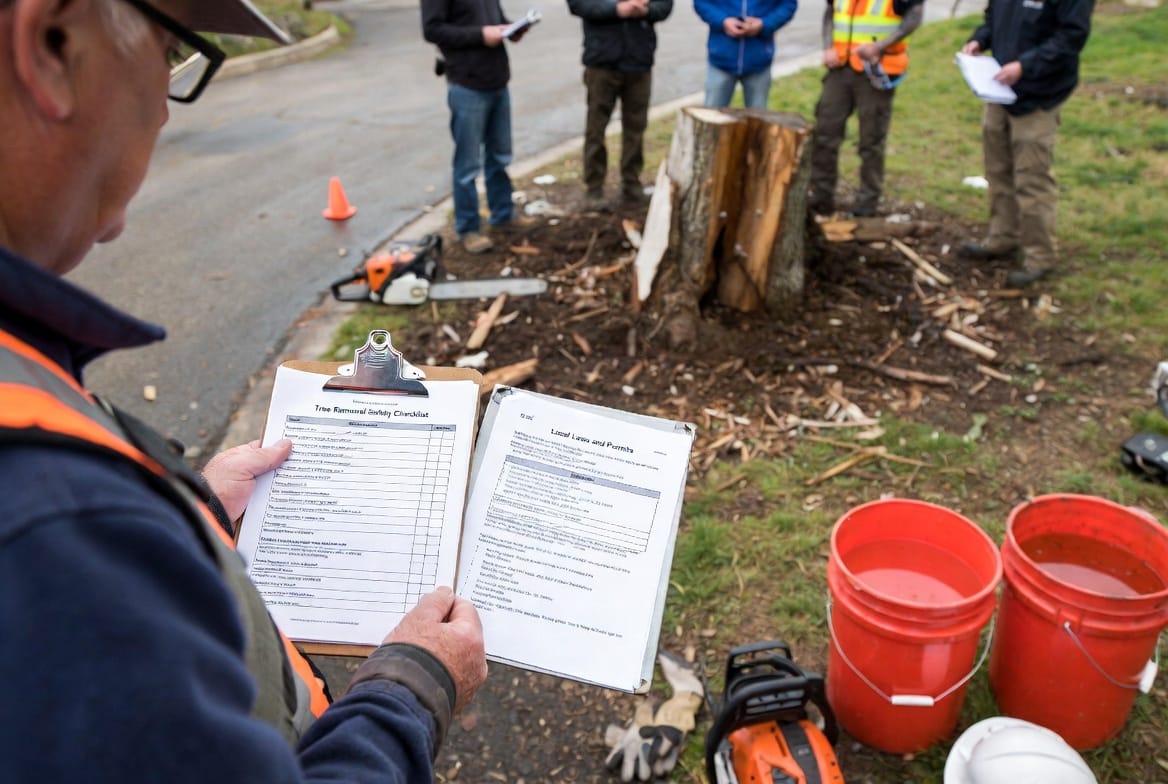
- Check local burn ordinances before starting
- Obtain necessary permits where required
- Comply with seasonal burn bans, especially during dry periods
- Notify your local fire department in advance
Many areas completely ban open burning of stumps. Urban and suburban locations often prohibit this practice entirely to reduce wildfire risks and smoke pollution. Rural areas may allow it with restrictions on timing and notification.
Always verify current regulations with your local authorities. Ignorance of the law can result in significant fines and potential liability if the fire escapes control.
Essential Safety Requirements
Safety must remain your top priority when considering stump burning. A properly executed burn minimizes risks, but the potential for uncontrolled fire demands respect.
Critical safety measures include:
- Clear a wide perimeter around the stump
- Maintain a reliable water source nearby (garden hose with strong pressure recommended)
- Have fire extinguishing tools ready, including a shovel and fire blanket
- Monitor weather conditions – avoid windy or extremely dry days
- Wear appropriate protective clothing and safety gear
- Notify neighbors and local fire services
Potassium nitrate and other chemicals require careful handling. Store and use them according to manufacturer guidelines to prevent accidents.
For families with children or pets, consider whether burning aligns with your household safety standards. The presence of smoke and open flames creates temporary hazards that need proper management.
Understanding the Risks Involved
While stump burning can be effective, several potential risks deserve careful consideration:
- Fire Spread: Embers can travel significant distances, especially on windy days
- Root System Burning: Underground roots may continue smoldering, creating hidden fire hazards
- Smoke and Air Quality: Heavy smoke affects neighbors and may violate air quality standards
- Chemical Residue: Accelerants may leave traces that affect soil health
- Incomplete Burning: Partially burned stumps may require additional removal work
These risks make professional assessment valuable before attempting DIY burning. An experienced arborist can evaluate whether your specific stump and property conditions suit this removal method.
Better Alternatives to Stump Burning
For many homeowners, professional alternatives provide safer and more reliable solutions than burning.
Stump Grinding
Stump grinding uses specialized machinery to reduce the stump to wood chips below ground level. This method:
- Works in almost any weather condition
- Creates minimal smoke or disruption
- Allows immediate replanting or landscaping
- Handles large stumps efficiently
Chemical Decay Methods
Chemical treatments accelerate natural decomposition without fire. These involve applying approved stump removal products that break down wood fibers over weeks or months.
Manual or Mechanical Removal
For smaller stumps, complete excavation or using leverage tools may prove practical.
Each alternative offers different advantages depending on your timeline, budget, and property constraints. Professional services often combine methods for optimal results.
When to Call Professional Stump Removal Services
Not every stump warrants burning. Consider professional help when:
- Local laws prohibit burning
- The stump is large or has an extensive root system
- You're uncertain about safety protocols
- The area has nearby structures or sensitive landscaping
- You prefer a quick, clean solution
Experienced teams bring proper equipment, insurance coverage, and expertise that ensures complete removal while protecting your property.
Making the Right Choice for Your Property
Tree stump burning offers a viable option for some situations, but it requires thorough preparation, legal compliance, and unwavering attention to safety. Understanding both the technique and its limitations helps you decide whether burning fits your needs or if professional alternatives would serve you better.
The goal remains the same regardless of method: safely eliminating the stump while preserving your landscape’s beauty and functionality. Taking time to research local regulations and assess safety conditions protects both your property and your community.
Remember that successful stump removal enhances your yard’s appearance and prevents future issues with regrowth or pests. Whether you choose burning or professional services, proper execution ensures long-term satisfaction.
Burning may not be legal in your area. For safe, reliable, and compliant stump removal solutions tailored to your property.
Our team provides professional assessment, recommends the best removal method for your specific situation, and delivers clean results with minimal disruption to your landscape.
Safe & Legal Stump Burning Experts – Call Today!