The Tree Spring Growth: Fertilizing for Seasonal Health
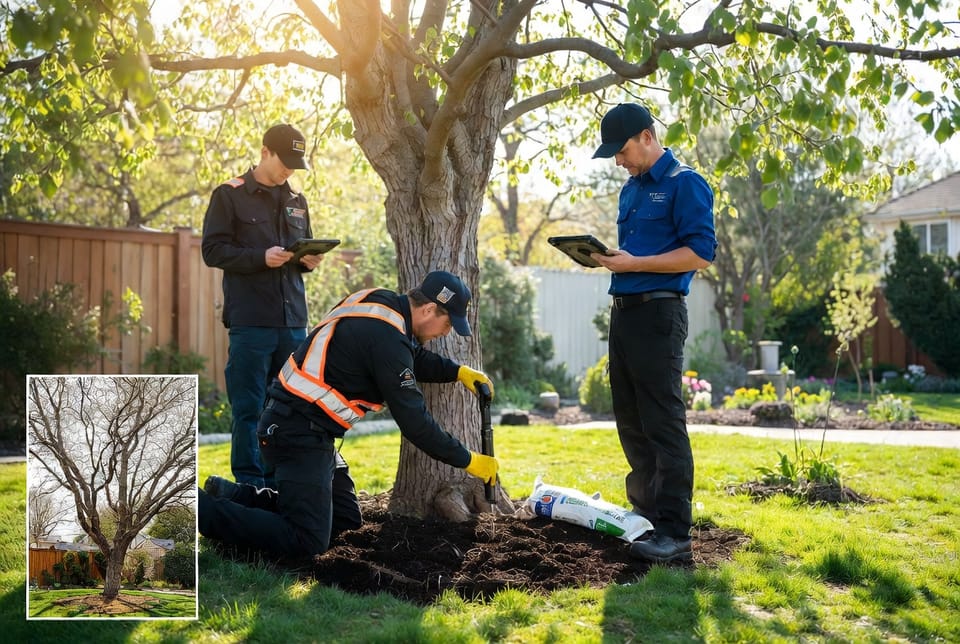
Spring marks the most critical window in a tree’s annual cycle. As soil temperatures rise and daylight lengthens, trees shift from dormancy into rapid new growth. Proper spring fertilization supplies the exact nutrients needed for strong shoots, dense foliage, and resilient root systems. When timed and applied correctly, this single seasonal practice dramatically improves long-term health, reduces stress, and prevents costly decline later in the year.
Get Expert Spring Tree Fertilization Today – Call Now!
Why Spring Fertilization Fuels New Growth
During winter, trees rely on stored energy. Once spring arrives, they demand a fresh supply of nitrogen, phosphorus, potassium, and micronutrients to power cell division and leaf expansion. Spring fertilization delivers these elements precisely when roots become active again. The result is thicker canopy density, longer annual shoot growth, and improved resistance to pests and drought.
Trees that receive balanced nutrition in early spring typically produce 20–40 percent more foliage than under-fertilized counterparts. This extra leaf surface increases photosynthesis, which in turn builds stronger wood and deeper roots. The process creates a positive feedback loop: healthier roots absorb more water and nutrients, supporting even better top growth.
Skipping this step often leaves trees struggling. Limited energy reserves force them to produce smaller leaves or fewer buds. Over successive seasons the cumulative effect appears as thinner crowns, slower recovery from storms, and greater vulnerability to insects.
Recognizing Nutrient Deficiency Signs Early
Catching problems early protects the investment you have already made in your landscape. Watch for these clear signs of nutrient deficiency:
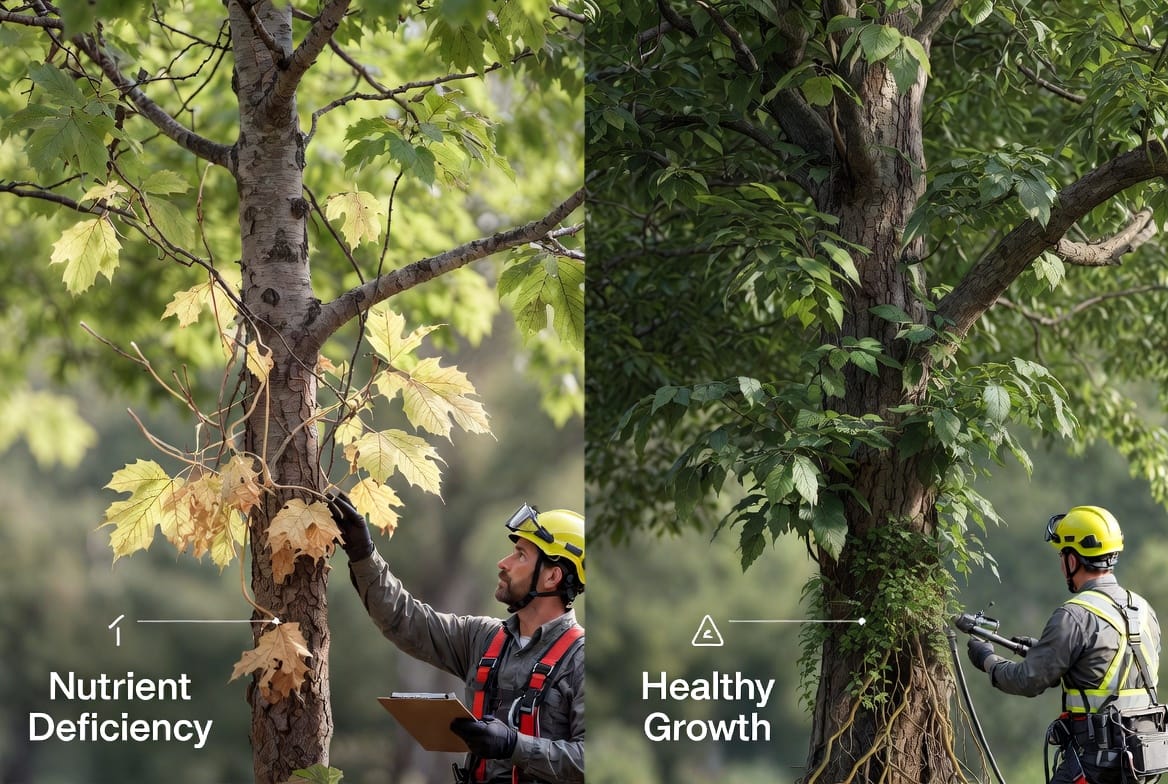
- Pale or yellowing leaves (chlorosis), especially between the veins while veins remain green
- Poor annual growth — shoots shorter than previous years or sparse branching
- Early leaf drop beginning in mid-summer rather than autumn
- Smaller-than-normal leaves or leaves with scorched margins
- Reduced flowering or fruiting on ornamental and fruit trees
- Thin canopy that allows excessive light to reach the ground
These symptoms rarely appear overnight. They develop gradually as soil nutrient levels drop or as roots struggle to access existing reserves. Iron and manganese deficiencies often show first on new growth; nitrogen shortages affect older leaves. Accurate diagnosis prevents unnecessary treatments and focuses resources where they matter most.
Choosing the Right Fertilizer Types
Not every product delivers the same results. Two categories stand out for reliable seasonal care: slow-release fertilizers and organic fertilizers.
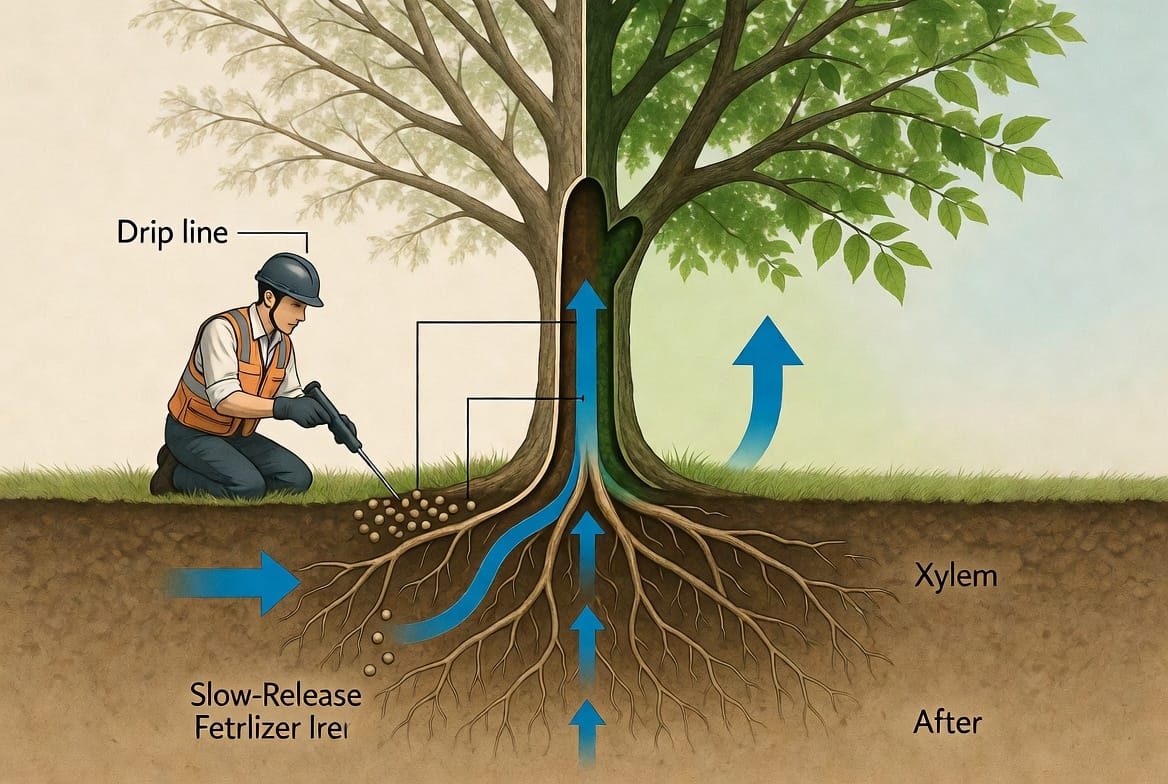
Slow-release fertilizers coat nutrients in polymer or sulfur layers that dissolve gradually over weeks or months. This controlled delivery matches the tree’s natural uptake rate, minimizing waste and reducing the risk of fertilizer burn. Most professional blends provide a balanced N-P-K ratio such as 18-6-12 or 16-4-8, often enriched with micronutrients. A single spring application can feed the tree through the entire growing season.
Organic fertilizers derive from natural sources—composted manure, bone meal, feather meal, or seaweed extracts. They improve soil structure while supplying nutrients. Organic materials encourage beneficial microbes that help roots absorb minerals more efficiently. Although they release nutrients more slowly than synthetic products, they build long-term soil health and are ideal for environmentally sensitive sites.
Many modern formulations combine both approaches: a portion of quick-release nitrogen for immediate spring response plus slow-release and organic components for sustained feeding. Always select products labeled for trees and shrubs rather than lawn fertilizers, which contain higher nitrogen levels that can encourage weak, leggy growth.
Proper Application Technique Protects Roots and Results
How you apply fertilizer matters as much as what you choose. The most effective method targets the root zone rather than broadcasting granules across the surface.
Surface broadcasting often wastes product. Much of the fertilizer never reaches the feeder roots that lie 6–18 inches below ground and extend well beyond the canopy edge (the drip line). Rain or irrigation can also wash surface material into storm drains, creating environmental runoff.
Professional root-zone application places nutrients directly where roots can absorb them. Techniques include:
- Soil injection with specialized probes that deliver liquid or granular fertilizer 8–12 inches deep
- Vertical mulching—drilling small holes throughout the root zone and backfilling with fertilizer-amended compost
- Deep root feeding that combines aeration with nutrient delivery
Apply material from the trunk outward to at least the drip line, and preferably 1.5 times that distance for mature trees. Calculate rates carefully: too little yields minimal benefit; too much risks salt burn or groundwater contamination. Follow label guidelines based on trunk diameter or canopy area, and water thoroughly afterward to activate the product and settle soil.
Timing is equally important. Begin once soil temperatures consistently exceed 50 °F and buds start to swell—typically late March through mid-May depending on climate. Avoid fertilizing during drought or extreme heat, when roots cannot efficiently take up nutrients.
Additional Seasonal Care That Amplifies Fertilization Benefits
Fertilization works best as part of a complete spring program. Pair it with these complementary practices:
- Mulching: Maintain a 2–4 inch layer of organic mulch over the root zone, keeping it away from the trunk. Mulch conserves moisture, moderates soil temperature, and slowly adds organic matter.
- Pruning: Remove dead or crossing branches before growth accelerates. Clean cuts heal faster when the tree is actively growing.
- Soil testing: A simple laboratory test every three to five years reveals exact nutrient levels and pH. Adjust fertilizer selection accordingly rather than guessing.
- Water management: Newly fertilized trees need consistent moisture. Provide deep, infrequent watering rather than frequent shallow sprinkling.
Together these steps create an environment where fertilizer delivers maximum return. Trees respond with denser foliage, stronger branch structure, and greater ability to withstand summer stress.
Common Mistakes and How to Avoid Them
Even well-intentioned homeowners sometimes undermine their efforts. Avoid these frequent errors:
- Applying fertilizer too close to the trunk, where few feeder roots exist
- Using high-nitrogen lawn products that force soft, pest-attractive growth
- Fertilizing stressed or recently transplanted trees before they establish
- Ignoring soil pH; nutrient availability drops sharply outside the ideal 6.0–7.0 range
- Over-applying “just to be safe,” which can damage roots and pollute waterways
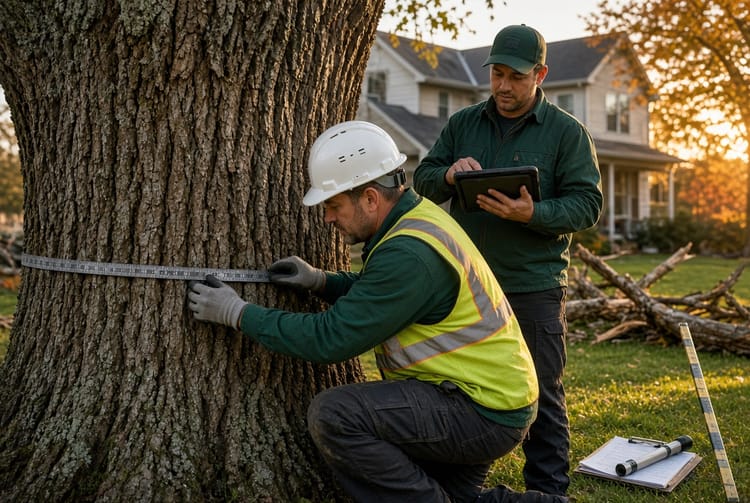
Professional assessment eliminates guesswork. Certified arborists measure trunk caliper, evaluate soil conditions, and calculate precise rates tailored to each tree species and site.
Long-Term Rewards of Consistent Spring Care
Trees that receive proper spring fertilization year after year develop deeper root systems, thicker bark, and denser canopies. They recover faster from storm damage, resist insect outbreaks more effectively, and maintain higher property values. Mature specimens that once looked sparse regain full, healthy crowns within two to three seasons.
Homeowners also notice practical benefits: cooler summer shade, reduced air-conditioning costs, and a more attractive landscape that enhances curb appeal. The modest annual investment in professional care prevents far larger expenses associated with tree removal or replacement later.
Final Thoughts on Seasonal Tree Vitality
Spring offers a brief but powerful opportunity to set trees up for success throughout the year. By understanding how fertilization supports new growth, recognizing signs of nutrient deficiency, selecting quality slow-release or organic products, and applying them correctly within the root zone, you give every tree the foundation it needs to thrive.
Protect Tree Health This Season – Call for Care!