The Tree Seedling Care: Growing Strong Trees from Seeds
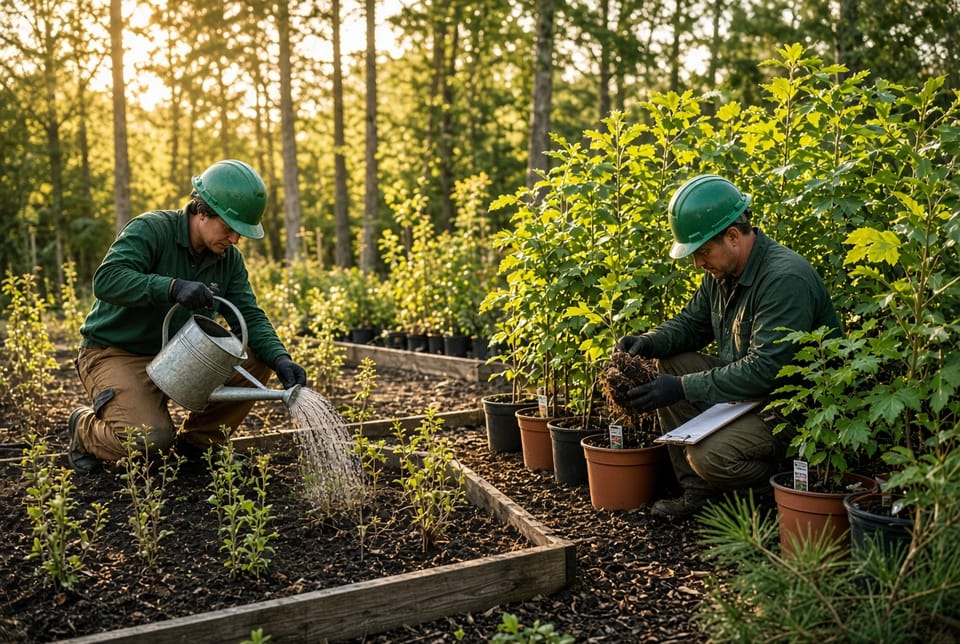
Growing trees from seed is one of the most rewarding forms of tree propagation. With patient, informed tree seedling care, you can raise oaks, maples, pines, walnuts and many other species that become landscape anchors for decades. This guide walks you through every practical stage—from seed collection and stratification through germination, transplanting and the first years of young-tree care—so you can produce healthy, well-rooted stock instead of buying expensive nursery trees.
Protect Young Trees After Removal – Call Now
Why Grow Trees from Seed?
Starting from seed gives you genetic diversity, lower cost and the satisfaction of watching a tiny embryo become a mature tree. Many native species also establish stronger root systems when grown this way. Success depends on matching each species’ natural requirements rather than treating every seed the same. The process is straightforward once you understand the biology behind dormancy and early growth.
Collecting and Storing Viable Tree Seeds
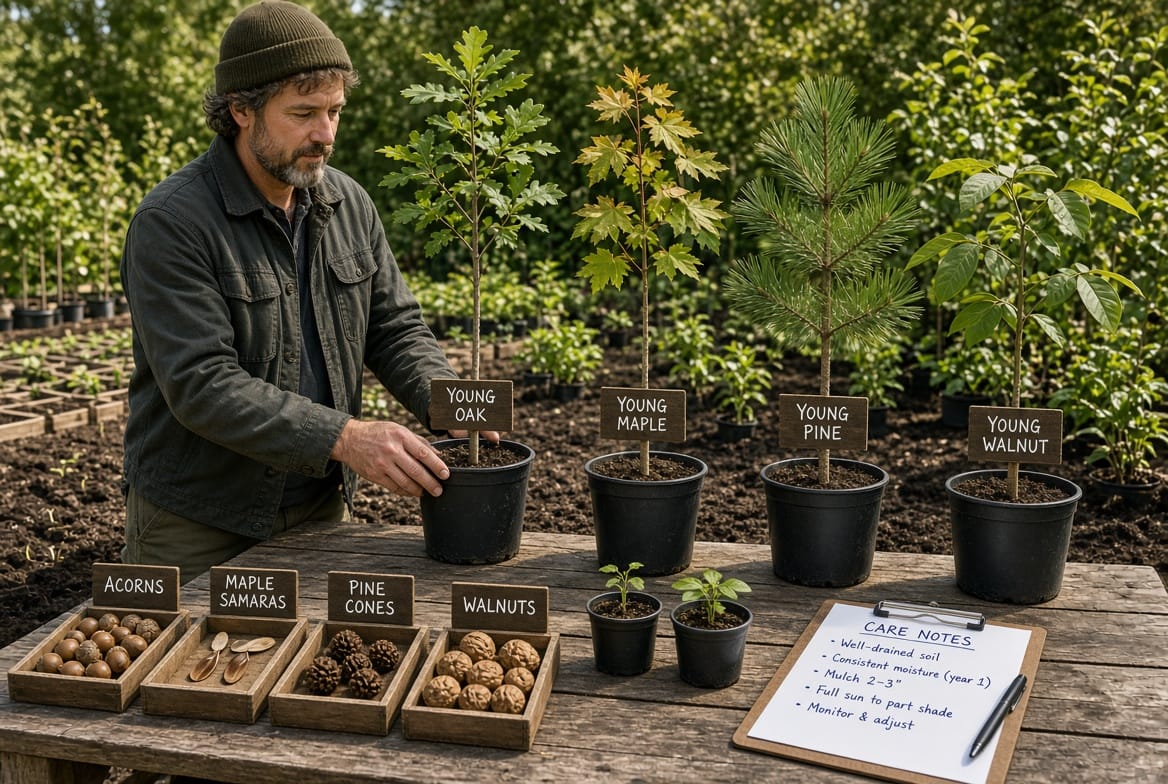
Begin with fresh, ripe seed. Collect acorns, maple samaras, pine cones and walnuts in autumn when they naturally drop or can be shaken from the tree. Discard any that float in water (they are usually empty or damaged) and those showing insect holes or mold.
- Store dry seeds (most pines, some maples) in paper bags in a cool, dark place.
- Keep fleshy or oily seeds (walnuts, many oaks) slightly moist and refrigerated if you cannot sow immediately.
- Label every batch with species, collection date and location.
Poor-quality seed is the most common reason germination fails. Taking a few extra minutes at collection pays off months later.
Stratification: Breaking Seed Dormancy
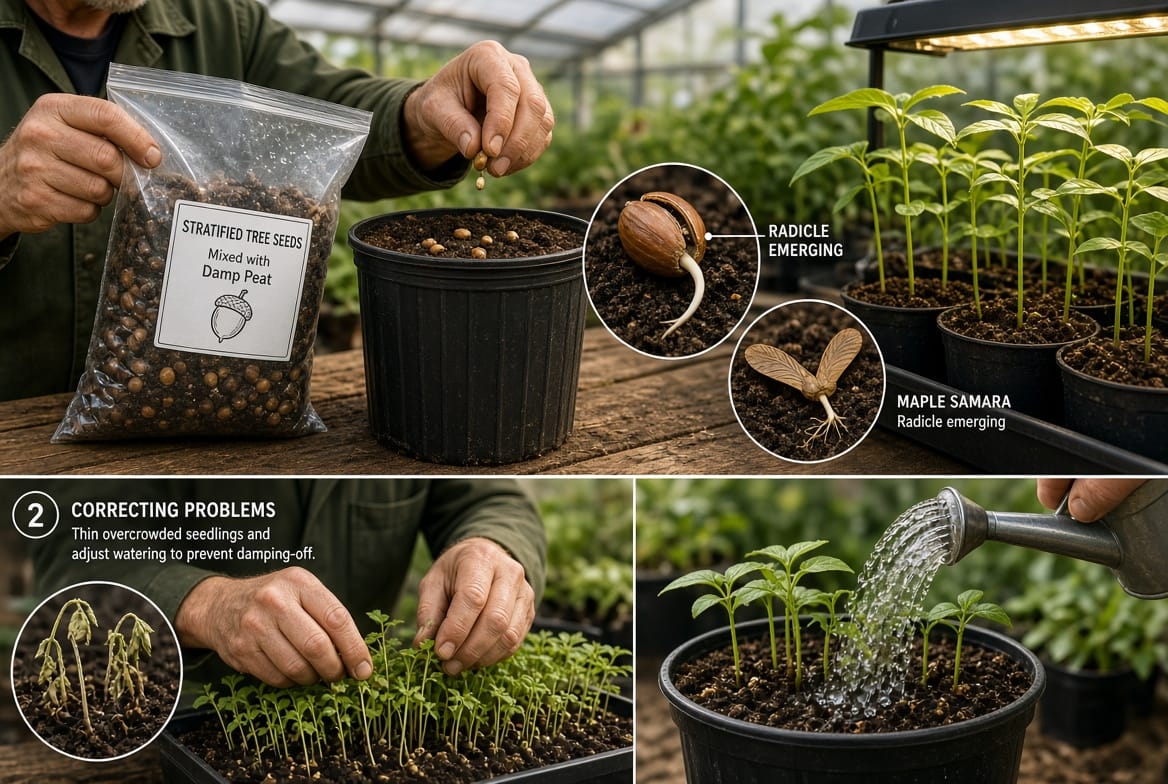
Most temperate-tree seeds will not sprout until they experience a period of cold, moist conditions that mimic winter. This process is called stratification.
- Mix seeds with damp (not wet) peat, sand or vermiculite.
- Place the mixture in a sealed plastic bag or container.
- Refrigerate at 34–41 °F for the recommended period: typically 30–90 days for maples, 60–90 days for oaks and walnuts, and 30–60 days for many pines.
- Check weekly and discard any moldy seeds; a light dusting of cinnamon can reduce fungal growth.
Some species, such as certain red oaks and white pines, also benefit from a short warm-moist period before the cold treatment. Others, like many white oaks, germinate immediately if planted in fall and need no artificial stratification. Always research the exact requirement for your chosen species rather than applying a one-size-fits-all schedule.
Risk to avoid: Letting the medium dry out or become soggy. Either extreme kills the embryo.
Sowing and Encouraging Germination
After stratification, sow seeds in a well-draining mix of potting soil, compost and perlite or coarse sand. Depth is usually two to three times the seed’s diameter.
- Use individual pots or deep cells so roots are not disturbed later.
- Keep the medium evenly moist and provide bright, indirect light or a grow light on a 14–16 hour cycle.
- Maintain temperatures of 65–75 °F for most species.
- Cover trays with a humidity dome until the first true leaves appear, then ventilate to prevent damping-off.
Germination times vary widely: some maples appear in two weeks, many oaks take four to eight weeks, and walnuts can require even longer. Patience and consistent moisture are more important than extra fertilizer at this stage.
Transplanting Seedlings Without Shock
Once seedlings have two to four true leaves and a sturdy stem, they are ready for larger containers or a prepared nursery bed.
- Water thoroughly the day before moving.
- Handle by the leaves or root ball, never the fragile stem.
- Plant at the same depth they grew previously; burying the stem invites rot.
- Water in with a dilute seaweed or mycorrhizal solution to ease transplant stress.
- Provide light shade for 7–10 days if moving outdoors.
Deep pots or fabric bags encourage a strong taproot in oaks and walnuts. Maples and pines often form more fibrous systems and tolerate standard containers well. Space plants so air circulates freely; crowding invites fungal disease.
Daily and Seasonal Care for Young Trees
The first two to three years determine whether a seedling becomes a vigorous tree or a struggling one.
Watering
Keep soil consistently moist but never waterlogged. Young roots occupy a small volume and dry out quickly. A simple finger test—water when the top inch feels dry—is more reliable than a fixed schedule. Mulch with 2–3 inches of shredded bark or wood chips, keeping the material a few inches away from the stem to prevent collar rot.
Light and Air
Most tree seedlings prefer full sun once established, but newly transplanted stock benefits from afternoon shade in hot climates. Good air movement reduces powdery mildew and damping-off.
Nutrition
A light application of balanced, slow-release fertilizer in spring is usually sufficient. Excess nitrogen produces weak, lanky growth that is more susceptible to wind and pests. Organic compost worked into the soil at planting supplies micronutrients without burning roots.
Protection
Young trees are vulnerable to rabbits, deer, voles and late frosts. Use tree tubes, hardware-cloth cages or fencing. In cold regions, a layer of extra mulch or a burlap wrap helps prevent frost heaving.
Pruning
Remove only damaged or crossing branches in the first year. Early structural pruning—selecting a single leader and well-spaced laterals—pays dividends later. Never remove more than 25 percent of the canopy at one time.
Risks to watch:
- Overwatering leading to root rot
- Sudden exposure to full sun after indoor germination
- Neglecting winter protection in USDA zones 5 and colder
- Allowing weeds to compete for water and nutrients
Address these issues promptly and most seedlings recover quickly.
Best Species to Grow from Seed
Certain trees respond especially well to home or small-scale propagation.
Oaks
Acorns of white oak group species often germinate the same fall they drop; red oak group members usually need stratification. Plant them 1–2 inches deep in deep containers to accommodate the taproot. They resent root disturbance, so plan to plant them in their final location or a large nursery bed as soon as possible.
Maples
Red and silver maples germinate readily with modest cold treatment. Sugar maple benefits from a longer 90-day stratification. Sow samaras soon after collection or after treatment; they lose viability if stored dry for too long.
Pines
Many pines require 30–60 days of cold-moist treatment. Sow on the surface or under a very light covering of grit because they need light to germinate. Protect young seedlings from damping-off with good ventilation and a well-drained mix.
Walnuts
The hard shell benefits from both scarification (nicking or soaking) and 90 days of stratification. Plant the nut on its side 1–2 inches deep. Walnut seedlings grow rapidly once established and develop a strong taproot.
These four groups cover a wide range of soils, climates and landscape uses. Starting several individuals of each species increases your chance of selecting the strongest specimens.
Troubleshooting Common Seedling Problems
Even careful growers encounter setbacks. Yellowing leaves often indicate overwatering or poor drainage; move the plant to a better mix and reduce frequency. Leggy growth signals insufficient light—raise the intensity or duration of supplemental lighting. Fungal spots or sudden collapse point to damping-off; improve air flow, reduce humidity and consider a biological fungicide. Insect damage on new leaves can usually be managed with insecticidal soap or by encouraging beneficial insects.
If an entire batch fails, review your stratification timing and storage conditions before starting again. Most problems are preventable with consistent monitoring rather than expensive treatments.
Building Long-Term Success
After the first growing season, gradually acclimate seedlings to outdoor conditions if they were started indoors. By the second or third year they can be planted in their permanent sites or sold as lining-out stock. Continue mulching, watering during drought and protecting from animals. Record-keeping—dates of sowing, germination percentages and any treatments—helps you refine your technique each year.
Growing trees from seed is not instant, but the process is reliable when you respect each species’ natural cycle. The result is a tree whose roots have never been confined to a small pot and whose genetics are adapted to your local conditions.
Grow your own trees from seed.
Call Now for Professional Seedling Care & Tree Removal