The Tree Root System: Understanding How Roots Support the Canopy
A tree’s true power is not only in the spreading branches and dense foliage we admire. The tree root system working silently below ground is the foundation that keeps the entire structure alive. Roots deliver water and nutrients, anchor the tree against wind and gravity, store energy, and communicate with the soil ecosystem. In return, the canopy produces the sugars that feed the roots. This two-way relationship is one of the most elegant examples of biological partnership in nature.
Call Now for a Professional Tree Health Assessment
When the root system functions well, the canopy stays full, green, and resilient. When roots suffer damage, compaction, disease, or drought, the effects quickly appear above ground as thinning foliage, dead limbs, or a leaning trunk. Understanding this connection allows property owners to protect their trees before small problems become costly removals or safety hazards.
This article explains the biology of the root–canopy relationship, the most common signs of root distress, and practical steps anyone can take to keep roots healthy. The information is grounded in established tree physiology and presented so homeowners, landscape managers, and property stewards can make informed decisions.
The Hidden Architecture of Tree Roots
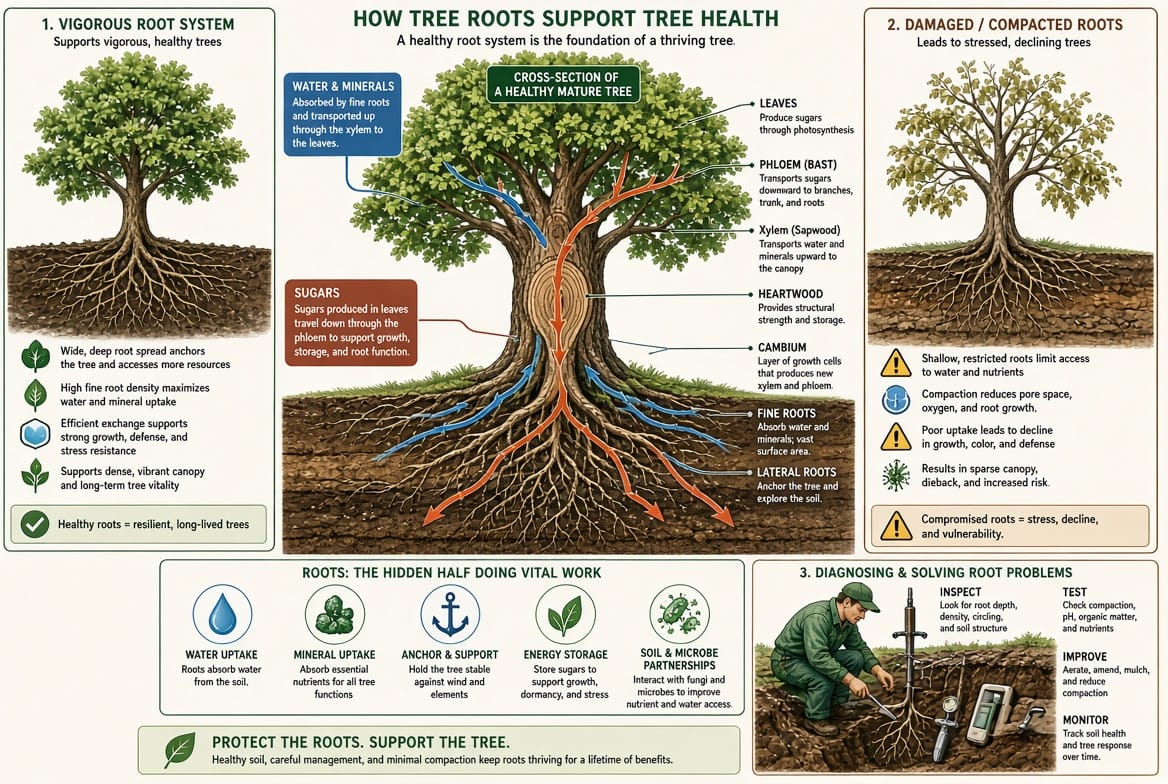
Most people picture a tree’s roots as a mirror image of the branches—a deep taproot with a few large laterals. In reality, the majority of a tree’s absorbing roots lie in the top 12 to 18 inches of soil, where oxygen, moisture, and nutrients are most available. These fine roots, often less than 2 millimeters in diameter, are covered with even finer root hairs that dramatically increase surface area for uptake.
Larger woody roots provide structure and transport. They radiate outward, frequently extending well beyond the drip line—the imaginary circle on the ground directly beneath the outermost leaves. In many species the root system can reach two to three times the width of the canopy. This wide, relatively shallow plate creates a stable “root plate” that resists uprooting.
Roots perform four essential functions:
- Anchorage – The woody framework holds the tree upright.
- Absorption – Fine roots and associated fungi take up water and mineral nutrients.
- Storage – Carbohydrates produced in the leaves are stored in root tissues for winter and for periods of stress.
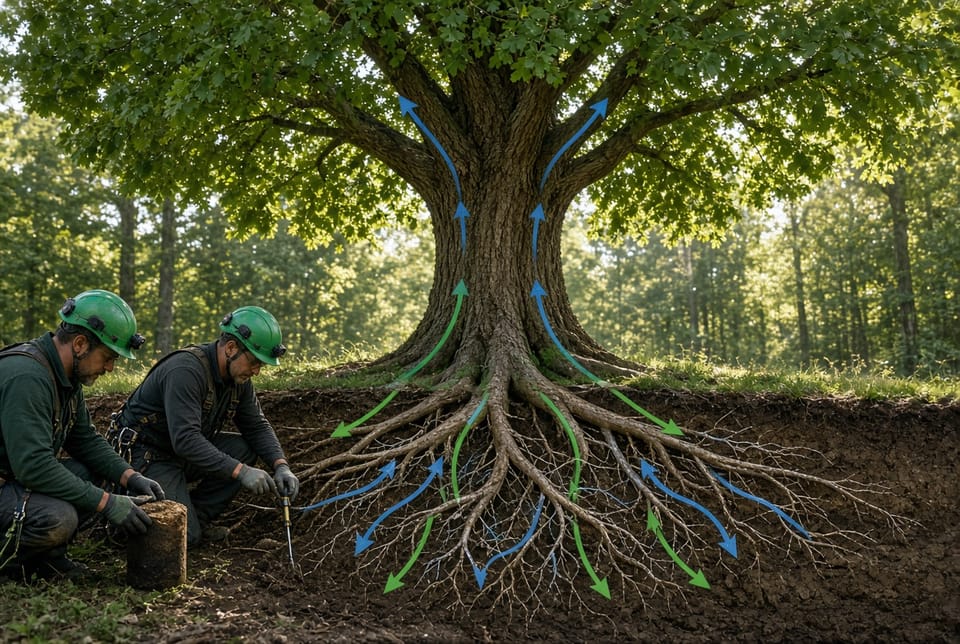
- Transport – Xylem vessels move water and dissolved minerals upward; phloem carries sugars downward.
Soil type, moisture, and available oxygen strongly influence root architecture. Compacted clay restricts oxygen and forces roots toward the surface. Sandy soils allow deeper penetration but may drain too quickly. Understanding these patterns helps explain why some trees thrive in one location and struggle in another.
The Vital Relationship Between Roots and Canopy
The canopy and the root system exist in constant exchange. Leaves open tiny pores called stomata to take in carbon dioxide for photosynthesis. At the same time they lose water vapor through transpiration. This loss creates a negative pressure that pulls a continuous column of water from the roots all the way to the highest leaves—a process described by the cohesion-tension theory.
While the canopy is manufacturing sugars, the roots are mining the soil for nitrogen, phosphorus, potassium, and micronutrients. These minerals travel upward in the xylem sap and become building blocks for new leaves, flowers, and wood. In the opposite direction, phloem tissue carries the products of photosynthesis down to the roots so they can grow, repair themselves, and maintain symbiotic relationships with soil microbes.
This partnership is so tightly linked that stress in one part of the tree almost immediately affects the other. Reduced root function means less water and fewer nutrients reach the leaves. The canopy responds by shedding older foliage, producing smaller leaves, or dying back from the tips—a condition known as canopy dieback. Conversely, if the canopy is heavily damaged by storm, disease, or improper pruning, the roots receive less energy and begin to decline.
Healthy trees maintain a roughly balanced root-to-shoot ratio. When that ratio is disrupted—by construction damage, grade changes, or chronic drought—the tree must spend energy repairing roots instead of growing new foliage or defending against pests. Over time the imbalance becomes visible and, if ignored, irreversible.
Recognizing Signs of Root Problems
Because roots are hidden, early warning signs appear first in the canopy or in the tree’s posture. Learning to read these signals allows timely intervention.
Common indicators include:
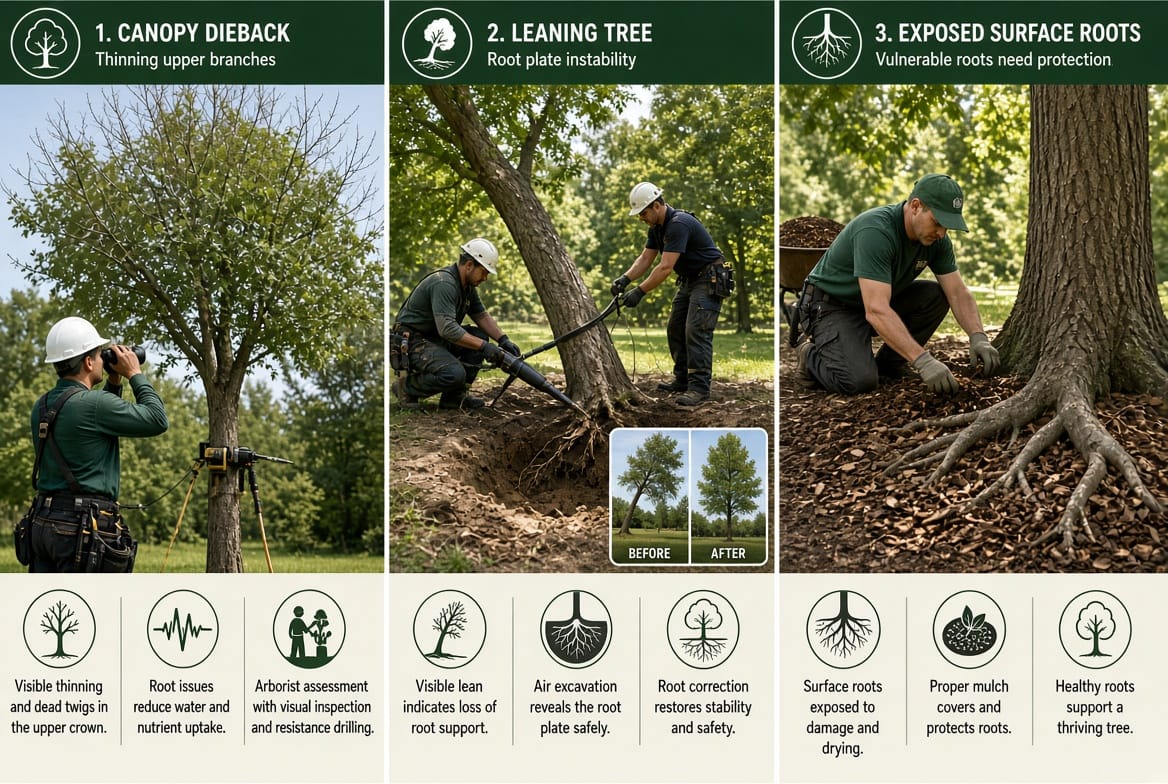
- Canopy dieback – Dead or dying twigs at the ends of branches, thinning crown, or large sections of the canopy that fail to leaf out in spring. Dieback often begins at the top or on the side of the tree farthest from the most damaged roots.
- Leaning – A sudden or progressive tilt. While some trees develop a natural lean, a recent change in angle frequently signals root-plate failure, decay on one side, or soil saturation that has reduced anchorage.
- Exposed roots – Large woody roots appearing on the surface, often accompanied by soil erosion or compaction. Surface roots are more vulnerable to injury from mowers, vehicles, and temperature extremes.
- Additional clues – Premature autumn color, undersized leaves, epicormic sprouts along the trunk, or mushrooms appearing at the base (possible root-decay fungi).
These symptoms do not always mean the tree must be removed. Many trees recover when the underlying soil or root issue is corrected. However, a leaning tree near a structure, a power line, or a high-traffic area requires prompt professional evaluation because the risk of failure increases rapidly once the root plate is compromised.
Soil compaction is one of the most frequent and preventable causes of root decline. Heavy equipment, repeated foot traffic, or parking vehicles within the critical root zone squeezes air out of the soil. Roots suffocate, water infiltration decreases, and beneficial microorganisms disappear. The canopy then shows drought stress even when rainfall has been adequate.
Construction activities pose another major threat. Cutting roots, adding or removing soil over the root zone, or changing drainage patterns can kill a significant percentage of the absorbing roots in a single season. Trees may appear normal for one or two years while they draw on stored energy, then decline suddenly.
Proven Strategies to Protect Tree Roots
Protecting the root system is far less expensive and more effective than trying to restore a declining tree. The following practices form the core of responsible tree care.
Maintain a generous mulch ring. Apply 2 to 4 inches of organic mulch (wood chips, shredded bark, or composted leaves) from near the trunk out to the drip line or beyond. Keep mulch a few inches away from the bark itself to prevent moisture-related decay. Mulch moderates soil temperature, reduces evaporation, suppresses weeds, and slowly adds organic matter as it decomposes.
Water deeply and infrequently. Shallow daily sprinkling encourages roots to stay near the surface where they are easily damaged. Instead, apply water slowly so it soaks 12 to 18 inches into the soil. Newly planted trees and trees under drought stress benefit most from this approach. Once established, most trees need supplemental water only during extended dry periods.
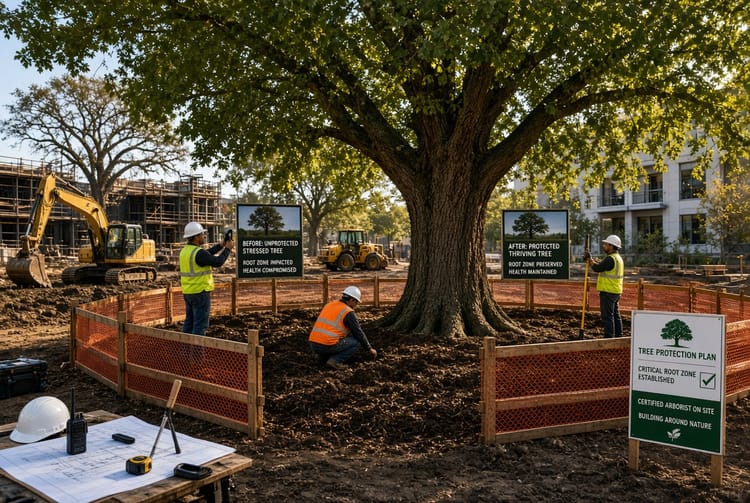
Avoid soil compaction. Keep vehicles, construction equipment, and heavy foot traffic outside the critical root zone whenever possible. When work must occur near trees, use plywood or commercial ground-protection mats to distribute weight. After construction, consider soil aeration or the addition of compost to restore porosity.
Never raise or lower the soil grade around an established tree without professional guidance. Adding fill smothers roots; removing soil exposes them and can destabilize the tree. If grade changes are unavoidable, consult an arborist about root-pruning techniques and possible installation of aeration systems.
Protect roots during landscaping and utility work. Inform contractors of the location of important trees and request that trenching be routed outside the drip line. When roots must be cut, make clean cuts with sharp tools rather than tearing them with machinery.
Monitor for pests and diseases that attack roots. Phytophthora root rot, for example, thrives in poorly drained soils and can kill fine roots rapidly. Early detection through soil testing or professional inspection allows targeted treatment before the canopy collapses.
Regular visual inspections by the property owner, combined with periodic professional assessments, catch problems while they are still manageable. An experienced arborist can evaluate root collar health, measure soil compaction, test for pathogens, and recommend corrective actions such as vertical mulching, radial trenching, or targeted fertilization.
Why Professional Tree Health Assessment Matters
Many root problems develop slowly and remain invisible until the canopy is already compromised. A trained arborist brings specialized tools—air excavation equipment, resistograph drills, soil penetrometers, and laboratory testing—that reveal conditions no homeowner can see. Early diagnosis often allows the tree to be saved through soil improvement, targeted pruning that reduces sail area, or structural support.
Waiting until a tree is obviously dying or leaning dangerously usually leaves only two options: costly cabling and bracing that may still fail, or complete removal. Regular assessment is therefore both a safety measure and a financial decision.
Healthy roots mean a healthy tree. When the underground system is intact and functioning, the canopy stays vigorous, the tree resists storms, and the landscape remains an asset rather than a liability. If you notice any of the signs discussed here—thinning foliage, a change in lean, or roots appearing at the surface—do not delay.
An experienced team can evaluate the entire root–canopy relationship, explain findings in clear language, and recommend the most effective, least invasive course of action. Protecting the hidden half of your trees today ensures they continue to provide shade, beauty, and value for decades to come.
Call Today to Check Root Damage and Tree Stability