The Tree Root Rot Treatment: Managing Underground Decay
Root rot remains one of the most deceptive threats to landscape trees. While the canopy may still appear mostly green, the real battle occurs silently beneath the soil. By the time most homeowners notice thinning crowns or mushrooms at the base, significant structural roots have already been compromised. Effective root rot treatment focuses on accurate diagnosis, cultural corrections that improve soil conditions, and timely decisions about tree removal when safety or spread risk becomes too great.
Call Now for Professional Root Rot Assessment
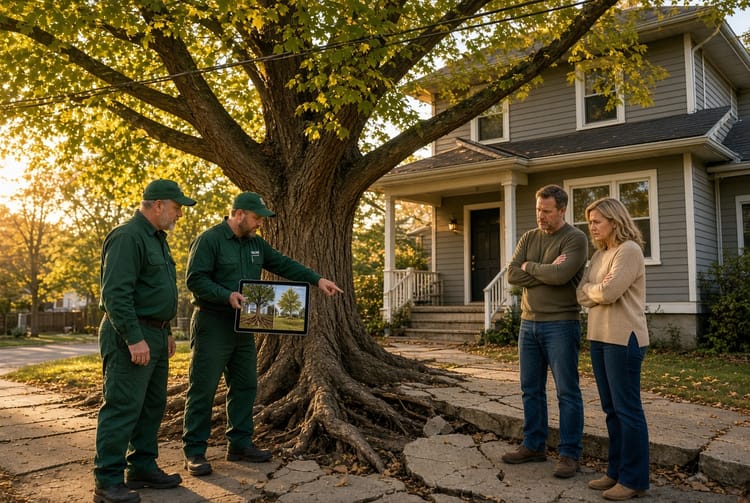
Professional arborists approach these cases with a clear priority: protect people and property first, then preserve trees whenever possible through targeted management. Understanding how fungal pathogens attack roots in wet or poorly drained soils helps homeowners recognize problems earlier and make informed choices.
Understanding Root Rot as an Underground Disease
Root rot is not a single disease but a group of conditions caused by various fungal pathogens and water molds that target the fine feeder roots and larger structural roots of trees. These organisms thrive in saturated or compacted soils where oxygen levels are low. Once established, they destroy the root system’s ability to absorb water and nutrients, effectively starving the tree from below.
Because the damage happens underground, visible symptoms often appear only after 30 to 50 percent or more of the root system is already affected. This delay makes early professional intervention critical. Trees stressed by construction, grade changes, or improper irrigation are especially vulnerable. The longer the condition goes unaddressed, the higher the chance of structural instability and potential tree failure during storms or high winds.
Primary Causes of Root Rot in Landscape Trees
Several common landscape conditions create the perfect environment for root-decaying organisms:
- Excess soil moisture from poor drainage, low spots, or automatic irrigation systems that run too frequently or too close to the trunk.
- Compacted or poorly aerated soil that limits oxygen to roots, weakening natural defenses.
- Root injuries caused by excavation, lawn equipment, foot traffic, or recent construction that opens entry points for pathogens.
- Deep planting or mulch piled against the trunk, which keeps the root collar constantly moist and invites collar rot.
- Introduction of contaminated soil or plant material that already carries fungal spores or mycelium.
Certain tree species show greater susceptibility, particularly mature oaks, maples, and pines growing in heavy clay or areas with fluctuating water tables. Once a pathogen becomes established in the root zone, it can persist for years, even after the original tree is gone, because many fungi produce durable resting structures in the soil.
Spotting the Warning Signs Before It’s Too Late
Homeowners often miss the earliest clues because they appear gradually. Regular observation combined with professional evaluation offers the best protection.
Canopy dieback typically begins at the outer edges or upper crown and progresses inward. Leaves may become smaller, turn yellow prematurely, or drop early. The overall crown looks thinner and less vigorous year after year.
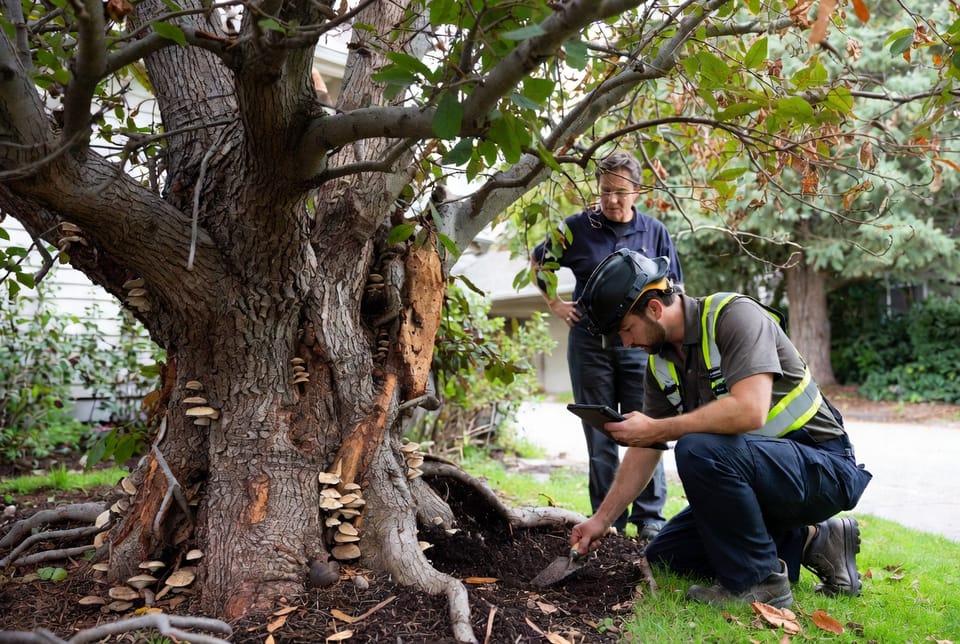
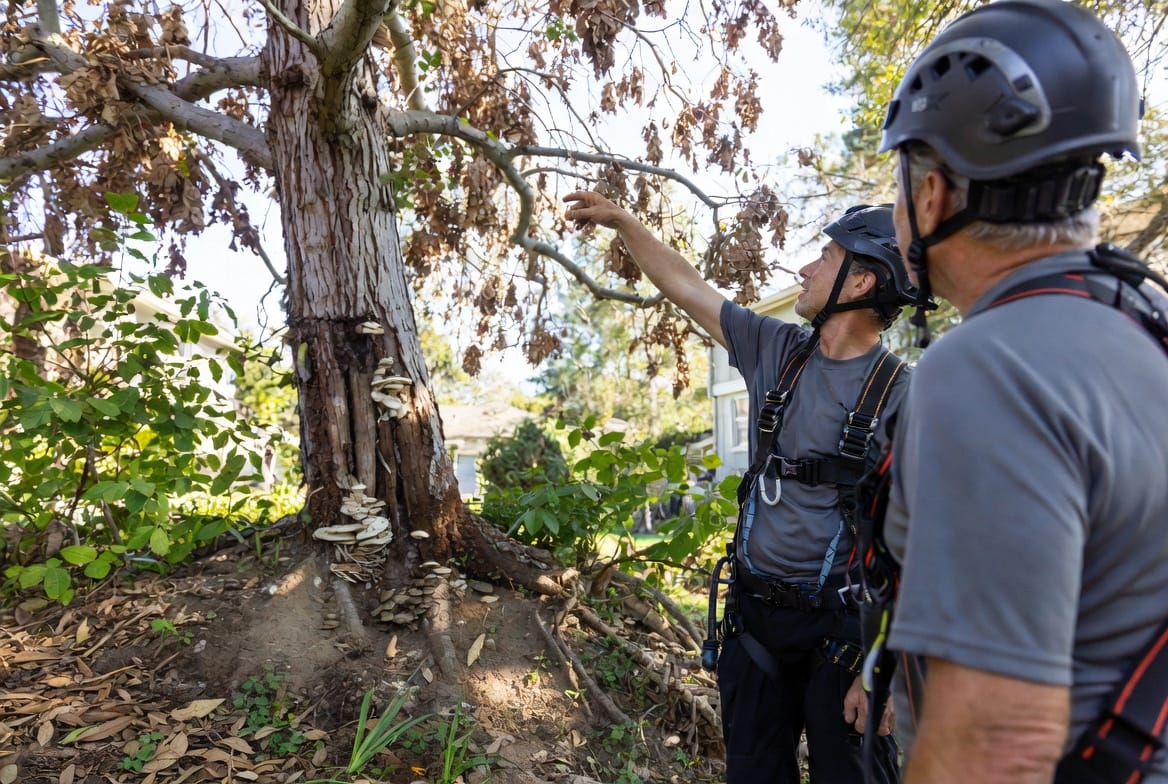
Mushrooms or fungal fruiting bodies appearing at the base of the tree or in the root zone after wet weather are strong indicators. These structures represent the reproductive stage of certain root rot fungi and signal active decay below.
Loose or mounded soil around the root flare, visible cracks in the ground, or soil that lifts easily when probed often means structural roots have rotted and can no longer anchor the tree properly.
Leaning or excessive swaying in moderate wind, especially if the lean has developed recently, points to loss of root support. A tree that once stood straight but now tilts noticeably deserves immediate attention.
Other signs include dark streaks or oozing on the lower trunk bark and reduced growth rings visible in any exposed wood. Because these symptoms can overlap with drought stress or nutrient deficiency, only a trained professional can confirm root rot through root collar excavation and diagnostic testing.
How Root Rot Spreads and Why Early Detection Matters
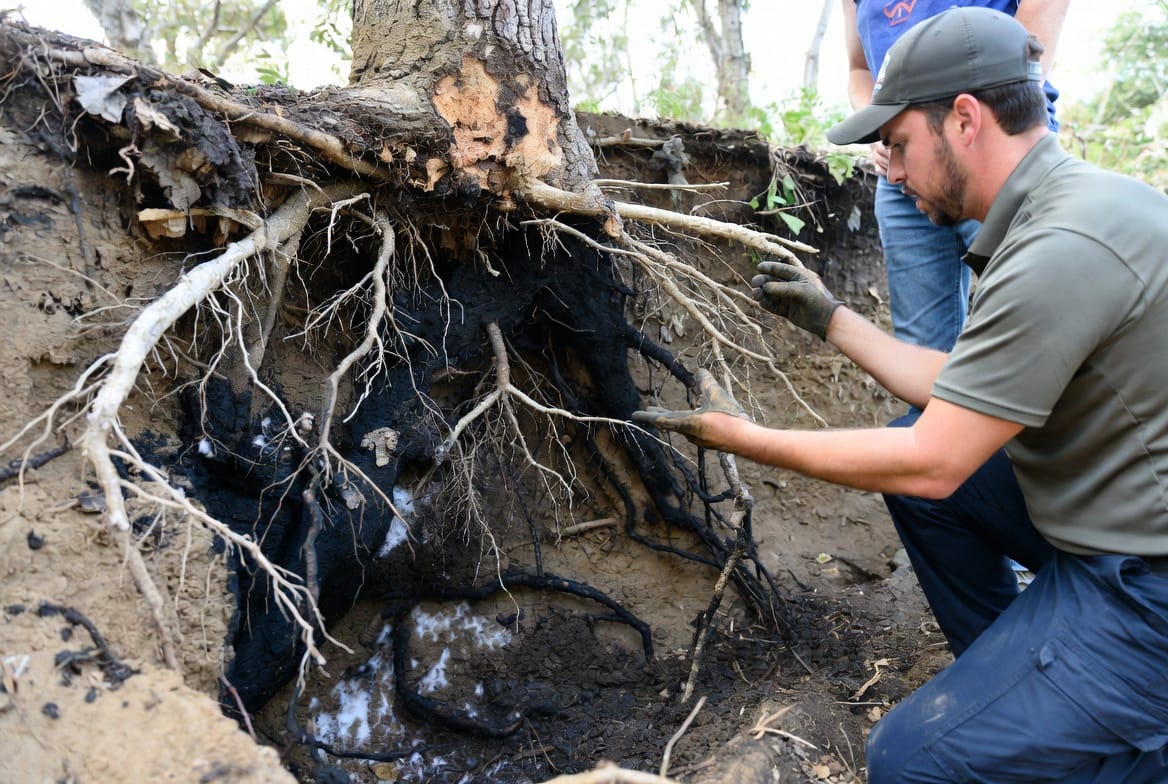
Root rot pathogens rarely stay contained to a single tree. Many species produce thread-like structures called rhizomorphs that can extend through soil and infect neighboring roots. Some fungi also spread when roots of different trees graft together underground. Spores released from mushrooms or conks can travel short distances and start new infections when they land in suitable wet soil.
This underground network explains why removing only the most obviously sick tree sometimes fails to stop the problem. Professional assessments evaluate not just the symptomatic tree but the surrounding landscape for shared soil conditions or root proximity that could allow continued spread. Understanding this biology helps homeowners see why improving drainage and removing severely infected trees often form the core of a successful root rot treatment plan.
Effective Management Strategies for Root Rot
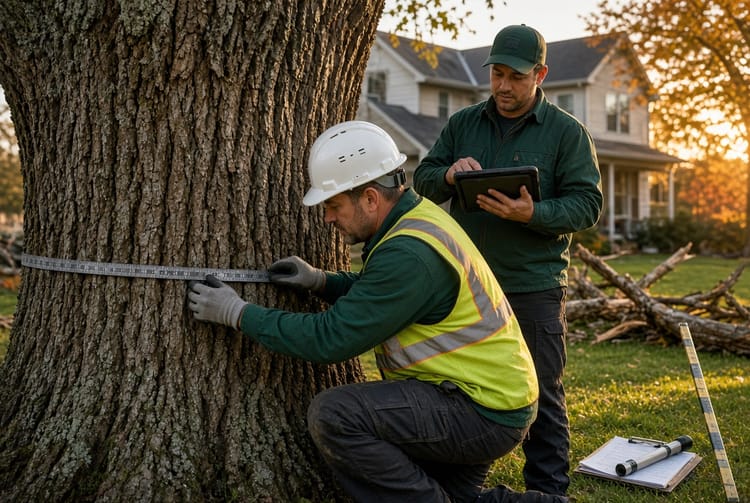
Successful management begins with precise diagnosis. Certified arborists use root collar excavation, soil sampling, and sometimes advanced tools to determine which pathogen is present and how far the decay has progressed. This information guides every subsequent decision.
Improve drainage and reduce excess moisture. Regrading low areas, installing French drains, or redirecting downspouts away from the root zone can dramatically change soil conditions. Arborists often recommend adjusting irrigation controllers so mature trees receive deep, infrequent watering rather than frequent shallow cycles that keep surface roots wet.
Modify the immediate root zone environment. Removing excess mulch from against the trunk, aerating compacted soil carefully, and eliminating competing grass or groundcover within the drip line reduces stress. These cultural changes do not cure existing infections but slow further decline and help remaining healthy roots function better.
Prune dead or dying branches. Removing deadwood reduces the tree’s energy drain and lowers the risk of branch failure. Professional pruning also improves air movement through the canopy, which can indirectly support overall tree health.
Consider targeted treatments when appropriate. For certain pathogens, especially Phytophthora species, some systemic fungicides or phosphonate applications applied by licensed professionals may slow disease progression in early stages. These treatments are not universally effective and work best as part of a broader management program rather than standalone solutions.
Remove the tree when risk outweighs benefit. When more than half the structural roots show significant decay, or when the tree leans noticeably and poses a clear hazard to structures or people, removal is often the safest and most responsible choice. Professional removal includes proper rigging to protect surrounding property, stump grinding or treatment to reduce residual fungal material, and guidance on replacement species suited to the site’s drainage conditions.
Prevention: Keeping Healthy Trees Resilient
The most effective root rot treatment is prevention. When planting new trees, ensure the root flare sits at or slightly above grade and that the planting hole drains well. Design irrigation systems so water does not constantly saturate the root zone of established trees. Conduct regular professional inspections, especially after major storms, construction projects, or changes in watering routines. Healthy, well-sited trees with intact root systems have natural defenses that can resist low levels of pathogen pressure.
Why Professional Assessment Provides the Greatest Value
Homeowners sometimes attempt DIY drainage fixes or apply general fungicides without knowing the specific pathogen or the extent of root loss. These efforts can waste resources or even worsen conditions by disturbing remaining healthy roots. More importantly, a leaning tree with hidden root decay represents a serious safety risk. Only trained professionals can quantify the percentage of compromised roots and recommend actions that balance tree preservation with property protection.
Root Rot Is Often Fatal — Act Before the Tree Becomes a Hazard
In many cases, by the time root rot symptoms become visible in the canopy, the disease has advanced significantly underground, making it often fatal to the tree. The most responsible step is to schedule a professional disease assessment before the situation escalates into property damage or personal injury.
Our team of certified arborists provides thorough evaluations, clear explanations of findings, and practical management options tailored to your landscape. Early action protects not only the affected tree but also neighboring trees and the safety of your property.
Let our experts help you understand what’s happening beneath the soil and guide you toward the safest, most effective path forward. Healthy trees start with healthy roots — and informed decisions start with professional insight.
Protect Your Trees – Schedule Expert Evaluation Today