The Tree Root Girdling Prevention: Proper Planting Depth Saves Trees

Trees are more than just beautiful additions to our landscapes—they are vital investments that enhance property value, provide shade, improve air quality, and support local ecosystems. Yet many well-intentioned homeowners unknowingly plant trees in ways that doom them from the start. Planting too deep is one of the most common and destructive mistakes, directly leading to girdling roots that can strangle a tree over time.
Prevent Girdling Roots & Protect Your Trees – Call Now
In this comprehensive guide, we explore exactly how proper planting depth prevents girdling roots, the warning signs to watch for, and the step-by-step techniques that ensure your trees thrive for decades. Whether you're planting a new sapling or assessing an established tree, understanding these fundamentals can save your landscape and prevent costly removals.
Proper planting depth isn't just a technical detail—it's the foundation of tree health. When done correctly, it allows roots to grow naturally outward and downward, anchoring the tree securely while delivering essential nutrients and water. Let's dive into why depth matters so much and how you can protect your trees.
Understanding Girdling Roots and Their Hidden Danger
Girdling roots occur when roots encircle the trunk or other major roots, restricting the flow of water, nutrients, and sugars. Over years, this constriction weakens the tree, reduces its stability, and can ultimately kill it.
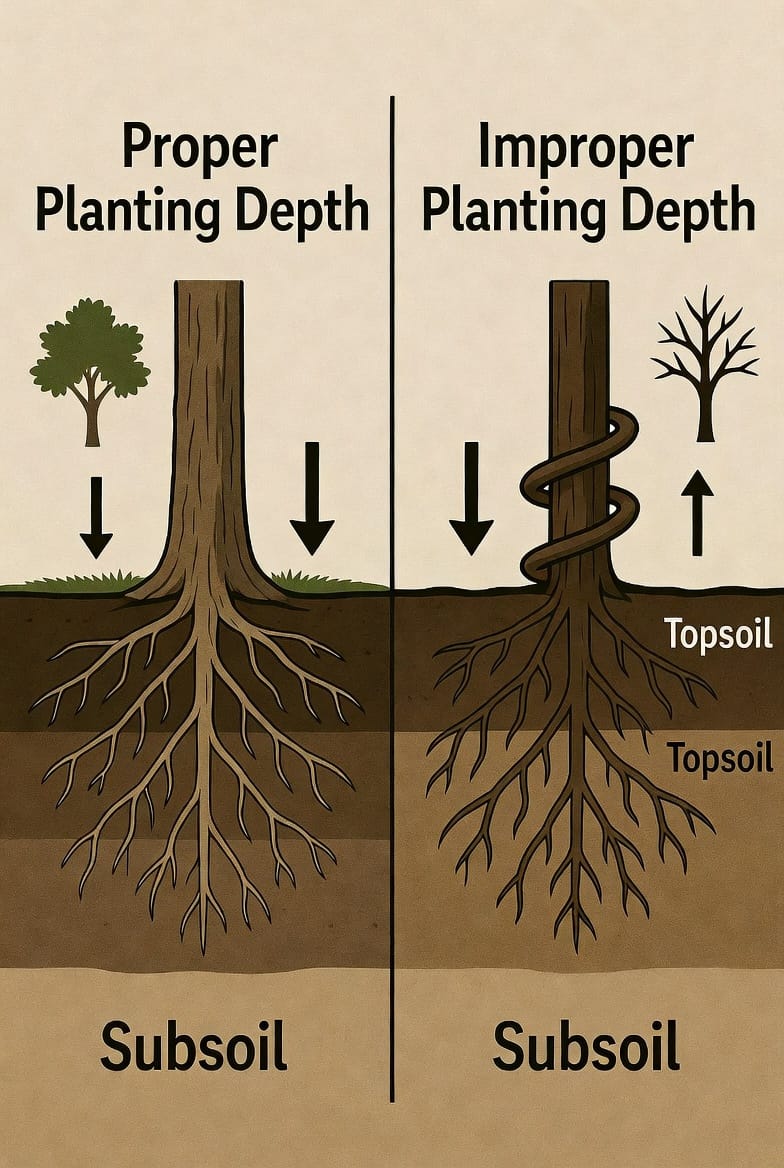
Unlike obvious pests or diseases, girdling often develops silently below ground. The primary culprit? Improper planting depth. When a tree is set too low in the hole, the trunk remains buried. As the tree grows, roots naturally seek oxygen and space near the surface, wrapping around the trunk instead of radiating outward.
This issue is especially common in urban and suburban settings where compacted soils and nursery stock practices encourage deep planting. But with awareness and the right technique, you can easily prevent it.
How Planting Too Deep Triggers Girdling Roots
When you dig a planting hole and position the tree so that soil covers the root flare (the point where the trunk widens at the base), you create conditions perfect for girdling.
The root flare must remain at or slightly above grade. Burying it forces the tree to adapt by sending out adventitious roots higher up on the trunk. These roots then circle and compress vascular tissue, cutting off circulation.
Risks of deep planting include:
- Reduced oxygen access for roots near the surface
- Trunk rot and decay from constant moisture against bark
- Weak structural support, increasing storm damage risk
- Slower growth and decline over 5–15 years
Many trees show no immediate symptoms, which makes early prevention crucial. A tree that looks healthy today may be silently struggling underground.
Recognizing the Signs of Girdling Roots
Early detection can save a tree before damage becomes irreversible. Look for these key indicators:
- Missing or hidden root flare: The trunk enters the soil like a telephone pole with no visible flare.
- Flattened or oval trunk base: Compression distorts the natural circular shape.
- Sparse canopy or dieback: Upper branches lose leaves while lower ones may appear normal.
- Suckers or epicormic growth: The tree sends out shoots from the trunk as it struggles.
- Surface roots circling the trunk: Visible roots wrapping around the base.
- Reduced growth rate compared to similar trees nearby.
If you notice any of these, don't panic. Professional assessment and corrective action, such as root collar excavation, can often reverse the problem when caught early.
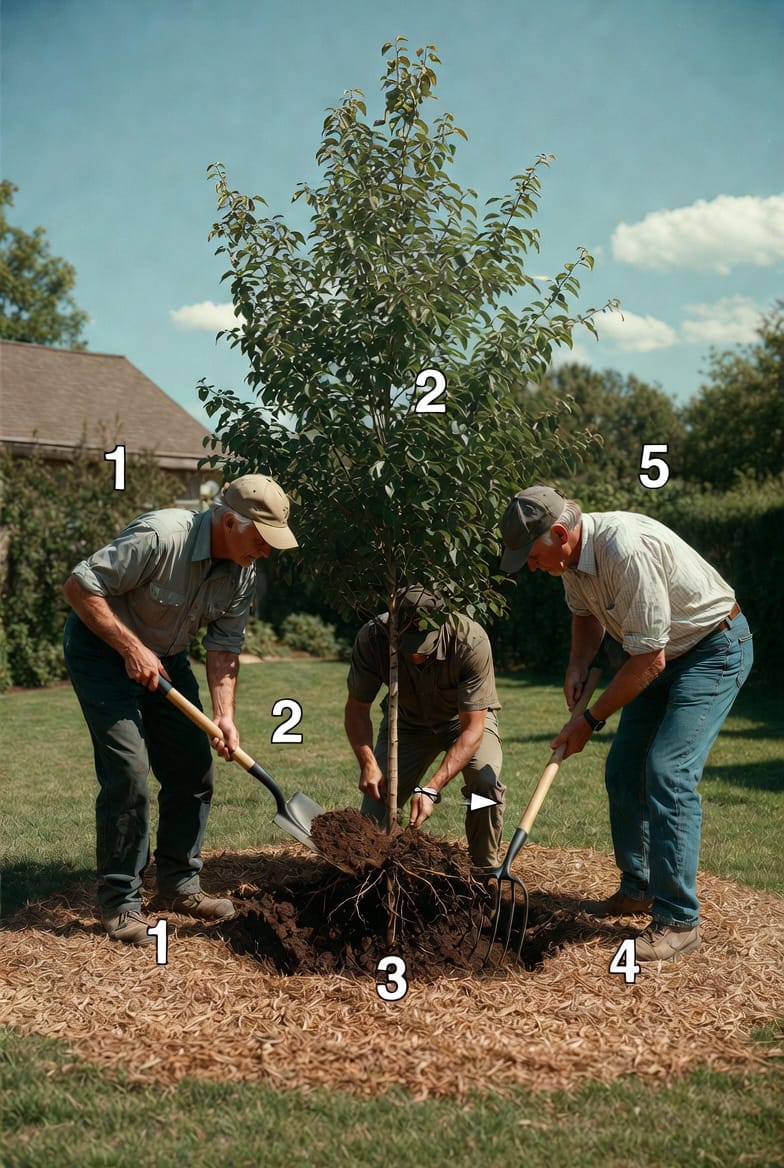
The Correct Way to Plant Trees: Depth Done Right
Preventing girdling starts with proper technique. Follow these essential steps for lasting success:
- Locate the root flare: Gently remove soil or mulch from the nursery container to find where the trunk flares out. This is your planting depth guide.
- Dig the right hole: Make it 2–3 times wider than the root ball but only as deep as the root flare height. The bottom should be firm to prevent settling.
- Position the tree correctly: Set it so the root flare sits at or 1–2 inches above surrounding soil grade. Never bury it.
- Backfill thoughtfully: Use native soil (amended lightly if needed) to fill around the roots. Avoid heavy compaction.
- Water deeply during establishment: This helps settle soil without creating air pockets.
- Apply mulch properly: Create a "donut" ring 2–4 inches deep, keeping it away from the trunk to prevent moisture buildup and rodent damage.
These practices promote healthy root development and long-term vitality.
Common Planting Mistakes to Avoid
Even experienced gardeners can fall into these traps:
- Planting at the same depth as the nursery container without checking the flare.
- Creating "mulch volcanoes" that pile material against the trunk.
- Using overly amended soil that encourages circling roots.
- Ignoring site conditions like compacted clay or poor drainage.
- Planting in haste without measuring depth accurately.
By avoiding these errors, you protect your investment and contribute to a healthier urban forest.
Correcting Existing Girdling Roots
For established trees showing signs of girdling, timely intervention is key. Root collar excavation involves carefully removing soil around the base to expose the flare and sever problematic girdling roots.
This process requires expertise to avoid damaging the tree further. In severe cases, removal of the tree may be necessary to prevent safety hazards or spread to nearby plants. Regular inspections by certified arborists help determine the best course of action.
Benefits of Proper Planting Depth for Your Landscape
Trees planted at the correct depth offer numerous advantages:
- Stronger anchorage against wind and storms
- Faster establishment and more vigorous growth
- Lower maintenance costs over time
- Enhanced disease and pest resistance
- Greater property value and aesthetic appeal
- Environmental benefits like better carbon sequestration
Investing time upfront in proper technique pays dividends for generations.
Seasonal Considerations and Expert Tips
Spring and fall are ideal planting seasons in most regions, allowing roots to establish before extreme weather. Always:
- Choose healthy nursery stock with visible root flares.
- Match species to your soil type and climate.
- Consider mature size and proximity to structures.
- Schedule professional planting for large specimens.
Bold reminder: A few extra minutes measuring depth during planting can save thousands in future tree removal and replacement costs.
Expand your knowledge by observing local successful landscapes. Healthy trees in parks and neighborhoods almost always show clear root flares and proper mulching.
Long-Term Tree Care Beyond Planting
Proper depth is the start. Maintain health with:
- Regular watering during dry periods
- Annual mulch refreshment (keeping the donut shape)
- Pruning for structure and airflow
- Soil testing and targeted fertilization
- Monitoring for pests and diseases
These practices work together to create resilient trees that enhance your property for decades.
Conclusion: Plant at the Right Depth for a Healthy Tree
Proper planting depth is one of the simplest yet most powerful ways to prevent tree root girdling and ensure your landscape thrives. By understanding the risks of deep planting, recognizing early signs, and following proven techniques, you give every tree the best possible start.
Don't leave your trees' future to chance. Whether planting new additions or caring for existing ones, expert guidance makes all the difference.
Plant at the right depth for a healthy tree. For professional planting guidance, assessment, and expert tree care services. Our experienced team helps homeowners protect their valuable trees with proven methods tailored to your property.
Proper Tree Planting Guidance – Call for Professional Help