The Tree Root Barrier: Protecting Foundations and Pavement
Tree roots seek water and nutrients. In doing so they can travel surprising distances and exert steady pressure on anything in their path—foundations, sidewalks, driveways, and underground utilities. The damage is often slow and hidden until cracks appear or pavement heaves. The most effective response is prevention. A properly installed tree root barrier redirects root growth downward or away from valuable structures before problems begin.
Protect Your Foundation from Tree Roots – Call Now
This article explains what root barriers are, the two main types (physical and chemical), the best times and locations to install them, and how they actually work. The focus is practical prevention that protects both the tree and the built environment around it.
Understanding Tree Roots and Structural Risk
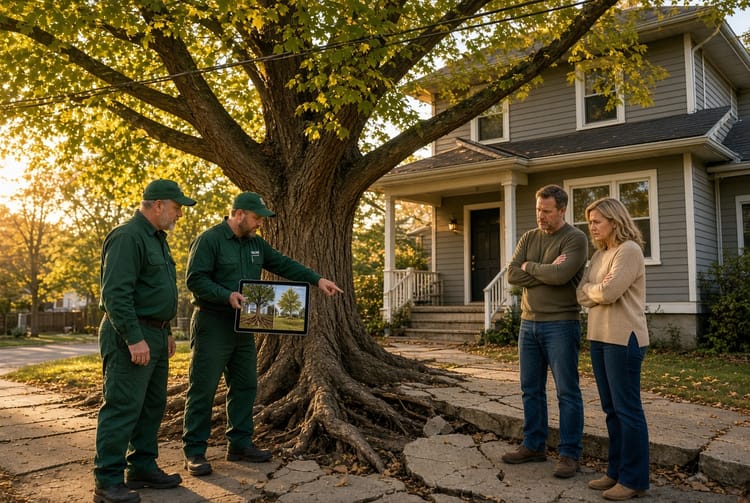
Roots do not grow randomly. They follow moisture and oxygen. In urban and suburban settings that moisture often collects along foundations, under pavement, or near irrigation and utility lines. Over years the roots thicken and the soil they occupy can shift. The result may be cracked slabs, lifted sidewalks, damaged pipes, or compromised foundation walls.
Not every tree poses the same risk. Species with aggressive, shallow root systems and trees planted too close to structures create the highest concern. Even a modest tree can cause expensive repairs if its roots are left unmanaged for a decade or more. Prevention through a root barrier is far less disruptive and far less costly than later excavation and structural repair.
What Root Barriers Are
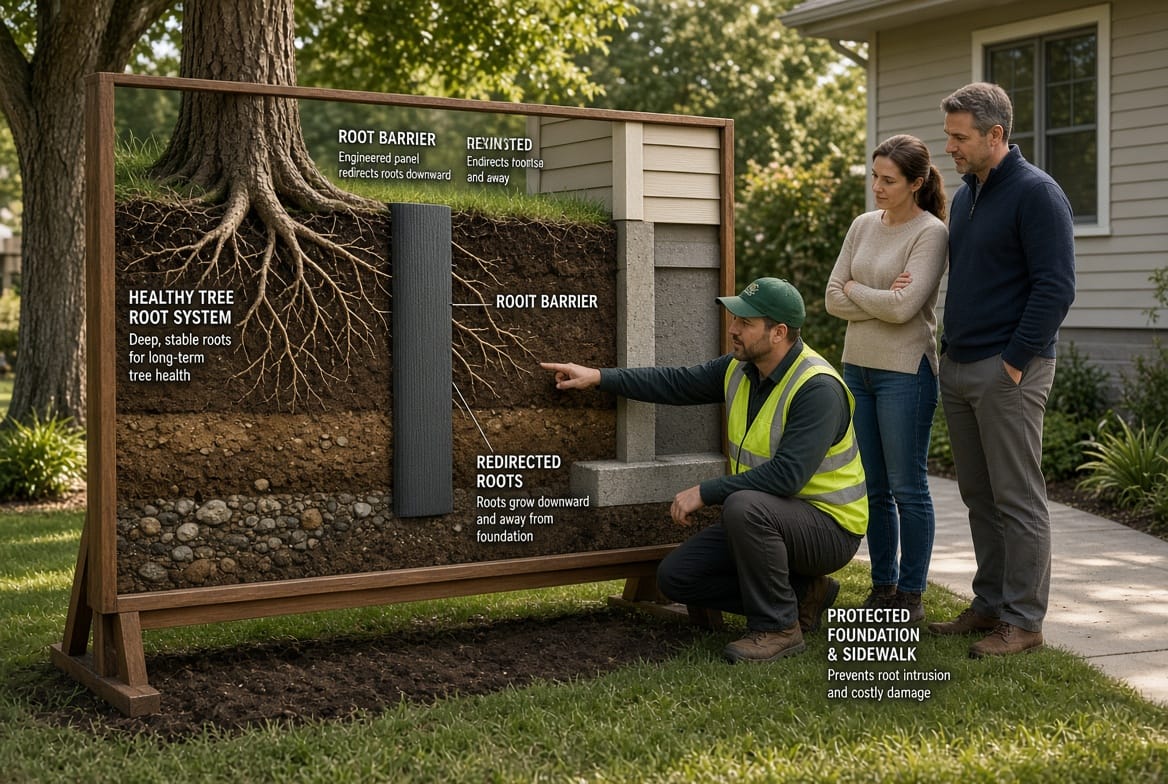
A tree root barrier is a purpose-built obstacle placed in the soil to change the direction of root growth. The barrier does not kill the tree; it simply encourages roots to grow downward or laterally away from the protected area.
There are two primary categories:
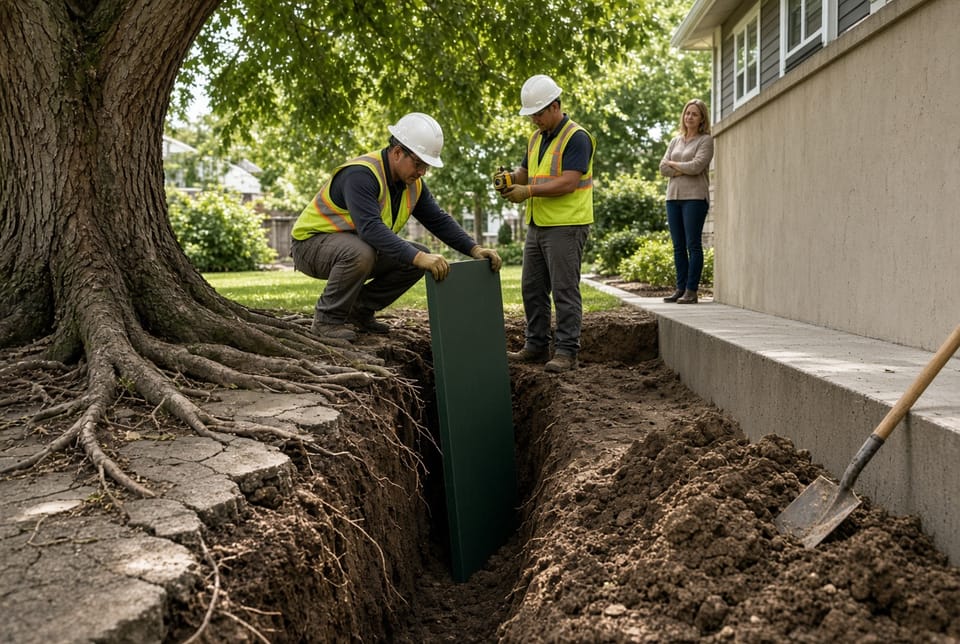
- Physical root barriers – Durable panels made of high-density plastic, composite, or occasionally metal. They are installed vertically in a trench and create a solid wall that roots cannot easily penetrate. Many modern physical barriers include a deflector lip at the top that further discourages surface roots from climbing over.
- Chemical root barriers – Materials treated with root-inhibiting compounds (commonly copper-based or other controlled-release agents). Roots that contact the treated surface are discouraged from continuing in that direction. Chemical barriers are sometimes used in combination with physical panels or in situations where a full physical wall is impractical.
Physical barriers are the most widely used for long-term protection of foundations and pavement because they provide a reliable, visible, and lasting solution. Chemical options can be useful in specific soil or access conditions but require careful selection to remain effective and environmentally appropriate.
When and Where to Install a Root Barrier
Timing and placement determine success. The ideal moment is before roots have reached the structure—either at the time of new tree planting or as soon as a potential conflict is identified.
Key locations include:
- Between a tree and a building foundation
- Along sidewalks, driveways, and patios
- Near underground utilities, sewer lines, and irrigation pipes
- Beside retaining walls or pool decks
The barrier should be installed at a distance that gives the tree enough room to develop a healthy root system while still intercepting roots before they reach the protected zone. Depth is equally important. Most residential installations extend 24 to 36 inches or deeper, depending on soil type, tree species, and local conditions. The top of the barrier is usually set slightly above or at grade and finished so it does not become a trip hazard.
Installing the barrier when the tree is young or when roots are still small is easiest and most effective. However, barriers can still be placed around established trees with careful excavation that minimizes root disturbance.
How Root Barriers Redirect Growth
Roots encountering a physical barrier cannot easily push through the dense material. Instead they follow the path of least resistance—typically downward along the face of the panel or laterally along its length until they find an opening or simply continue growing in a safer direction. The result is a deeper, more stable root system that is less likely to heave pavement or press against foundation walls.
A well-designed barrier also manages water and oxygen. Some panels include features that allow limited moisture movement while still blocking roots. This balance helps the tree remain healthy rather than becoming stressed.
Chemical barriers work by creating a zone that roots prefer to avoid. When roots reach the treated material they slow or change direction. The effect is localized and does not harm the entire tree when the product is used as intended.
In both cases the goal is the same: give the tree a viable place to grow while keeping its roots out of conflict with buildings and hardscape.
Situations That Benefit Most from Root Barriers
Certain conditions make installation especially worthwhile:
- New construction or landscaping where trees will be planted near the house
- Existing trees whose roots are already approaching a foundation or sidewalk
- Properties with expansive clay soils that amplify movement when roots extract moisture
- Homes with older or shallower foundations that have less resistance to root pressure
- Areas with underground utilities that would be expensive to repair if damaged
In each of these situations a root barrier acts as insurance. The cost of installation is modest compared with foundation repair, sidewalk replacement, or utility work.
Installation Considerations and Professional Expertise
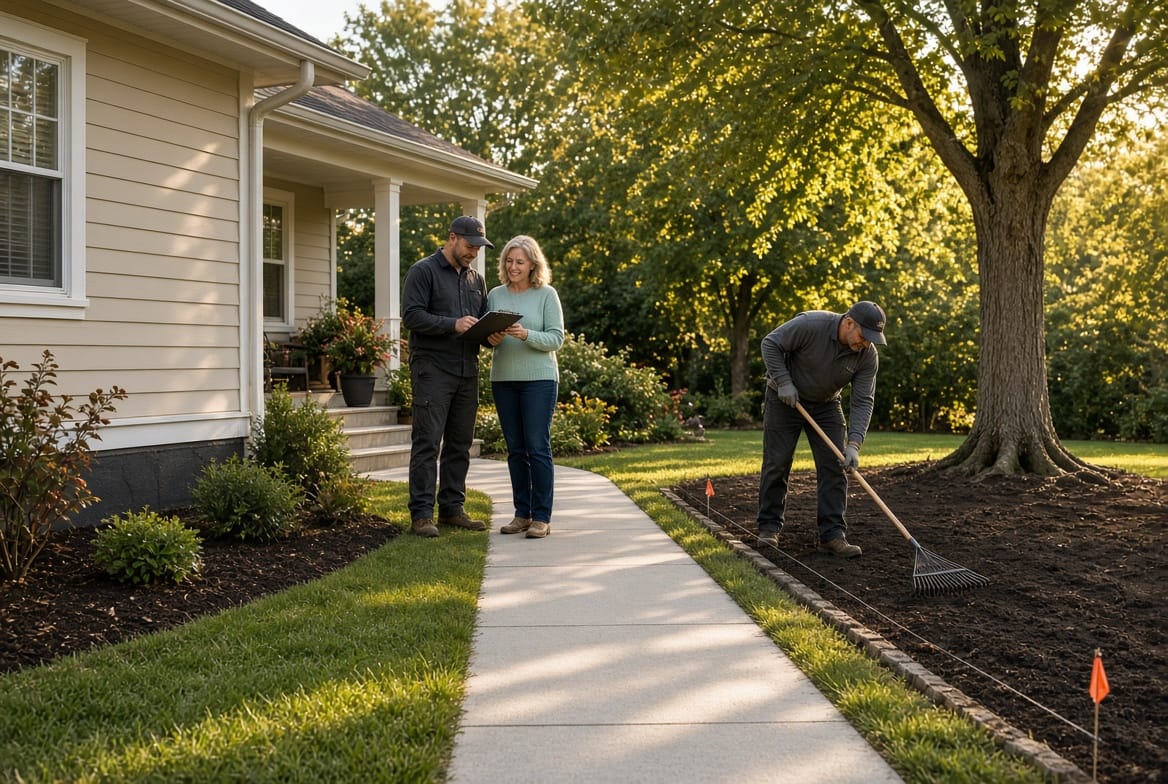
Successful installation requires more than placing a panel in the ground. Soil type, drainage, tree species, and the exact location of existing roots all influence the plan. Improper depth or gaps at the ends of the barrier can allow roots to find a way around.
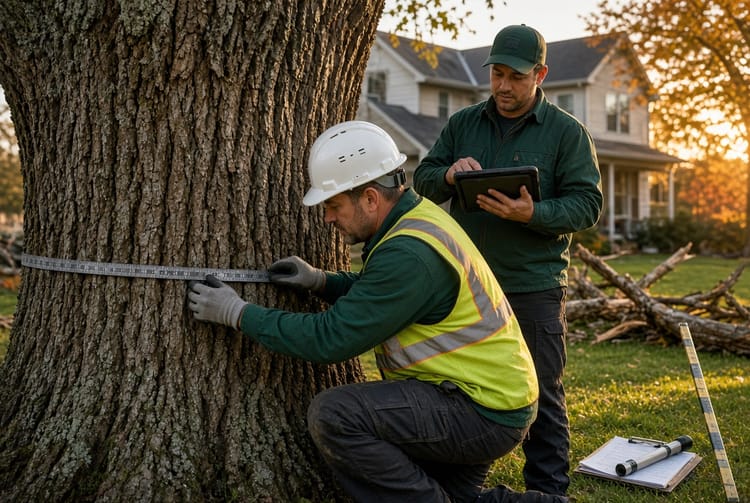
A professional assessment includes examining the tree’s health, mapping likely root paths, and choosing the appropriate barrier type and depth. Installation itself involves careful trenching that protects remaining roots, precise placement of panels with proper overlap or sealing, and restoration of the soil and surface. When done correctly the work is neat, the landscape recovers quickly, and the barrier performs for decades.
Homeowners sometimes consider a do-it-yourself approach for small projects. For anything near a foundation or utility line, professional installation is the safer and more reliable choice.
Long-Term Benefits of Prevention
A properly installed tree root barrier delivers several lasting advantages. Foundations stay more stable. Pavement remains level and safe. Utility lines are less likely to be crushed or infiltrated. The tree itself often develops a stronger, deeper root system that improves its own stability in wind and drought.
Prevention also preserves property value and avoids the disruption of major repairs. Instead of waiting for cracks to appear, you address the source of the pressure early.
Regular observation after installation is still useful. Watch for any new surface roots or changes in the landscape and schedule a follow-up if needed. Combined with ordinary tree care—proper watering, mulching, and occasional pruning—the barrier becomes part of a complete protection strategy.
Protect Your Foundation from Tree Roots
Tree roots are persistent, but they can be guided. A root barrier—whether physical or chemical—gives you a proven way to keep roots away from foundations, pavement, and utilities while allowing the tree to thrive. The earlier the barrier is installed, the simpler and more effective the solution.
If you have trees near your home or are planning new plantings, now is the time to consider protection . A straightforward preventive step today can save significant repair costs and keep both your landscape and your structures in good condition for years to come.
Redirect Tree Roots Safely – Request a Consultation