The Tree Protection During Construction: Preserving Roots and Canopy
Construction projects transform landscapes and create new opportunities for growth, yet they also place significant pressure on the living trees that already define a property’s character, shade, and ecological value. Protecting these trees is not an optional courtesy; it is a practical necessity that safeguards long-term property value, environmental health, and community aesthetics. When trees remain healthy through the building process, they continue providing cooling shade, stormwater management, wildlife habitat, and visual appeal for decades afterward. This comprehensive guide explains exactly how construction activities harm trees, how to recognize early warning signs of stress, and the proven methods that preserve both the root system and the canopy. By following these authoritative practices, property owners, developers, and project managers can complete their work while ensuring trees thrive rather than decline.
Protect Your Trees During Construction – Call Now!
Trees are resilient living organisms, yet their survival depends on an intricate underground network of roots and a balanced canopy that performs photosynthesis. Any disruption to soil structure, root integrity, or water availability during construction can trigger a cascade of decline that may not become visible for months or even years. Understanding these risks and implementing protective measures from the earliest planning stages delivers reliable results. The following sections provide clear, actionable insights grounded in professional arboricultural standards so that every stakeholder can act with confidence.
How Construction Activities Damage Trees
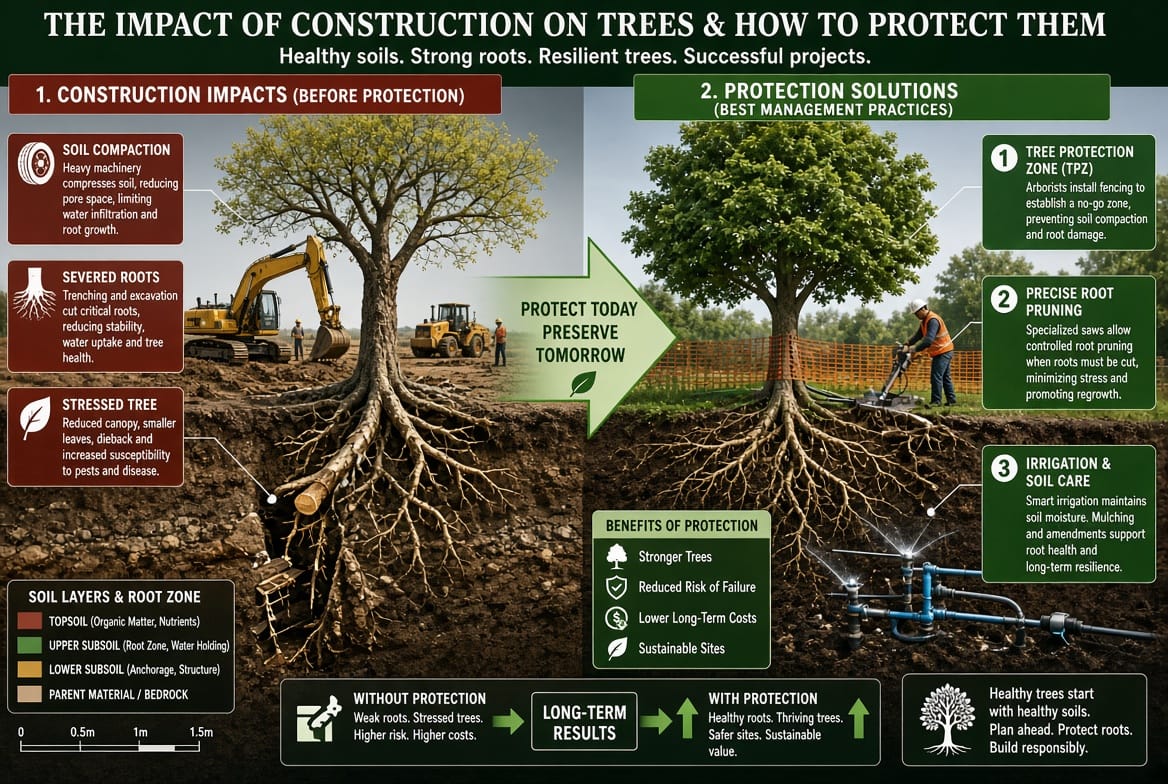
The most severe harm to trees during construction occurs below ground, where the majority of a tree’s life-support systems reside. Three primary mechanisms—soil compaction, root cutting, and trenching—account for the majority of irreversible injury.
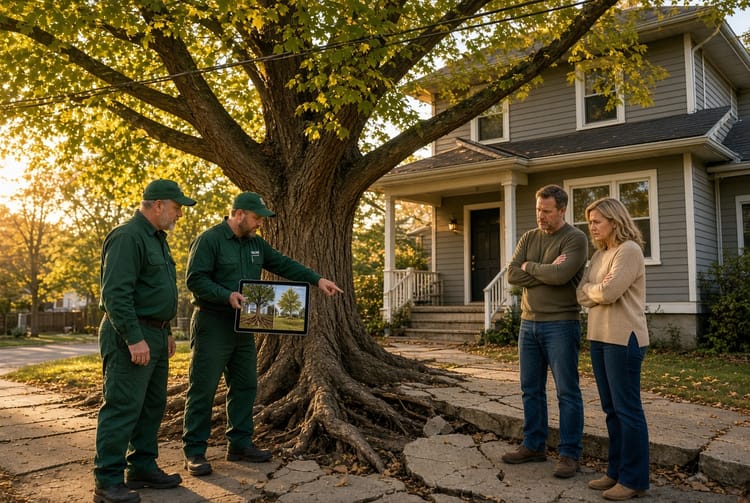
Soil compaction happens when heavy machinery, repeated foot traffic, or stacked materials compress the soil particles. Healthy soil contains roughly 50 percent pore space that allows oxygen and water to reach fine feeder roots. Once compacted, those pores collapse. Roots literally suffocate, water infiltration slows dramatically, and beneficial soil organisms die off. The result is a stressed tree that struggles to absorb nutrients even when irrigation is later applied. Compaction is especially damaging within the critical root zone, the area extending outward from the trunk to the edge of the canopy drip line and beyond.
Root cutting occurs whenever excavation equipment severs larger structural roots. Even a single cut on a major root can remove a substantial percentage of the tree’s absorbing capacity and destabilize its anchorage. Because roots grow outward rather than straight down, any digging near the trunk or under the canopy risks slicing through vital tissue. The tree responds by walling off the damaged area, but the sudden loss of water and nutrient pathways often leads to dieback in the corresponding portion of the canopy.
Trenching for utilities, foundations, or drainage systems creates linear wounds that can sever entire root plates. A trench cut on one side of a tree may remove 30 to 50 percent of the root mass if it passes through the critical root zone. Unlike natural pruning, these cuts are jagged, untreated, and left exposed to pathogens. Combined with the soil disturbance that accompanies trenching, the tree experiences both mechanical injury and altered hydrology.
Additional secondary risks include grade changes that bury roots under excess fill or expose them through soil removal, chemical spills from concrete washout or fuel, and physical abrasion of trunks and lower limbs by equipment. Each of these impacts compounds the others, accelerating decline if left unaddressed.
Recognizing Signs of Tree Stress During and After Construction
Early detection of stress allows timely intervention and dramatically improves recovery odds. Trees rarely show immediate symptoms; instead, they exhibit delayed responses that careful observers can identify.
Look first for canopy thinning or reduced leaf density. A healthy canopy appears full and vibrant; a stressed canopy develops sparse areas, especially on the side nearest construction activity. Leaves may appear smaller than normal, yellowed, or scorched at the edges even when soil moisture seems adequate. Premature leaf drop in late summer or early fall is another clear indicator.
Dieback of branch tips and the progressive death of outer limbs signal that the root system can no longer support the full canopy. Bark may crack, peel, or develop sunken areas, and fungal fruiting bodies sometimes emerge at the base or on major roots. Increased production of epicormic sprouts—small shoots emerging from the trunk or larger branches—represents the tree’s attempt to replace lost photosynthetic capacity.
Soil-related clues include standing water that fails to drain, unusually hard or cracked ground surfaces, and a noticeable lack of fine feeder roots when soil is carefully probed. Monitoring these signs throughout the construction period and for at least two full growing seasons afterward provides the data needed to adjust protective measures or schedule professional treatments.
Proven Protection Methods That Preserve Roots and Canopy
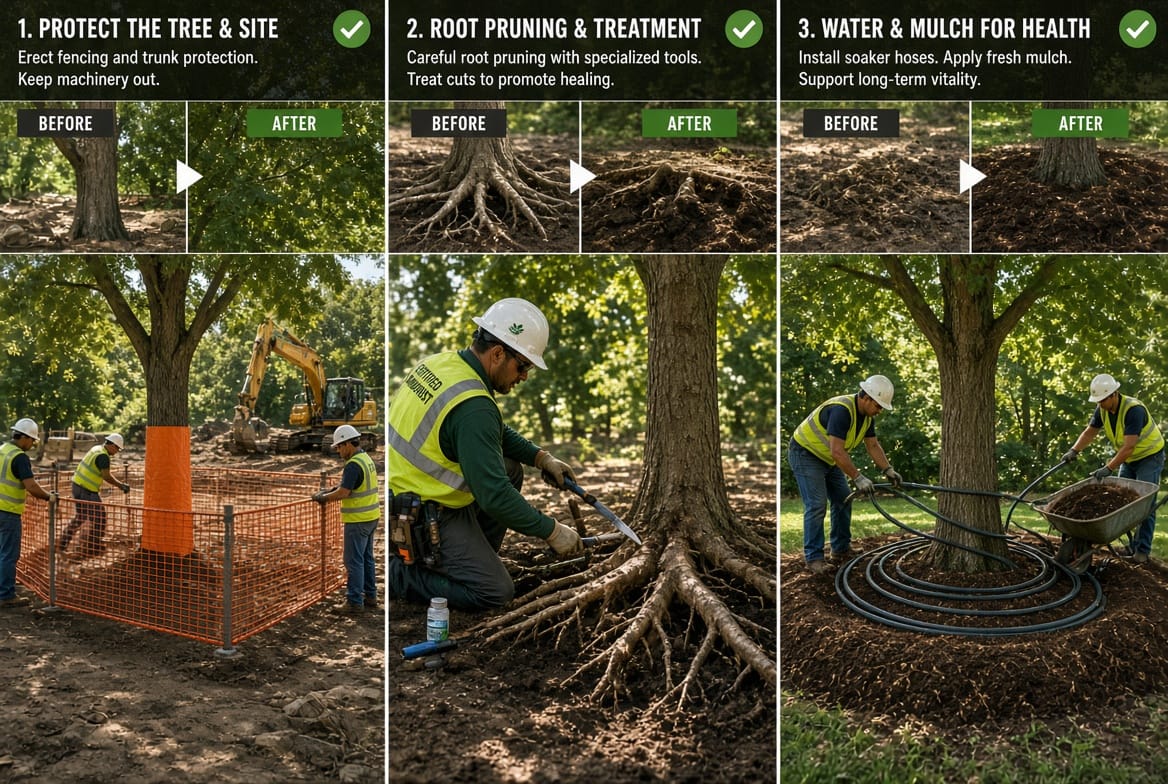
Effective tree protection rests on three foundational practices: fencing, root pruning, and watering. When applied correctly and in combination, these methods create a reliable shield around the tree’s most vulnerable systems.
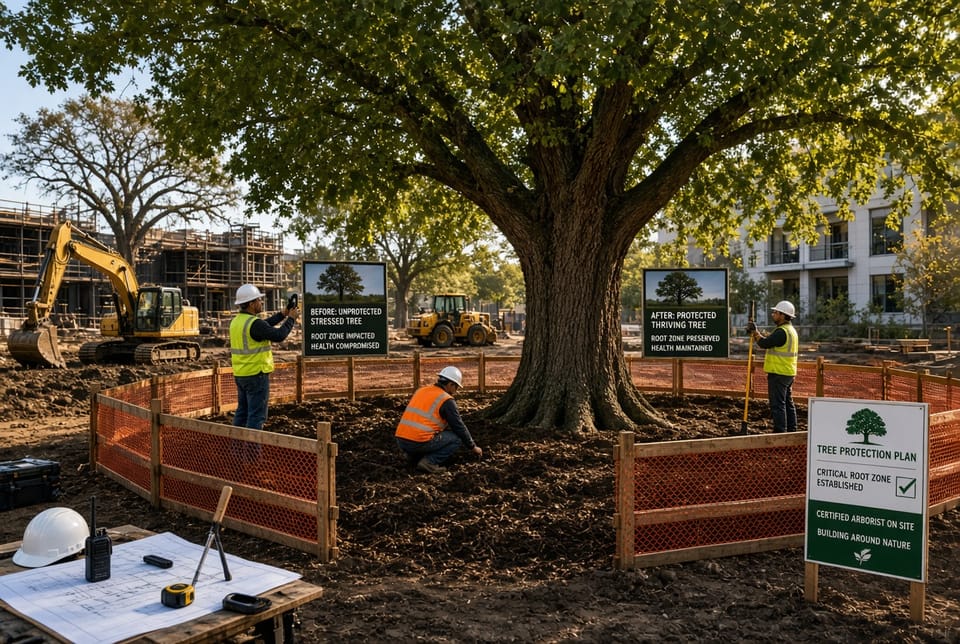
Protective fencing is the single most important physical barrier. Install sturdy, highly visible fencing at or beyond the drip line before any equipment enters the site. The fence must be continuous, at least four to six feet high, and anchored firmly so that it cannot be moved or breached. Inside the fenced area, prohibit all storage of materials, vehicle parking, and foot traffic. Post clear signage explaining that the zone is off-limits. In high-activity areas, add secondary barriers such as plywood trunk wraps or additional mulch layers to prevent accidental impact. Proper fencing preserves soil structure, prevents root crushing, and keeps the canopy free from mechanical damage.
Root pruning becomes necessary when excavation must occur near the tree. Rather than allowing random tearing by machinery, schedule controlled root pruning performed by qualified arborists before major digging begins. Clean cuts made with sharp tools heal more readily and reduce the risk of decay. After pruning, backfill promptly with native soil amended only as recommended, and avoid leaving cut roots exposed. This proactive approach minimizes the shock that uncontrolled root loss would otherwise cause and helps the tree redirect energy into new root growth outside the construction footprint.
Strategic watering compensates for the reduced root capacity and altered soil conditions that construction inevitably creates. Deep, infrequent irrigation encourages roots to grow downward rather than remaining near the surface. Use soaker hoses or temporary drip systems placed throughout the critical root zone, delivering water slowly so that it penetrates rather than runs off. Monitor soil moisture at several depths and adjust volume according to weather, soil type, and tree species. Mulching the root zone with two to four inches of organic material further conserves moisture, moderates soil temperature, and reduces compaction from any residual light activity. Consistent watering during the construction phase and the following two seasons often determines whether a tree fully recovers or continues a slow decline.
Integrating Protection into the Project Timeline
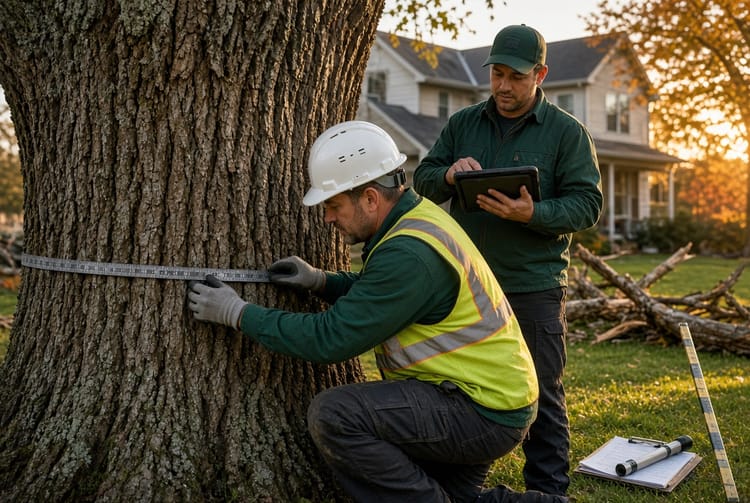
Successful tree preservation begins long before the first shovel of soil is turned. During the design and permitting phase, identify every tree that will remain on site and map its critical root zone. Engage a consulting arborist to evaluate tree condition, species tolerance, and specific protection requirements. Include these specifications in the construction documents so that every contractor understands the non-negotiable boundaries.
Hold a pre-construction meeting on site to walk the protective fencing layout, discuss access routes, and clarify penalties for violations. Assign a dedicated monitor—ideally an arborist or trained site supervisor—to inspect fencing integrity daily and document any necessary adjustments. When utility trenching or foundation work approaches a protected zone, pause activity until root pruning and additional barriers are complete. After major earthwork finishes, gradually reintroduce limited access only after confirming that soil has been properly de-compacted and irrigation systems are functioning.
Long-term monitoring continues after the project ends. Schedule professional inspections at six-month intervals for the first two years, looking for the stress signs described earlier. Supplemental treatments such as vertical mulching, soil aeration, or targeted fertilization may be recommended based on those evaluations. Documenting every step creates a clear record that demonstrates due diligence and supports any future warranty or insurance claims related to tree health.
Additional Best Practices That Strengthen Outcomes
Beyond the core trio of fencing, root pruning, and watering, several supporting practices further reduce risk. Maintain existing grade levels within the critical root zone whenever possible; if fill is unavoidable, use structural soil or aeration systems designed for tree survival. Keep concrete washout stations, fuel storage, and chemical mixing areas far from protected trees. When temporary roads must cross root zones, install heavy-duty plywood or specialized root-protection mats that distribute weight and prevent compaction.
Species selection for any new plantings near construction areas should favor trees known for tolerance to urban stresses, yet the priority remains preserving mature specimens that already deliver substantial canopy cover and root stability. Educate every worker on the economic and environmental value of the trees being protected; when crews understand that a single mature tree can be worth thousands of dollars in shade, energy savings, and property value, compliance improves dramatically.
The Broader Benefits of Tree Preservation
Preserving trees during construction delivers measurable returns that extend well beyond the immediate site. Mature canopies reduce urban heat-island effects, lower cooling costs for nearby buildings, and intercept significant volumes of stormwater that would otherwise contribute to runoff and erosion. Healthy root systems stabilize slopes and improve soil structure for future landscaping. From a community perspective, retained trees enhance neighborhood character, support local wildlife corridors, and contribute to the overall sense of place that new development seeks to create.
Property owners who invest in proper protection often see higher resale values and faster sales because buyers recognize the established landscape. Municipalities increasingly require tree-protection plans as part of the permitting process; demonstrating proactive compliance streamlines approvals and avoids costly stop-work orders or replacement mandates. Environmentally, every preserved tree continues sequestering carbon and producing oxygen, reinforcing broader sustainability goals that many projects now highlight.
When challenges arise—unexpected root conflicts, extreme weather, or tight schedules—professional guidance ensures solutions remain both practical and scientifically sound. Adjustments such as temporary irrigation upgrades, selective canopy reduction to balance root loss, or specialized soil remediation can be implemented without compromising the project timeline.
Sustaining Success After Construction Ends
The work of tree protection does not conclude when the last piece of equipment leaves the site. Continued attentive care during the establishment period solidifies the gains achieved through fencing, root pruning, and watering. Maintain a consistent mulch layer, avoid new compaction from landscaping activities, and schedule periodic deep watering during dry spells. Annual professional assessments catch subtle changes before they escalate, allowing minor interventions that keep trees vigorous.
Over time, the protected trees become living proof that thoughtful construction and environmental stewardship can coexist. Their expanding canopies and robust root systems reward the initial investment many times over, delivering shade, beauty, and ecological services for generations.
Call Today to Protect Trees from Construction Damage