The Tree Mulching Volcano: Why Over-Mulching Kills Trees
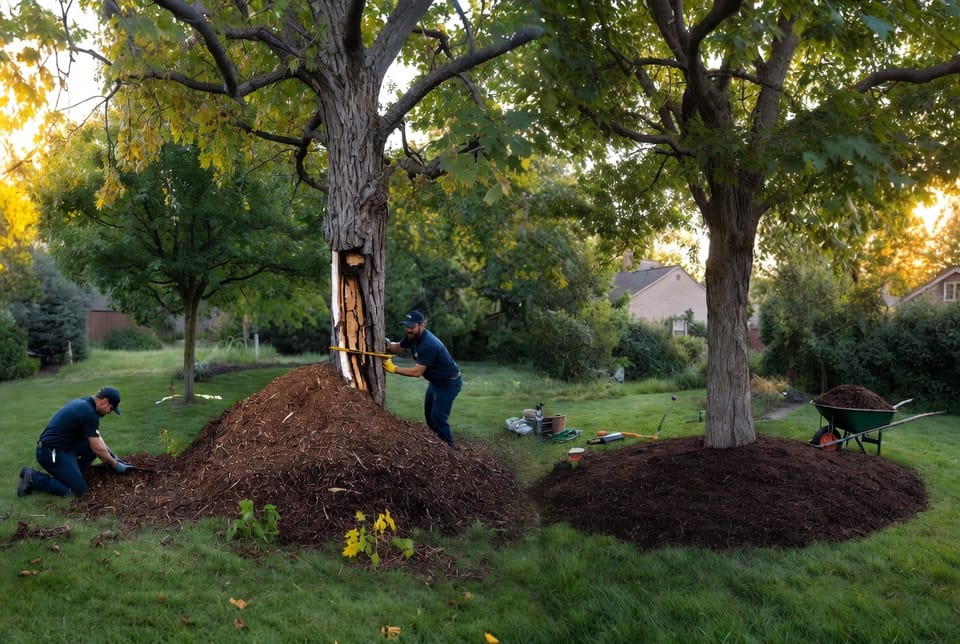
Homeowners across the country invest time and money into beautiful landscapes, yet one simple error quietly destroys even the healthiest trees. The mulch volcano—that familiar mound of mulch piled high against the trunk—might look tidy at first glance, but it creates serious long-term damage.
Get Professional Mulch Correction & Tree Care – Call Now
At its core, this common planting mistake stems from a misunderstanding of how trees actually function. Trees are not designed to have their trunks buried in organic material. When mulch touches the bark, it sets off a chain reaction that can weaken or even kill the tree over time.
The good news? This problem is completely preventable. With the right knowledge and a few straightforward adjustments, you can protect your trees and enjoy their beauty, shade, and value for decades. In this guide, we explain exactly what a mulch volcano is, why it causes harm, and the proven proper mulching technique that keeps trees thriving.
What Is a Mulch Volcano?
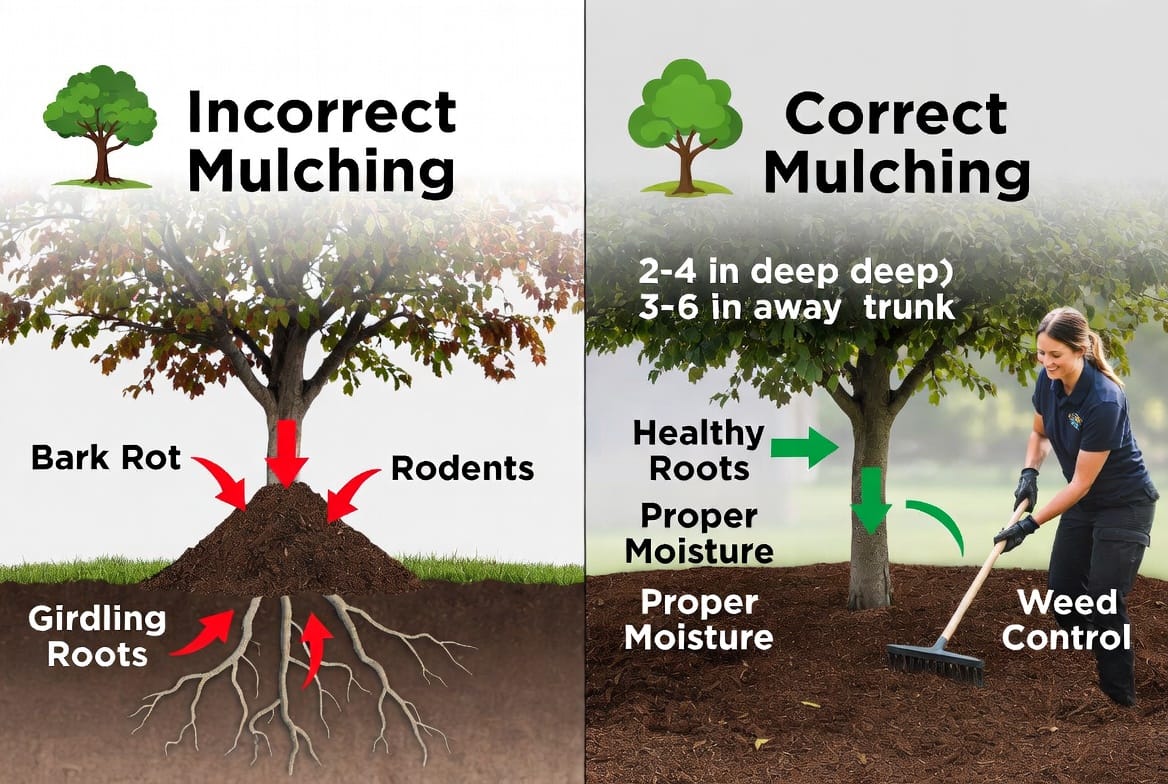
A mulch volcano occurs when mulch is piled directly against the tree trunk in a tall, cone-shaped mound. Instead of spreading it outward in a flat layer, gardeners or landscapers create a steep pile that resembles a miniature volcano erupting around the base of the tree.
This practice often begins with good intentions—adding extra mulch to suppress weeds, retain moisture, or create a polished look. Over time, however, the mound settles and presses against the bark. What starts as an innocent landscaping choice becomes a hidden threat that many homeowners never notice until the tree begins showing signs of decline.
The Hidden Dangers of Mulch Volcanoes
Mulch volcanoes do far more than look unattractive. They actively harm trees through several destructive mechanisms. Understanding these risks helps you act before irreversible damage occurs.
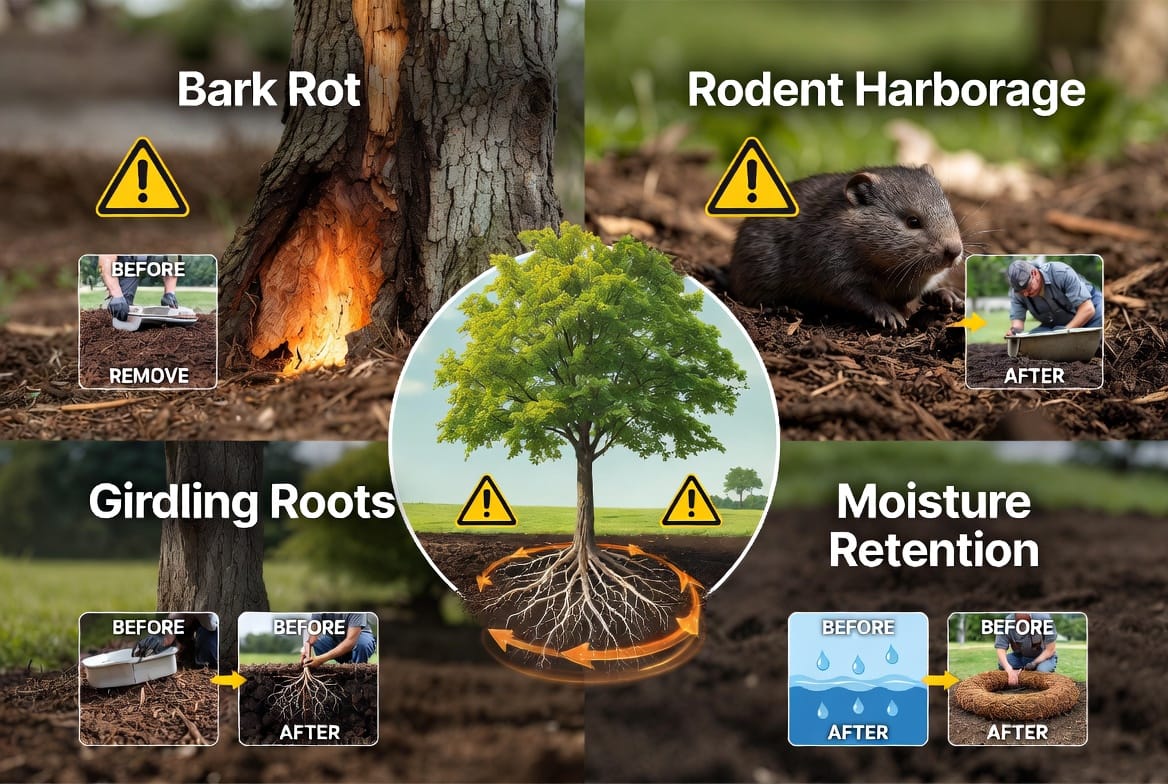
- Bark rot and decay: Tree bark is meant to stay dry and exposed to air. When mulch stays in constant contact with the trunk, it traps moisture and promotes fungal growth. This leads to bark rot, where the protective outer layer softens and peels away, leaving the tree vulnerable to infection.
- Rodent and pest harborage: The warm, dark environment inside a mulch volcano creates the perfect hiding spot for mice, voles, and insects. These pests gnaw at the bark and cambium layer, further weakening the tree’s vascular system.
- Girdling roots: Excess mulch encourages shallow roots to grow upward into the moist material. Over time, these roots circle the trunk in a process called girdling roots, slowly strangling the tree and restricting water and nutrient flow.
- Moisture retention against the trunk: Constant wetness prevents the bark from breathing. This excess moisture blocks oxygen exchange and creates conditions for disease that would never develop in properly mulched soil.
Left unchecked, these issues can reduce a tree’s lifespan by years or force costly tree removal when the damage becomes too severe. The reassuring truth is that early detection and correction almost always save the tree.
Recognizing the Warning Signs Early
Trees communicate stress in visible ways. Watch for these common indicators that a mulch volcano may be at work:
- Yellowing or wilting leaves during the growing season
- Thinning canopy or branch dieback
- Visible cracks or soft spots on the lower trunk
- Mushrooms or fungal growth at the base
- Roots emerging above the soil line near the trunk
If you spot any of these symptoms, immediate action can reverse the decline. Professional tree care teams regularly correct these issues and restore tree vigor before they escalate.
The Correct Way to Mulch: The Donut Technique
Proper mulching follows one simple rule: keep the mulch away from the trunk. The recommended mulch donut shape creates a protective ring that benefits the tree without causing harm.
Follow these steps for best results:
- Remove existing volcano mulch completely from the trunk area first.
- Spread fresh mulch in a wide circle 3 to 4 feet in diameter (or wider for larger trees).
- Maintain 2–4 inches depth—never deeper, as excessive thickness blocks oxygen.
- Leave a 3–6 inch gap between the mulch edge and the trunk to allow air circulation.
- Keep the donut level or slightly sloped outward so water flows away from the trunk.
- Refresh annually but always pull mulch back from the trunk during application.
This technique mimics nature’s own forest floor while preventing the problems created by piled mulch. It delivers consistent moisture to the root zone, suppresses weeds, moderates soil temperature, and encourages strong, outward root growth.
Why Proper Mulching Matters for Long-Term Tree Health
When done correctly, mulching becomes one of the most effective ways to support your landscape. Healthy trees improve property value, reduce energy costs through natural cooling, and contribute to cleaner air and stronger ecosystems.
Correct mulch application also minimizes the need for chemical treatments, watering, or eventual tree removal. Trees that receive the donut treatment develop deeper root systems, resist drought better, and show vibrant foliage year after year.
Choosing the Right Mulch and Avoiding Other Common Errors
Organic mulches such as shredded hardwood, pine bark, or leaf compost work best for most residential trees. Avoid rubber mulch or dyed products near the trunk, as they can introduce unnecessary chemicals.
Always measure depth carefully and never pile mulch against fences, foundations, or other plants. Consistency across your entire landscape prevents the same issues from spreading to shrubs and perennials.
When Professional Tree Care Makes the Difference
Even with the best intentions, some situations require expert intervention. If a mulch volcano has already caused significant root girdling, bark damage, or pest infestation, a certified arborist can assess the tree’s condition and recommend targeted solutions.
In severe cases, partial or full tree removal may be necessary to protect surrounding property and prevent safety hazards. However, most trees respond remarkably well to corrective mulching and ongoing professional monitoring.
Our team at the tree care service has helped countless homeowners transform stressed landscapes into thriving ones. A quick assessment today can save thousands in replacement costs tomorrow.
Mulch Correctly for Tree Health
Your trees deserve better than a mulch volcano. By switching to the simple donut mulching technique—2–4 inches deep, kept well away from the trunk—you give them the oxygen, moisture balance, and protection they need to flourish.
Avoid the common planting mistake that silently kills so many urban trees. Instead, embrace proper mulching practices that support strong growth, beautiful landscapes, and lasting property value.
Ready to protect your trees? Schedule a professional tree care assessment today. Our experts will evaluate your landscape, correct any mulch volcanoes, and set your trees up for decades of healthy growth.
Protect Your Trees with Expert Mulching Assessment – Call Today