The Tree Lightning Protection System: Installing Cables to Save Specimens.
Lightning strikes pose one of the most sudden and destructive threats to mature trees, yet many property owners remain unaware of the advanced solutions available to prevent catastrophic loss. A tree lightning protection system offers a proven, non-invasive method to safeguard specimen trees by safely channeling electrical energy away from the living tissue and into the ground. Rather than facing removal after damage occurs, these systems allow historic and high-value trees to thrive for generations.
Protect Your Trees from Lightning – Call Now!
In this comprehensive guide, we explore how lightning protection systems work, which trees benefit most, and why professional installation is the only reliable way to achieve lasting results. With expert design and quality materials, you can protect the trees that define your landscape without compromising their natural beauty or structural integrity.
The Devastating Impact of Lightning on Valuable Trees
When lightning strikes a tree, the immense electrical current—often exceeding 100 million volts—seeks the path of least resistance. Trees contain high moisture content, which can instantly vaporize, causing the trunk to explode outward in a process known as explosive vaporization. This results in deep splits, stripped bark, and shattered limbs that not only disfigure the tree but also create entry points for disease and pests.
Beyond the tree itself, strikes near structures can ignite fires, damage roofs, or send dangerous voltage through underground utilities. Large oaks, in particular, stand tall and attract strikes due to their height and expansive canopy. Without protection, even a single event can turn a cherished landmark into a safety hazard requiring costly removal.
Fortunately, modern tree lightning protection systems change this outcome entirely. By providing a controlled pathway, these installations prevent internal damage and keep surrounding property secure. Homeowners and land managers who invest in protection report peace of mind during every thunderstorm, knowing their most valuable trees remain intact.
How a Tree Lightning Protection System Works
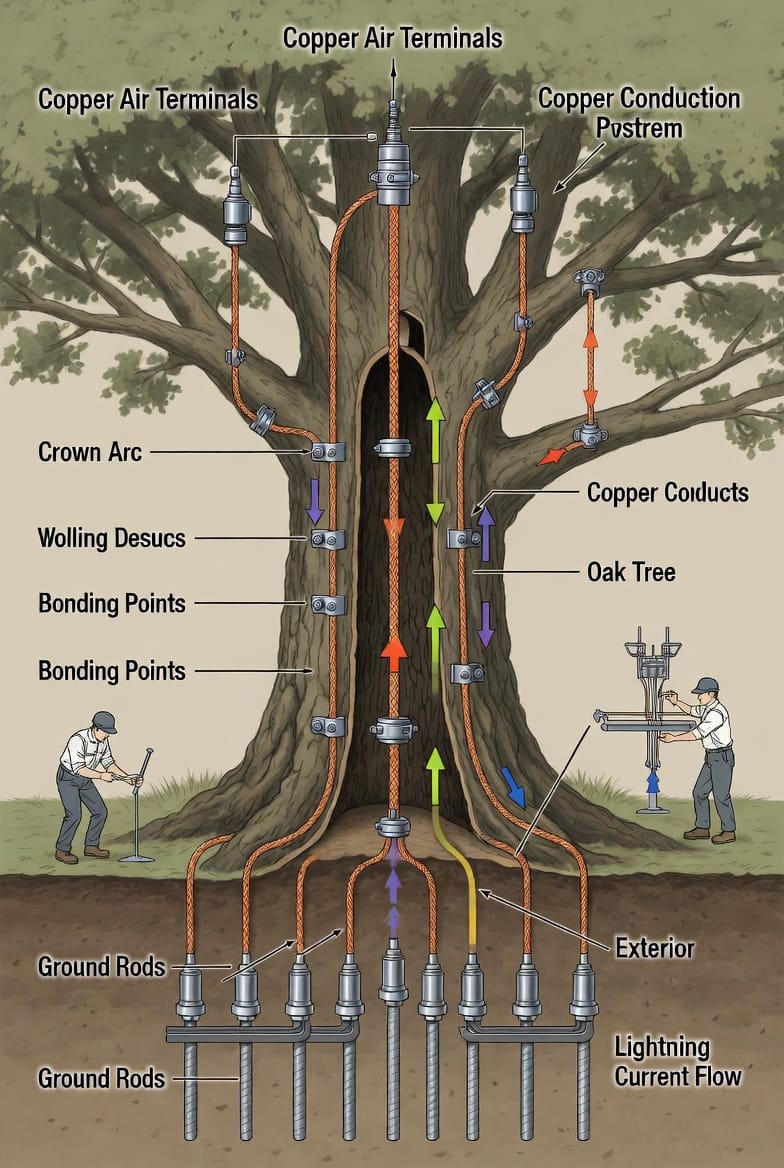
A tree lightning protection system operates on a simple yet highly engineered principle: divert the lightning current safely to the earth before it can harm the tree. The system does not attract lightning; instead, it intercepts a strike and conducts the energy downward with minimal resistance.
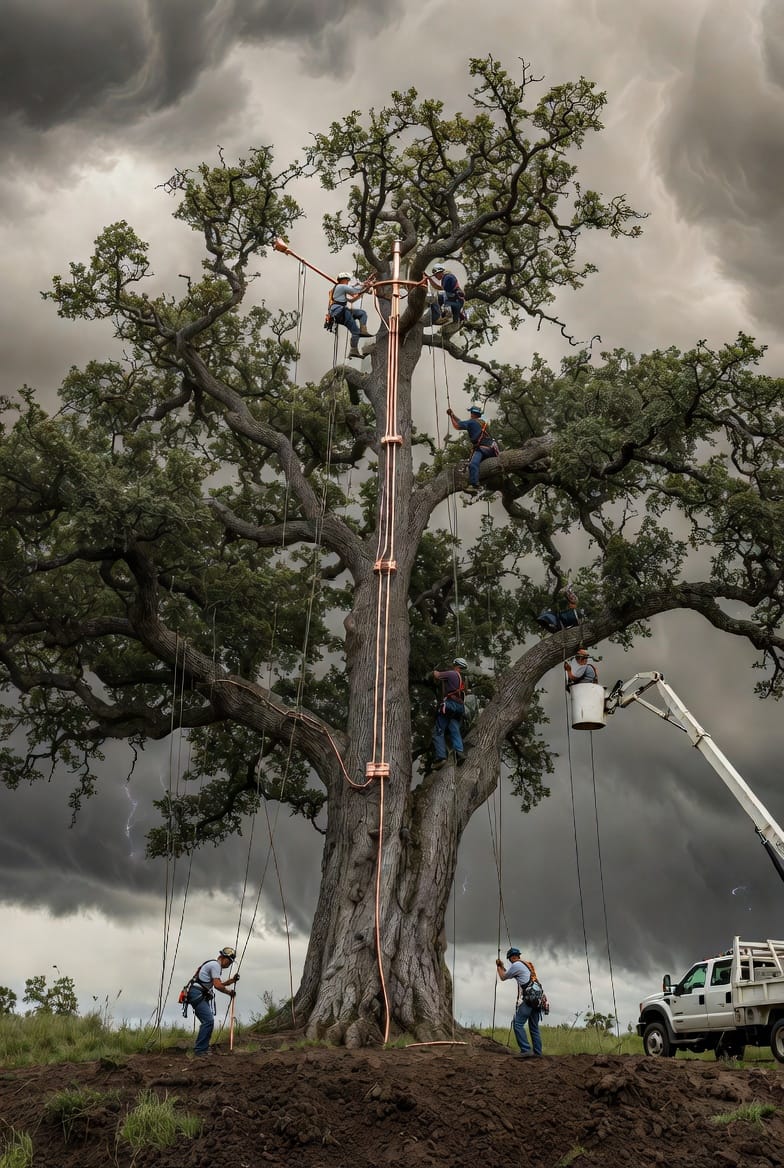
Air terminals—solid copper rods with pointed tips—are strategically placed at the highest points of the tree’s crown. These terminals serve as the initial contact point, capturing the strike. From there, main conductors (heavy-gauge copper cables) carry the current down the trunk and major branches. These cables are carefully routed along natural contours to avoid girdling or restricting growth.
At the base, the energy transfers into a network of ground rods—copper-clad steel electrodes driven deep into the soil. Multiple rods, spaced and connected properly, disperse the charge harmlessly into the earth, completing the circuit. All connections use specialized exothermic welding or high-pressure clamps to ensure zero resistance and long-term durability.
This complete pathway protects the tree’s vascular system, roots, and surrounding area. Properly installed, the system can handle repeated strikes over decades with virtually no maintenance beyond periodic inspections.
Which Trees Qualify for Lightning Protection
Not every tree needs a protection system, but certain specimens stand out as prime candidates for this life-saving investment:
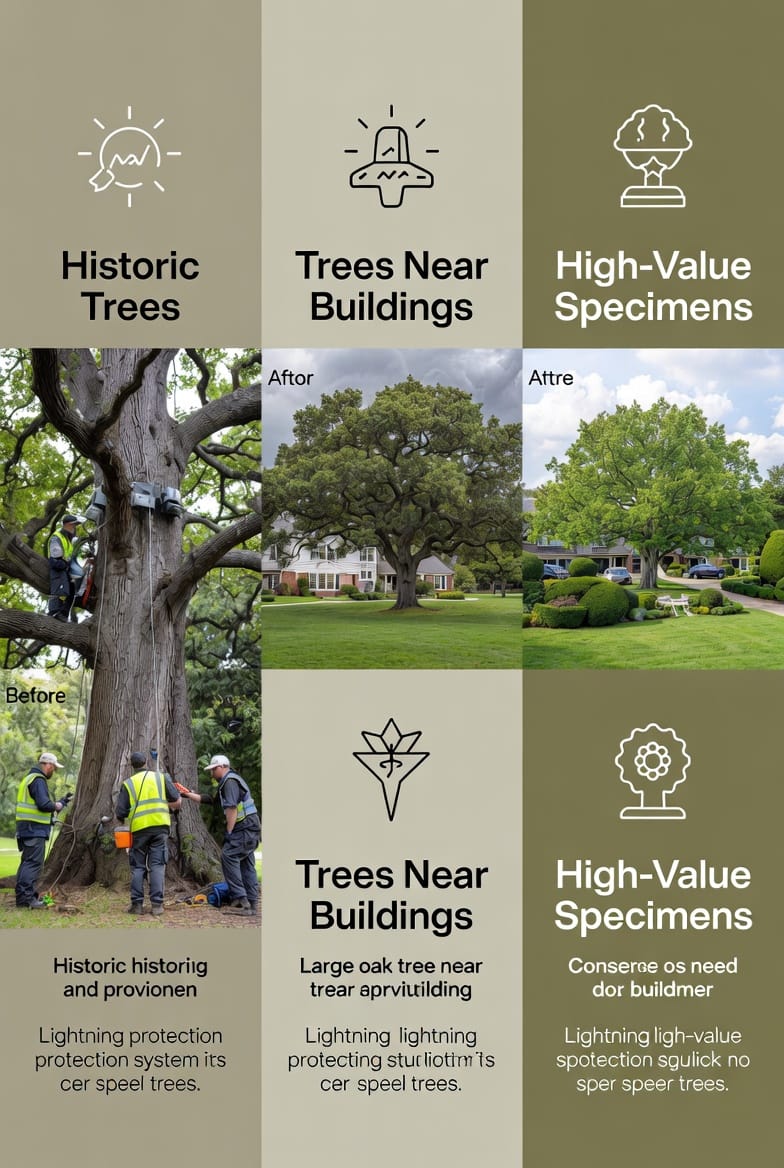
- Historic trees that hold cultural or community significance deserve protection to preserve living history.
- Specimen trees of exceptional size, age, or rarity add unmatched value to any property.
- Large oaks and other tall, dominant species located near homes, offices, or power lines require safeguarding due to their height and strike frequency.
- High-value landscape trees that anchor garden designs or provide critical shade and habitat.
If your tree shows any of these characteristics, professional assessment can confirm whether a lightning protection system makes sense. Early installation prevents irreversible damage and avoids the far greater expense and emotional cost of removal later.
Professional Installation: Precision and Expertise Matter
DIY attempts or inexperienced contractors often cause more harm than good by damaging bark, restricting growth, or creating improper grounding. Certified arborists follow strict standards set by the International Society of Arboriculture and Lightning Protection Institute.
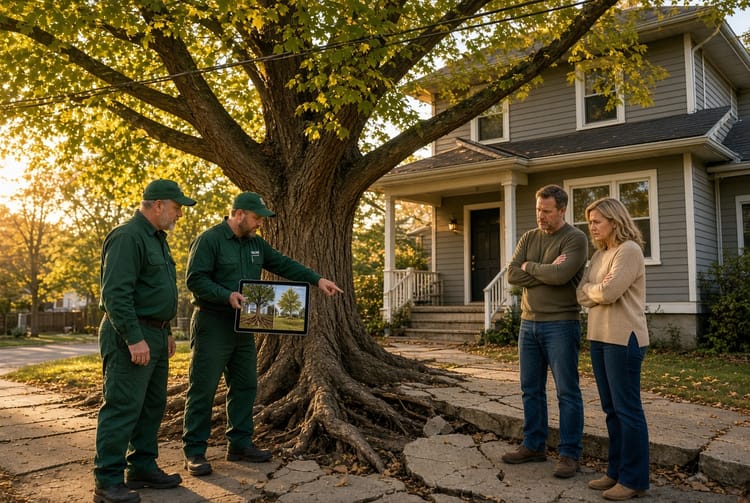
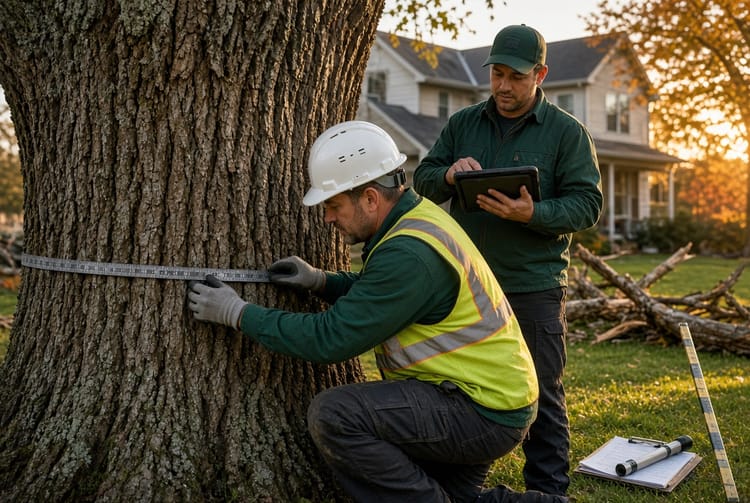
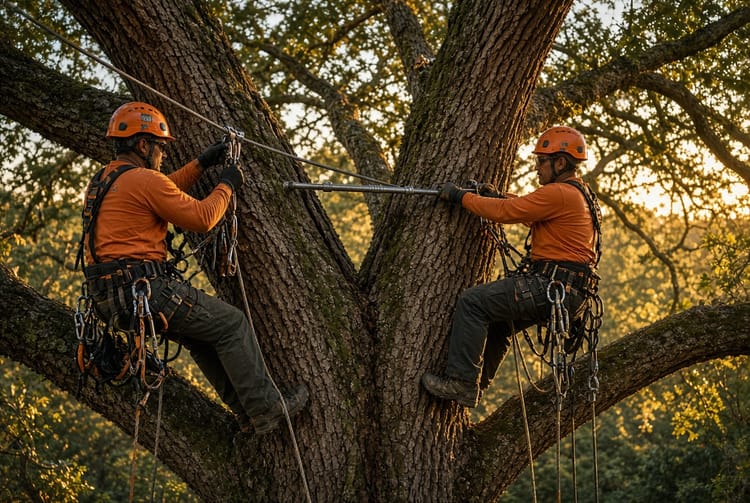
The process begins with a thorough on-site evaluation. Arborists climb or use aerial lifts to map the canopy, identify strike-prone leaders, and assess soil conditions for grounding. They then design a custom layout that respects the tree’s natural architecture while ensuring complete coverage.
Installation follows in carefully sequenced steps. First, air terminals are secured at strategic high points without penetrating living tissue. Next, conductors are fastened using non-invasive clamps that allow for trunk expansion. Finally, ground rods are driven to proper depth and interconnected with buried counterpoise wires when needed. Every connection receives a final integrity test.
Throughout the project, the team minimizes disruption to the tree and surrounding landscape. Safety protocols protect both workers and the property. The entire process typically completes in one to two days, depending on tree size and complexity.
Long-Term Benefits and Peace of Mind
Installing a tree lightning protection system delivers benefits far beyond immediate strike defense. Protected trees maintain their structural integrity, continue providing shade, wildlife habitat, and aesthetic beauty. Property values remain stable or increase because mature specimen trees are preserved rather than removed.
Compared with the cost of emergency removal, stump grinding, and replacement planting, protection systems prove remarkably economical. Many installations include warranties and annual inspection options that ensure ongoing performance.
Property owners also gain reassurance during severe weather. Knowing that expert-installed cables and grounding elements stand ready to handle even the most powerful strikes allows families and businesses to focus on safety rather than worry.
Maintaining Your Investment for Decades of Protection
Once installed, a lightning protection system requires minimal upkeep. Annual visual inspections by qualified arborists check for loose conductors, corrosion, or growth-related shifts. Minor adjustments keep the system fully effective as the tree matures.
Because the materials resist weathering and the design accommodates natural expansion, most systems perform reliably for 25 years or longer. This low-maintenance approach makes lightning protection an intelligent, forward-thinking choice for any serious tree steward.
Protect Irreplaceable Trees from Lightning
Lightning strikes can happen without warning, but the damage they cause is entirely preventable. A professionally designed and installed tree lightning protection system offers the most effective way to save historic, specimen, and high-value trees while keeping your property safe.
Do not wait until after a storm to act. Schedule a professional assessment today and give your most important trees the protection they deserve.
Safeguard Your Specimen Trees – Get Protected Now