The Tree Leader Competition: Managing Co-Dominant Stems to Prevent Splitting
In the world of professional tree care, some structural issues hide in plain sight high above our heads. Co-dominant stems — also called co-dominant leaders — create one of the most common yet preventable threats to tree stability. When two main stems of nearly equal size grow upward in direct competition, they form a weak union that can lead to sudden splitting, property damage, or the need for full tree removal.
Expert Structural Pruning – Prevent Costly Tree Removal
As experts dedicated to safe, science-based tree management, we emphasize structural pruning as the most effective way to resolve this “leader competition” before it becomes a crisis. This guide explains exactly what co-dominant leaders are, why they pose serious risks due to included bark, and how targeted pruning or cabling restores strength and safety. With early intervention, your trees can thrive for decades without the worry of failure.
Structural pruning is not cosmetic trimming — it is a precise, long-term strategy that redirects growth, strengthens architecture, and protects both your property and the tree itself. Read on to discover how to recognize the problem, understand the solution, and take confident action.
Understanding Co-Dominant Leaders
Co-dominant stems occur when a tree develops two (or sometimes more) main vertical leaders of roughly the same diameter and height instead of a single dominant central leader. This pattern often begins in young trees due to genetics, storm damage, or previous improper pruning that encouraged equal upward growth.
Species such as maples, oaks, elms, and lindens are particularly susceptible. The two leaders compete for dominance, each trying to claim the role of the tree’s primary trunk. Over time, this rivalry creates a narrow, V-shaped crotch rather than the strong, U-shaped union that allows wood to fuse solidly.
Left unchecked, the tree invests energy in two competing structures instead of building one robust framework. The result is a canopy that appears full and healthy from a distance but hides a fundamental structural flaw at its core. Professional arborists assess tree architecture early precisely to prevent this internal competition from escalating into visible failure years later.
The Hidden Danger: Included Bark and Structural Weakness
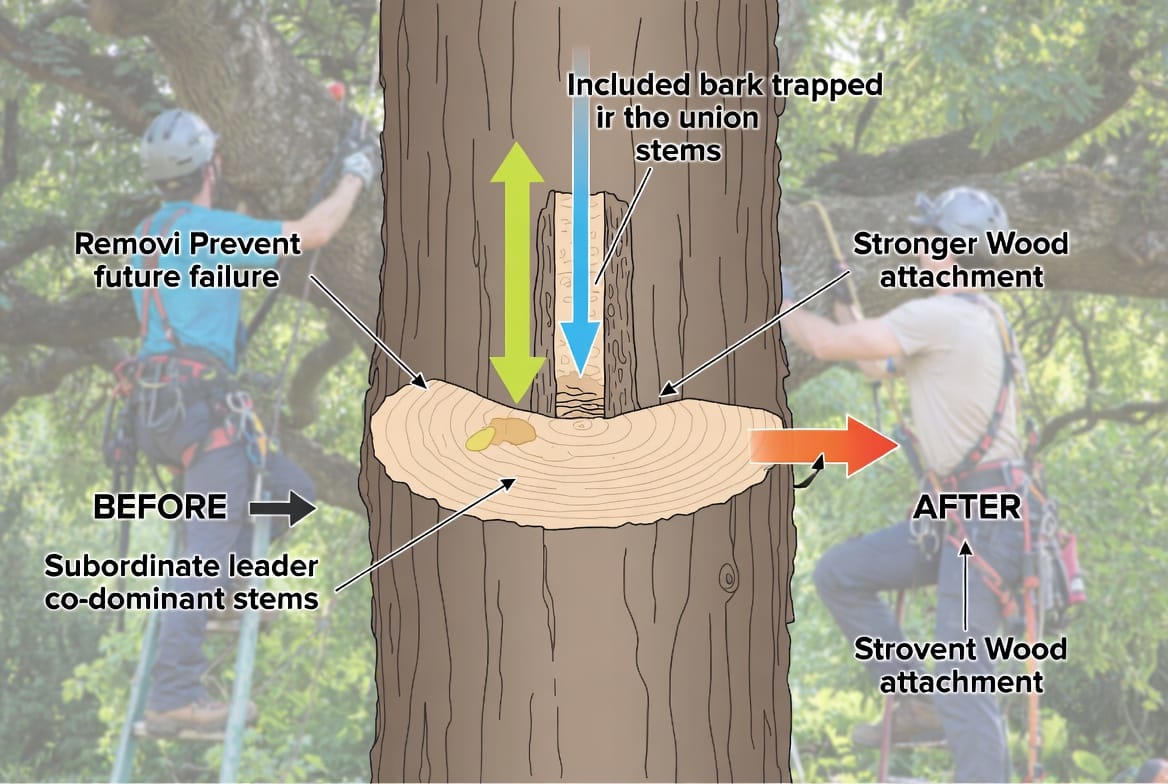
The primary reason co-dominant stems are dangerously weak lies in included bark. As the two leaders expand side by side, bark becomes trapped between them instead of being pushed outward. This trapped bark prevents the formation of strong connecting wood, leaving only a thin layer of tissue holding the leaders together.
Under normal conditions the union may hold, but add wind, heavy snow, ice, or even the tree’s own weight during rapid growth, and the weak seam can split dramatically. Such failures often occur without warning, sending large limbs crashing down and creating emergency tree removal situations.
Included bark turns a minor defect into a high-risk liability. Property owners frequently underestimate the danger until a storm reveals the truth. Structural pruning addresses this at the source by deliberately subordinating one leader, allowing the remaining stem to develop a dominant, well-attached structure supported by solid wood throughout.
Spotting the Signs Before It’s Too Late
Early detection is your greatest advantage. Trained eyes look for these clear indicators of co-dominant stems:
- V-shaped crotch instead of a wide, U-shaped union
- Bark trapped inside the union appearing as a dark seam or ridge running downward
- Uneven swelling or cracking at the junction point
- One or both leaders showing signs of twisting or leaning away from each other
- History of minor splits or bark separation after storms
Trees with these characteristics are far more prone to splitting, especially during high-wind events or after heavy snowfall. Homeowners who notice these signs early can avoid the high costs and safety hazards of emergency tree removal.
Regular professional inspections — ideally every two to three years — allow arborists to catch co-dominant stems while the tree is still young and responsive to corrective pruning. The sooner you act, the less invasive the solution becomes.
Structural Pruning: The Proven Correction Method
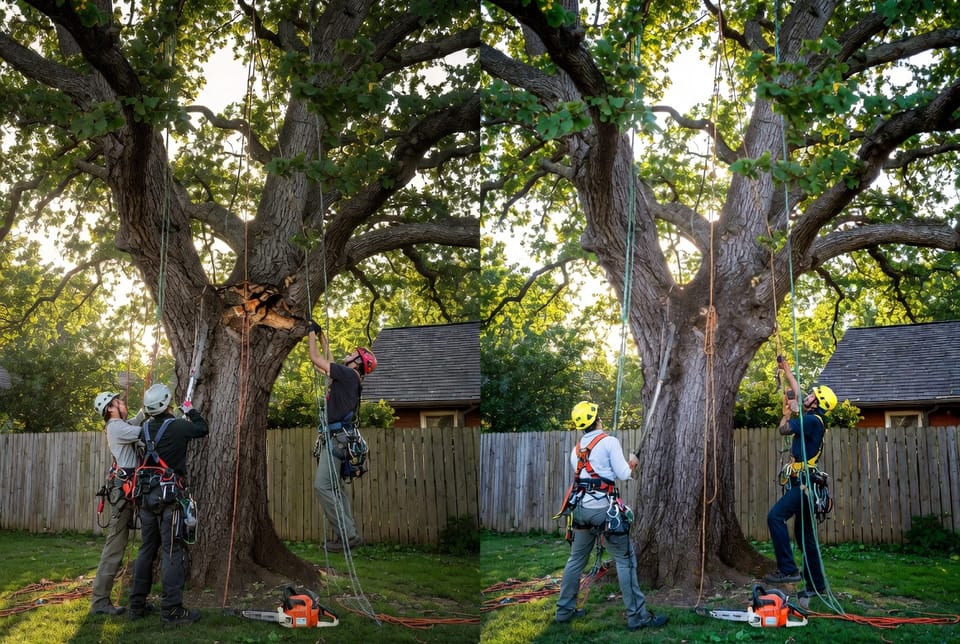
Structural pruning is the gold-standard solution for managing co-dominant stems. The goal is to subordinate the weaker leader gradually over several seasons, reducing its height and diameter so the stronger leader assumes dominance and develops a single, well-supported trunk.
Proper technique involves:
- Removing no more than 20-25% of live foliage in any single pruning session to avoid shock
- Making clean cuts just outside the branch collar to promote rapid healing
- Prioritizing the removal of crossing or rubbing branches that add stress to the weak union
- Focusing cuts on the subordinate leader to redirect energy upward into the chosen dominant stem
This methodical approach strengthens the tree’s architecture without compromising its overall health. Young trees respond especially well, often achieving a stable single-leader form within three to five years. Mature trees require more patience and multiple pruning cycles, but the payoff is a dramatically reduced risk of splitting and a longer, safer lifespan.
Cabling and Bracing as Complementary Support
In cases where co-dominant stems have already reached significant size, structural pruning alone may not suffice immediately. Supplemental cabling and bracing provide temporary support while pruning takes effect.
High-strength flexible cables are installed well above the weak union to limit excessive movement during storms. When combined with strategic pruning, cabling gives the tree time to grow stronger wood connections. These systems are professionally engineered, inspected annually, and removed once the tree’s natural structure has stabilized.
This dual approach — pruning plus support — offers property owners peace of mind while the tree matures into a safer form. It is far preferable to waiting for failure and facing emergency tree removal.
Why Professional Expertise Delivers the Best Results
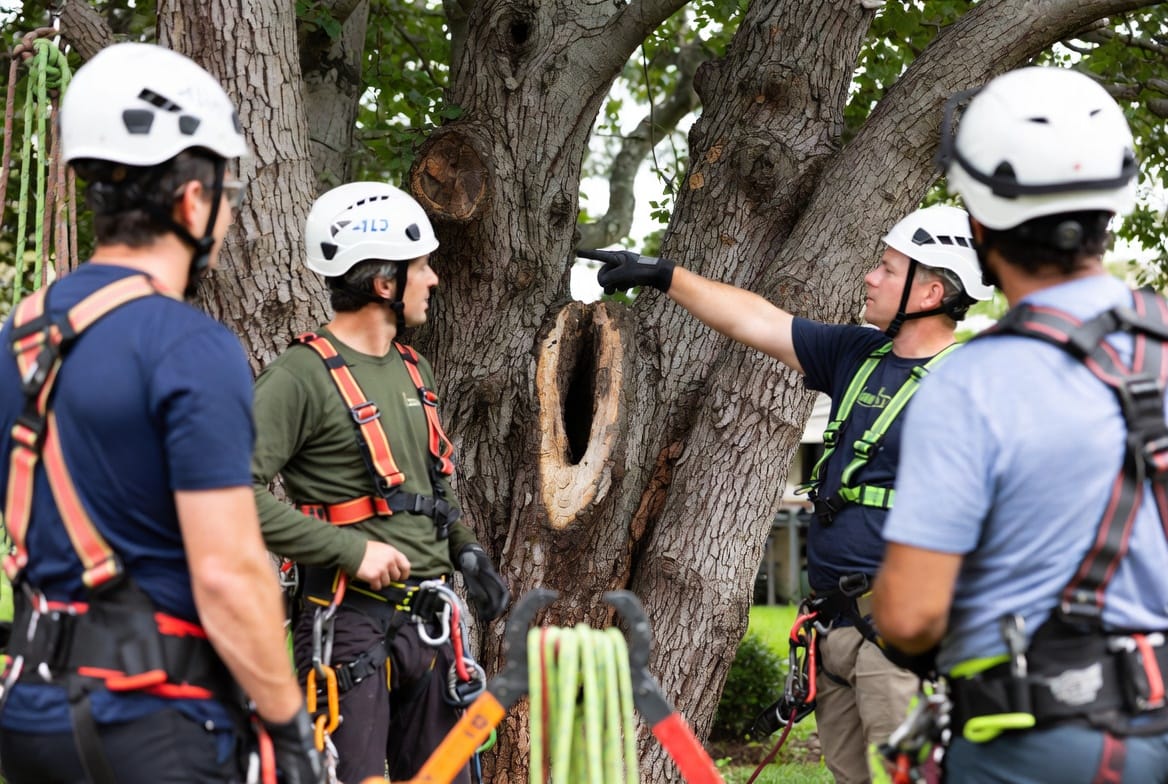
While some basic pruning can be done by homeowners, correcting co-dominant stems demands certified arborist knowledge. Incorrect cuts can worsen the defect, invite decay, or create new weak points. Professional tree care teams use specialized equipment, follow industry standards, and prioritize tree health above quick fixes.
They also consider the tree’s species, age, location, and surrounding environment to create a customized multi-year plan. This expertise prevents the need for costly tree removal down the road and ensures your landscape remains beautiful and secure.
Long-Term Benefits of Early Intervention
Investing in structural pruning today yields multiple rewards:
- Reduced risk of limb failure and property damage
- Stronger overall tree architecture that withstands storms
- Extended tree lifespan and enhanced property value
- Lower long-term maintenance and emergency service costs
- Healthier canopy with improved air circulation and sunlight penetration
Trees that receive proper structural care are more resilient, more attractive, and far less likely to become safety hazards. Early action transforms a potential liability into a valued asset that enhances your outdoor living space for generations.
Taking Action to Protect Your Trees
The “tree leader competition” does not have to end in failure. With informed, professional structural pruning, you can guide your trees toward strong, single-leader growth and eliminate the hidden dangers of included bark and weak unions.
Prevent splitting with early intervention. Our certified arborists are ready to evaluate your trees, develop a tailored plan, and deliver the expert care that keeps your landscape safe, beautiful, and thriving for years to come.
Protect Your Property from Tree Failure – Call Now