The Tree Girdling Roots: Identifying and Correcting This Hidden Killer
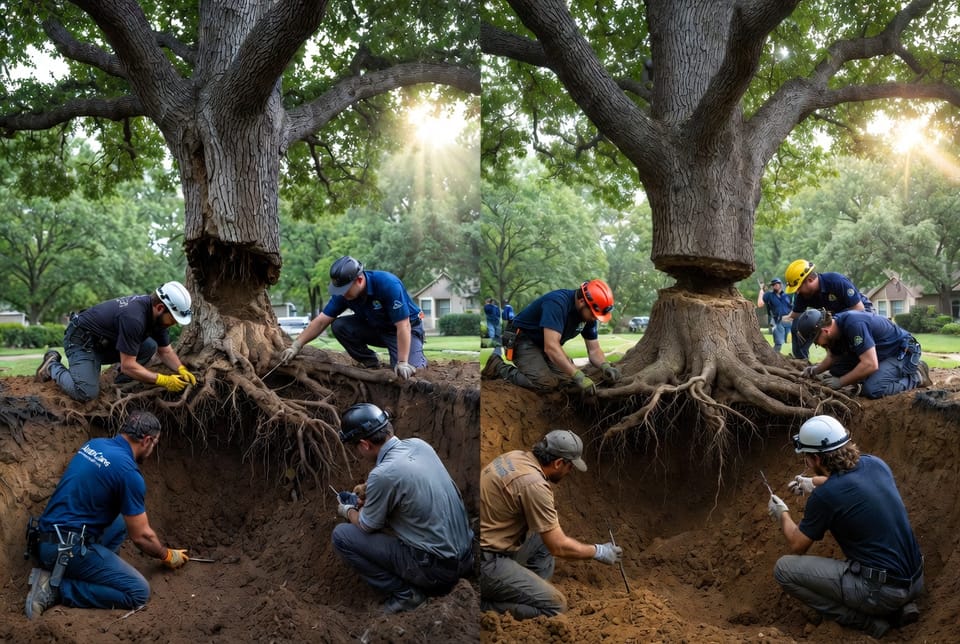
Girdling roots represent one of the most deceptive threats to landscape trees across Texas and beyond. What begins as a simple planting oversight can quietly strangle a mature tree from within, often going unnoticed until decline sets in. As tree care professionals, we have seen countless properties where this common mistake has compromised otherwise healthy specimens. The good news? With early identification and targeted correction through root pruning and root collar excavation, you can save your trees and restore their vitality for decades to come.
Save Your Tree Today – Call for Girdling Root Assessment!
In this comprehensive guide, we explore the biology behind girdling roots, the telltale symptoms that signal trouble, proven correction methods, and—most importantly—how to prevent this issue altogether. Whether you manage a residential property in Dallas or oversee commercial landscaping, understanding girdling roots empowers you to protect your investment in green infrastructure.
What Are Girdling Roots and Why Do They Form?
Girdling roots occur when a tree’s roots grow in a circular pattern around the trunk or other major roots instead of radiating outward. Over time, as the tree and roots expand, these circling roots compress the trunk’s vascular tissues. This constriction disrupts the flow of water, nutrients, and sugars essential for growth.
The primary culprit is almost always a common planting mistake made at installation. Trees planted too deeply, in holes that are too narrow, or straight from nursery containers without proper root preparation frequently develop this issue. Container-grown trees often have roots that have already begun circling against the pot walls. If these are not straightened or pruned at planting time, the pattern continues underground.
Left unaddressed, girdling roots act like a slow-motion tourniquet. The tree may appear healthy for years while the internal damage accumulates. This hidden nature makes girdling roots particularly dangerous—they can kill a tree long after the original planting has been forgotten.
How Girdling Roots Strangle Trees: The Biological Process
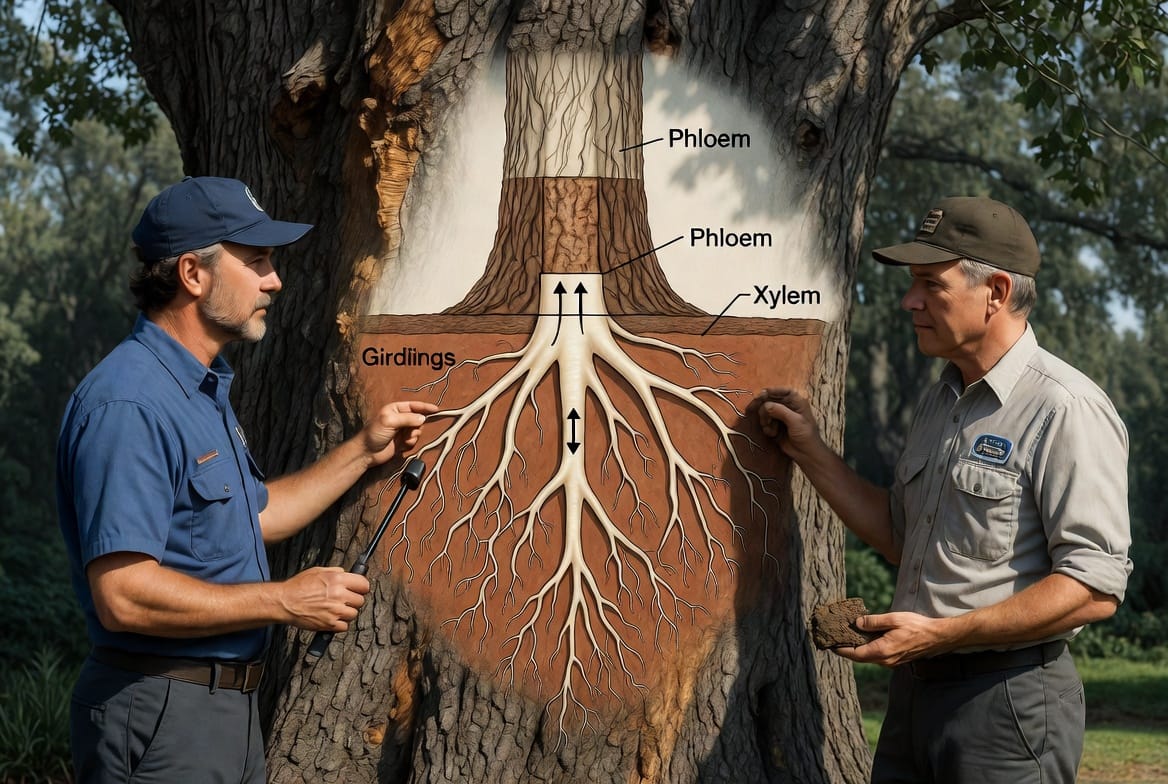
The mechanism is straightforward yet devastating. A tree’s trunk contains phloem (the tissue that transports sugars from leaves to roots) and xylem (the tissue that moves water and minerals upward). When girdling roots tighten around the base, they flatten these vital layers.
As compression increases, nutrient transport slows. The tree responds by producing smaller leaves, reduced canopy density, and weaker branch growth. Eventually, sections of the tree begin to starve, leading to dieback. In severe cases, the trunk develops a visibly flattened or oval shape at the soil line—a clear structural weakness that can compromise stability during high winds common in North Texas.
This process explains why many homeowners notice symptoms only after the tree has reached 10–20 years of age. The damage is underground and progressive, but the effects become visible above ground when the tree can no longer compensate.
Identifying Symptoms: Spotting the Warning Signs Early
Early detection is key to successful correction. Look for these girdling root symptoms during routine inspections:
- Flattened or oval-shaped trunk at the base – Instead of a naturally round trunk flare, the base appears pinched or compressed on one or more sides.
- Poor overall growth – Leaves are smaller than normal, canopy density is thin, and annual growth rings are narrow.
- Early fall color or premature leaf drop – Portions of the tree turn color weeks ahead of similar trees in the neighborhood.
- Dieback in the upper crown – Branch tips brown and die even when surrounding trees remain lush.
- Wilting or scorched leaves during normal weather – The tree struggles to draw sufficient water despite adequate rainfall or irrigation.
- Visible circling roots at the soil surface or root flare – Sometimes roots can be seen wrapping the trunk when soil is gently pulled back.
If you observe any combination of these signs, do not delay. A professional girdling root assessment can confirm the issue before it escalates to irreversible decline or safety hazards.
Correction Methods: Professional Root Pruning and Root Collar Excavation
The most effective solution is targeted root pruning performed by trained arborists. This process involves carefully exposing the root collar—the area where the trunk meets the roots—then selectively removing the offending circling roots.
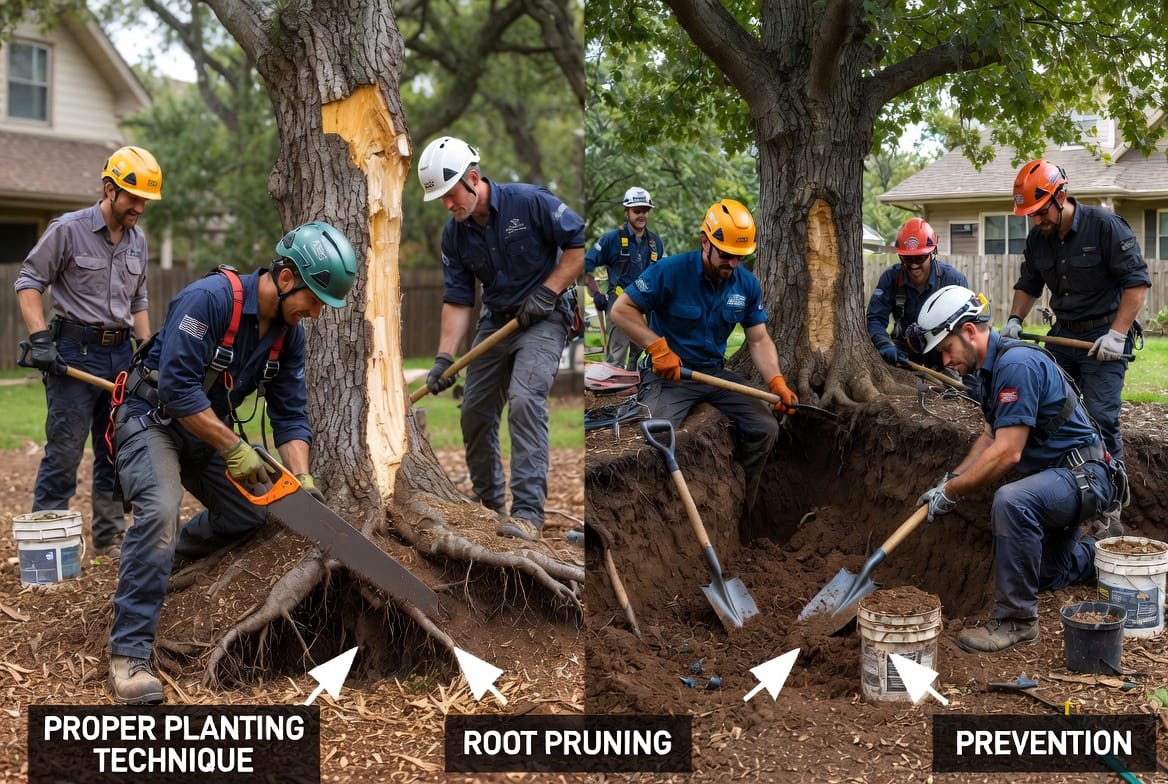
Proper technique is critical. We never remove more than 20–25% of the root system in a single session to avoid transplant shock. Strategic cuts are made at the point where the girdling root originates, allowing the tree to redirect growth outward. After pruning, the soil is replaced with a balanced mix that promotes healthy root regeneration.
Root collar excavation often accompanies pruning. Excess soil and mulch that have buried the trunk flare are removed, exposing the true base of the tree. This simple step alone can relieve pressure and improve oxygen flow to the roots.
In advanced cases, multiple sessions spaced over seasons may be required. The results, however, are dramatic: improved canopy density, stronger growth, and restored structural integrity. Trees that once appeared destined for removal frequently rebound into vigorous, long-lived specimens.
Prevention: Proper Planting Practices That Protect Trees for Life
The best defense against girdling roots is prevention at the time of planting. Follow these proven guidelines:
- Dig a wide, shallow planting hole—at least three times the width of the root ball but no deeper than the root collar.
- Gently straighten or prune any circling roots before placing the tree in the ground.
- Position the tree so the root flare sits slightly above grade, ensuring it remains visible after backfilling.
- Avoid piling mulch against the trunk; maintain a 2–3 inch mulch ring that stops several inches from the bark.
- Water deeply and infrequently during the first two years to encourage outward root growth.
These steps require minimal extra effort at planting yet deliver decades of protection. When working with a professional tree service, insist on root inspection and correction as part of the installation process.
The Long-Term Benefits of Addressing Girdling Roots
Correcting girdling roots does far more than save a single tree. Healthy trees enhance property values, reduce energy costs through natural shade, improve air quality, and provide habitat for local wildlife. In urban and suburban settings like Dallas-Fort Worth, mature trees also mitigate stormwater runoff and urban heat island effects.
By investing in professional assessment and root pruning now, you avoid the much higher costs of full tree removal and replacement later. More importantly, you preserve the beauty and environmental benefits that established trees offer your landscape.
When to Call the Professionals for Girdling Root Assessment
While some minor root issues can be monitored, most cases require expert evaluation. Certified arborists use specialized tools and techniques to map root systems without causing additional damage. They can determine the severity of girdling and recommend the safest correction plan tailored to your tree species and site conditions.
Do not attempt major root pruning yourself. Incorrect cuts can introduce disease, weaken the tree further, or create entry points for pests. Professional service ensures compliance with industry best practices and provides follow-up care to support recovery.
Save Trees from Their Own Roots
Girdling roots may be a hidden killer, but they are also a highly correctable one. Through proper identification, expert root pruning, and preventive planting practices, you can ensure your trees remain strong, beautiful, and safe for generations.
If you suspect girdling roots on your property, schedule a professional assessment today. Early action delivers the best outcomes and the greatest peace of mind.
Protect Your Tree from Hidden Girdling Roots – Free Assessment