The Tree Water Sprouts: Managing Suckers and Epicormic Growth
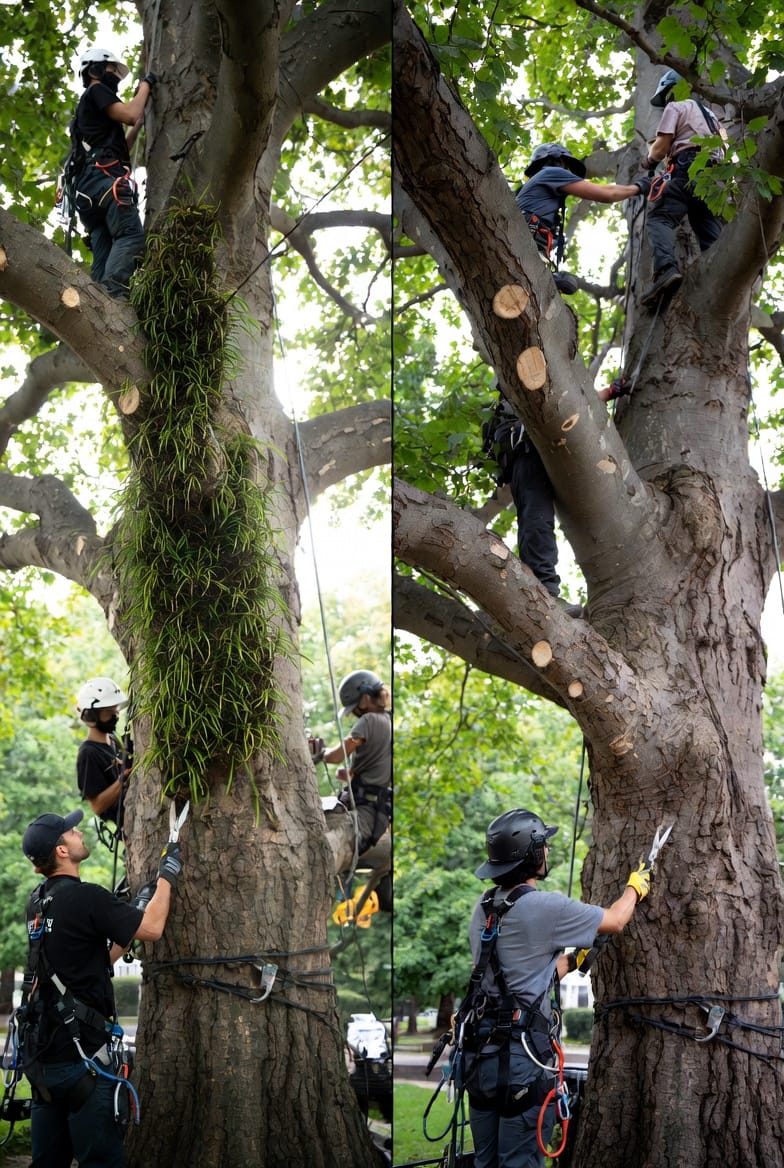
Water sprouts, suckers, and epicormic growth are natural but often misunderstood responses from trees that signal stress or opportunity for better structure. When managed correctly, addressing these vigorous shoots protects long-term tree health, prevents structural weakness, and keeps your landscape looking its best. At our professional tree service, we see these growths daily and know exactly how to turn them into an advantage rather than a problem.
Stop Water Sprouts Today – Call for Expert Pruning!
Left unchecked, water sprouts can compete with the main canopy, create dense clutter, and increase the risk of storm damage. Yet with the right knowledge and timely action, you can guide your trees back to strong, balanced form. This comprehensive guide explains everything you need to know about these shoots, why they appear, and the proven techniques that promote healthier, safer trees.
What Are Water Sprouts and Epicormic Growth?
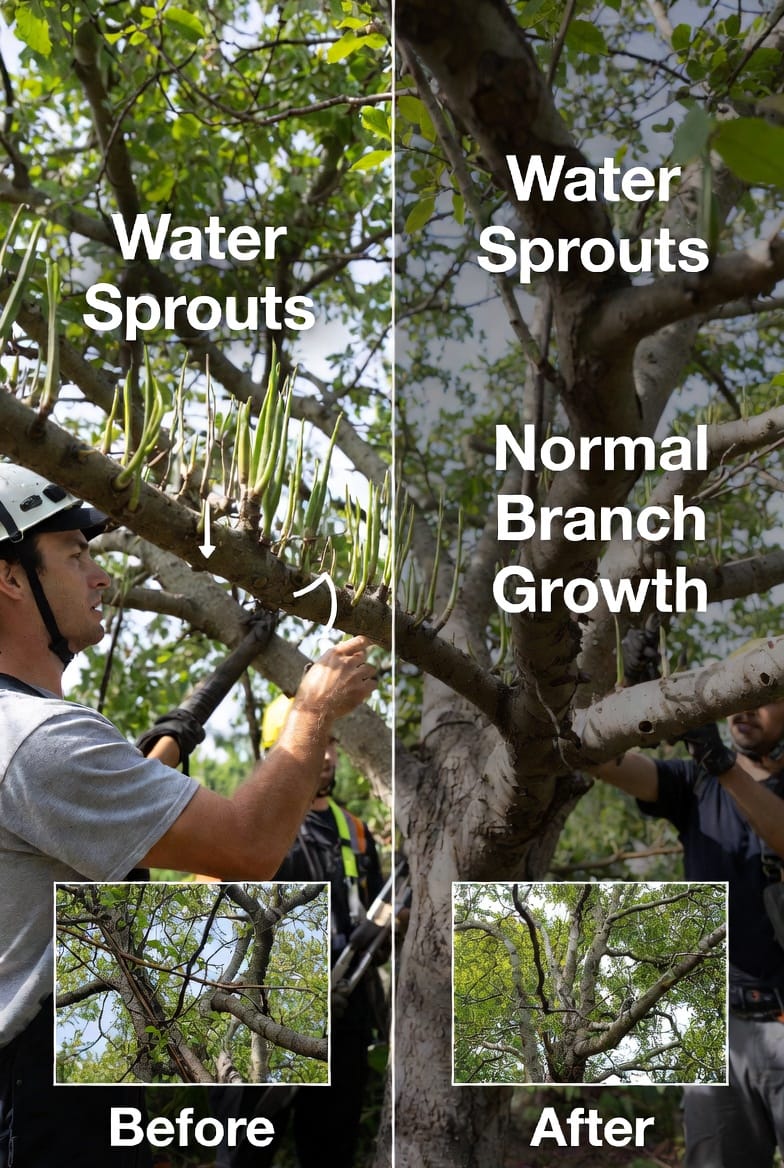
Water sprouts are fast-growing, upright shoots that emerge from latent buds along branches or the trunk. They are typically very vigorous, with large leaves and rapid vertical growth. Epicormic growth is the broader term for these same shoots when they arise from dormant buds buried in the bark. Both terms describe the tree’s emergency response to sudden changes in light, nutrients, or canopy balance.
Suckers, by contrast, originate from the root system or the very base of the trunk. While similar in appearance, suckers often indicate root stress or graft issues in certain species. All three types share one thing in common: they divert energy away from the tree’s primary structure if allowed to mature.
These shoots are not inherently bad. In moderation, they show the tree is alive and trying to adapt. The challenge arises when they become numerous and compete with the central leader and scaffold branches.
Why Trees Produce Water Sprouts
Trees are remarkably resilient, but they react strongly to any disruption in their natural balance. Common triggers include:
- Severe pruning or topping – Removing large sections of the canopy suddenly exposes inner branches to direct sunlight, triggering dormant buds.
- Storm damage or limb loss – Broken branches create the same light-and-energy imbalance.
- Root stress or compaction – Drought, construction, or poor soil health signals the tree to send up new growth in search of resources.
- Insect or disease pressure – When the upper canopy weakens, the tree pushes energy into lower or inner buds.
- Transplant shock – Newly planted or relocated trees often produce abundant sprouts while re-establishing roots.
Understanding these causes helps homeowners and property managers take preventive steps. Rather than reacting after the fact, you can address the underlying stress and reduce future sprout formation.
Early intervention is key. A tree that produces water sprouts is communicating a need – and professional assessment can often resolve the root cause before sprouts become a chronic issue.
Identifying Water Sprouts Versus Normal Growth
Learning to spot water sprouts early prevents them from competing with the tree’s framework. Look for these characteristics:
- Vertical orientation – They grow straight up, unlike the more horizontal or angled growth of permanent scaffold branches.
- Rapid, lush foliage – Leaves are often larger and a brighter green than the rest of the canopy.
- Smooth, thin bark – Young sprouts lack the textured, mature bark of established limbs.
- Emergence point – They appear directly from the trunk or older branches rather than from existing lateral buds.
Suckers at the base are usually even more obvious – thick, fast-growing stems shooting from the ground or root flare. If your tree is grafted, these suckers may belong to the rootstock variety and should be removed promptly to protect the desired top growth.
Risks of Leaving Sprouts Unmanaged
Allowing water sprouts and suckers to remain creates several long-term problems:
- Structural weakness – Multiple upright shoots concentrate weight and wind resistance in the wrong places.
- Reduced airflow and light – Dense inner growth invites fungal issues and pest problems.
- Energy drain – The tree wastes resources on temporary growth instead of strengthening the permanent framework.
- Increased storm vulnerability – Weakly attached sprouts can tear away in high winds, causing larger wounds.
Property owners who ignore these signs often face more expensive corrective pruning or even tree removal later. Timely management keeps your trees safer, more attractive, and longer-lived.
Proper Removal Techniques for Lasting Results
The secret to successful water sprout management lies in timing, technique, and follow-through. Here is the professional approach we recommend:
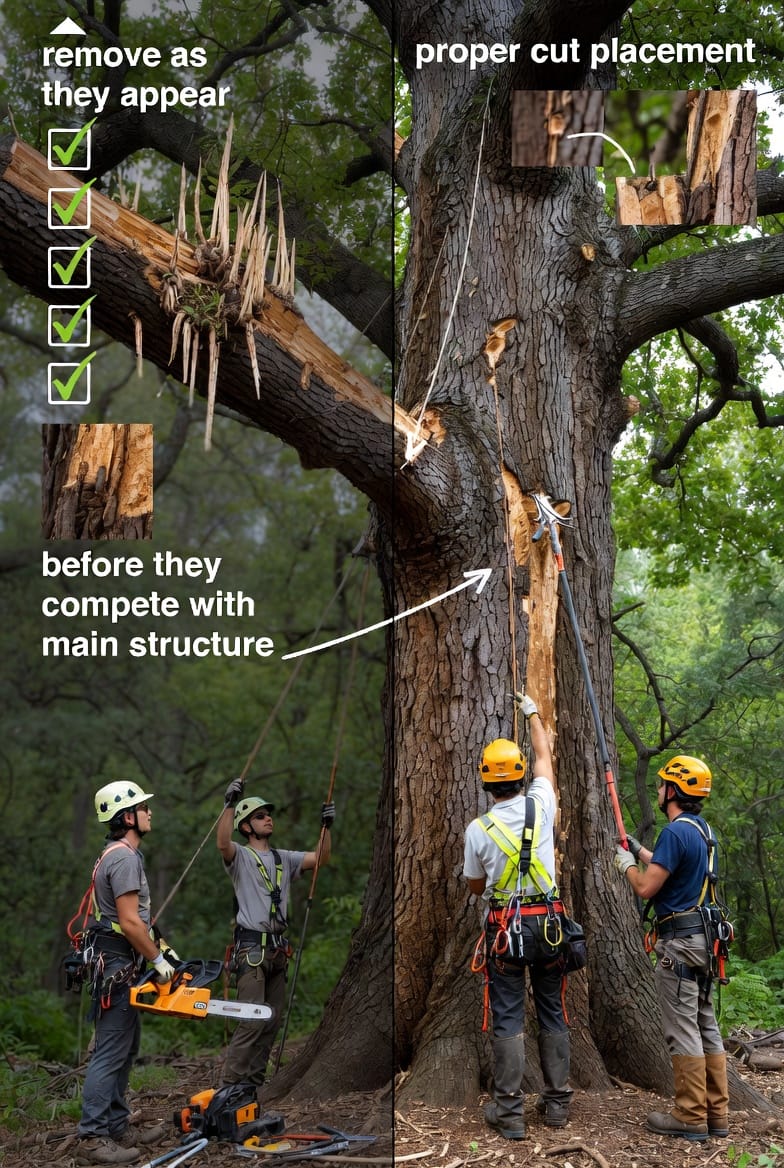
- Remove as soon as they appear – Young sprouts are easier to detach cleanly and less likely to leave large wounds.
- Prune before they compete – Do not wait until they reach pencil thickness or larger; early action preserves the tree’s energy for the main structure.
- Make correct cuts – Always cut just outside the branch collar at the base of the sprout. Never leave stubs, as they invite decay and more sprouting.
- Use sharp, clean tools – Bypass pruners or saws disinfected between cuts prevent disease spread.
- Avoid flush cuts or paint – Modern arboriculture shows that trees heal best when the collar is left intact and no wound dressing is applied.
For larger established sprouts or heavy infestations, a certified arborist should evaluate the tree first. Improper removal can actually stimulate even more vigorous regrowth the following season.
Seasonal timing matters too. Late winter or early spring (before bud break) is often ideal for most deciduous trees because the tree is still dormant and wound closure begins quickly once growth resumes.
When to Call Professional Tree Care Experts
While small, isolated sprouts can be handled by attentive homeowners, most situations benefit from professional evaluation. Our team brings:
- Years of species-specific knowledge
- Proper safety equipment and climbing techniques
- Ability to assess overall tree structure and health
- Access to specialized tools that minimize stress
We don’t just remove sprouts – we address the underlying cause and create a long-term maintenance plan that keeps your trees thriving with minimal future intervention.
Preventive care is the most cost-effective strategy. Regular professional inspections catch stress factors early and dramatically reduce the frequency of water sprout outbreaks.
Benefits of Consistent Sprout Management
Trees that receive proper sprout management display:
- Stronger, more balanced canopy structure
- Improved resistance to wind and storm damage
- Better overall vigor and leaf color
- Reduced risk of disease and insect infestation
- Longer lifespan and greater property value
Homeowners consistently report that once the cycle of heavy sprouting is broken, their trees require far less maintenance year after year.
Maintaining Tree Health Year-Round
Beyond sprout removal, support your trees with:
- Adequate deep watering during dry periods
- Mulching to retain soil moisture and regulate temperature
- Soil testing and targeted fertilization when needed
- Protection from mechanical damage by lawn equipment
- Prompt treatment of any pest or disease issues
These cultural practices work hand-in-hand with professional pruning to keep water sprouts, suckers, and epicormic growth to a minimum.
Every tree is unique, and the right strategy depends on species, age, location, and overall health. That is why a personalized assessment by qualified arborists delivers the best outcomes.
Manage Sprouts for a Healthier Tree
Taking control of water sprouts, suckers, and epicormic growth is one of the smartest investments you can make in your landscape. With timely, correct action you protect structure, enhance beauty, and extend the life of your valuable trees.
If you notice excessive vertical shoots, basal suckers, or any signs of stress on your property, do not hesitate to reach out. Our certified team is ready to provide expert evaluation and professional pruning services tailored to your specific trees.
Protect Your Trees from Dangerous Sprouts – Call Now!