The Tree Hazard Assessment: When to Call an Arborist vs. Monitor Yourself
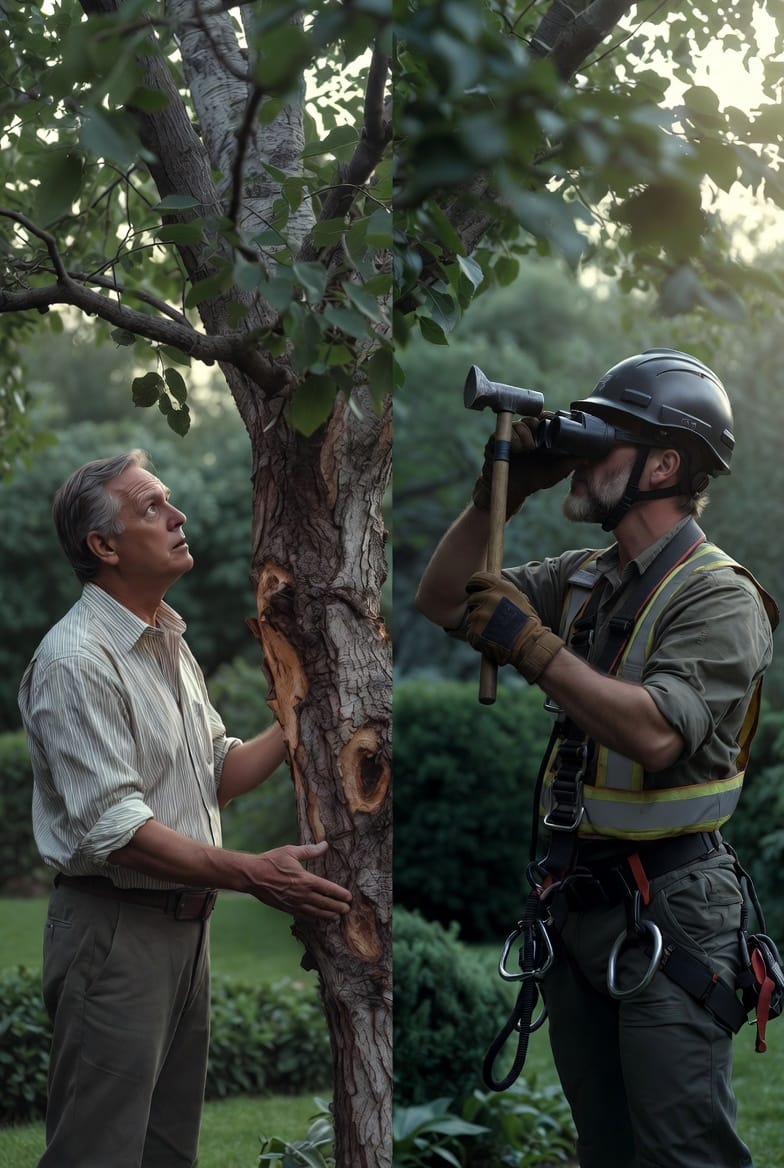
Trees bring beauty, shade, and value to our homes. Yet every tree carries potential risks that can turn a backyard asset into a serious liability. Understanding tree hazard assessment empowers homeowners to make smart decisions about their landscape while keeping loved ones and property safe.
Call Now for Expert Tree Hazard Assessment
This comprehensive guide walks you through professional risk evaluation, helping you confidently distinguish between minor issues you can monitor yourself and situations that demand immediate expert attention from a qualified arborist.
Why Tree Hazard Assessment Matters
Every year, falling trees and branches cause significant property damage and, unfortunately, occasional injuries. Tree failure doesn’t always happen during storms — sometimes it occurs on calm days when least expected.
A proper hazard assessment evaluates three core elements:
- The tree’s structural condition
- Its surroundings (targets)
- The likelihood of failure
By learning these fundamentals, you gain peace of mind and avoid unnecessary worry over harmless conditions while catching genuine threats early.
Understanding Tree Risk Levels
Professional arborists use standardized systems to classify tree risk levels. These generally fall into three categories:
- Low Risk: Stable trees with minor defects and no immediate threats to people or property.
- Moderate Risk: Trees showing noticeable defects but with low probability of hitting valuable targets.
- High Risk: Trees with significant structural weaknesses positioned to cause major damage or injury if they fail.
Recognizing these risk levels helps homeowners prioritize actions. Not every imperfection signals danger, but ignoring serious warning signs can lead to costly consequences.
What Homeowners Can Safely Monitor
Many tree conditions remain stable for years and only require regular observation. Homeowners can confidently track these minor defects without professional help:
- Small leaf drop or seasonal changes – Normal shedding during autumn or minor thinning during dry periods often reflects natural cycles rather than illness.
- Minor bark cracks or small dead branches under 2 inches in diameter, especially in the outer canopy.
- Slight leaning that has developed gradually over many years and shows no recent movement.
- Surface roots that create tripping hazards but do not indicate root decay.
- Minor insect activity limited to a few leaves without widespread defoliation.
Regular monitoring involves walking around your trees quarterly, noting any changes in appearance, and documenting them with photos. This simple habit often catches developing issues before they escalate.
Pro Tip: Keep a tree journal with dated photos. Visual records help track subtle changes over time.
Signs That Require Closer Attention
While many issues are benign, certain symptoms deserve heightened awareness:
- Unusual leaf discoloration or premature leaf drop outside normal seasonal patterns.
- Mushrooms or fungal growth appearing at the base of the trunk.
- Cracks in the soil around the root zone, especially after heavy rain.
- New cracks or splits in major limbs or the main trunk.
- Sudden increase in dead wood in the upper canopy.
These signs don’t automatically mean the tree must be removed, but they indicate it’s time to evaluate more carefully — either through continued monitoring or professional consultation.
When Professional Assessment Becomes Essential
Certain situations clearly cross the threshold where DIY monitoring is no longer sufficient. Professional arborists possess specialized training, equipment, and experience to accurately assess these higher-risk scenarios.
Call an arborist immediately when you observe:
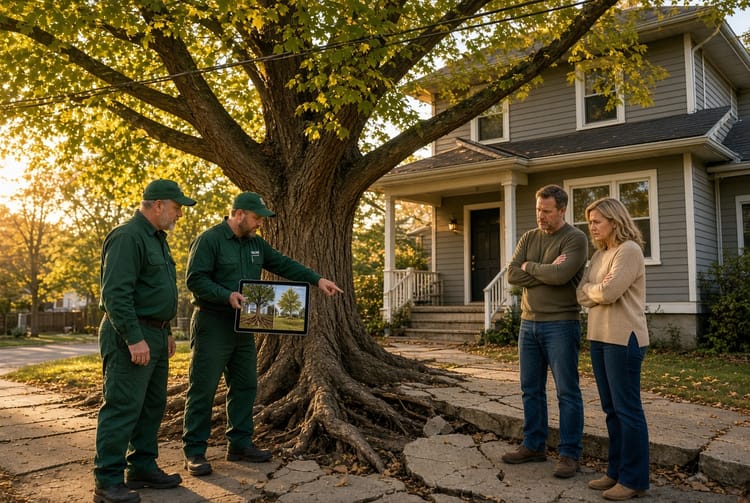
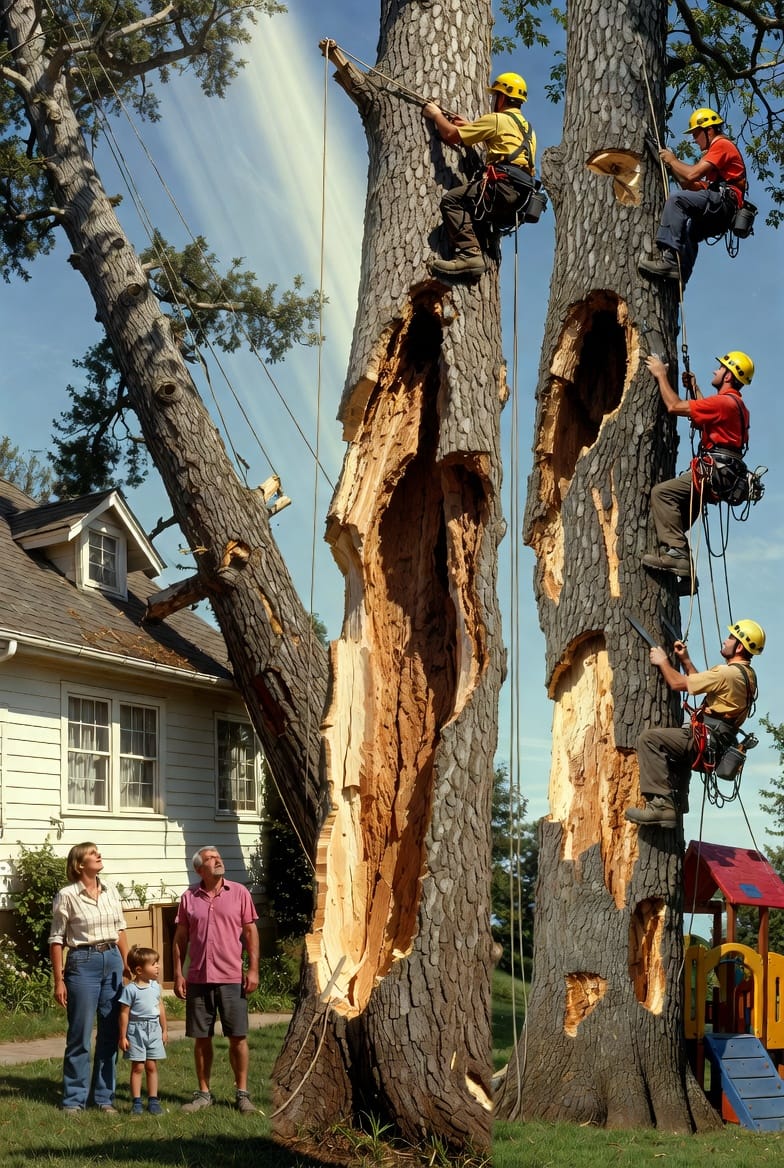
- Large targets beneath or near the tree — including homes, vehicles, play structures, or frequently used outdoor living spaces.
- Significant defects such as large cavities, extensive decay, or multiple co-dominant stems with included bark.
- Recent changes in tree posture, such as sudden leaning or shifting soil at the base.
- History of storm damage that left major wounds or broken branches.
- Trees showing advanced root issues near foundations or sidewalks.
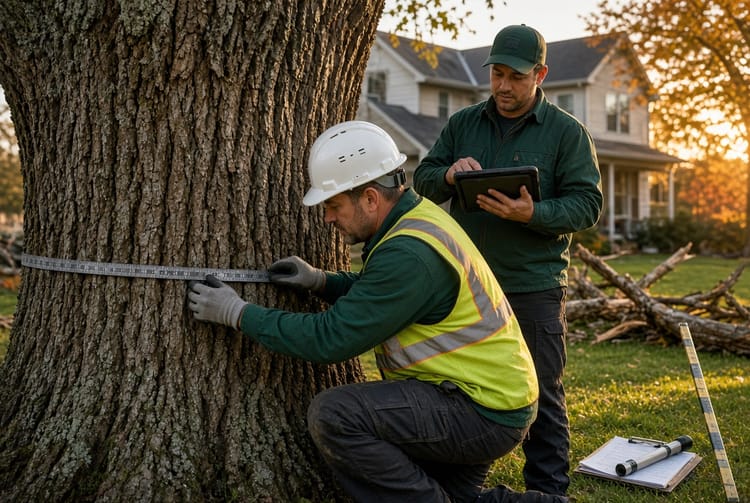
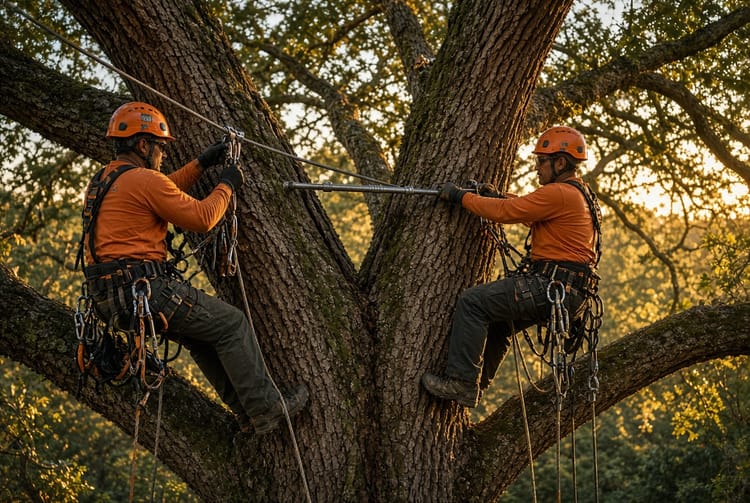
In these cases, a certified arborist can perform detailed evaluations using tools like resistograph drills, sonic tomography, or aerial inspections that homeowners simply cannot replicate safely.
Detailed Risk Assessment Factors Explained
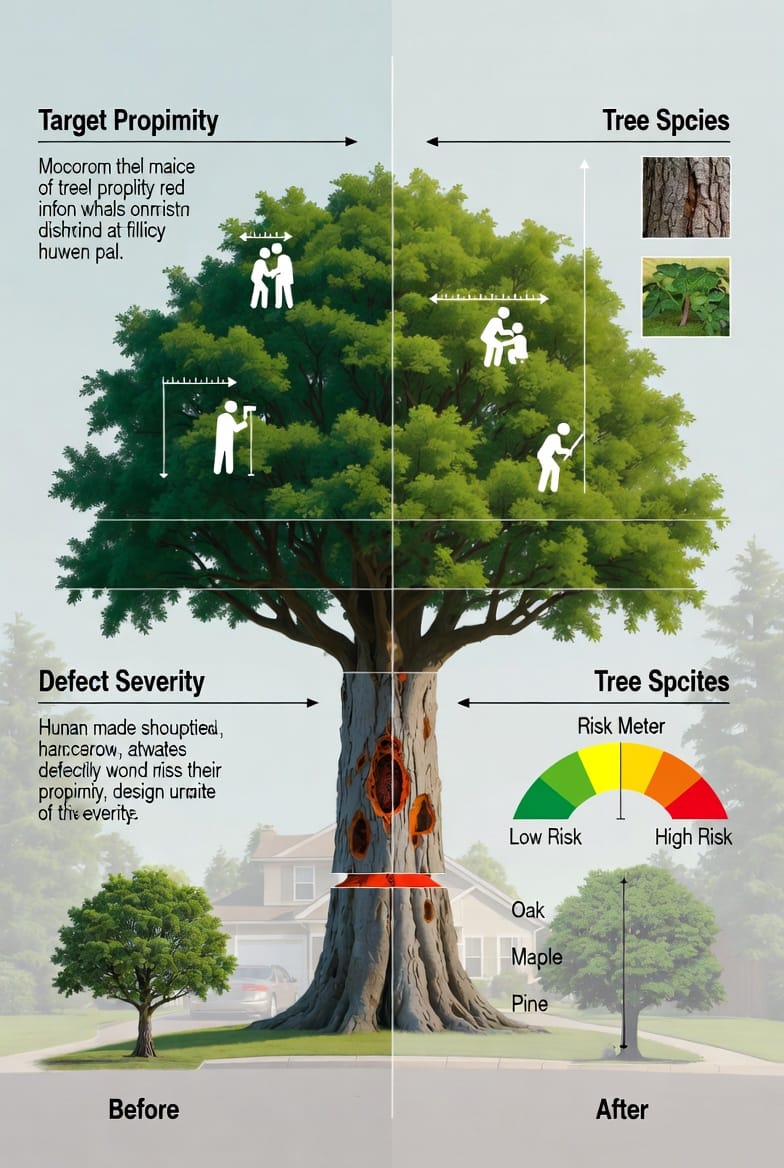
Target Proximity and Potential Impact
The most critical factor in tree hazard assessment is what lies within the tree’s potential fall zone. A large oak overhanging a quiet wooded area presents far less risk than the same tree positioned above a family home or children’s play area.
High-value targets include:
- Primary residence and attached structures
- Garages and vehicles
- Power lines and utility equipment
- Frequently occupied patios or decks
- Neighboring properties
When calculating risk, professionals measure both the height of the tree and the distance to these targets. Trees whose failure zone overlaps with high-occupancy areas almost always warrant expert evaluation.
Defect Severity and Structural Integrity
Not all defects carry equal weight. Small surface blemishes rarely compromise tree stability, whereas deep decay, large hollows, or cracks extending through the wood can significantly weaken a tree.
Arborists evaluate:
- Extent of decay – Using specialized tools to measure how much sound wood remains.
- Location of defects – Issues in the lower trunk or root collar pose greater risk than those high in the canopy.
- Multiple defects – Trees with several weaknesses compound overall risk dramatically.
Significant defects often remain hidden beneath the bark or below ground, making professional assessment crucial for accurate diagnosis.
Tree Species and Growth Characteristics
Different species have distinct strengths and vulnerabilities:
- Some trees, like certain maples and oaks, develop strong wood but can suffer from included bark in branch unions.
- Fast-growing species may create weak wood structure prone to breakage.
- Trees with naturally shallow root systems become more susceptible after heavy rainfall or soil compaction.
Understanding your specific tree species helps contextualize observed defects and informs monitoring frequency.
Safe Self-Monitoring Practices
When professional assessment isn’t immediately required, follow these best practices for effective homeowner monitoring:
- Conduct visual inspections from multiple angles, including ground level and from a safe distance.
- Check after major weather events for new damage.
- Look for changes rather than static conditions — sudden developments signal higher concern.
- Maintain proper spacing between trees and structures to reduce pressure.
- Avoid DIY pruning of large branches, which can create entry points for decay.
Remember: Observation is valuable, but never attempt to climb trees or perform structural pruning without proper training and safety equipment.
The Limits of Homeowner Assessment
While vigilant homeowners play an important role in early detection, several factors limit self-assessment accuracy:
- Many critical defects develop internally and remain invisible to the naked eye.
- Accurate measurement of decay requires specialized instruments.
- Risk calculations involve complex variables best interpreted by trained professionals.
- Safety considerations make close inspection of tall trees dangerous for untrained individuals.
These limitations explain why certified arborists remain essential partners in responsible tree care, even for proactive homeowners.
Benefits of Professional Arborist Assessment
Partnering with a qualified arborist delivers numerous advantages:
- Accurate diagnosis using industry-standard methods and equipment.
- Detailed reports with clear recommendations and risk ratings.
- Prioritized action plans focusing on the most critical concerns first.
- Preventive strategies that extend tree health and reduce long-term costs.
- Liability protection through documented professional evaluation.
Most importantly, professional assessment provides reassurance that you’re making informed decisions based on expert analysis rather than guesswork.
Common Myths About Tree Risk
Many homeowners hesitate to call professionals due to widespread misconceptions:
- “If the tree looks healthy, it must be safe.” — External appearance can mask serious internal decay.
- “Small cracks are always harmless.” — Depending on location and depth, even modest defects can warrant concern.
- “I can judge risk just by looking.” — Without training and tools, accurate assessment remains extremely difficult.
- “Professional help is only needed after storms.” — Many hazards develop gradually and require proactive evaluation.
Understanding these realities helps homeowners act confidently and timely.
Developing a Responsible Tree Care Routine
Create a sustainable approach by combining self-monitoring with periodic professional input:
- Perform basic visual checks four times per year.
- Document changes with photographs.
- Schedule professional assessments every 3–5 years for mature trees, or annually for high-risk specimens.
- Address minor issues promptly through proper maintenance.
- Maintain open communication with your arborist for ongoing guidance.
This balanced strategy maximizes tree benefits while minimizing potential hazards.
Protecting Your Investment and Safety
Trees represent significant investments in both monetary value and emotional attachment. Proper hazard assessment protects that investment by identifying problems early and preserving healthy specimens whenever possible.
Rather than viewing assessment as an expense, consider it essential preventive care similar to regular home maintenance or vehicle inspections. The small cost of professional evaluation pales compared to potential damage from an undetected failure.
Conclusion: Know When to Call the Pros
Mastering tree hazard assessment involves recognizing your strengths as a homeowner while respectfully acknowledging the boundaries of self-evaluation. Monitor minor defects and normal seasonal changes with confidence, but never hesitate to seek expert help when large targets, significant defects, or sudden changes appear.
Your trees deserve thoughtful care, and your family deserves peace of mind.
Know Your Tree Risks – Get Professional Assessment Now