The Tree Mulch Application: Benefits and Best Practices
Applying mulch around trees remains one of the simplest yet most powerful practices a property owner can adopt. When performed correctly, this single layer of organic material delivers lasting protection that supports root systems, conserves resources, and reduces ongoing maintenance. This guide explains the core benefits of moisture retention, temperature moderation, and weed suppression, outlines precise application standards of 2-4 inches kept safely away from the trunk, and highlights the dangers of volcano mulching. Follow these authoritative recommendations to give every tree the stable environment it needs to thrive.
Get Expert Mulch Application Today – Call Now!
Proper tree mulch application begins with understanding why the practice matters. Trees growing in urban or suburban landscapes face compacted soil, fluctuating weather, and competition from grass. A correctly placed mulch layer recreates the natural forest-floor conditions trees evolved to enjoy. The result is stronger growth, fewer stress-related problems, and lower long-term care costs.
Understanding the Core Benefits of Tree Mulch
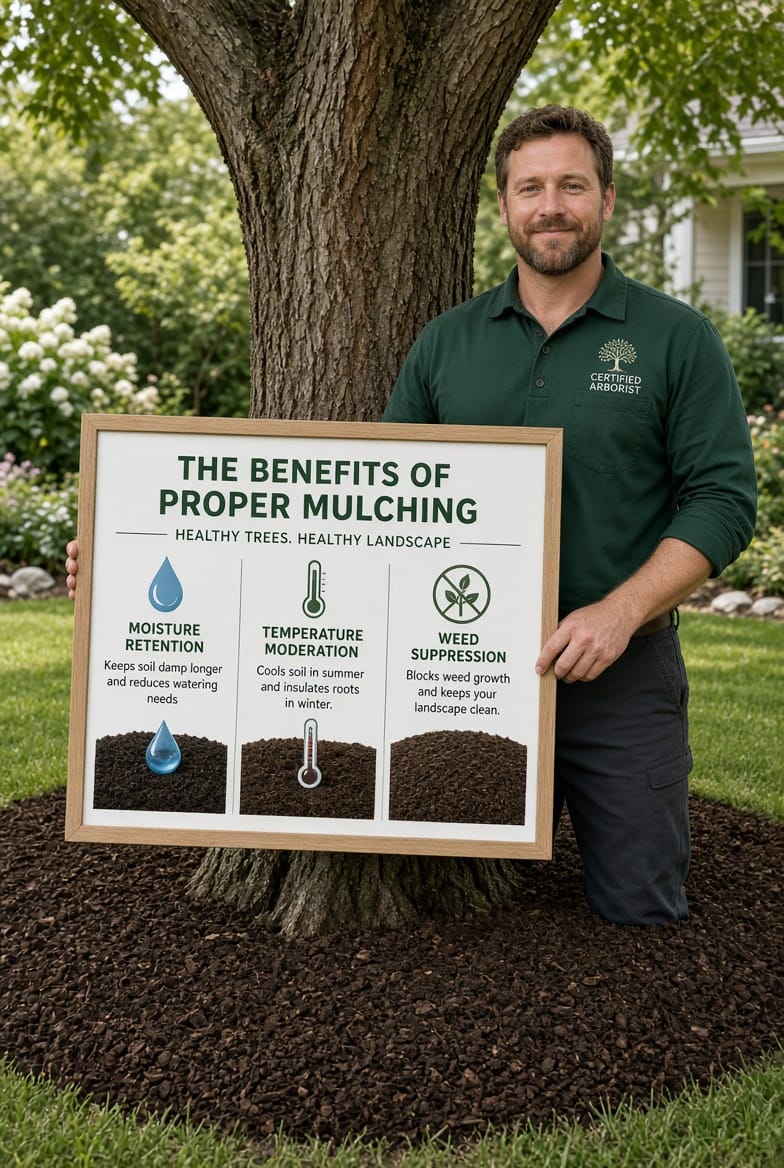
Three primary advantages stand out whenever mulch is applied according to best practices.
Moisture retention ranks first among these advantages. A uniform layer of organic mulch slows evaporation from the soil surface. Rainwater and irrigation soak in rather than running off, keeping the critical root zone consistently damp during dry spells. Trees therefore experience fewer drought-stress symptoms such as wilted leaves or premature leaf drop. Over a full growing season the reduced need for supplemental watering also conserves both time and water resources.
Temperature moderation follows closely. Soil temperatures swing dramatically between hot summer days and cold winter nights. Mulch acts as an insulating blanket: it keeps roots cooler when air temperatures soar and warmer when frost threatens. This buffering effect prevents the fine feeder roots from dying back, allowing the tree to continue absorbing nutrients even during extreme weather. The same insulation reduces frost heaving in colder climates, protecting newly planted or shallow-rooted specimens.
Weed suppression completes the trio of essential benefits. A 2-to-4-inch blanket blocks sunlight from reaching weed seeds, dramatically lowering germination rates. Fewer weeds mean less competition for water and nutrients and far less need for herbicides or manual pulling near the tree’s sensitive root zone. The time saved on weeding can be redirected toward other landscape priorities.
Additional supporting benefits appear once these three functions are in place. As organic mulch slowly decomposes it adds humus to the soil, improving structure and encouraging beneficial microbial activity. The layer also cushions the soil against foot traffic and lawn-equipment compaction, preserving the pore space roots need for oxygen. Together these effects create a healthier growing environment that pays dividends for years.
Proper Application Techniques for Lasting Results
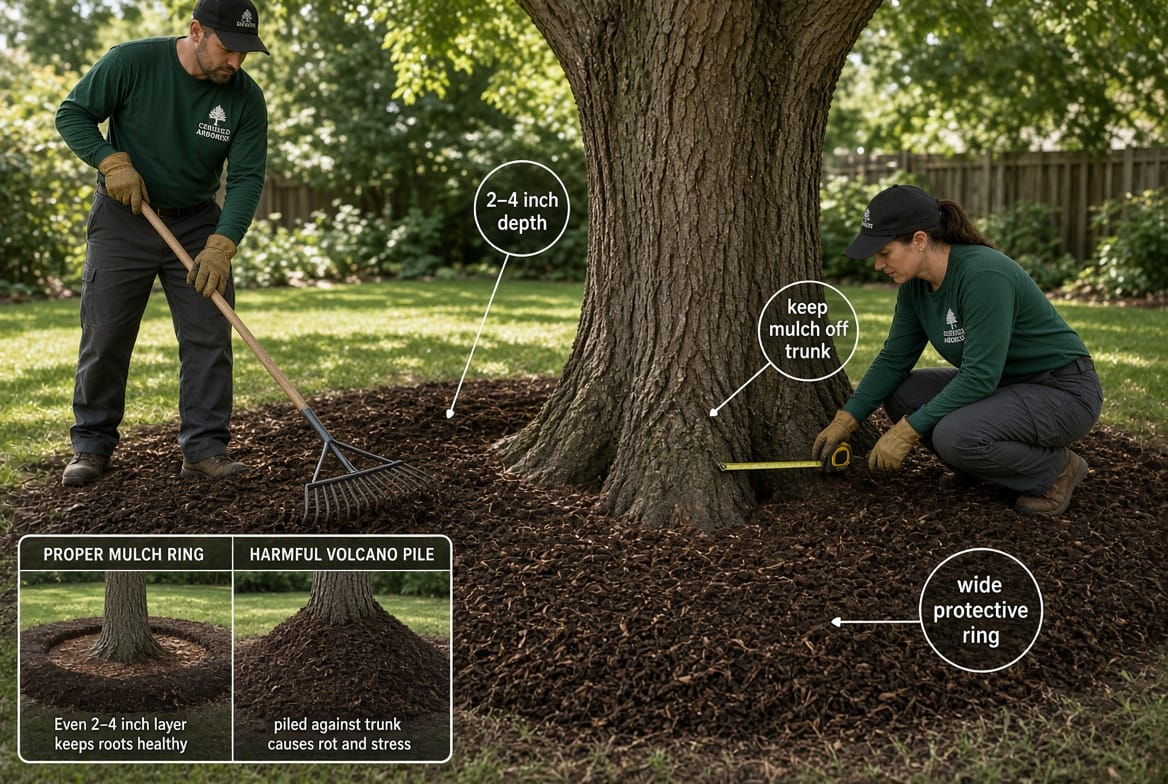
Success depends on following a few non-negotiable measurements. Industry standards call for a finished depth of 2-4 inches. Less than two inches fails to deliver adequate moisture retention or weed control. More than four inches can restrict oxygen and invite excess moisture against the bark. Aim for the middle of that range—approximately three inches—on most sites.
Equally important is keeping mulch away from the trunk. Leave a clear gap of three to four inches around the base so the root flare remains visible and dry. This “donut” or “ring” shape allows air circulation and prevents the constant dampness that leads to decay. Extend the mulched area outward to the drip line whenever possible, or at least three to five feet from the trunk on young trees. The wider the ring, the greater the protective zone.
Material choice also influences performance. Shredded hardwood, pine bark nuggets, and arborist wood chips all work well when applied at the correct depth. Avoid finely ground products that compact easily and dyed mulches that may contain unknown additives. Refresh the layer annually by adding only enough new material to restore the 2-4 inch depth rather than piling fresh mulch on top of old.
Timing matters as well. Early spring, after the soil has warmed but before weeds germinate, is ideal in most climates. A light top-dressing in fall can provide extra winter insulation. Always inspect the existing layer first; if it has compacted or thinned, loosen it gently with a rake before adding more.
Common Mistakes That Undermine Tree Health
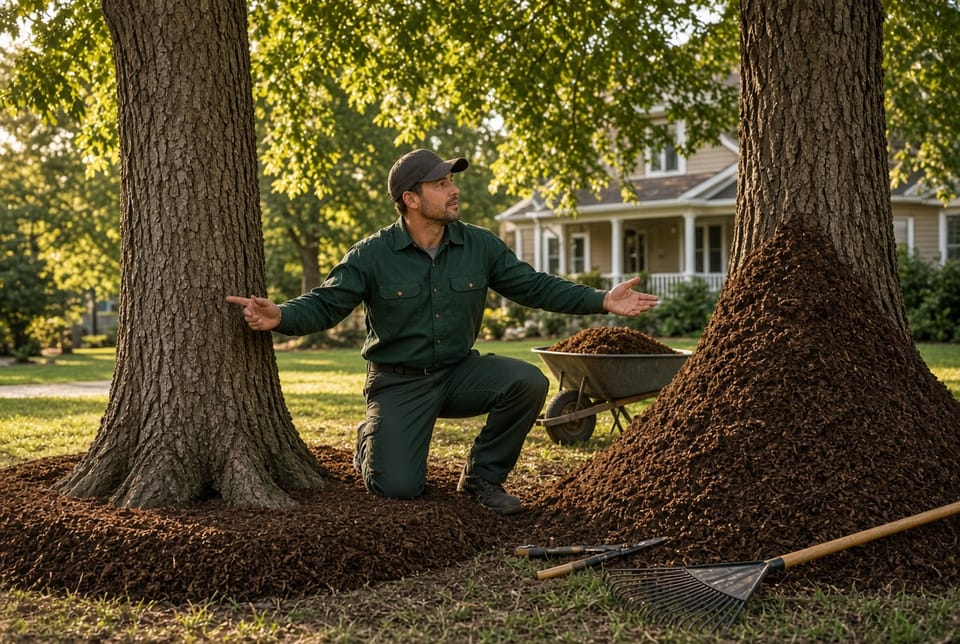
The most widespread error is volcano mulching. This occurs when mulch is piled high against the trunk in a cone shape resembling a volcano. The practice looks tidy to some eyes yet creates several serious problems. Constant moisture against the bark invites fungal decay and insect infestation. The buried root flare cannot breathe, leading to oxygen deprivation. Over time the tree may form girdling roots that circle and constrict the trunk, slowly starving the canopy.
Other frequent mistakes include applying mulch too thinly, using grass clippings that mat and sour, or spreading mulch over existing weeds without first removing them. Each of these errors reduces the intended benefits and can actually increase maintenance. The solution is simple: measure depth, maintain the gap at the trunk, and choose quality organic material.
Ongoing Maintenance and Seasonal Adjustments
Mulch is not a one-time task. Check the layer twice a year. In spring, pull any material that has drifted against the trunk and fluff compacted areas. In late fall, add a thin refresh if the depth has dropped below two inches. Watch for signs that the mulch has become waterlogged or has developed a sour smell; these indicate poor drainage or excessive depth and require immediate correction.
Different seasons call for slight adjustments. During prolonged drought, a well-placed mulch ring reduces irrigation frequency. In regions with heavy snow, the insulating layer protects roots from freeze-thaw cycles. After severe storms, inspect for displaced mulch and restore the even 2-4 inch profile.
Young trees benefit most from consistent mulching because their root systems are still establishing. Mature trees still gain from the moisture and temperature control, especially in compacted urban soils. In every case the same rules apply: correct depth, safe distance from bark, and quality material.
Selecting the Right Mulch and Avoiding Hidden Risks
Not every bag labeled “mulch” is suitable for trees. Look for products made from natural wood or bark that have been aged rather than freshly chipped. Fresh chips can temporarily tie up nitrogen as they decompose. Avoid rubber mulch or stone, which do not improve soil structure and can create heat islands. If you prefer a finished appearance, choose a medium-grade shredded product that stays in place without forming a water-repellent crust.
Watch for hidden risks such as contaminated loads that contain treated lumber or plastic debris. Purchase from reputable landscape suppliers or request arborist-generated chips from local tree-care companies. These chips often contain a beneficial mix of wood and leaves that break down at an ideal rate.
When in doubt, err on the side of a slightly shallower layer rather than an overly deep one. Trees recover more easily from too little mulch than from too much.
Integrating Mulch into a Broader Tree-Care Plan
Mulching works best as part of a complete care strategy. Combine it with proper watering during establishment, periodic soil testing, and professional pruning that maintains a strong structure. Avoid piling additional soil or decorative stone on top of the mulch layer; these additions recreate the same problems as volcano mulching.
Property owners who follow these guidelines typically notice healthier foliage, reduced summer wilt, and fewer weed-related chores within a single season. The investment of time is modest, yet the return in tree vitality is substantial. Mulch correctly for tree health.
Protect Your Trees from Volcano Mulching – Call Today!