The Tree Lichen and Moss: Harmless or Harmful
Homeowners often notice unusual green, gray, or crusty patches spreading across the bark of their favorite trees and immediately worry that something is seriously wrong. These growths—commonly known as lichen and moss—appear frequently on trunks, branches, and even exposed roots. While their presence can look alarming, especially when they form thick carpets or colorful patterns, the reality is far more reassuring than many people assume. Understanding what these organisms truly are, why they appear, and when they might signal a deeper issue allows property owners to respond calmly and effectively rather than reacting with unnecessary panic.
Call Now for Expert Lichen & Moss Tree Evaluation
In the majority of cases, lichen and moss pose no direct threat to tree health. They function as epiphytes, organisms that simply live on the surface of another plant without extracting nutrients from it. This fundamental distinction separates them from true parasites that invade living tissue and weaken their host. Still, heavy accumulations can sometimes point to environmental conditions or early stages of tree decline that deserve professional attention. This comprehensive guide explores the science behind these common growths, clarifies the difference between harmless colonization and genuine concern, and outlines practical steps for maintaining vibrant, long-lived trees.
Understanding Lichen and Moss: Nature’s Surface Dwellers
Lichen represents one of nature’s most fascinating partnerships. It is not a single organism but a symbiotic relationship between a fungus and an alga or cyanobacterium. The fungal partner provides structure and protection, while the photosynthetic partner produces food through sunlight. Together they create the familiar crusty, leafy, or branching forms that cling tightly to bark. Because lichen obtains everything it needs from the air, rainwater, and sunlight, it never penetrates the living cells of the tree.
Moss, by contrast, belongs to a group of simple non-vascular plants. These soft, green cushions thrive in moist environments and reproduce via spores. Like lichen, moss anchors itself to the outer bark without drawing sustenance from the tree’s vascular system. Both organisms prefer surfaces that offer stability, moderate shade, and consistent humidity—conditions frequently found on the north side of trunks or on older, slower-growing trees.
These growths are remarkably widespread. From urban backyards to rural woodlots, nearly every mature tree hosts at least a small colony. Their appearance often coincides with the natural aging process of bark, which becomes rougher and more textured over decades, creating ideal microhabitats. Far from indicating disease in isolation, the presence of lichen and moss frequently reflects a stable, relatively undisturbed environment.
Why These Growths Appear on Trees
Several environmental and biological factors encourage colonization. Trees with dense canopies that limit air movement create pockets of higher humidity ideal for both lichen and moss. Older specimens whose bark no longer sheds rapidly provide long-term attachment sites. Locations with consistent moisture—near lawns that receive regular irrigation, along stream banks, or in regions with frequent fog—also favor rapid establishment.
Air quality plays an interesting role. Many lichen species are sensitive to pollution and actually thrive in cleaner atmospheres. Their abundance can therefore serve as a positive indicator of local environmental conditions rather than a warning. Conversely, trees stressed by compacted soil, improper watering, or root damage may grow more slowly, allowing surface organisms more time to expand before the bark renews itself.
It is important to recognize that these growths do not cause the conditions that support them; they simply respond to them. A tree that already experiences reduced vigor may display denser coverage simply because its bark remains available longer. The organisms themselves remain passive passengers.
The Critical Distinction: Epiphytes Versus Parasites
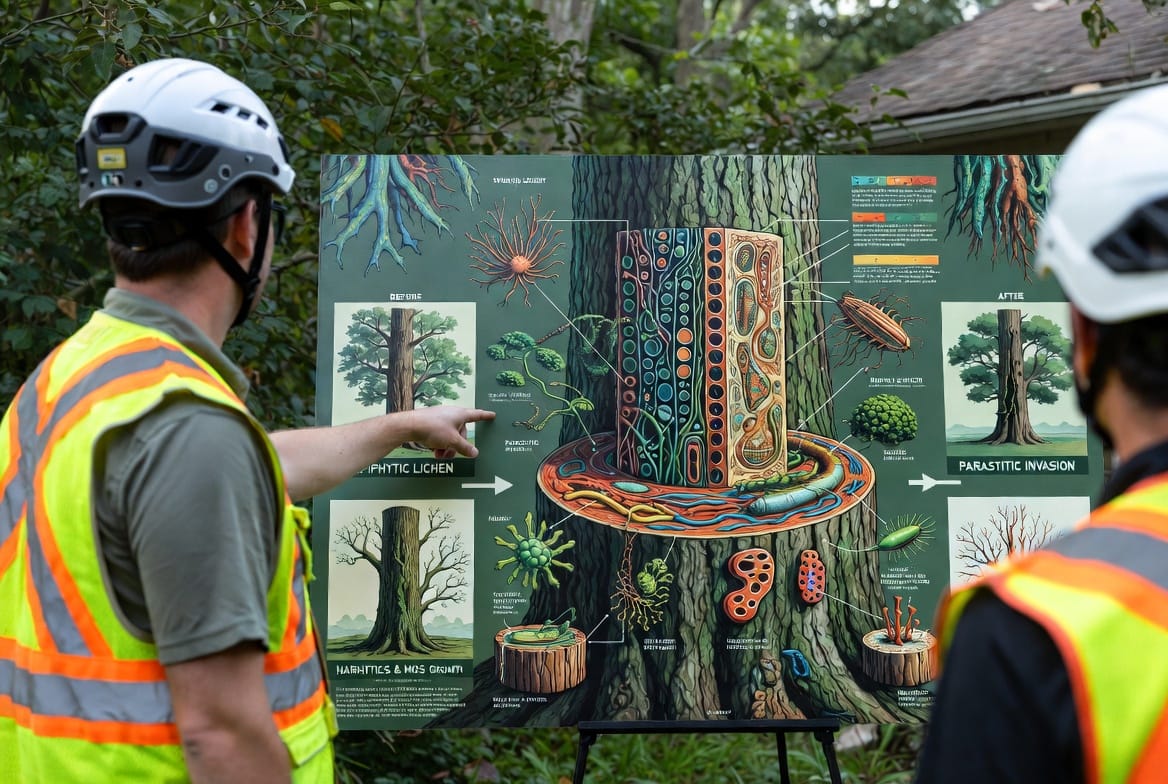
The most common misconception is that anything growing on a tree must be feeding on it. True parasites, such as mistletoe or certain fungi that cause cankers, invade living tissue, disrupt nutrient flow, and can ultimately kill branches or entire trees. Lichen and moss never behave this way. They sit entirely on the exterior surface, drawing zero resources from the host.
This epiphytic lifestyle means the tree continues its normal processes of photosynthesis, water transport, and growth undisturbed by the surface covering. Even thick mats of moss rarely create enough shade or weight to affect major limbs. In rare extreme cases on very small twigs, the added moisture retention might encourage minor surface decay, yet such instances remain exceptional and easily managed.
Because the relationship is non-invasive, aggressive removal is usually unnecessary and can actually harm the tree. Scraping or chemically treating bark to eliminate lichen and moss risks damaging the protective outer layer, opening pathways for genuine pathogens. A measured, informed approach always proves superior.
When Lichen and Moss Become Indicators of Concern
Although the organisms themselves remain harmless, their density and distribution can sometimes reveal underlying tree stress. A sudden, rapid increase in coverage across previously clean bark may coincide with reduced growth rates caused by drought, soil compaction, nutrient deficiency, or root injury. In these situations the tree sheds bark more slowly, giving surface dwellers greater opportunity to expand.
Heavy growth concentrated on one side of the trunk or throughout the upper canopy can also signal poor air circulation or excessive shade from nearby structures or competing vegetation. Over time, a declining tree may support denser colonies simply because its overall vigor has diminished. The lichen and moss act as visible markers rather than the primary cause.
Age itself contributes. Very old trees naturally host more extensive communities because their bark has weathered for decades. In such cases the growth is expected and does not automatically indicate imminent failure. Distinguishing normal aging from true tree decline requires careful observation of additional symptoms beyond the surface organisms.
Recognizing the Warning Signs That Merit Attention
While isolated patches of lichen or moss rarely justify alarm, certain combinations of symptoms deserve professional evaluation. Watch for these indicators:
- Extremely dense, continuous mats covering large portions of the trunk and major limbs
- A thinning or sparse canopy that allows excessive light to reach lower branches
- Brittle, dry branches that snap easily under light pressure
- Visible cracks, oozing sap, or fungal fruiting bodies appearing alongside the surface growth
- Progressive dieback starting from the tips of branches and moving inward
- Noticeable lean or instability in the overall structure of the tree
When heavy surface colonization appears together with any of these signs, the tree may be experiencing cumulative stress. Early detection allows corrective measures—such as improving soil aeration, adjusting irrigation, pruning for better airflow, or addressing root-zone problems—before decline becomes irreversible.
It is equally important to avoid overreacting to purely aesthetic concerns. Many healthy, vigorous trees display attractive lichen patterns that enhance their character without compromising strength or longevity. Context always matters more than appearance alone.
Practical Steps for Homeowners and the Value of Professional Insight
Property owners can support tree health through simple, consistent practices. Ensure the soil around the root zone remains uncompacted and mulched appropriately, avoiding the common mistake of piling mulch against the trunk. Water deeply but infrequently to encourage strong root systems. Prune selectively to open the canopy and improve air movement, always following proper techniques that protect the tree’s natural defense mechanisms.
Never attempt to strip lichen or moss with harsh chemicals, pressure washing, or metal tools. Such methods damage bark and create entry points for real pathogens. If the growth becomes excessively thick in a high-visibility area, a gentle brushing with a soft brush after a rain may reduce volume without harm, yet even this step is optional.
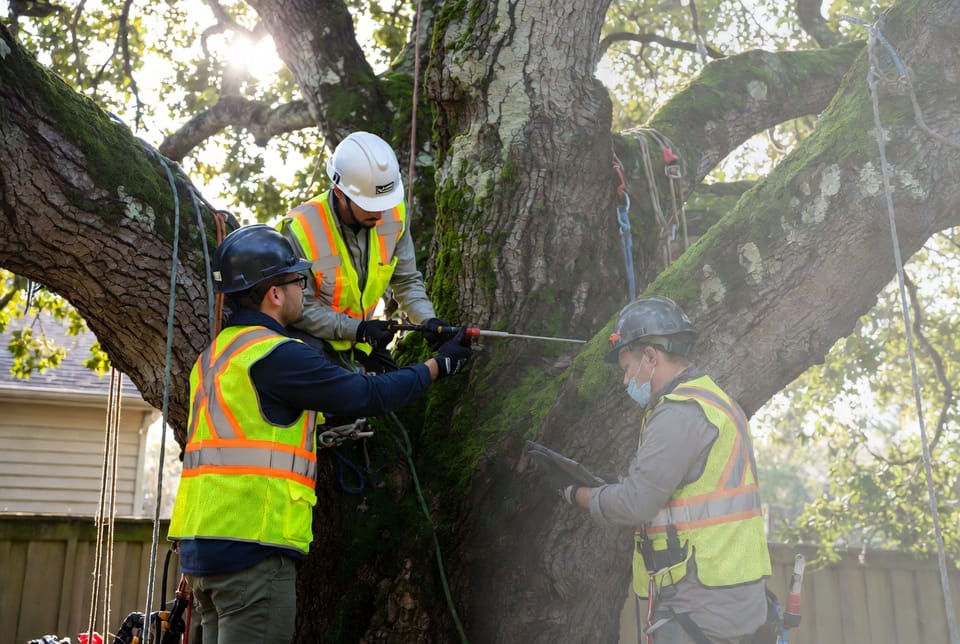
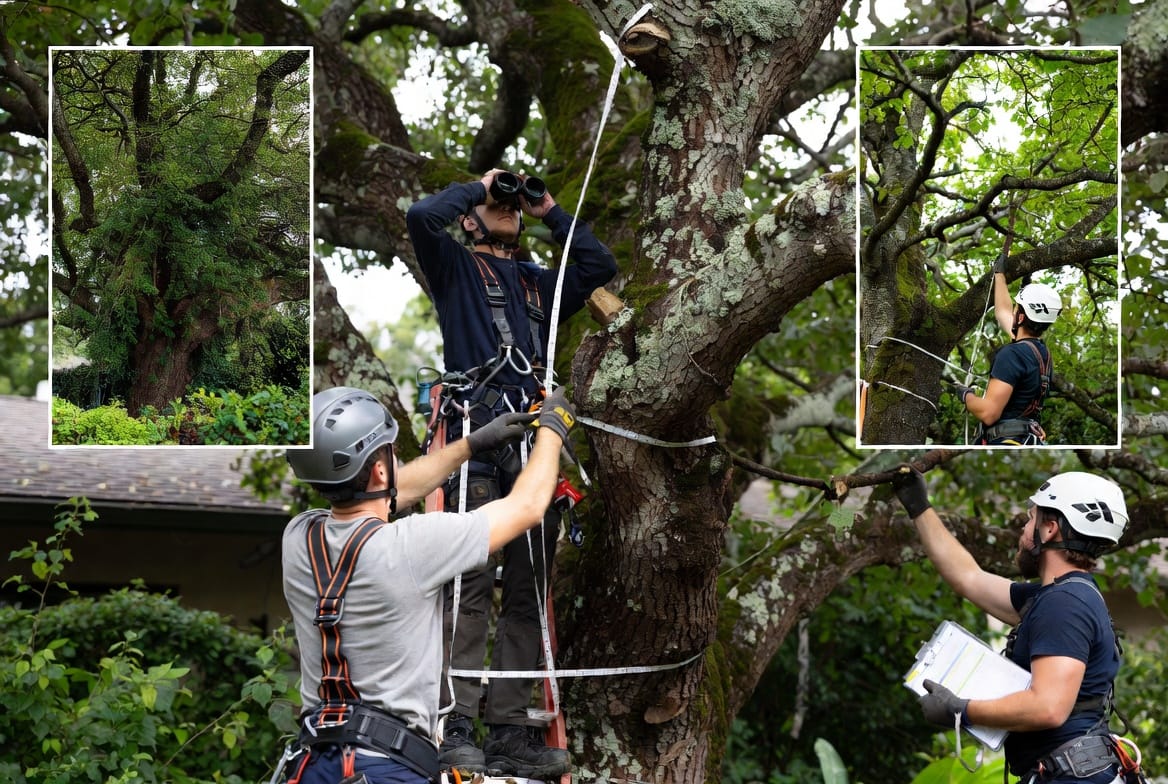
The most reliable path forward involves periodic professional assessment. Certified arborists possess the training to differentiate normal colonization from symptoms of decline, evaluate structural integrity, and recommend targeted care. They can also identify whether other factors—soil chemistry, pest activity, or environmental stressors—are at work beneath the surface.
Long-Term Tree Vitality and Peace of Mind
Healthy trees enrich landscapes, provide shade, support wildlife, and increase property value. By understanding that lichen and moss are usually passive residents rather than aggressors, homeowners can focus energy on genuine care practices that promote resilience. Regular monitoring, proper cultural techniques, and timely expert input form the foundation of successful tree stewardship.
In landscapes where these growths appear particularly prominent, a simple professional inspection often confirms that the tree remains structurally sound and biologically vigorous. When underlying issues do exist, early intervention restores balance and prevents more costly problems later. The goal is never eradication of every surface organism but rather the cultivation of strong, adaptable trees capable of thriving for generations.
Seasonal changes also influence visibility. Growth may appear more pronounced after wet periods and less noticeable during dry spells. Observing patterns across multiple seasons provides a clearer picture than any single snapshot. Patience combined with informed observation yields the best outcomes.
Ultimately, the presence of lichen and moss invites curiosity rather than fear. These organisms have coexisted with trees for millions of years, forming part of complex, balanced ecosystems. When they become unusually dense, they simply invite a closer look at the broader health of the landscape.
Lichen and moss are usually harmless. For a thorough tree assessment and personalized recommendations that protect both the beauty and structural integrity of your landscape.
Get a Professional Tree Assessment Today – Call Now!