The Tree Leaf Scorch: Browning at Edges from Environmental Stress
Leaf scorch can turn the lush canopy of your beloved trees into a patchwork of brown, crispy edges that signal underlying environmental stress rather than disease. Homeowners across Dallas and North Texas often notice these symptoms during hot, dry summers and worry about losing valuable shade trees. The good news? With proper understanding and timely intervention, most trees can recover and thrive again.
Get Professional Tree Health Assessment Today – Call Now
At our tree care service, we’ve helped countless Texas property owners restore tree health by addressing the root causes of leaf scorch. This comprehensive guide explains what leaf scorch really is, why it happens, and—most importantly—how you can protect and revive your trees effectively.
Understanding Leaf Scorch: Not a Disease, But a Symptom
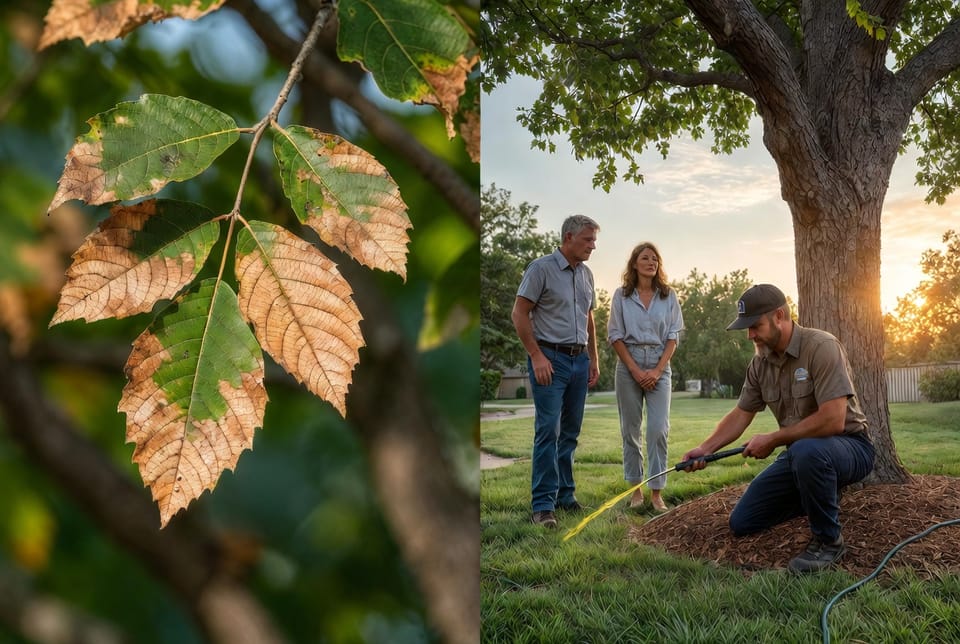
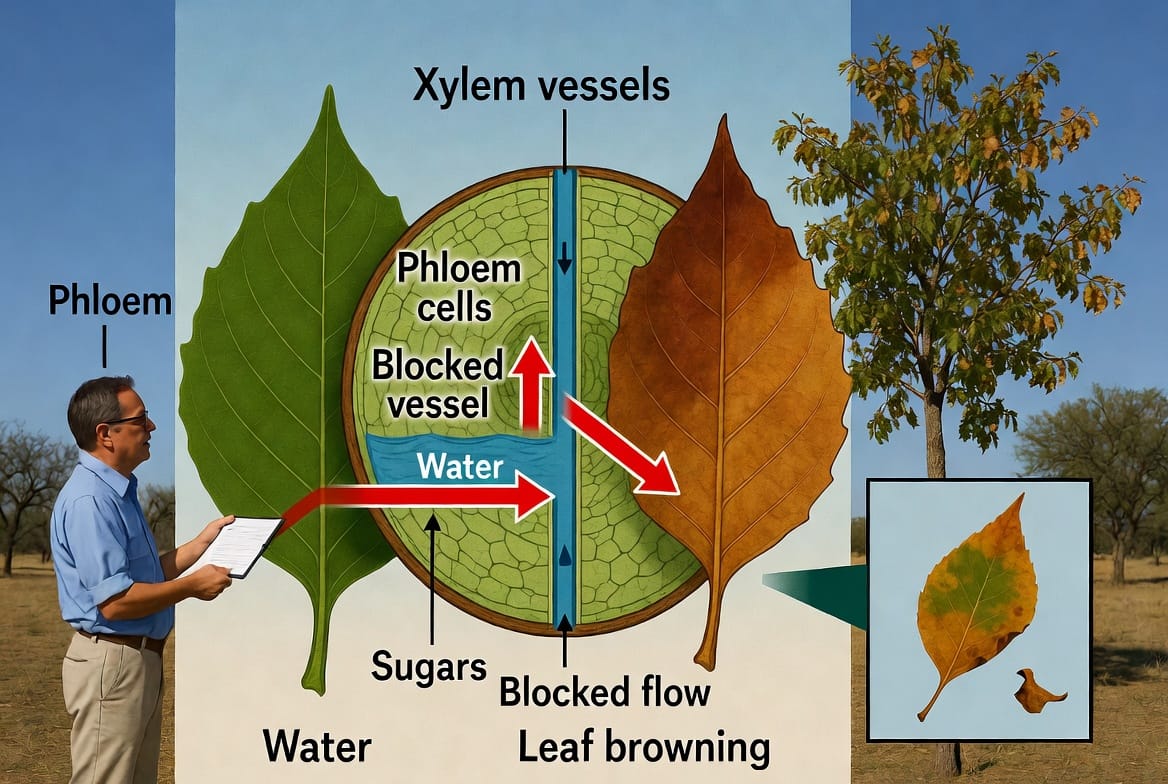
Leaf scorch refers to the browning and drying of leaf margins (edges) while the inner portions often remain green. Unlike fungal or bacterial diseases, scorch results from the tree’s inability to transport sufficient water to the leaf tips and edges. The tissue essentially “burns” from dehydration even when the tree stands in soil.
This condition appears across many species common in Texas landscapes, including oaks, maples, elms, and even some evergreens. The visual effect starts subtly with yellowing or browning along the margins, progressing inward if stress continues. Trees attempt to conserve water by sacrificing outer leaf tissue, which is why the center often stays green longer.
Key visual identifier: Brown, papery edges with a distinct contrast to greener centers—no powdery mildew, spots, or unusual growths typically associated with pathogens.
Early detection makes all the difference. Catching scorch before it advances allows for simple corrective actions that can save the tree and prevent long-term decline.
Primary Causes of Environmental Leaf Scorch
Several environmental factors trigger leaf scorch. Understanding these helps homeowners take targeted action.
Drought and Insufficient Soil Moisture
Texas summers bring intense heat and unpredictable rainfall. When roots cannot access enough water, the tree prioritizes newer growth and inner leaves, leaving outer edges to scorch.
- Shallow watering encourages weak surface roots vulnerable to drought.
- Compacted clay soils common in Dallas restrict water penetration.
- Newly planted or transplanted trees suffer most during establishment.
Root Damage and Restricted Uptake
Physical damage to roots severely limits water absorption:
- Construction activity near trees severs critical feeder roots.
- Girdling roots (roots wrapping around the trunk) commonly stress mature oaks in suburban yards.
- Heavy foot traffic or vehicle parking compacts soil, suffocating roots.
Salt and Chemical Stress
Road salt, pool chemicals, or over-fertilization introduce salts that draw moisture out of root tissues:
- Winter de-icing salts splash onto nearby trees.
- Excessive fertilizer creates high salt concentrations in soil.
- Poor drainage concentrates salts around the root zone.
Transplant Shock
Recently moved trees experience disrupted root systems and struggle to establish in new locations. Symptoms often appear in the first one to two growing seasons after planting.
Other Contributing Factors
- High winds accelerate transpiration (water loss through leaves).
- Extreme heat waves increase evaporation rates.
- Urban heat islands in Dallas neighborhoods amplify stress.
Pro Tip: Multiple stressors often combine—drought plus root compaction creates a perfect storm for severe scorch.
Recognizing Symptoms and Accurate Diagnosis
Proper diagnosis prevents unnecessary treatments. Look for these hallmark signs:
- Marginal browning starting at leaf tips and edges.
- Leaves curling or cupping upward.
- Premature leaf drop in late summer.
- Overall thinning canopy without obvious pests or fungal fruiting bodies.
Distinguish scorch from disease by absence of spots, holes, or discoloration patterns typical of pathogens. A certified arborist can confirm through visual inspection and soil/root analysis.
Effective Management Strategies for Leaf Scorch
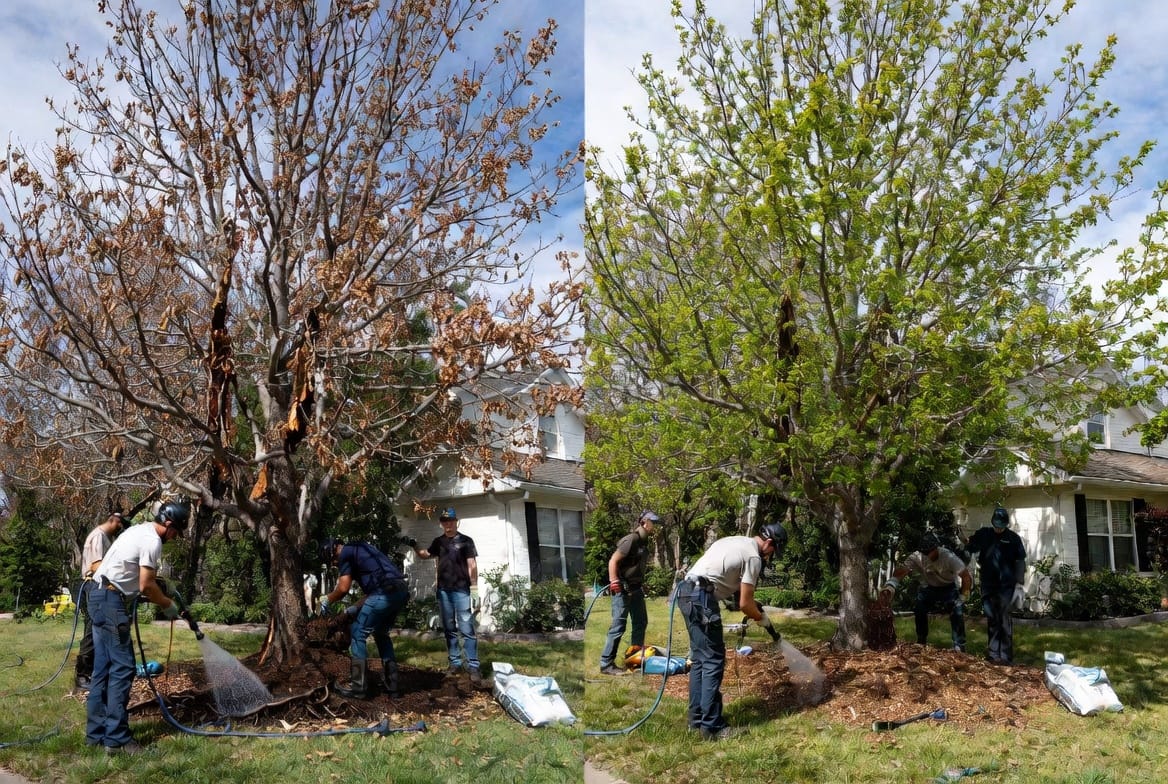
Recovery focuses on reducing stress and improving water delivery to the canopy. Consistent care yields visible improvement within one season.
Deep, Infrequent Watering
- Water slowly and deeply to encourage deep root growth.
- Apply 1–2 inches of water weekly during dry periods, targeting the entire root zone (extending to the dripline).
- Early morning watering minimizes evaporation.
Mulching for Moisture Retention
Organic mulch acts as a protective blanket:
- Apply 2–4 inches of wood chips or shredded bark.
- Keep mulch away from the trunk to prevent rot.
- Replenish annually to maintain benefits.
Soil Improvement and Aeration
- Aerate compacted soil around the tree.
- Incorporate organic matter to enhance drainage and nutrient availability.
- Avoid digging near major roots.
Reducing Additional Stressors
- Prune dead or damaged branches to redirect energy (best done by professionals).
- Minimize foot traffic and construction near the root zone.
- Install protective barriers if salt exposure is an issue.
Long-Term Prevention for Healthy Texas Trees
Prevention beats treatment every time. Build resilience into your landscape:
- Choose drought-tolerant species suited to North Texas conditions.
- Plant at proper depth and season for best establishment.
- Schedule annual professional tree health assessments.
- Maintain consistent irrigation during establishment years.
- Monitor soil moisture with simple probes or sensors.
For established trees, proactive care prevents minor stress from escalating into severe scorch or decline.
When to Call Professional Tree Care Experts
While homeowners can implement basic care, certain situations require expert intervention:
- Severe or widespread scorch affecting more than 30% of the canopy.
- Signs of secondary pest or disease invasion.
- Suspected root damage from recent construction.
- Large or high-value trees where improper treatment could cause harm.
Our certified arborists provide thorough assessments, precise diagnosis, and customized treatment plans tailored to Dallas-area conditions and soil types.
Conclusion: Scorch Is a Symptom, Not a Disease
Leaf scorch signals environmental stress your tree is experiencing, but it doesn’t have to mean the end. With targeted watering, mulching, soil care, and professional guidance, most trees recover beautifully and continue providing beauty, shade, and value to your property for years to come.
Don’t wait until browning progresses further. Early action protects your investment and maintains a healthy landscape.
Ready for a tree health assessment? We specialize in diagnosing and treating environmental stress issues like leaf scorch, helping North Texas homeowners restore vibrant, resilient trees.
Stop Leaf Scorch Before It Spreads – Call for Expert Help