The Tree Fertilization: When, Why, and How to Feed Your Trees
Tree fertilization is a vital yet often overlooked aspect of maintaining vibrant, resilient landscapes. Healthy trees do more than enhance property aesthetics—they improve air quality, provide shade, increase property value, and support local ecosystems. However, many homeowners treat trees like lawn grass, applying the wrong nutrients at the wrong time. This comprehensive guide explains when, why, and how to fertilize trees effectively for optimal health and longevity.
Boost Your Tree Health Today – Call Now!
Proper tree fertilization goes beyond simple feeding. It addresses specific nutritional needs that differ significantly from turfgrass requirements. By understanding these differences, you can prevent common deficiencies and ensure your trees thrive for decades.
Why Trees Need Specialized Fertilization
Trees in urban and suburban environments face unique challenges. Soil compaction, limited root space, and competition from lawns or structures often deplete essential nutrients. Unlike forest trees that benefit from natural leaf litter decomposition, landscape trees frequently require intervention.
Trees need different fertilizer than lawns. Lawn fertilizers typically emphasize high nitrogen for quick green growth. In contrast, tree fertilizers should contain higher levels of phosphorus and potassium to support strong root development, disease resistance, and overall structural integrity. Excessive nitrogen can actually harm trees by promoting weak, succulent growth prone to pests and environmental stress.
Key benefits of proper tree fertilization include:
- Enhanced root systems that improve drought tolerance
- Better resistance to diseases and insect infestations
- Improved leaf color and density for superior photosynthesis
- Increased flowering and fruit production in ornamental and productive trees
- Extended lifespan of valuable specimen trees
When trees receive balanced nutrition, they become more resilient to extreme weather, urban pollution, and soil degradation—common issues in many regions.
Signs Your Trees Need Fertilization
Early detection of nutrient deficiencies prevents long-term damage. Watch for these common indicators:
- Pale or yellowing leaves (often signaling nitrogen deficiency)
- Poor overall growth and smaller-than-normal leaves
- Early leaf drop or sparse canopy
- Stunted twig growth with short internodes
- Discolored foliage edges or unusual patterns
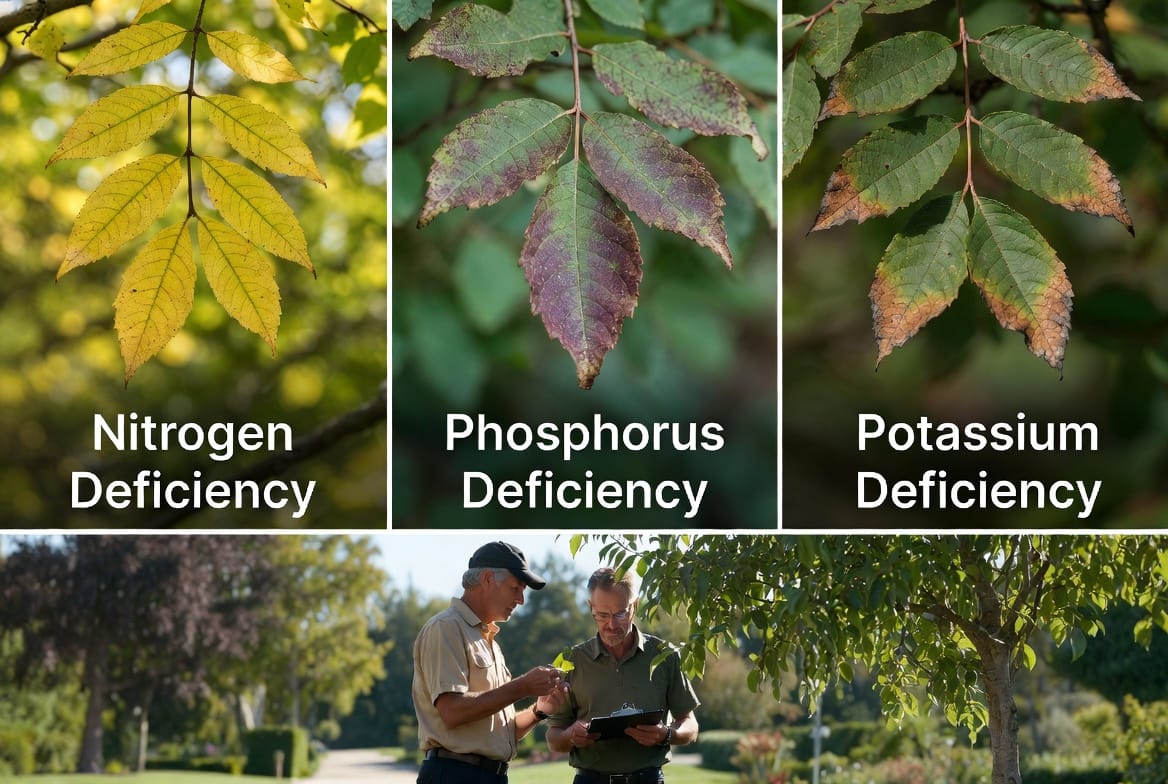
Specific deficiency symptoms include:
- Nitrogen deficiency: Uniform yellowing of older leaves
- Phosphorus deficiency: Purple or reddish tinting along leaf edges
- Potassium deficiency: Scorched or brown tips on leaves
If you notice any of these signs, it’s time to assess your trees’ nutritional needs. Soil testing remains the most reliable method to determine exact requirements rather than guessing with generic applications.
When to Fertilize Trees
Timing significantly impacts fertilization success. The best periods for tree fertilization typically occur during:
- Early spring (just before bud break) when trees begin active growth
- Late fall (after leaf drop but before ground freezes) to support root development
- Avoid mid-summer applications in hot climates, as they can stress trees during peak heat
Young, newly planted trees generally need more frequent feeding during their establishment phase (first 2-3 years). Mature trees may only require fertilization every 2-3 years, depending on soil conditions and growth performance.
Always consider local climate, tree species, and soil quality. For example, fast-growing species like maples and birches may benefit from more regular applications than slower-growing oaks.
Proper Tree Fertilization Techniques
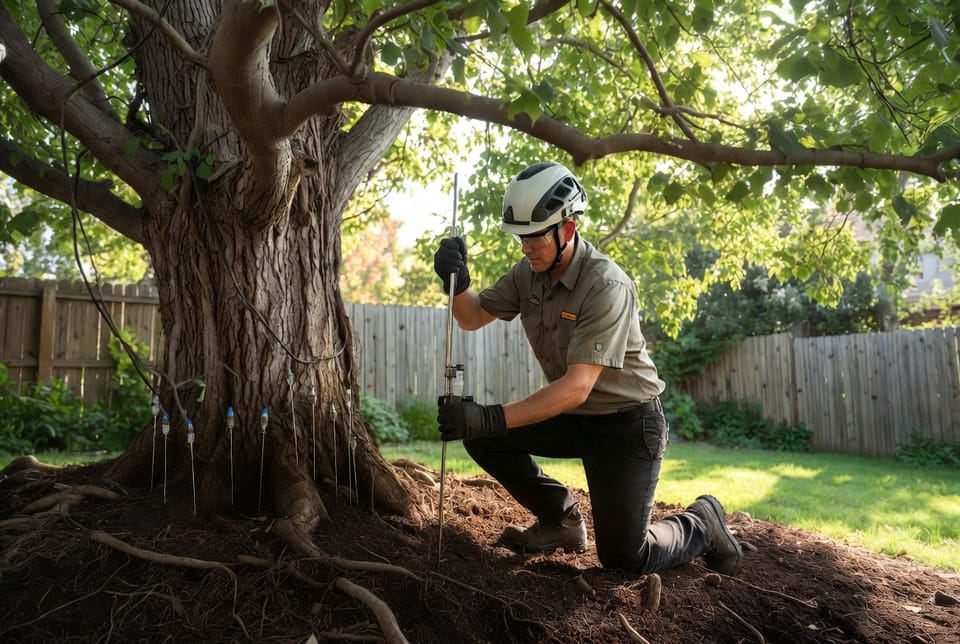
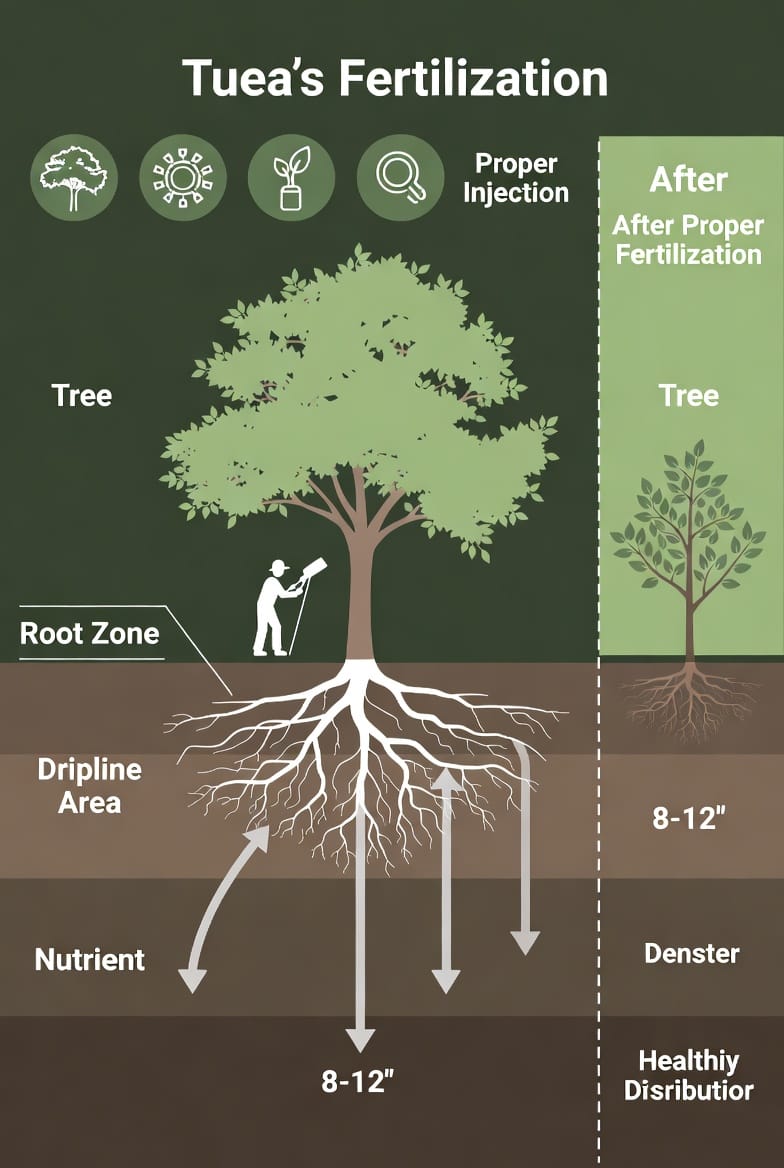
Correct application method makes the difference between effective nutrition and wasted effort. Root zone injection stands as the preferred professional technique for several reasons:
- Delivers nutrients directly to the active root zone
- Minimizes runoff and environmental impact
- Ensures even distribution throughout the soil profile
- Reduces the risk of burning surface roots or grass
Never broadcast fertilizer on the surface around trees. This common mistake leads to nutrient loss, grass over-fertilization, and potential root damage from concentrated salts.
Step-by-Step Professional Application Process
- Conduct soil testing to identify specific deficiencies
- Calculate the appropriate fertilizer formula based on test results
- Mark the root zone extending from the trunk to just beyond the dripline
- Inject or place fertilizer at proper depth (typically 8-12 inches)
- Water thoroughly after application to activate nutrients
- Monitor tree response over the following growing season
Professional arborists use specialized equipment for precise delivery, ensuring nutrients reach where trees need them most—deep in the soil where feeder roots actively absorb minerals.
Common Tree Fertilization Mistakes to Avoid
Even well-intentioned efforts can backfire without proper knowledge. Key risks include:
- Over-fertilization leading to salt buildup and root burn
- Wrong nutrient ratios causing imbalances
- Applying at wrong times during dormant or stressed periods
- Using lawn fertilizer on trees (too much nitrogen)
- Surface spreading instead of root zone delivery
Bold warning: Improper fertilization can weaken trees over time, making them more susceptible to serious health issues. When in doubt, consult certified professionals who understand tree biology and local conditions.
Tree Species and Their Unique Fertilization Needs
Different trees have varying nutritional preferences:
- Deciduous trees like oaks and maples often benefit from balanced N-P-K formulas with emphasis on phosphorus for root strength
- Evergreen trees may require more nitrogen during active growth periods
- Fruit trees need additional potassium for better fruit quality and disease resistance
- Ornamental flowering trees respond well to higher phosphorus for abundant blooms
Tailoring your approach to specific species maximizes results and prevents unnecessary applications.
The Science Behind Tree Nutrition
Trees require 16 essential nutrients for proper growth, with macronutrients (nitrogen, phosphorus, potassium) needed in larger quantities. Micronutrients like iron, manganese, and zinc play crucial roles in enzyme functions and chlorophyll production.
Healthy soil biology also matters significantly. Beneficial microbes help break down organic matter and make nutrients available to roots. Some advanced fertilization programs incorporate soil amendments that support this underground ecosystem.
Long-Term Benefits of Consistent Tree Care
Investing in proper tree fertilization yields substantial returns:
- Trees with adequate nutrition grow stronger and live longer
- Healthier canopies provide better energy production
- Improved pest and disease resistance reduces treatment costs
- Enhanced property aesthetics and value
- Greater environmental benefits through carbon sequestration and oxygen production
A well-fed tree becomes an asset rather than a liability, potentially avoiding expensive removal or major treatments down the road.
Professional Assessment and Customized Programs
While basic understanding helps, professional evaluation ensures optimal results. Certified arborists assess overall tree health, soil conditions, environmental stressors, and specific species requirements before recommending any treatment plan.
They can identify whether fertilization alone suffices or if additional care like aeration, mulching, or pest management is needed for comprehensive tree health.
Conclusion: Feed Your Trees Properly for Long Life
Healthy trees represent one of the best investments in your property and environment. By understanding the unique nutritional needs of trees and applying proper fertilization techniques, you give your landscape the foundation for decades of beauty and benefits.
Don’t leave your trees’ health to chance.
Our expert team provides thorough evaluations and customized tree care solutions tailored to your specific landscape needs. Protect your valuable trees with science-based nutrition and professional expertise.
Expert Tree Nutrition Assessment – Call Today!