The Tree Drought Stress: Symptoms and Recovery
Drought stress ranks among the most widespread seasonal challenges facing trees across residential and commercial landscapes. During prolonged dry periods—especially in the heat of summer and early fall—trees struggle to draw adequate moisture from the soil. This physiological strain can weaken even established specimens, leaving them vulnerable to secondary problems. Understanding the signs early and responding with proven care practices often means the difference between full recovery and permanent decline. This guide explains the clear symptoms of drought stress, the most effective recovery methods, and the critical point at which professional evaluation determines whether a tree can be saved or must be removed for safety.
Call Today to Save Stressed Trees or Plan Safe Removal
Trees possess remarkable resilience, yet they are not immune to extended water shortages. When soil moisture drops below critical levels for weeks at a time, roots cannot supply the canopy with the water needed for photosynthesis, cooling, and nutrient transport. The result is a cascade of visible and internal changes that, if left unaddressed, may become irreversible. Fortunately, timely intervention restores vitality in the majority of cases. Homeowners and property managers who recognize the warning signs and apply consistent support give their trees the strongest chance of thriving through the next growing season.
Understanding Seasonal Drought Stress
Drought stress develops most frequently during mid-to-late summer when temperatures rise and rainfall becomes infrequent. Even trees that appear healthy in spring can show distress by August if dry conditions persist. Shallow-rooted species and newly planted trees suffer first, but mature trees with extensive root systems also experience strain when the upper soil layers remain dry for extended periods. Urban and suburban sites intensify the problem: compacted soil, heat-reflecting pavement, and restricted root zones limit natural water infiltration.
The stress response begins underground. Fine feeder roots near the surface die back when moisture is unavailable, reducing the tree’s overall absorption capacity. Above ground, the canopy prioritizes survival by closing stomata—tiny pores on leaves—to conserve water. This protective mechanism slows photosynthesis and raises internal temperatures, producing the classic visible symptoms discussed below. Recognizing the seasonal pattern allows proactive care before damage escalates.
Common Symptoms of Tree Drought Stress
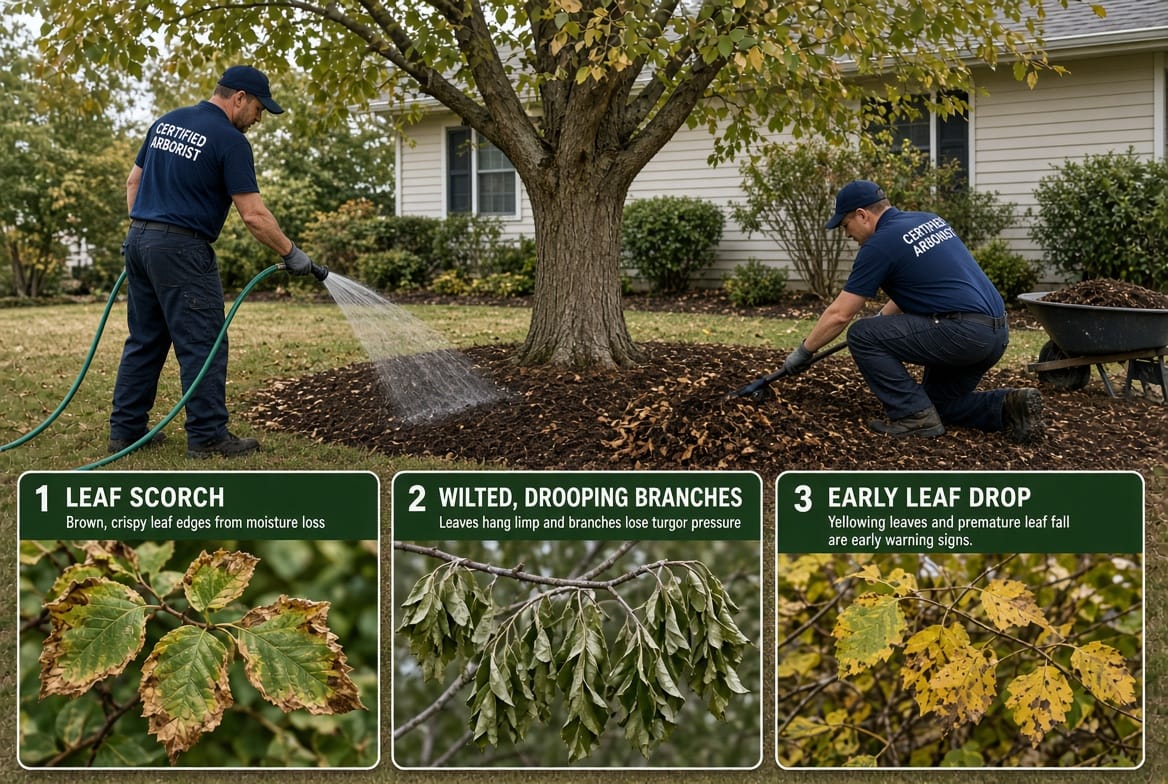
Early detection is essential. The following signs appear progressively and should prompt immediate attention.
- Wilting
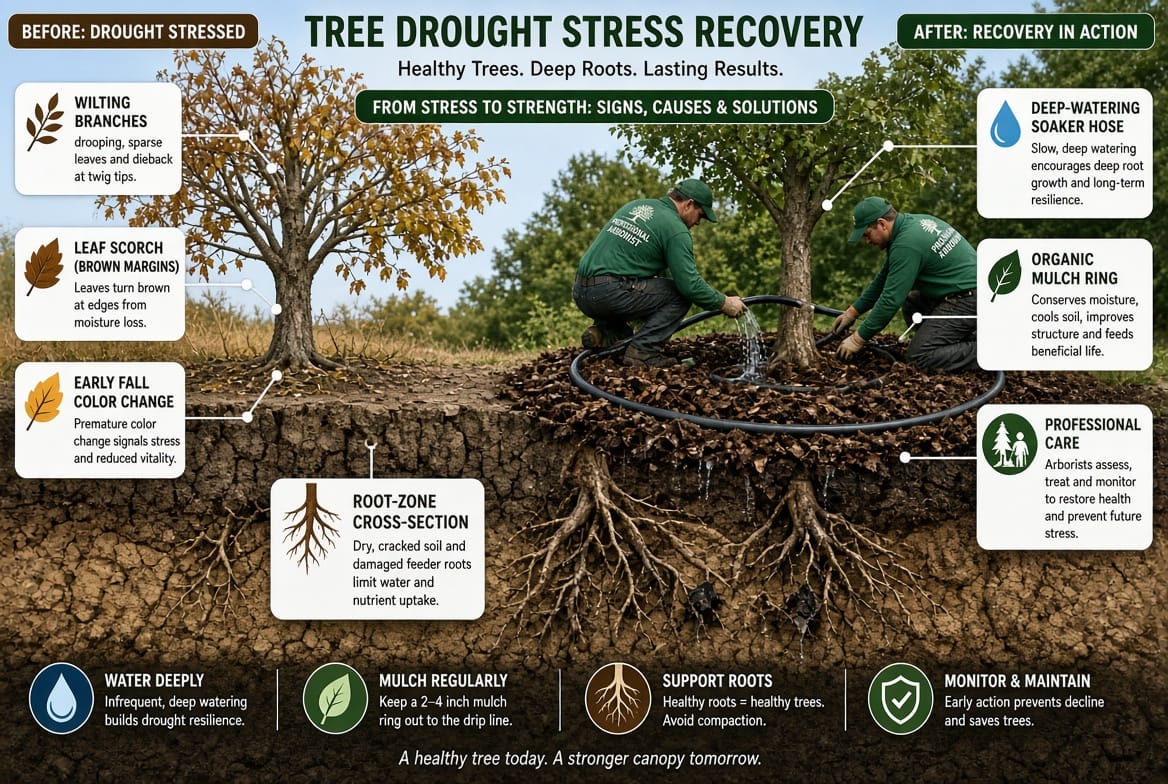
Leaves and young shoots lose turgor pressure and appear limp or drooping, even in the morning when moisture should be highest. Wilting often starts at the outer edges of the canopy and progresses inward. In severe cases, entire branches hang downward as if exhausted. - Leaf Scorch
The most diagnostic visual cue is leaf scorch—browning or crisping along the margins and between the veins while the leaf base remains green longer. Scorched areas feel brittle to the touch and may curl upward. This symptom results directly from insufficient water reaching the leaf extremities during peak transpiration hours. - Early Fall Color
Premature color change and leaf drop occur weeks or months ahead of normal autumn timing. Leaves may turn yellow, red, or brown and fall while neighboring trees remain green. This early senescence is the tree’s attempt to reduce water demand by shedding foliage.
Additional indicators include slowed growth, smaller-than-normal leaves, and dieback of twig tips. When multiple symptoms appear together, the tree is under significant drought stress and requires prompt support.
How to Help Trees Recover from Drought Stress
Once symptoms are confirmed, focus shifts to restoring soil moisture, protecting roots, and minimizing additional strain. Consistent, correct practices reverse mild-to-moderate stress in most healthy trees.
Deep Watering Techniques
Surface sprinkling is ineffective. Deep watering delivers moisture slowly to the critical root zone, typically 12 to 18 inches below the surface. Apply water at the drip line—the outer edge of the canopy—rather than against the trunk. Use a soaker hose, drip irrigation, or a slow-running garden hose for several hours, allowing water to infiltrate thoroughly. Frequency depends on soil type and weather: sandy soils may need watering every 7–10 days, while clay soils retain moisture longer and may require intervals of 10–14 days. Aim for the equivalent of 1 to 1.5 inches of water per session. Early morning application reduces evaporation and fungal risk.
Mulch Application for Moisture Retention
A proper mulch layer is one of the most powerful tools against recurring drought. Spread 2 to 4 inches of organic material—wood chips, shredded bark, or composted leaves—in a wide circle extending to the drip line. Keep mulch several inches away from the trunk to prevent rot. Mulch moderates soil temperature, suppresses weeds that compete for water, and dramatically slows evaporation. Replenish annually as the material decomposes. Avoid piling mulch into “volcanoes” against the bark; this common error creates moisture and pest problems.
Reduce Additional Stress Factors
Lower the overall demand on the tree while it recovers. Avoid heavy pruning during drought periods; limit cuts to dead or hazardous branches only. Postpone fertilization until soil moisture is restored, because nutrients can burn stressed roots. Protect the root zone from compaction by keeping vehicles and heavy foot traffic away. If construction or grading is planned nearby, install temporary barriers. For newly planted trees, maintain a consistent watering schedule through the first two full seasons to establish deep roots capable of withstanding future dry spells.
Monitor progress weekly. New growth, improved leaf color, and reduced scorching signal successful recovery. Continue supportive care through the remainder of the dry season and into the following spring.
When Recovery Is Possible Versus When Removal Is Needed
Not every drought-stressed tree can be saved, yet the majority respond favorably when care begins early. Recovery remains realistic under these conditions:
- The tree is otherwise healthy with no major structural defects.
- Symptoms are limited primarily to the outer canopy.
- The root system shows no widespread decay or girdling.
- Supportive measures (deep watering and mulching) are applied consistently for several weeks.
- New buds or improved foliage appear within one to two months.
In these situations, patience and continued monitoring usually restore vigor. Trees that endure moderate drought often emerge stronger, having developed deeper root systems as an adaptive response.
Removal becomes the responsible choice when damage has progressed beyond practical recovery. Warning thresholds include:
- Extensive canopy dieback exceeding 50 percent.
- Large sections of dead wood that pose falling hazards.
- Visible root collar decay or major root loss.
- Persistent decline despite months of proper care.
- Structural instability that threatens people or property.
Waiting too long increases risk. Dead or severely compromised trees can fail suddenly during storms, creating liability and cleanup costs far higher than timely professional removal. A certified assessment determines whether the tree retains sufficient live tissue and structural integrity to justify continued investment in recovery.
Long-Term Strategies to Prevent Future Drought Stress
Prevention reduces the frequency and severity of future episodes. Select drought-tolerant species suited to local climate and soil when planting new trees. Group plants with similar water needs to simplify irrigation. Improve soil structure with organic amendments that enhance water-holding capacity. Install efficient irrigation systems with moisture sensors that deliver water only when needed. Maintain the mulch ring year-round and avoid unnecessary root disturbance. Annual professional inspections catch early stress before it becomes visible to the untrained eye.
Seasonal preparation is equally valuable. In late spring, ensure irrigation systems function correctly and mulch layers are refreshed. During predicted dry spells, begin deep watering proactively rather than waiting for symptoms. These habits create a buffer that keeps trees resilient even when rainfall is scarce.
Professional Assessment Ensures Accurate Decisions
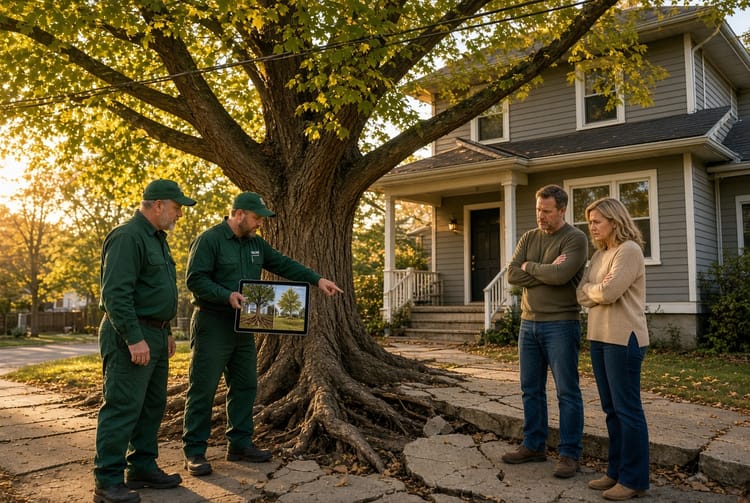
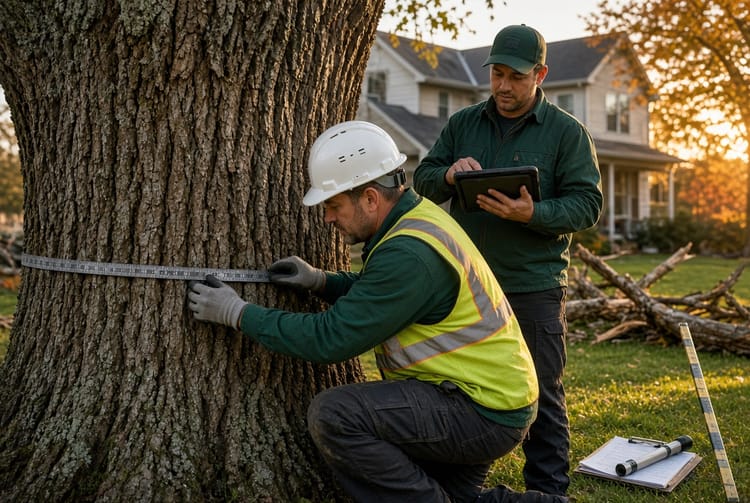
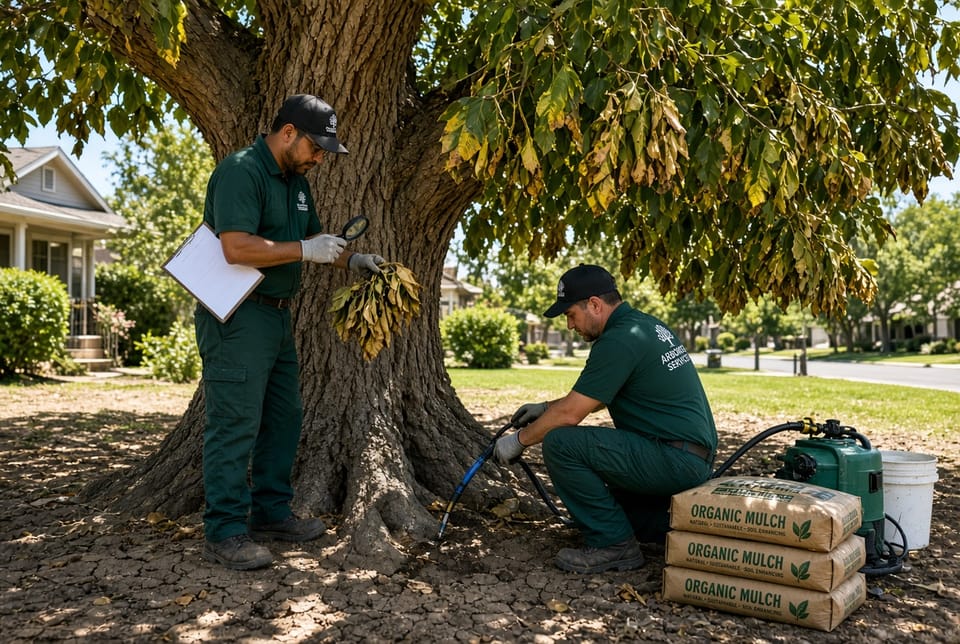
While many recovery steps can be performed by property owners, complex cases benefit from expert evaluation. Trained arborists measure soil moisture at multiple depths, assess root health, identify secondary pests or diseases that exploit drought-weakened trees, and recommend precise treatment plans. They also determine safe removal strategies when necessary, protecting surrounding landscape and structures. Early professional involvement frequently converts borderline cases into successful recoveries.
Drought stress is a manageable seasonal issue when addressed with knowledge and consistent action. Recognizing wilting, leaf scorch, and early fall color allows rapid response. Applying deep watering, proper mulch, and stress-reduction practices restores most trees to full health. When decline has advanced too far, responsible removal eliminates risk and opens space for healthier replacements. With attentive care, landscapes remain vibrant and safe through every dry season.
Call Now for Fast Tree Health Check & Removal Options