The Tree Disease Diagnosis: Identifying Common Infections That Require Removal
Trees are the backbone of any healthy landscape, offering shade, beauty, and environmental benefits that enhance property value and quality of life. Yet hidden threats can silently compromise even the strongest specimens. Tree disease diagnosis is the critical first step in protecting your investment and preventing costly damage to surrounding vegetation. When infections reach advanced stages, timely tree removal becomes essential—not just for the affected tree, but to safeguard the entire ecosystem around it.
Get Your Tree Disease Diagnosis Today – Call Now!
In this comprehensive guide, we explore the most common fatal tree diseases that often necessitate professional removal. You will learn how to recognize early warning signs, understand why certain infections spread rapidly, and discover when removal is the only responsible course of action. Armed with this knowledge, homeowners can act confidently and decisively, restoring safety and vitality to their outdoor spaces.
Early detection saves more than trees—it prevents widespread devastation. Ignoring subtle symptoms allows pathogens to travel through soil, air, or insects, turning a single problem into a neighborhood crisis. Professional arborists combine years of field experience with precise diagnostic techniques to deliver accurate assessments that homeowners simply cannot replicate alone.
Why Early Tree Disease Diagnosis Matters for Long-Term Landscape Health
Tree health depends on proactive monitoring. Vascular diseases, fungal infections, and bacterial pathogens can weaken structural integrity within months, increasing risks of falling branches or complete collapse during storms. Beyond safety, diseased trees diminish curb appeal and can lower property values by thousands of dollars.
When infections are identified promptly, options exist for treatment in milder cases. However, certain aggressive diseases progress too quickly for recovery. In these situations, strategic tree removal stops the cycle of infection, protecting neighboring healthy trees and preserving the overall beauty of your yard. This authoritative approach ensures peace of mind, knowing your landscape remains vibrant and secure for years to come.
Homeowners who invest in regular inspections report fewer surprises and lower long-term costs. A single professional visit can reveal issues invisible to the untrained eye, guiding decisions that balance preservation with necessary intervention.
Oak Wilt: Recognizing the Vascular Threat That Demands Swift Action
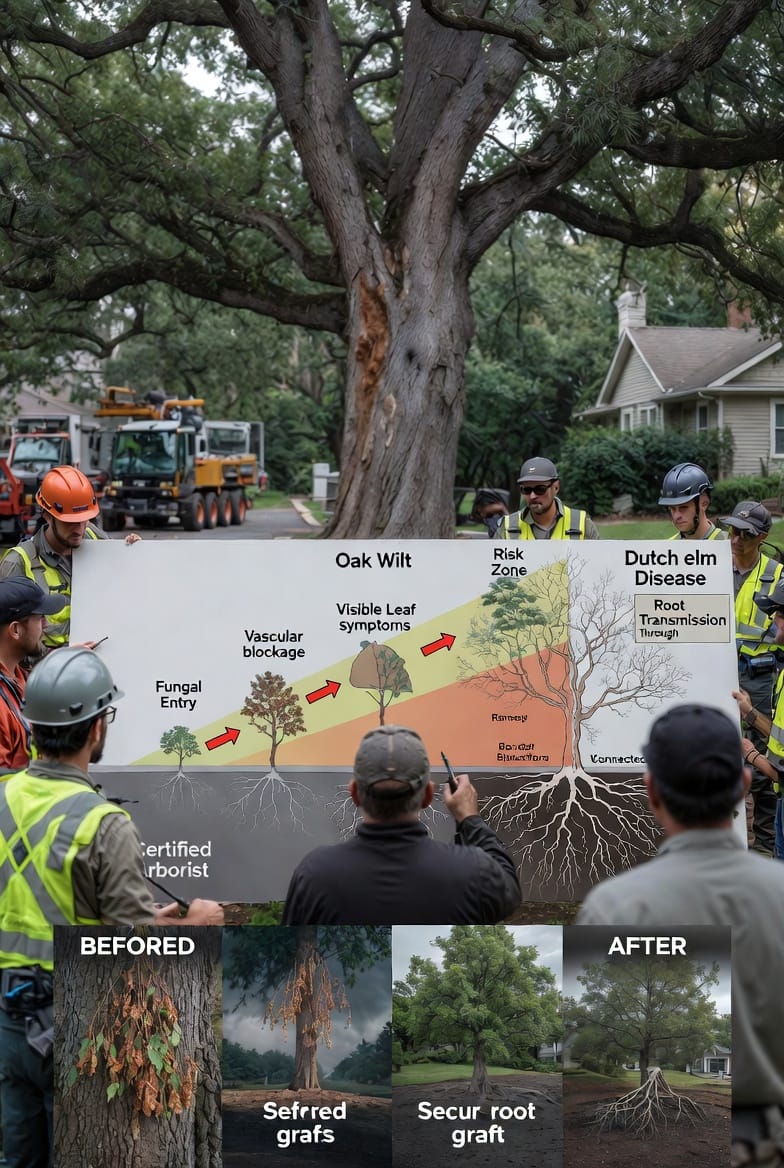
Oak wilt stands among the most destructive diseases affecting oak species across North America. Caused by a fungus that blocks the tree’s water-conducting vessels, it strikes rapidly, especially in red oaks. The infection often begins underground through root grafts between nearby trees, allowing the pathogen to move silently before visible symptoms appear.
Key oak wilt symptoms include:
- Browning leaves that start at the outer edges and progress inward, creating a distinctive scorched appearance
- Sudden wilting of entire branches during spring or early summer
- Leaf drop while the petioles remain attached
- Discoloration of sapwood beneath the bark, visible as dark streaks when inspected
Identification requires close examination. Look for these signs during the growing season when symptoms are most pronounced. Red oaks typically succumb within weeks to months, while white oaks may linger longer but still pose a transmission risk.
Removal becomes necessary when laboratory confirmation or clear symptom patterns indicate active infection. Leaving an infected oak in place allows the fungus to spread via root connections or sap-feeding beetles, endangering every oak within 50 feet. Certified professionals follow strict protocols: they sever root grafts, remove the tree entirely, and dispose of material to eliminate spore sources.
This decisive step protects the broader woodland or urban canopy. Property owners who act quickly often report that surrounding trees remain untouched, demonstrating the power of informed intervention.
Dutch Elm Disease: The Beetle-Vectored Killer Targeting Iconic Elms
Dutch elm disease has reshaped streetscapes and parks for decades. This vascular wilt, transmitted primarily by elm bark beetles, clogs the tree’s transport system and leads to rapid decline. American elms are particularly vulnerable, though certain hybrid varieties show improved resistance.
Classic symptoms develop in a predictable pattern:
- Yellowing or wilting of leaves on individual branches, often starting in the upper canopy
- Premature leaf drop while green leaves remain on healthy sections
- Brown streaking in the sapwood under the bark
- Progressive dieback moving from outer branches toward the trunk
Detection involves inspecting for beetle galleries and fungal staining. Because the disease spreads through both beetles and root grafts, a single infected elm can trigger an epidemic in a row of street trees.
When removal is required, experts recommend immediate action upon confirmation. Pruning alone rarely suffices once the infection reaches the main stem. Professional crews use specialized equipment to dismantle the tree safely, grind the stump to prevent resprouting, and apply preventive treatments to nearby elms. This methodical process breaks the transmission cycle, allowing the landscape to recover without further loss.
Homeowners appreciate the reassurance that comes from expert handling. What begins as concern over a single tree ends with an entire elm population preserved through one well-executed removal.
Apple Scab: The Fungal Infection That Weakens Fruit Trees and May Require Removal
Apple scab primarily affects apple, crabapple, and related species. While not always immediately fatal, severe or repeated infections can defoliate trees year after year, reducing vigor and inviting secondary pests or structural failure.
Tell-tale symptoms appear as:
- Olive-green to black velvety spots on leaves and fruit
- Leaf curling, yellowing, and premature drop
- Cracked or deformed fruit rendering it unusable
- Twig lesions that serve as overwintering sites for the fungus
In mild climates with frequent spring rains, the disease thrives. Home gardeners often notice fruit loss first, but advanced cases leave trees thin and stressed by midsummer.
Removal becomes the recommended action when scab has compromised more than 70 percent of the canopy for multiple seasons or when the tree poses safety risks due to weakened branches. Experts evaluate overall health, weighing treatment feasibility against the benefits of replacement with resistant varieties. Timely removal clears space for healthier plantings while eliminating a persistent spore reservoir that could reinfect nearby susceptible trees.
This measured approach restores productivity and beauty without unnecessary delay.
Step-by-Step Symptom Identification Every Homeowner Should Know
Accurate tree disease diagnosis starts with systematic observation. Follow these practical steps:
- Inspect leaves weekly during the growing season for discoloration, spots, or wilting
- Check bark and twigs for lesions, oozing, or unusual discoloration
- Examine the base of the tree for root flare issues or fungal fruiting bodies
- Note any sudden changes in growth rate or canopy density
- Compare affected branches to healthy ones on the same tree
Document findings with dated photos. While these observations provide valuable clues, only laboratory testing or certified arborist evaluation delivers definitive results. Professional tools such as soil probes, moisture meters, and microscopic analysis reveal what the naked eye misses.
When Professional Tree Removal Is the Only Safe and Effective Solution
Certain red-flag situations leave no room for hesitation:
- Confirmed vascular wilt with rapid canopy decline
- Evidence of root graft transmission to adjacent trees
- Structural instability from disease-weakened wood
- Repeated infections that have exhausted treatment options
- Regulatory requirements in areas with quarantine protocols
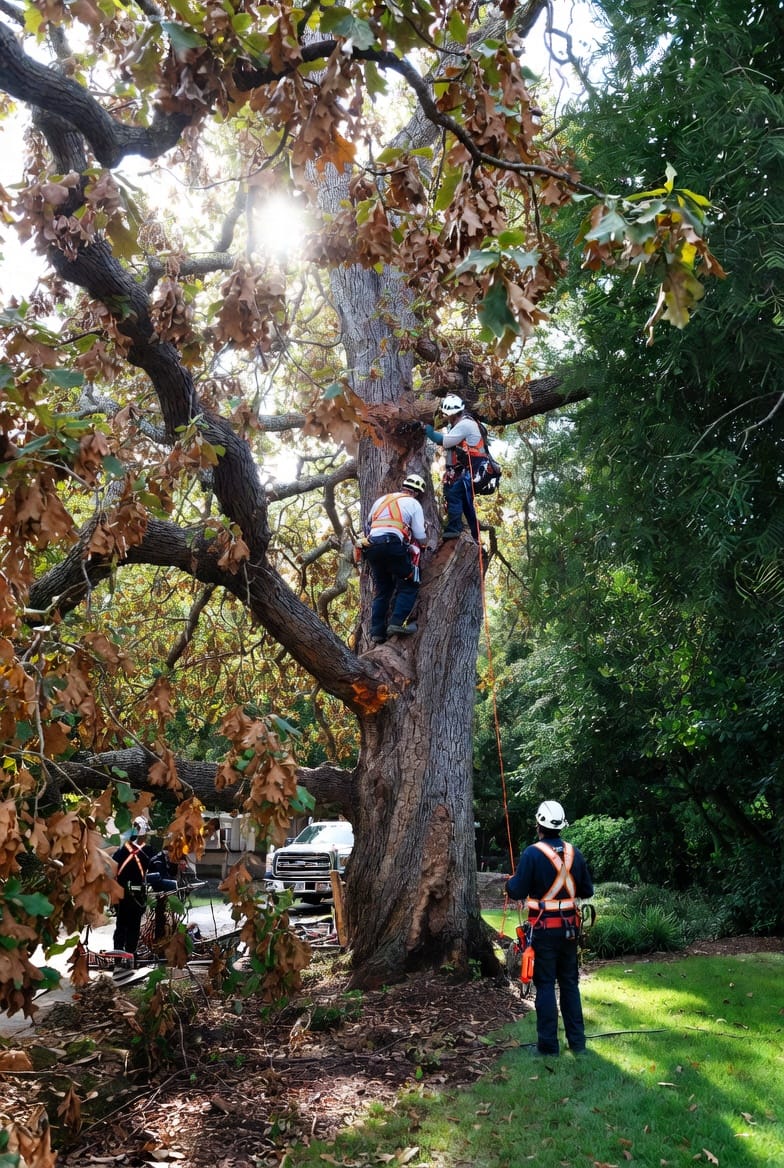
In each case, expert removal protects lives, property, and the investment in surrounding vegetation. Certified teams employ advanced rigging, chippers, and stump grinders to complete the job cleanly and efficiently, leaving your yard ready for replanting or restoration.
The Hidden Risks of Delaying Diagnosis and Removal
Postponing action carries serious consequences. Infected trees become havens for secondary pests, increase storm damage potential, and accelerate disease spread through the landscape. Financially, the cost of emergency removal after collapse far exceeds planned professional service. Emotionally, losing multiple trees at once creates lasting gaps that take years to fill.
By contrast, proactive diagnosis delivers control and confidence. Homeowners who partner with specialists report healthier yards, stronger property values, and the satisfaction of responsible stewardship.
Best Practices for Protecting Your Trees After Diagnosis
Once a disease is identified and removal completed where necessary, focus shifts to prevention:
- Select disease-resistant cultivars for future plantings
- Maintain proper spacing to reduce root graft risk
- Implement regular pruning and mulching schedules
- Monitor weather patterns that favor fungal growth
- Schedule annual professional health assessments
These habits build resilience across your entire landscape.
Restoring Confidence Through Expert Tree Care
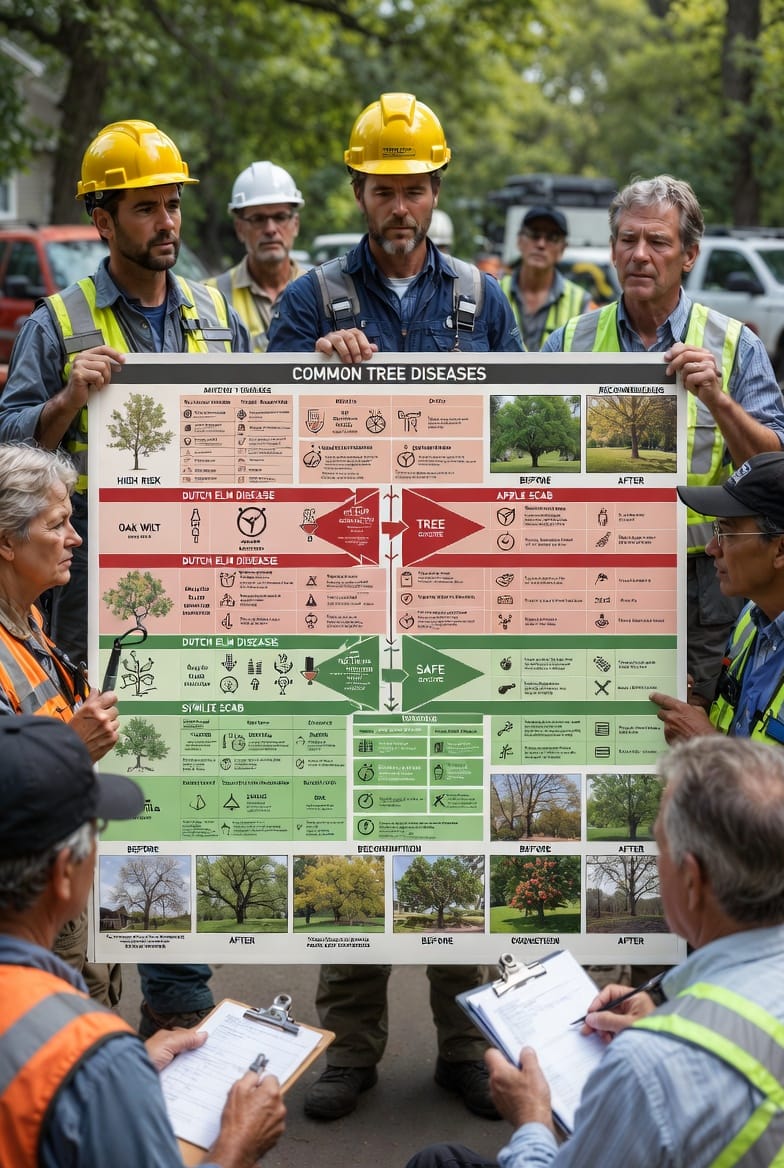
Knowledge empowers action. Understanding common fatal tree diseases transforms uncertainty into informed decision-making. Whether facing oak wilt, Dutch elm disease, or severe apple scab, recognizing symptoms early and knowing when tree removal is required allows you to protect what matters most—your landscape, your safety, and your peace of mind.
Professional assessment combines science, experience, and care to deliver results you can trust. The process is straightforward, the outcomes lasting.
Need Tree Removal? Get Accurate Disease Assessment Today