The Tree Canopy Thinning: Improving Light and Airflow Without Full Removal
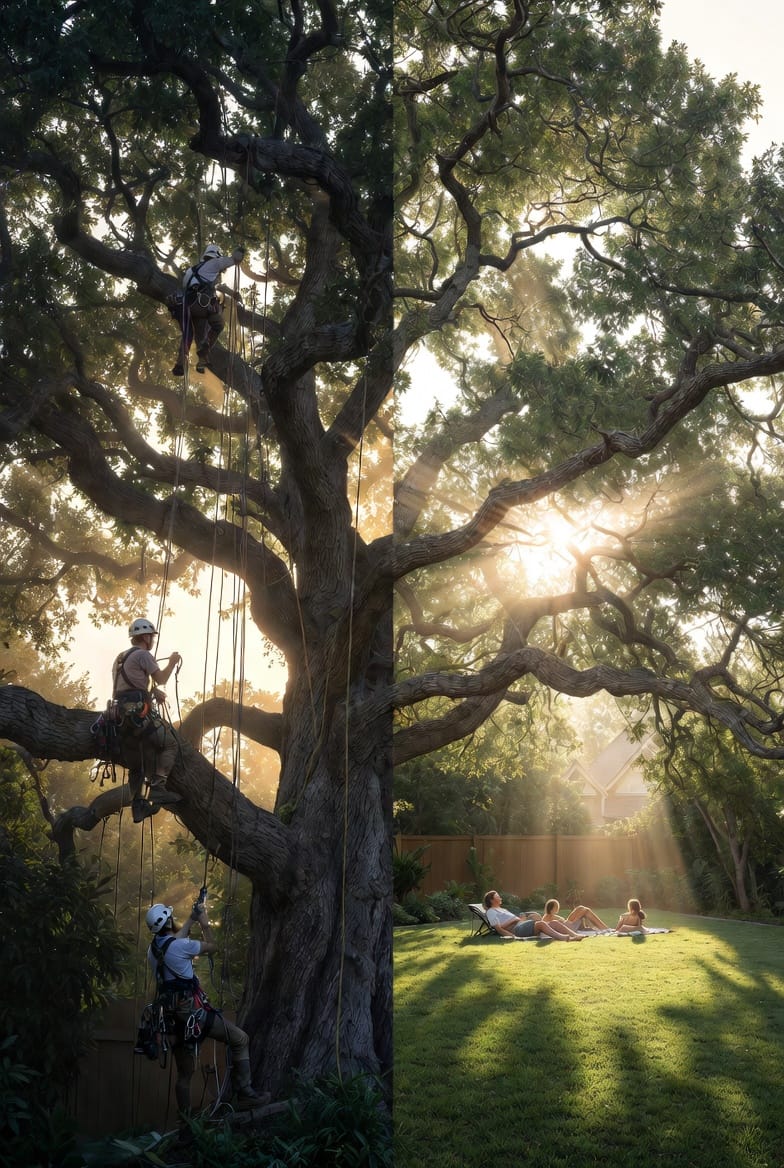
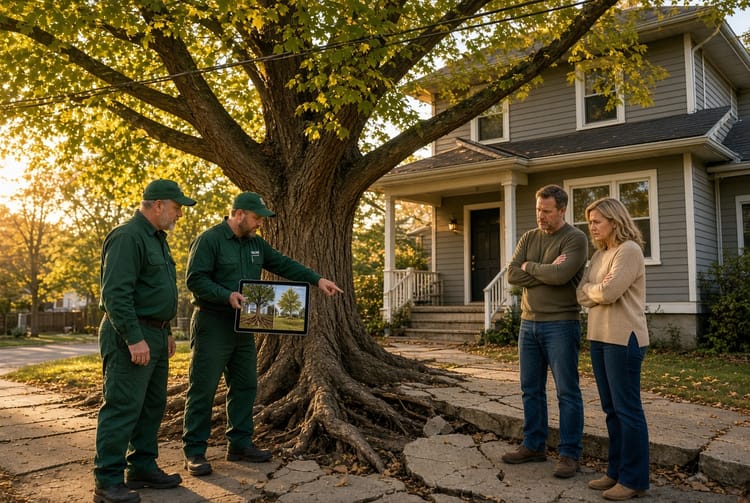
When your mature trees feel too dense or are casting excessive shade across your lawn, the first thought might be complete tree removal. Yet tree canopy thinning offers a far superior, preservation-focused solution. This targeted preservation pruning technique selectively reduces the density of the upper canopy, allowing more sunlight and fresh air to reach the ground and the tree itself—without compromising the tree’s overall structure or long-term health.
Get Professional Canopy Thinning Today – Call Now!
Professional arborists who specialize in selective thinning understand that a tree’s canopy is its lifeline. By carefully opening the crown, they create a healthier, more resilient specimen that continues to provide beauty, shade, and environmental benefits for decades. Homeowners across the country are discovering that canopy thinning delivers dramatic improvements while avoiding the high cost, environmental impact, and loss of established trees that full removal requires.
In this comprehensive guide, we explore exactly how tree canopy thinning works, why it outperforms harmful shortcuts like topping, and the measurable benefits you can expect. Whether you manage a large residential property or simply want to enhance your backyard oasis, preservation pruning through strategic thinning is the professional choice that respects both your landscape and your investment.
What Is Tree Canopy Thinning?
Tree canopy thinning is a precise form of preservation pruning that focuses on reducing the density of a tree’s upper branches and foliage. Unlike crown reduction—which shortens branches—or crown raising—which lifts the lower canopy—thinning specifically targets interior and crossing branches to improve internal light and air circulation.
Certified arborists follow strict industry standards, never removing more than 25% of the live canopy in a single session. This measured approach ensures the tree retains its natural shape while gaining significant functional improvements. The process requires deep knowledge of tree biology: every cut is made at the branch collar to promote rapid healing and prevent decay.
Selective thinning is not random trimming. Arborists evaluate the tree’s species, age, structure, and site conditions before making a single cut. The goal is always long-term vitality rather than immediate visual change.
Why Choose Thinning Over Full Tree Removal?
Mature trees represent decades of growth and significant property value. Tree canopy thinning lets you keep that asset while solving common problems caused by overly dense crowns. Full removal becomes necessary only when a tree is structurally compromised beyond repair or poses an immediate safety hazard.
By choosing preservation pruning, you maintain the cooling shade, wildlife habitat, and carbon sequestration your tree provides. You also avoid the expense of stump grinding, soil restoration, and replanting a young sapling that will take years to match the original tree’s stature.
Canopy thinning is especially valuable in urban and suburban settings where space is limited and every tree counts. Homeowners report healthier lawns, reduced irrigation needs, and fewer pest issues after professional thinning—benefits that compound over time.
Selective Thinning Techniques Explained
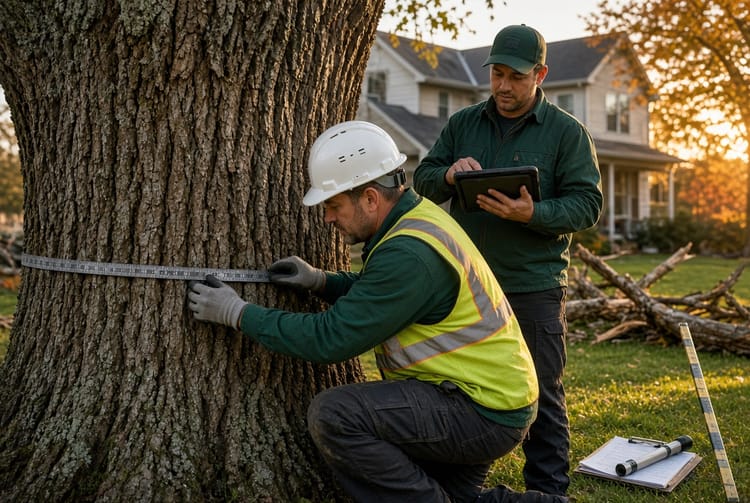
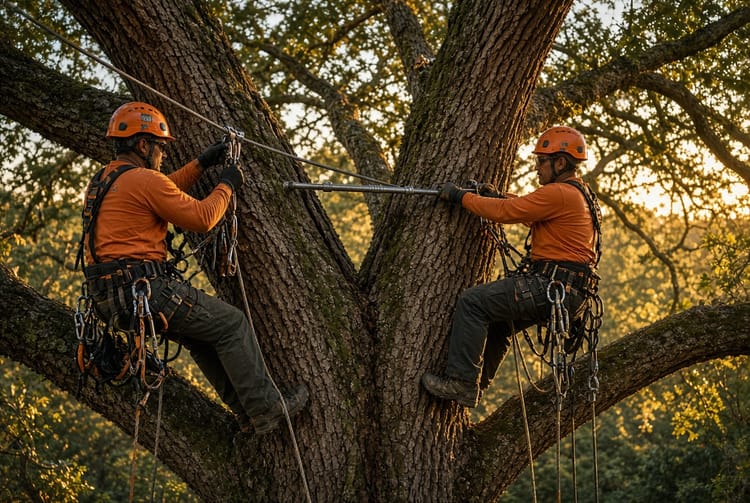
Professional tree canopy thinning follows a systematic, science-based process. Arborists begin with a thorough visual inspection from ground level and, when necessary, use aerial lifts or climbing techniques for closer evaluation.
Key steps include:
- Identifying problem branches: Arborists target dead, diseased, or dying wood first, then remove crossing or rubbing limbs that create entry points for pathogens.
- Improving light penetration: Interior branches that block sunlight are selectively removed while preserving the tree’s outer shell of foliage.
- Enhancing airflow: Opening pockets within the canopy reduces humidity pockets that foster fungal diseases.
- Maintaining natural form: No more than 20-25% of the canopy is removed in one session to avoid stress.
- Making proper cuts: Every branch is severed just outside the branch collar at a slight angle to promote wound closure.
These techniques require specialized tools—sharp pruning saws, pole pruners, and chainsaws maintained to surgical standards—plus extensive training in tree physiology. DIY attempts often lead to improper cuts that invite decay and weaken the tree for years.
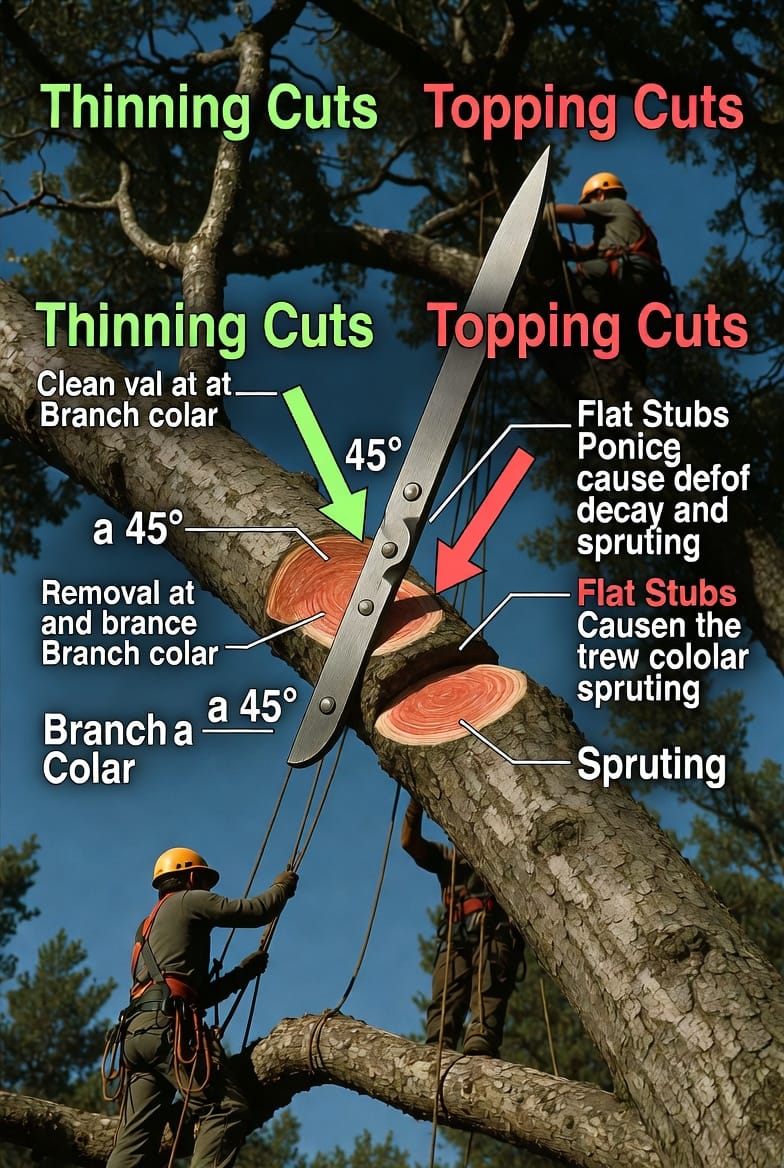
The Critical Difference: Thinning vs. Harmful Topping
Many property owners confuse canopy thinning with the destructive practice known as topping. The two could not be more different—and the consequences of choosing the wrong method are severe.
Topping involves cutting large branches back to stubs or arbitrary lengths, often leaving ugly flat cuts. This shocks the tree, triggers rapid weak sprout growth, and creates large wounds that rarely heal properly. Topped trees become more susceptible to insects, disease, and storm failure because the new growth is weakly attached.
In contrast, selective thinning maintains the tree’s natural architecture. Cuts are small, precise, and located where the tree can compartmentalize and heal quickly. Research from leading arboricultural organizations consistently shows that properly thinned trees exhibit stronger wood, better resistance to wind, and significantly lower disease rates than topped specimens.
Choosing preservation pruning through thinning protects both your tree and your property. Professional arborists never top healthy trees, recognizing it as a practice that ultimately shortens a tree’s lifespan and increases long-term maintenance costs.
Key Benefits of Professional Canopy Thinning
The advantages of tree canopy thinning extend far beyond aesthetics. Homeowners consistently experience measurable improvements in landscape performance and tree health.
- More light reaches the lawn and garden: Thinned canopies allow 30-50% more sunlight to penetrate, transforming shaded, thin grass into lush, vibrant turf that requires less fertilizer and water.
- Reduced wind resistance: An open canopy catches less wind, dramatically lowering the risk of storm damage and branch failure during high winds.
- Lower disease pressure: Improved airflow decreases humidity within the crown, discouraging fungal infections such as powdery mildew and leaf spot that thrive in stagnant, dense foliage.
- Stronger overall structure: By removing weak or competing branches early, thinning encourages the development of sturdy scaffold limbs that support the tree for decades.
- Enhanced property value and curb appeal: A well-thinned tree looks balanced and healthy, adding natural elegance that boosts real estate appeal.
- Better pest management: Increased light and air circulation make the tree less hospitable to boring insects and other pests that prefer dark, humid environments.
These benefits compound year after year. A professionally thinned tree requires less frequent intervention and continues to thrive where an unthinned or improperly pruned tree would decline.
When Is the Right Time for Canopy Thinning?
Timing matters for successful preservation pruning. The optimal window varies by species and climate, but late winter through early spring (dormant season) is generally preferred for most deciduous trees. This allows the tree to direct energy into healing before the spring growth flush.
Evergreen species can often be thinned year-round, provided weather conditions are favorable and the tree is not under stress. Professional arborists assess each tree individually, considering recent weather, soil moisture, and overall vigor before scheduling work.
Avoid thinning during extreme heat, drought, or immediately after heavy storms when the tree’s defenses are already taxed. A qualified service will always evaluate conditions on-site and recommend the safest, most effective timing for your specific trees.
Choosing Professional Arborists for the Job
Canopy thinning is an art and a science best left to certified professionals. Look for arborists who hold credentials from the International Society of Arboriculture (ISA) and follow ANSI A300 pruning standards. These experts carry proper insurance, use state-of-the-art equipment, and prioritize safety for both your property and their crew.
A reputable tree care company will provide a detailed written proposal outlining the specific branches to be removed, the percentage of canopy reduction, and the expected results. They should also offer follow-up care recommendations to maximize the long-term benefits of the thinning.
Long-Term Care After Thinning
Once your tree has been professionally thinned, simple maintenance steps help lock in the improvements. Regular monitoring for new growth, proper watering during dry periods, and mulching around the root zone all support recovery and continued vitality.
Schedule follow-up inspections every 3-5 years. As the tree matures, light maintenance thinning keeps the canopy balanced and prevents the return of dense interior growth. With consistent professional care, your tree will remain an asset rather than a liability for many years to come.
Improve your tree, don’t remove it.
Canopy thinning delivers the light, airflow, and health your landscape needs while preserving the beauty and value of established trees. When performed correctly by certified professionals, this preservation pruning technique outperforms removal in nearly every scenario.
Ready to transform your trees and yard? Our expert team is here to help you achieve a healthier, more beautiful landscape without sacrificing your mature trees.
Transform Your Tree Canopy Safely – Call for Free Consultation