The Tree Canopy Restoration: Rebuilding After Storm Damage
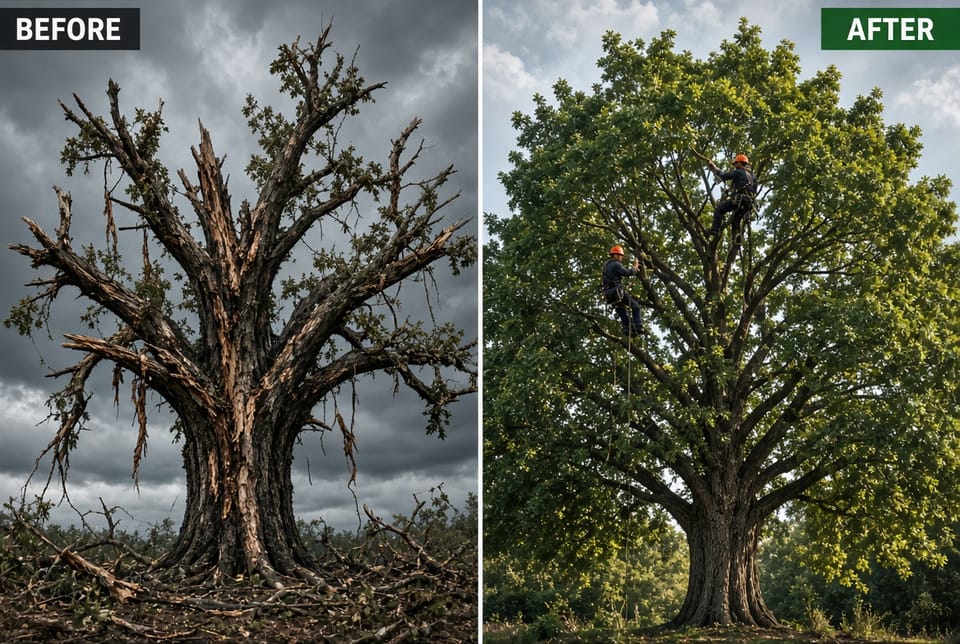
Storms leave more than scattered leaves and fallen twigs. High winds, heavy rain, ice, and lightning can tear through a property’s living architecture, leaving trees with broken limbs, stripped foliage, and compromised structure. Yet tree canopy restoration offers a clear path forward. With careful assessment, selective saving of viable wood, and disciplined pruning over successive seasons, most storm-damaged trees can regain balance, strength, and beauty. This guide walks property owners through every stage of recovery so that the canopy once again provides shade, wildlife habitat, and landscape value.
Restore Your Tree Canopy Today – Call Now!
Understanding the Immediate Impact of Storms on Tree Canopies
A tree’s canopy is its engine room. Leaves convert sunlight into energy while branches distribute weight and resist wind. When a storm strikes, that system can fracture in minutes. Broken branches create open wounds that invite decay organisms. Torn bark exposes the cambium layer essential for nutrient flow. Uprooted sections or severe leans signal root-plate failure. Even trees that appear upright may hide internal cracks that threaten future stability.
The first hours after a storm are critical. Safety comes before aesthetics. Stay clear of hanging limbs, power lines, and trees leaning toward structures. Professional evaluation prevents secondary accidents and protects remaining healthy tissue. Early intervention also limits the window during which pathogens can colonize fresh wounds.
How to Assess Storm Damage Systematically
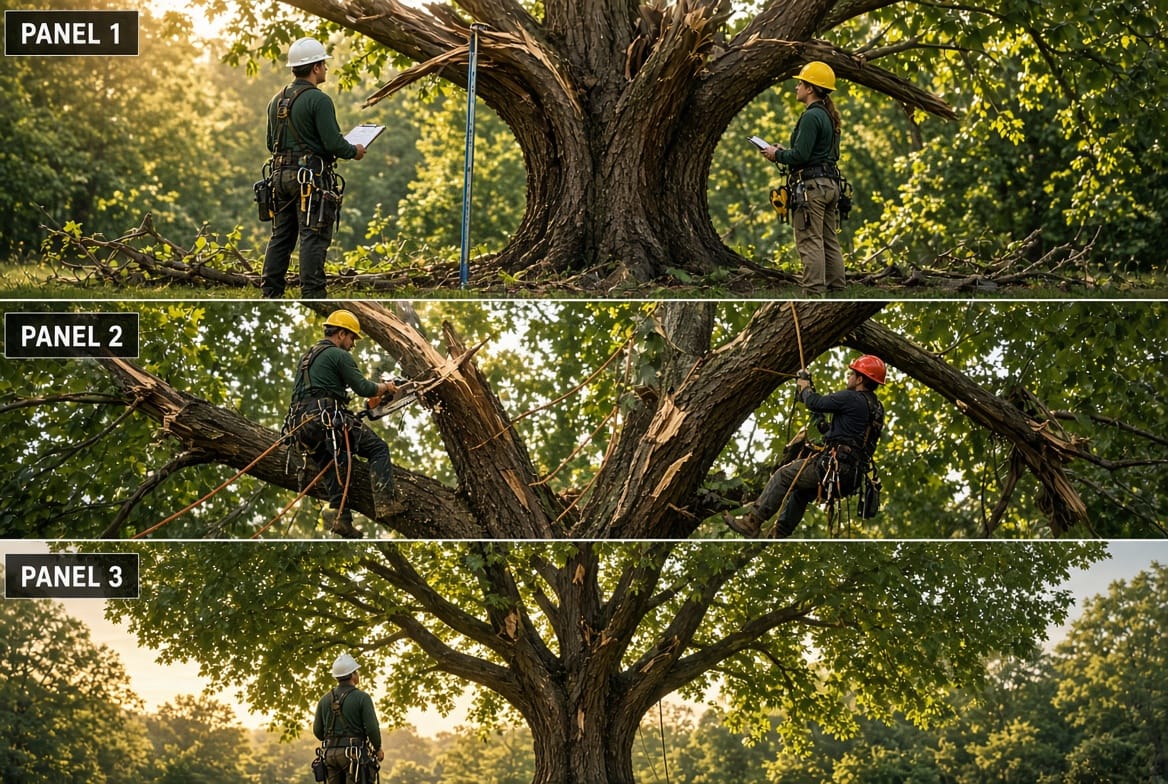
Accurate assessment determines whether restoration is realistic. Begin with a ground-level survey, then move upward.
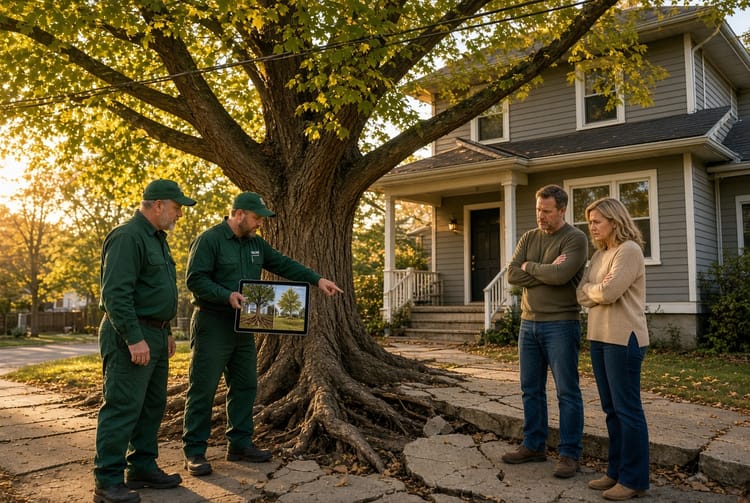
- Visual scan from multiple angles. Walk a full circle around the tree. Note any lean greater than fifteen degrees, soil mounding on one side, or exposed roots. These signs often indicate root failure that pruning alone cannot correct.
- Branch integrity check. Look for cracks running along the grain, hanging stubs, and branches attached by only a strip of bark. Freshly broken wood appears lighter in color; older damage may already show discoloration or fungal fruiting bodies.
- Canopy density evaluation. Estimate the percentage of live foliage remaining. Trees retaining at least fifty percent of their original canopy usually respond well to restoration pruning. Below that threshold, recovery becomes slower and more uncertain.
- Trunk and root-collar inspection. Examine the base for girdling roots, soil compression, or wounds that circle more than one-third of the circumference. Use a soft mallet to listen for hollow sounds that suggest internal decay.
- Species-specific considerations. Oaks and maples often compartmentalize damage effectively, while willows and poplars may decline rapidly after severe breakage. Knowing the species helps set realistic timelines.
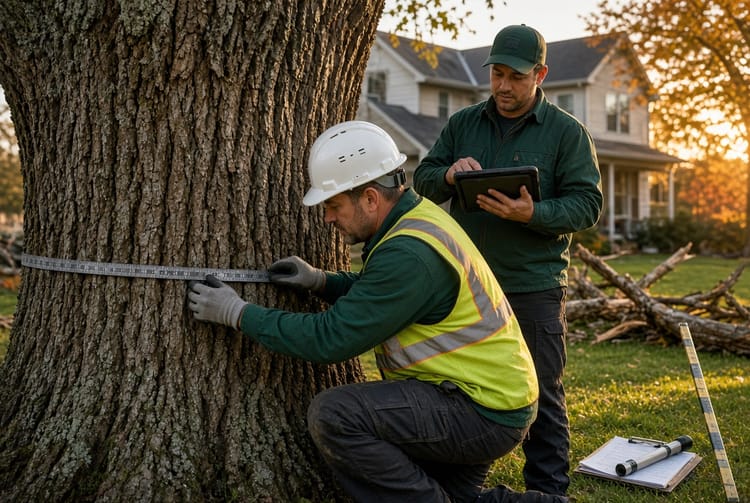
Document findings with dated photographs. These records guide future pruning decisions and support insurance claims when applicable. When doubt remains, a certified arborist can perform a resistograph or sonic tomography test to measure internal wood strength without invasive cutting.
Determining What Can Be Saved
Not every damaged limb or tree must be removed. The goal of canopy restoration is to preserve as much living structure as possible while eliminating hazards.
Viable wood typically shows:
- Green cambium just beneath the bark
- Flexible branch tips that snap rather than crumble
- Active buds or leaf scars indicating recent growth
- Absence of extensive discoloration or soft, punky tissue
Conversely, wood that is brittle, dark-stained, or hollow rarely recovers and should be removed promptly. Trees with more than one-third of the root system severed or with a severe lean toward a target (house, driveway, play area) often require complete extraction for safety.
Younger trees with smaller wounds heal faster than mature specimens. Yet even large heritage trees can rebound when damage is limited to the outer crown. The key is matching the scale of intervention to the tree’s remaining vigor. A tree that still produces strong annual growth rings and maintains adequate leaf area has the resources to rebuild its canopy over two to five growing seasons.
Pruning Techniques That Rebuild Canopy and Shape Over Time
Restoration pruning differs from routine maintenance. The objective is gradual rebalancing rather than immediate perfection. Work proceeds in phases so the tree is never stripped of more foliage than it can replace in a single season.
Phase One: Hazard Reduction and Cleaning
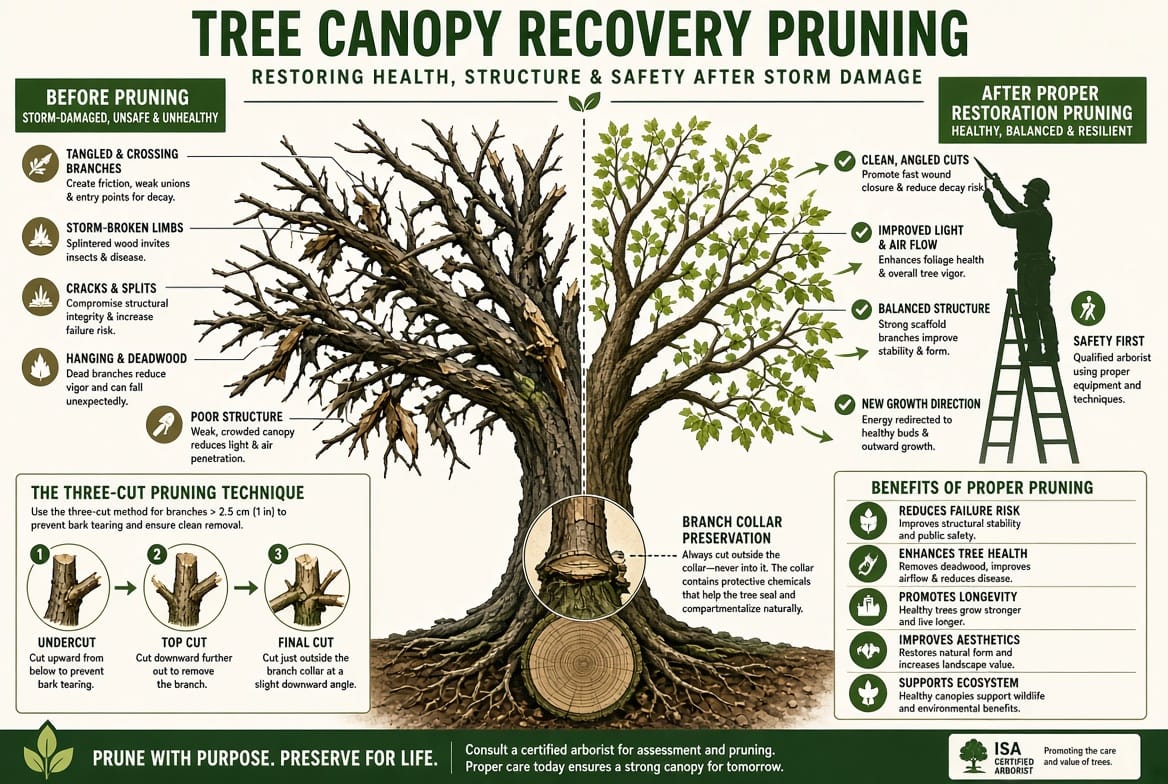
Immediately after assessment, remove broken, hanging, and dead branches. Make clean cuts just outside the branch collar—the swollen area where the branch meets the trunk or parent limb. Avoid flush cuts that damage the collar and slow wound closure. Large limbs may need undercuts first to prevent bark tearing as the piece falls.
This initial cleaning reduces weight on compromised sections and eliminates entry points for pests. It also opens the canopy to light and air, stimulating dormant buds lower on the tree.
Phase Two: Structural Thinning and Crown Restoration
Once hazards are gone, focus on long-term architecture. Crown thinning selectively removes competing or crossing branches to improve airflow and reduce wind resistance. Never remove more than twenty-five percent of live foliage in a single year; excessive loss can starve the root system.
For trees that lost large sections of canopy on one side, directional pruning encourages new growth toward the open space. Shorten overly long branches on the intact side by cutting back to a lateral branch at least one-third the diameter of the cut stem. This redirects energy and gradually fills gaps.
Crown reduction may be necessary when the remaining canopy is top-heavy. Reduce height and spread by cutting to strong laterals, preserving the tree’s natural form rather than creating an unnatural “lollipop” shape. Reduction cuts should follow the one-third rule: the remaining lateral must be large enough to assume the terminal role without stress.
Phase Three: Shaping for Future Strength
Over subsequent seasons, monitor new growth. Water sprouts and epicormic shoots often emerge near wounds. While some can be retained to rebuild foliage quickly, most should be thinned to prevent weak, upright clusters that break easily in future storms.
Train young leaders by selecting the strongest, most upright shoot and suppressing competitors. Use subordinate pruning on secondary branches so the main stem develops clear dominance. As the canopy fills, continue light thinning every two to three years to maintain balance and reduce sail effect in high winds.
Throughout all phases, sterilize tools between cuts when disease is suspected, and never leave stubs longer than a quarter-inch. Proper cuts heal by forming callus tissue that walls off decay.
Supporting Practices That Accelerate Recovery
Pruning alone is not enough. Trees recovering from storm trauma benefit from complementary care.
- Soil management. Aerate compacted soil around the root zone and apply a two-to-three-inch layer of organic mulch, keeping it clear of the trunk. Mulch conserves moisture and moderates temperature extremes.
- Watering regimen. Deep, infrequent irrigation encourages roots to grow downward. Provide one inch of water per week during dry spells for the first two seasons after major pruning.
- Nutrient support. A soil test guides any fertilizer application. Excess nitrogen can force weak, lush growth that is vulnerable to the next storm. Slow-release, balanced formulations are preferable.
- Cabling and bracing. On trees with co-dominant stems or large wounds, flexible cables installed high in the canopy can reduce movement and prevent further splitting while new wood strengthens.
- Monitoring schedule. Inspect the tree each spring and after every significant weather event. Early detection of new cracks or dieback allows prompt correction.
These practices create an environment in which the tree’s natural compartmentalization process works efficiently. Over time, the canopy densifies, branch unions strengthen, and the overall silhouette returns to a balanced, wind-resistant form.
Timeline Expectations for Full Canopy Restoration
Recovery is measured in growing seasons, not weeks.
- Year one: Hazard removal and initial thinning. New shoots appear near pruning sites.
- Year two: Canopy begins to fill; selective thinning of water sprouts.
- Years three to five: Structural refinement continues. Most trees regain functional canopy density and aesthetic appeal.
Patience is essential. Aggressive pruning in a single season can set recovery back by exhausting energy reserves. Incremental work, guided by annual assessments, produces stronger, longer-lasting results.
Common Risks and How to Avoid Them
Even well-intentioned efforts can create new problems.
- Over-pruning. Removing too much foliage starves roots and invites sunscald on previously shaded bark.
- Topping. Cutting main leaders to arbitrary heights produces weakly attached sprouts that fail in the next storm.
- Ignoring root damage. A tree with compromised roots may look stable after canopy work yet fail later under wind load.
- Delayed action. Leaving broken limbs in place allows decay to progress deeper into the trunk.
Professional crews trained in ANSI A300 pruning standards minimize these risks. They understand species biology, proper cut placement, and the importance of preserving living tissue.
The Long-Term Value of Restored Tree Canopies
A successfully restored canopy does more than improve curb appeal. Dense foliage moderates temperature, reduces stormwater runoff, filters air pollutants, and supports birds and beneficial insects. Mature trees that survive storms with proper care continue providing these services for decades. In contrast, premature removal erases those benefits and often costs more than a multi-year restoration program.
Property owners who invest in thoughtful recovery also gain peace of mind. A balanced, well-pruned canopy is less likely to shed large limbs during the next weather event. The tree becomes an asset rather than a liability.
Final Considerations for Property Owners
Every storm-damaged tree presents a unique combination of species, age, site conditions, and injury patterns. Generic advice cannot replace on-site evaluation. Yet the principles remain constant: assess thoroughly, save what is viable, prune with restraint and precision, and support the tree through its recovery years.
When the canopy once again forms a continuous green roof overhead, the landscape feels whole. Shade returns, birds nest, and the property regains the living architecture that storms tried to erase. Restoration is not merely cosmetic; it is an investment in resilience, safety, and long-term environmental function. Restore your trees after storms.
Call Now to Rebuild Your Damaged Tree Canopy Safely