The Tree Borer Insects: Identifying Entry Holes and Deciding Removal
Tree borers represent one of the most destructive pests homeowners and property managers face. These insects tunnel beneath the bark and into the wood, disrupting the tree’s vital nutrient and water transport systems. Early detection through entry holes and other visible signs can mean the difference between saving a valuable landscape tree and requiring full tree removal.
Spotted Borer Holes? Get Expert Assessment – Call Now
At our professional tree care service, we emphasize proactive management. While borers can weaken or kill trees rapidly, many cases allow for successful treatment if caught early. This comprehensive guide equips you with authoritative knowledge to identify threats and make informed decisions.
Understanding Common Tree Borer Insects
Several borer species target residential and commercial trees across North America. Recognizing the primary culprits helps you assess risk accurately.
- Emerald Ash Borer (Agrilus planipennis): This invasive beetle has devastated ash tree populations. Adults are metallic green, but the damage comes from larvae that create serpentine galleries under the bark.
- Bronze Birch Borer (Agrilus anxius): A serious threat to birch trees, especially those already stressed by drought or poor soil. Larvae create winding tunnels that girdle branches.
- Pine Bark Beetles: These attack various pine species, often in groups. They introduce fungi that further damage the tree’s vascular system.
Bold fact: A single emerald ash borer infestation can kill a mature ash tree within 2–4 years if left untreated. Early intervention remains your strongest defense.
Recognizing the Signs of Borer Infestation
Successful identification starts with careful observation. Look for these reliable indicators during regular tree inspections.
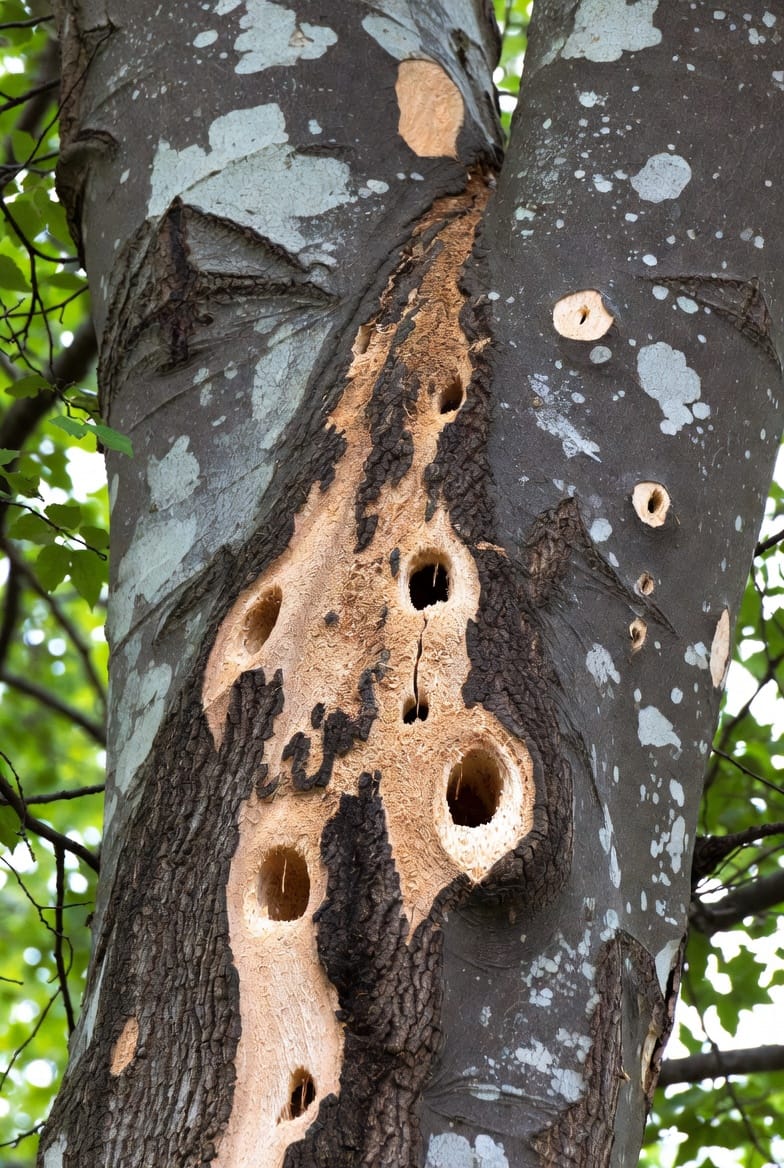
D-shaped exit holes are a hallmark of metallic wood-boring beetles like the emerald ash borer. These holes measure approximately 1/8 inch across and appear distinctly flattened on one side.
Other critical signs include:
- Sawdust-like frass accumulating at the base of the tree or in bark crevices
- Canopy dieback beginning at the top and progressing downward
- Bark splitting or vertical cracks
- Increased woodpecker activity as these birds hunt borer larvae
- Wilting leaves or premature leaf drop
Early detection saves trees. When you spot these symptoms, do not delay professional assessment.
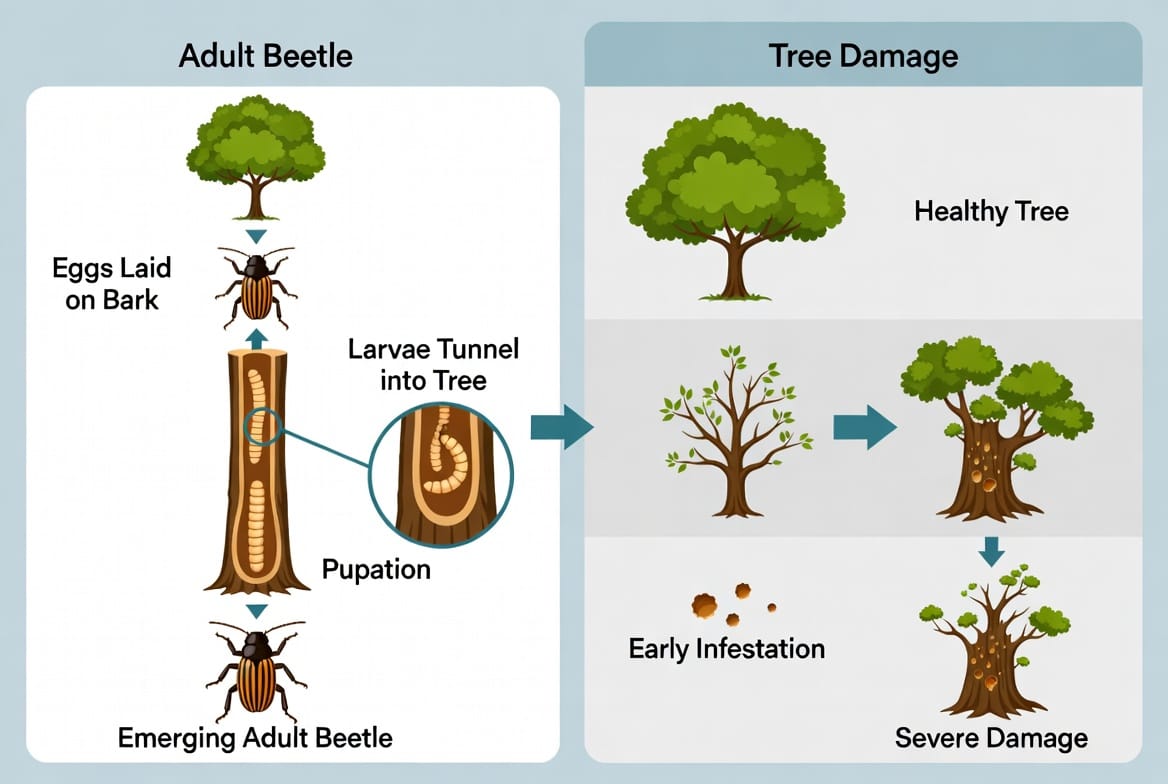
How Borers Damage Trees: The Hidden Process
Borers do their greatest harm out of sight. Adult females lay eggs in bark crevices. Once hatched, larvae bore into the cambium layer and create extensive galleries. This disrupts the phloem and xylem, cutting off the tree’s ability to transport water and nutrients.
As infestation advances:
- The tree experiences canopy thinning
- Branches die back
- Overall vigor declines dramatically
- Secondary pests and diseases often follow
Stressed trees – those suffering from drought, compacted soil, or mechanical injury – become prime targets. Healthy, well-maintained trees possess stronger natural defenses.
Identifying Entry Holes vs. Other Damage
Not every hole indicates borers. Distinguish borer damage from other issues:
| Sign | Borer Characteristics | Other Possible Causes |
|---|---|---|
| Hole Shape | D-shaped or oval | Round (carpenter bees) |
| Frass Texture | Fine, powdery sawdust | Coarse wood shavings |
| Location | Trunk and major branches | Leaves or small twigs |
| Pattern | Multiple holes at different heights | Single entry points |
Pro tip: Use a flashlight and hand lens during inspection. Fresh frass often appears light-colored and accumulates after rain.
When Treatment Is Possible vs. When Removal Becomes Necessary
Not every infested tree requires removal. Professional arborists evaluate several factors:
Trees That Can Often Be Saved
- Early-stage infestation with less than 30% canopy dieback
- Valuable specimen trees with good overall structure
- Healthy root systems and adequate soil conditions
Treatment options include:
- Systemic insecticides applied by licensed professionals
- Targeted trunk sprays
- Soil drenches or injections
- Cultural practices to improve tree vigor (proper watering, mulching, fertilization)
When Tree Removal Is the Responsible Choice
- Advanced infestation with over 50% canopy loss
- Severe structural compromise risking property or safety
- Trees in poor health with limited recovery potential
- High-risk locations near structures or walkways
Safety first: A heavily compromised tree can fail unexpectedly. Professional removal protects your property and loved ones while preventing pest spread to neighboring trees.
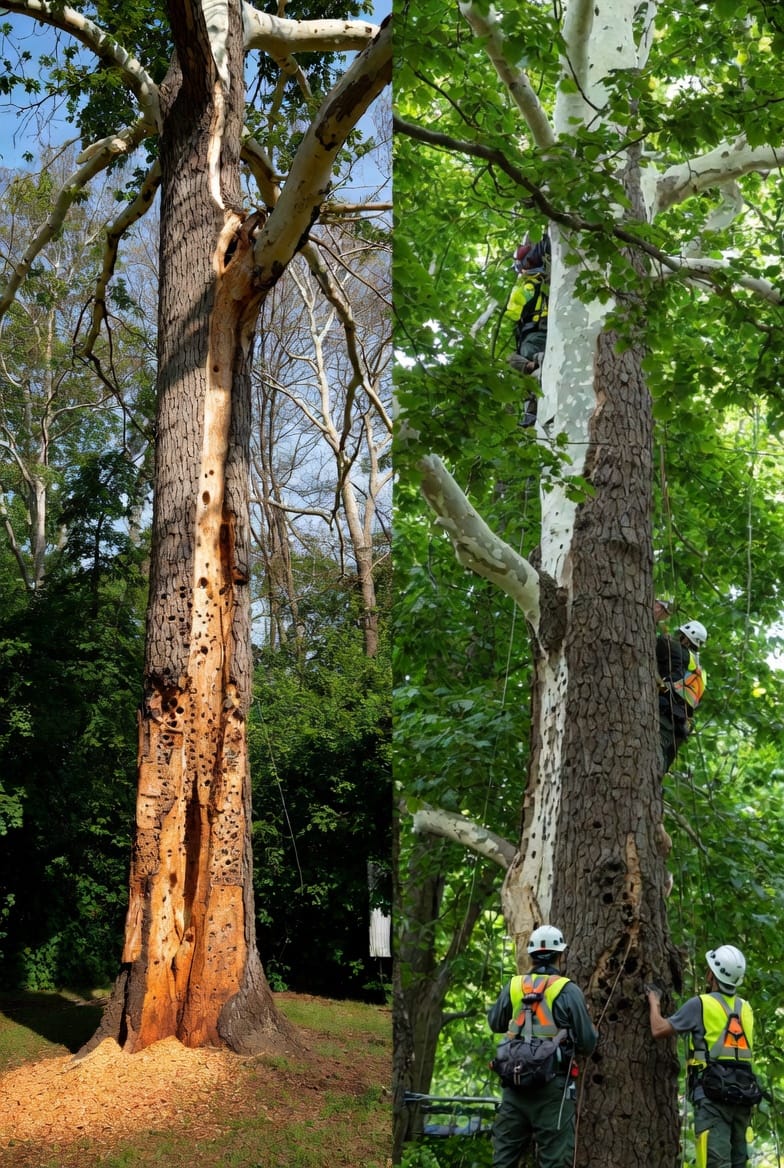
Step-by-Step Inspection Process
- Visual Assessment: Examine the trunk and branches from ground level
- Close Inspection: Check for exit holes and frass using binoculars or ladder (safely)
- Canopy Evaluation: Note dieback patterns and leaf health
- Root Zone Check: Ensure no additional stress factors
- Professional Consultation: Schedule certified arborist evaluation
Preventive Strategies for Long-Term Tree Health
Prevention outperforms treatment. Implement these practices:
- Choose resistant species when planting new trees
- Maintain consistent watering during dry periods
- Apply proper mulch (not against the trunk)
- Fertilize based on soil test results
- Prune correctly to avoid stress wounds
- Monitor regularly for early warning signs
Integrated Pest Management (IPM) combines cultural, mechanical, and chemical methods for sustainable results.
The Cost of Inaction vs. Professional Care
Delaying action on borer infestations often leads to higher costs through emergency removal, property damage, or replacement planting. Professional assessment provides clear options tailored to your situation.
Our team delivers authoritative guidance based on years of field experience. We focus on solutions that preserve your landscape investment while ensuring safety.
Conclusion: Act Decisively for Tree Protection
Borers can kill trees quickly. Identifying entry holes and other signs early gives you the best chance for successful treatment. When removal becomes necessary, professional execution ensures safety and minimizes impact on your property.
Don’t wait until visible decline becomes irreversible. Our certified arborists provide accurate diagnosis and tailored recommendations to protect your valuable trees.
Your landscape deserves expert care. Contact us for reliable, science-based tree borer management and removal services.
Tree Borer Treatment or Safe Removal – Call Today