The Tree Bark Inclusion: When Branches Grow Into the Trunk
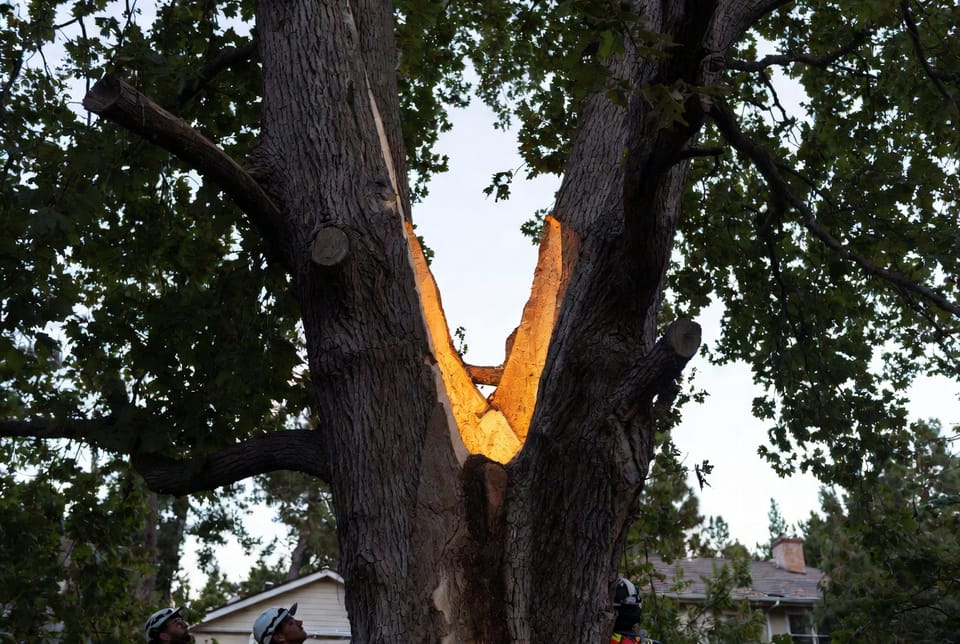
Included bark represents one of the most common yet dangerous structural defects in mature trees. When branches grow too closely or at narrow angles, bark can become trapped between them, preventing a strong wood-to-wood connection. This creates a weak union that compromises the tree’s overall stability and increases the risk of failure during storms or under normal weight loads.
Protect Your Property from Tree Failure – Call Now
Homeowners and property managers who understand this issue can take proactive steps to protect their landscapes, homes, and families. In this comprehensive guide, we explore the science behind included bark, how to identify it, effective management strategies, and when professional intervention becomes essential.
Understanding Included Bark: The Hidden Structural Flaw
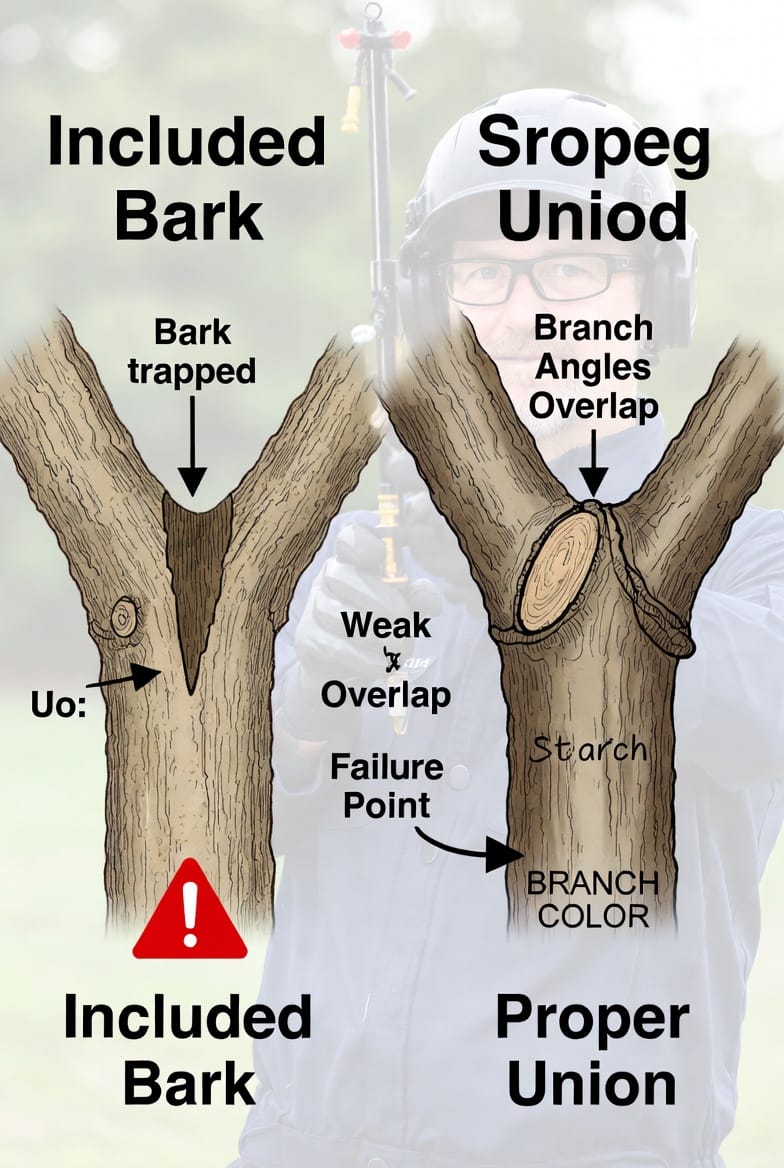
Included bark occurs when two stems or branches grow in such proximity that their bark layers press together instead of forming a proper branch collar with strong wood attachment. Over time, as the tree expands, this trapped bark creates a seam-like weakness rather than a solid structural bond.
Unlike a healthy branch union, which develops a strong connection with continuous wood fibers, an included bark union relies on the weaker bark tissue. This defect often forms in codominant stems — two or more main leaders competing for dominance without a clear central trunk.
Key risks associated with included bark include:
- Sudden branch failure during high winds or heavy snow
- Internal decay progressing behind the trapped bark
- Cracking and splitting at the union point
- Increased liability for property owners if damage occurs
Early detection and proper management can prevent these issues, saving significant costs and preserving valuable trees.
Recognizing the Signs of Included Bark
Identifying included bark early is crucial for effective intervention. Look for these telltale indicators during routine tree inspections:
- V-shaped crotch: Narrow angles (typically less than 45 degrees) between stems often trap bark.
- Bark pushed inside the union: Visible bark ridges or seams running into the crotch instead of stopping at the base.
- Absence of wood connection: No visible branch bark ridge or collar formation.
- Cracks or swelling: Signs of stress at the union point.
- Water sprouts or epicormic growth: Compensatory growth around weak areas.
- History of storm damage: Previous breaks in similar unions on the same tree.
Regular visual assessments, especially after severe weather, help catch these issues before they escalate. Professional arborists use specialized tools and techniques to evaluate hidden defects that may not be visible from the ground.
The Science Behind Weak Branch Unions
Trees form strong unions through proper cambial activity, where new wood layers connect seamlessly. When bark inclusion occurs, this process is interrupted. The trapped bark acts as a barrier, leading to:
- Reduced load-bearing capacity at the union
- Higher susceptibility to pathogens entering through micro-cracks
- Gradual weakening over years or decades
Codominant stems are particularly prone to this defect because neither stem develops a subordinate position. Both continue growing upward, creating competing leaders with included bark between them.
This structural issue affects many common species, including maples, oaks, elms, and birches. Urban trees often face additional stress from compacted soil, limited root space, and environmental factors, making early management even more important.
Management Strategies for Included Bark
Effective management depends on the severity of the defect, tree species, age, and overall health. Professional arborists typically recommend a tiered approach:
Subordinate Pruning Techniques
Subordination pruning reduces the size and weight of the weaker stem, encouraging the dominant leader to take precedence. This technique:
- Lightens load on the weak union
- Promotes better structure over time
- Reduces failure risk without full removal
Proper pruning requires precise cuts to avoid further stress. Certified professionals understand the biology of tree response to ensure healing and long-term stability.
Cabling and Bracing Solutions
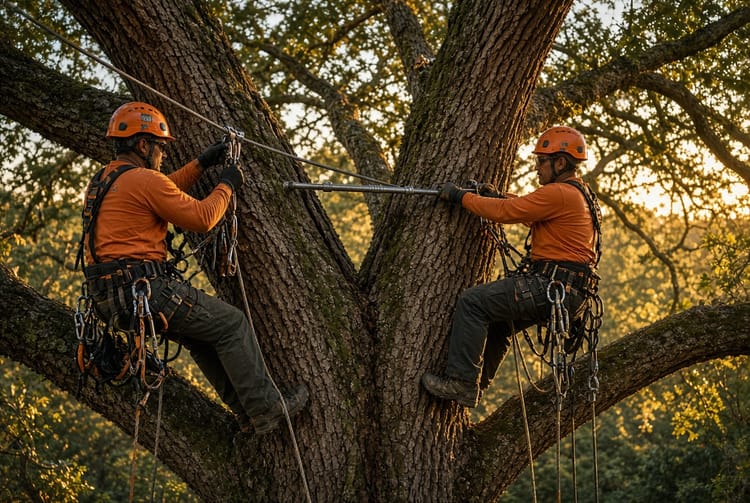
For valuable trees with moderate defects, cabling and bracing provide supplemental support. Dynamic or static systems:
- Redistribute mechanical stress
- Allow natural movement while preventing catastrophic failure
- Extend the safe lifespan of the tree
These systems require regular inspection and maintenance to remain effective.
When Removal Becomes Necessary
In severe cases where the included bark union shows advanced cracking, decay, or significant instability, tree removal may be the safest option. Factors influencing this decision include:
- Proximity to structures or high-traffic areas
- Extent of internal decay
- Overall tree health and species resilience
- Cost-benefit analysis of preservation versus replacement
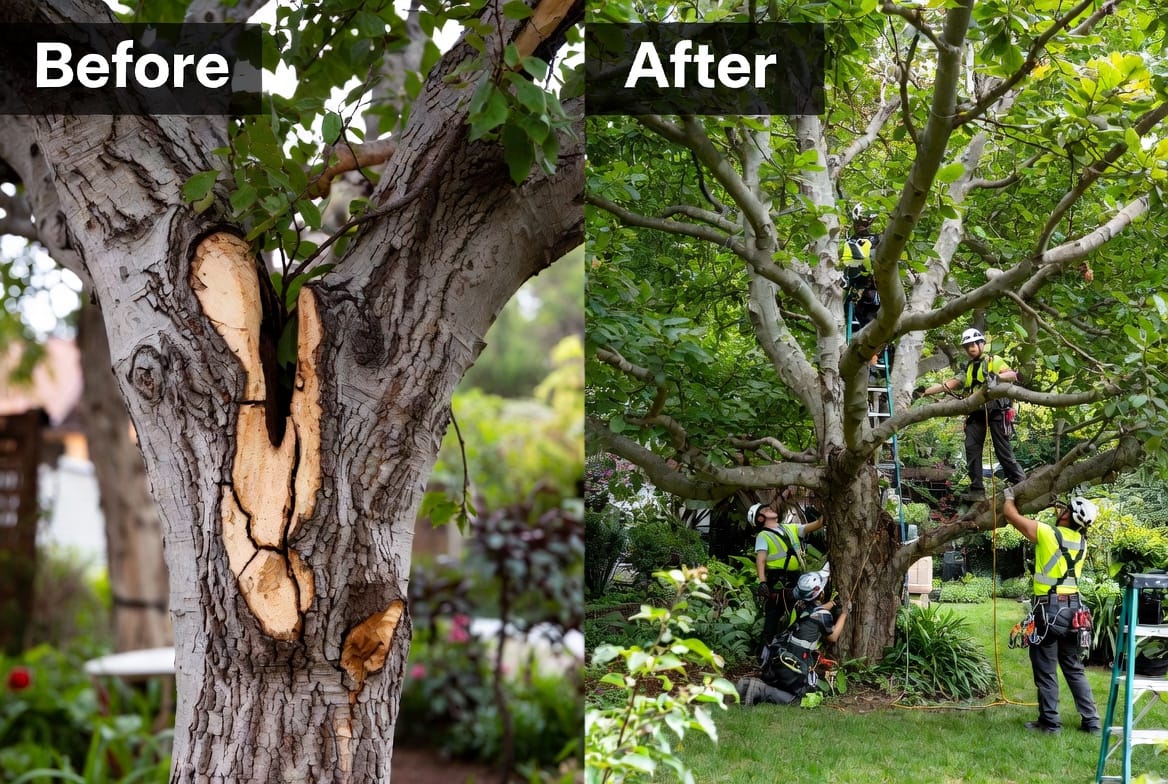
Professional tree removal ensures safety and minimizes landscape impact. Expert crews use advanced rigging techniques to dismantle trees section by section.
Long-Term Tree Health and Prevention
Preventing included bark starts with proper planting and early training. Young trees benefit from:
- Selecting specimens with good structure
- Structural pruning during establishment years
- Avoiding topping or poor pruning practices
- Maintaining overall tree vigor through proper watering, mulching, and soil care
Mature trees require ongoing monitoring. Seasonal inspections help identify emerging defects before they compromise safety.
The Importance of Professional Assessment
While homeowners can spot obvious signs, accurate diagnosis often requires expert evaluation. Certified arborists assess:
- Union strength through visual and sometimes advanced diagnostic tools
- Internal conditions using resistance drilling or other non-invasive methods
- Risk levels based on location and target zones
This professional insight ensures decisions balance safety, aesthetics, and environmental benefits.
Common Myths About Included Bark
Many property owners underestimate this defect or rely on ineffective DIY approaches. Understanding the facts helps make informed choices:
- Myth: All narrow crotches are dangerous.
Fact: Some species naturally form narrower angles but develop strong unions. - Myth: Cabling solves all problems permanently.
Fact: Systems require ongoing maintenance. - Myth: Removing a codominant stem always weakens the tree.
Fact: Proper subordination often strengthens overall structure.
Benefits of Addressing Structural Defects Promptly
Taking action against included bark delivers multiple advantages:
- Enhanced safety for people and property
- Extended tree lifespan through better structure
- Improved aesthetics and landscape value
- Reduced long-term maintenance costs
- Environmental benefits by preserving healthy trees
Strong, well-structured trees contribute to property value, energy efficiency, and community well-being.
Case Studies in Structural Tree Management
Across various landscapes, timely intervention has saved numerous valuable specimens. In one suburban neighborhood, early subordination pruning prevented failure of a large oak during a major storm season. Another commercial property successfully used cabling to maintain historic trees while meeting safety requirements.
These examples demonstrate the effectiveness of professional, science-based approaches.
Preparing for Professional Tree Care
When scheduling service, provide clear information about:
- Tree species and approximate age
- Observed signs of weakness
- Location details and access points
- Any history of storms or damage
This preparation helps arborists deliver targeted, efficient service.
Conclusion: Protect Your Trees with Expert Care
Identify weak branch unions early to prevent costly and dangerous failures. Whether through strategic pruning, supportive systems, or necessary removal, professional management ensures your landscape remains safe and beautiful.
For expert structural pruning and comprehensive tree care solutions. Don’t wait for a storm to reveal hidden weaknesses — proactive care preserves both your trees and peace of mind.
Our experienced professionals deliver reliable service focused on long-term tree health and property safety. Schedule your assessment now and take the first step toward stronger, more resilient trees.
Secure Your Trees Before the Next Storm – Call Today