The Tree Bark Girdling: Preventing Damage from Lawn Equipment
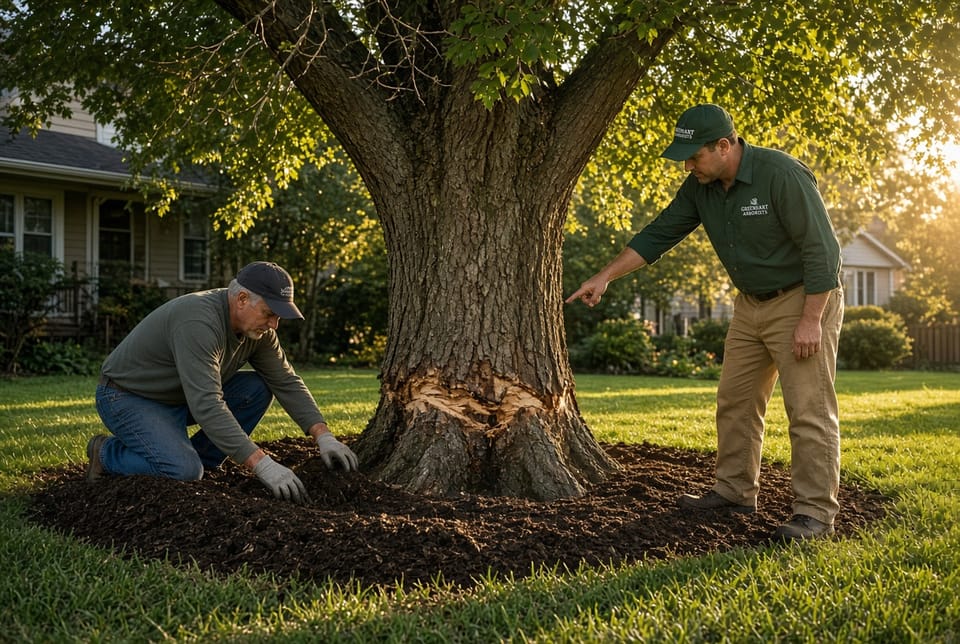
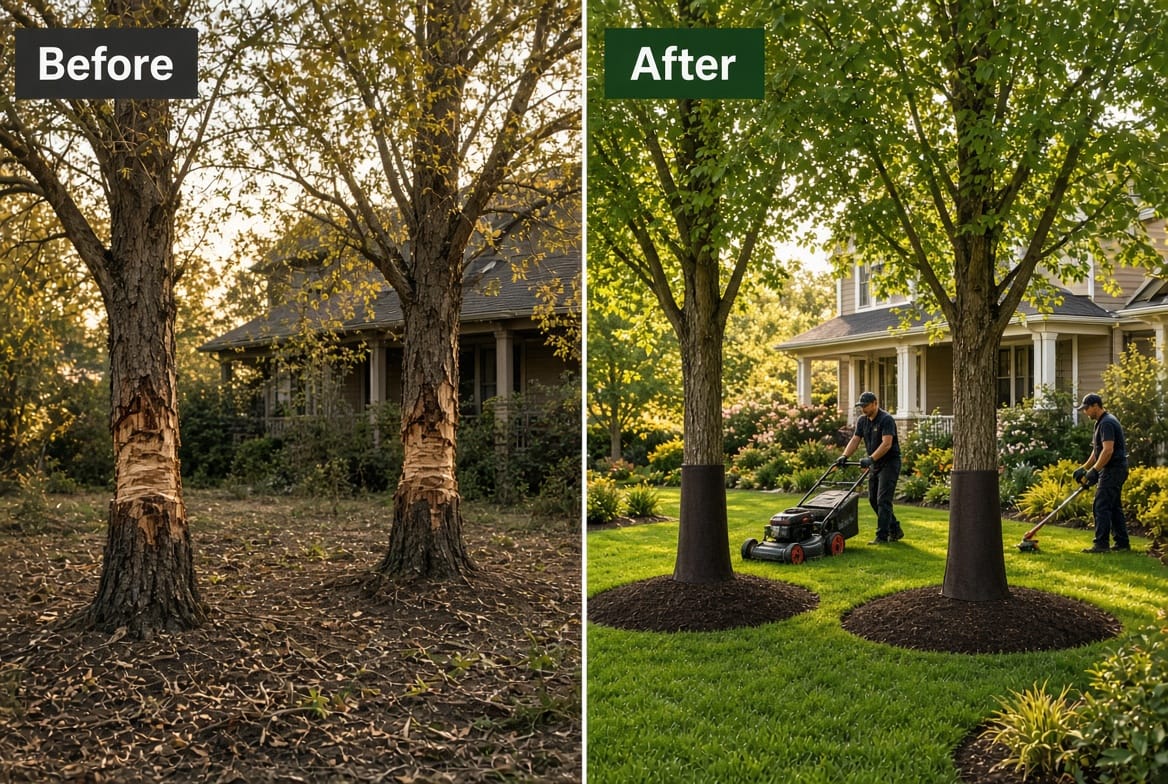
Tree bark girdling is one of the most common yet preventable forms of damage that homeowners unintentionally inflict on their landscape trees. When lawn mowers and string trimmers repeatedly nick or strip the bark around the trunk base, they disrupt the vital flow of nutrients and water, slowly compromising the tree’s health. The good news? With the right knowledge and simple protective measures, you can completely prevent girdling and keep your trees thriving for decades.
Save Your Trees from Girdling – Free Consultation, Call Now!
This comprehensive guide walks you through everything you need to know about tree bark girdling — what it is, how to spot early warning signs, and most importantly, proven prevention strategies that deliver lasting results.
Understanding Tree Bark Girdling and Why It Matters
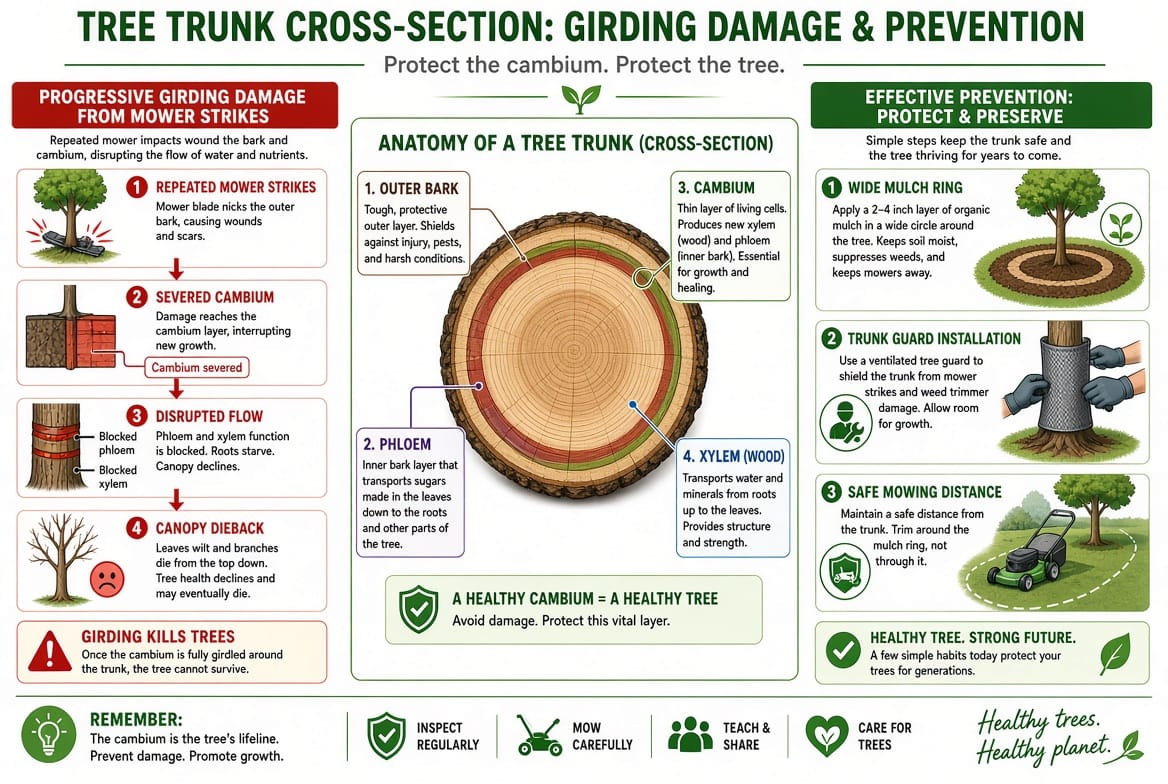
Girdling occurs when the protective outer bark and the underlying cambium layer — the thin green tissue responsible for transporting sugars and nutrients — are damaged or completely removed in a continuous ring around the trunk. Once the cambium is severed, the tree can no longer move essential resources between roots and canopy.
Unlike sudden storms or pests, girdling damage from lawn equipment happens gradually. Each weekend mowing session compounds the injury until the tree begins to show stress. Because the damage is mechanical and localized at the base, many homeowners don’t notice until it’s advanced.
Protecting tree bark from lawn equipment is one of the highest-return investments you can make in your landscape. Healthy, undamaged trees provide better shade, higher property value, stronger storm resistance, and dramatically lower long-term maintenance costs.
Recognizing the Early Signs of Girdling Damage
Early detection gives you the best chance to save the tree. Look for these key indicators:
- Missing or shredded bark at the base of the trunk, often in a ring pattern
- Callusing or swollen tissue attempting to heal around damaged areas
- Dieback — thinning or browning leaves starting from the outer canopy
- Reduced leaf size or premature leaf drop in summer
- Visible wounds that fail to close after one growing season
- Fungal growth or insect activity concentrated near the injury site
If you notice any of these signs of girdling, act quickly. While severe cases may require professional intervention, most early-stage damage can be halted with immediate protective measures and improved maintenance habits.
The Most Effective Ways to Prevent Tree Bark Girdling
Prevention is always easier and less expensive than treatment. Here are the proven strategies that professional arborists recommend:
1. Create Wide Mulch Rings Around Every Tree
A 3–4 foot radius mulch ring is the single most effective defense against lawn equipment damage.
- Apply 3–4 inches of organic mulch (wood chips, shredded bark, or pine straw)
- Keep mulch 2–3 inches away from direct trunk contact to prevent moisture buildup
- Extend the ring beyond the drip line when possible
- Replenish mulch annually to maintain protection
Mulch rings not only stop mowers and trimmers but also conserve moisture, suppress weeds, and improve soil biology — delivering multiple benefits in one simple step.
2. Install Commercial Tree Guards or Wraps
For young or thin-barked trees, tree guards provide an extra physical barrier:
- Flexible plastic or metal guards that encircle the trunk
- Mesh wraps that allow air circulation while blocking equipment
- Guards that can be adjusted or removed as the tree grows
Choose guards that are tall enough to cover the area most frequently hit by equipment (typically 18–36 inches high).
3. Practice Mindful Mowing and Trimming Techniques
Small changes in routine create big protection:
- Mow away from trees rather than circling tightly around them
- Use a string trimmer guard or lower the cutting head when near trunks
- Switch to hand tools or manual edging near tree bases
- Keep mower blades sharp to reduce accidental kicks toward trunks
- Consider reducing lawn area around trees with expanded beds
4. Train Your Landscape Team or Family Members
Everyone who maintains your property needs clear instructions. Share these prevention guidelines and consider marking “no-mow zones” during spring growth when bark is most vulnerable.
Common Mistakes That Lead to Girdling (And How to Avoid Them)
Even well-intentioned homeowners make these errors:
- Placing mulch directly against the trunk (“mulch volcanoes”)
- Using string trimmers at full speed right up to the bark
- Installing narrow mulch rings that equipment still reaches
- Ignoring damage until it becomes severe
- Relying solely on “careful mowing” without physical barriers
By addressing these habits proactively, you eliminate the primary causes of mechanical girdling damage.
Long-Term Benefits of Protecting Your Trees
Trees protected from girdling damage:
- Grow faster and develop stronger root systems
- Resist drought, pests, and disease more effectively
- Maintain structural integrity against wind and storms
- Provide greater aesthetic and monetary value to your property
- Require significantly less corrective pruning and treatment over time
A single mature tree can add thousands of dollars to property value. Protecting that investment with simple prevention measures makes excellent financial sense.
Professional Tree Care When You Need Extra Help
While most girdling prevention is straightforward for homeowners, certain situations benefit from professional expertise. Certified arborists can assess existing damage, recommend targeted treatments, and install advanced protection systems for valuable specimen trees.
Protect tree bark from lawn equipment. Don’t wait until you see dieback or structural weakness. Implement these prevention strategies today and enjoy healthier, more beautiful trees for years to come.
For expert tree care, assessment of potential girdling damage, or professional installation of protective systems. Our team is ready to help you maintain a safe, thriving landscape.
Professional Tree Bark Protection Services – Call Now!