The Tree Bark Damage Assessment: When Wounds Are Healable vs. Fatal
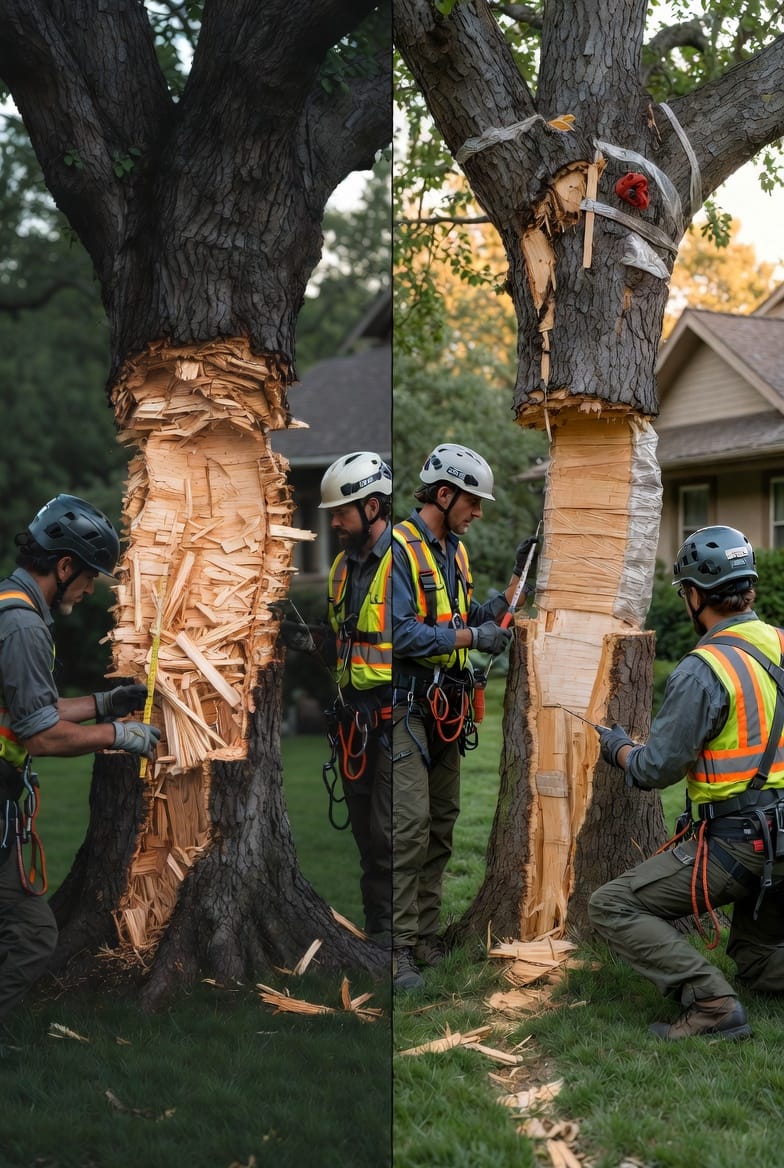
Trees stand as silent guardians of our properties, providing shade, beauty, and structural stability for generations. Yet even the strongest tree can sustain bark damage from everyday accidents such as lawnmower strikes, vehicle impacts, or construction equipment. When these injuries occur, homeowners face a critical question: can the tree recover on its own, or does the damage require professional tree removal to protect people and property?
Get Your Tree Bark Damage Assessed Today – Call Now!
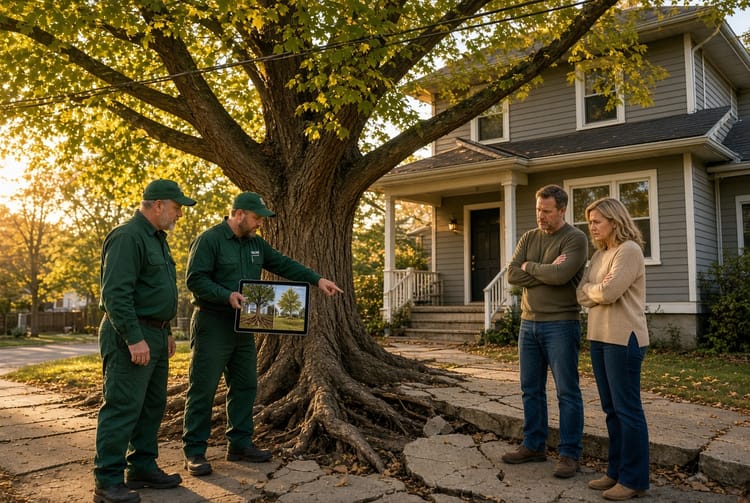
A thorough tree bark damage assessment delivers the clarity you need. At its core, this evaluation examines how deeply the injury has affected the tree’s living tissues and whether the tree can successfully isolate the wound. Understanding this process empowers you to make informed decisions that safeguard your landscape while avoiding unnecessary removal of a valuable asset.
In this comprehensive guide, we explore the science behind tree recovery, distinguish between minor bark wounds that heal naturally and girdling injuries that prove fatal, and outline the precise factors professionals consider. You will learn exactly when watchful waiting is appropriate and when swift tree removal becomes the responsible choice. With expert assessment, most trees receive the targeted care they need to thrive once again.
Understanding Tree Bark and Its Critical Protective Role
Tree bark serves as the tree’s first line of defense, shielding the vital cambium layer beneath. The cambium is a thin, active tissue responsible for producing new growth each season. When bark is stripped or crushed, the cambium becomes exposed to air, insects, and pathogens, triggering an immediate response from the tree.
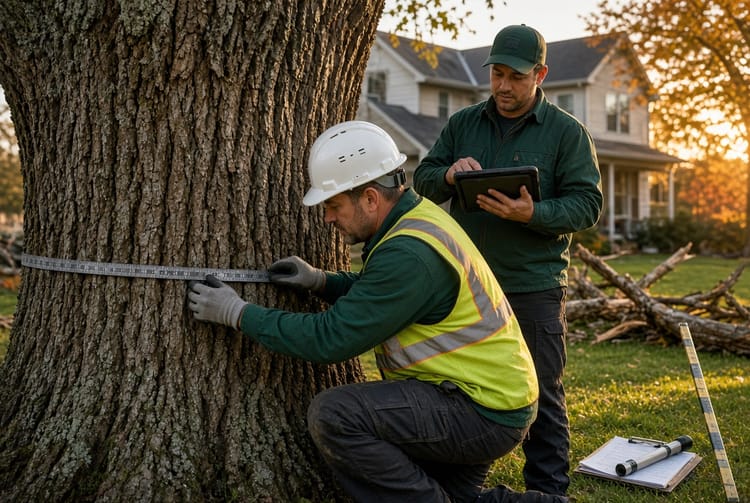
Minor surface scrapes rarely threaten long-term health because the cambium remains largely intact. In contrast, deep wounds that remove large sections of bark disrupt the flow of water, nutrients, and sugars between roots and canopy. Early bark damage assessment focuses on measuring the wound’s depth, location, and percentage of trunk circumference affected.
Homeowners often underestimate the resilience of healthy trees, yet professional evaluation reveals the true story. By identifying the injury type early, certified arborists can recommend simple protective measures that dramatically improve recovery odds.
How Trees Compartmentalize Damage: Nature’s Built-In Defense System
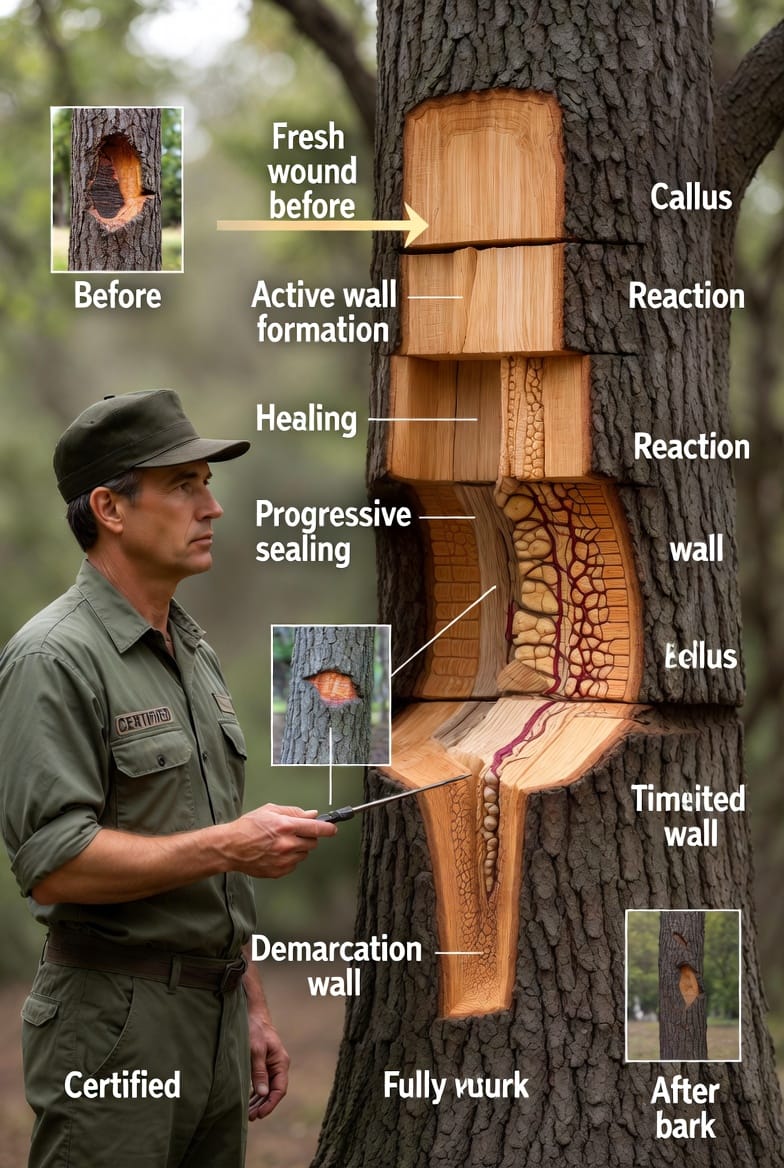
Trees do not heal wounds the way animals do. Instead, they practice compartmentalization—a sophisticated biological process that walls off damaged areas to prevent decay from spreading. This mechanism, known as CODIT (Compartmentalization of Decay in Trees), relies on four specialized “walls” the tree creates using its own cells.
Wall 1 stops vertical spread within existing wood fibers. Wall 2 uses ray cells to limit sideways movement. Wall 3 forms new growth rings that seal the wound from above and below. Wall 4 creates a strong barrier zone of specialized cells that blocks infection from reaching healthy tissue.
When bark wounds are small and the tree is vigorous, this compartmentalization process succeeds remarkably well. Over months or years, the tree grows new bark over the sealed area, leaving only a visible scar. However, if the injury circles most or all of the trunk, compartmentalization fails because the flow of nutrients is permanently interrupted.
Tree compartmentalization explains why some seemingly severe wounds close successfully while others lead to rapid decline. Professional assessment measures how effectively the tree has already begun this process and whether additional support can enhance it.
Minor Bark Wounds: Clear Signs of Healable Damage
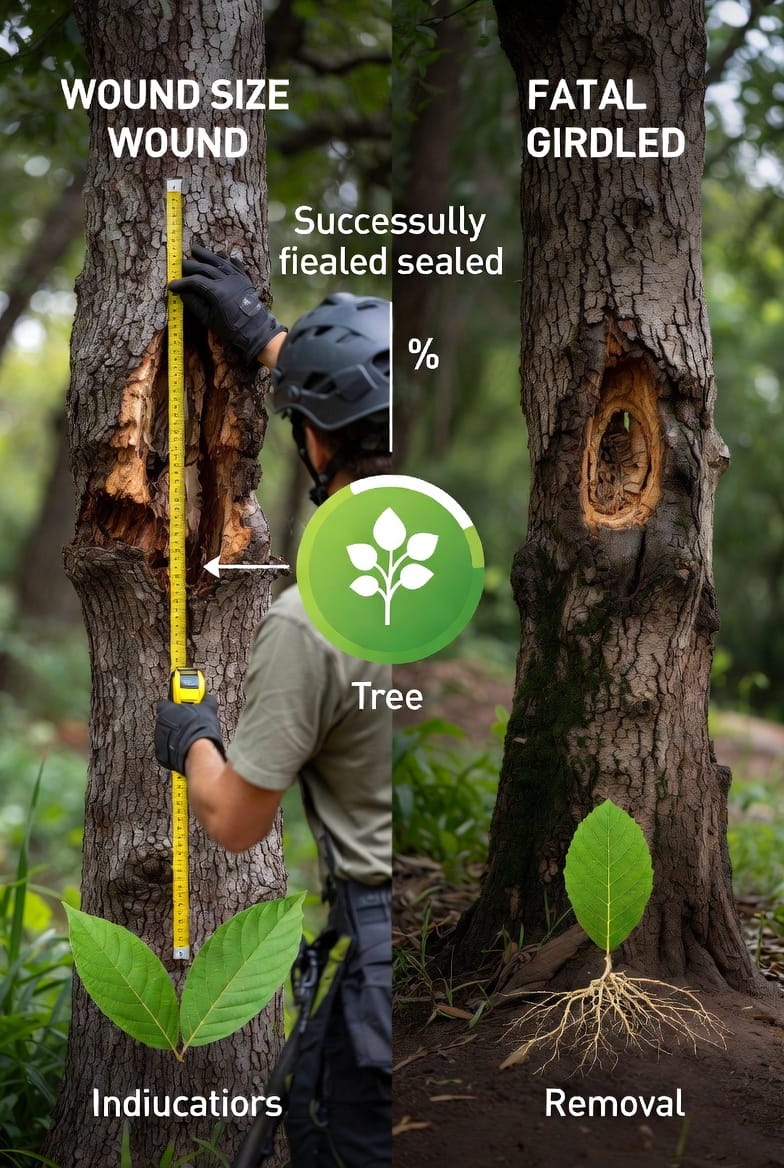
Many bark wounds fall into the healable category when they meet specific criteria. These injuries typically affect less than one-third of the trunk’s circumference and remain shallow enough to spare most of the cambium.
Look for these reassuring indicators during your initial observation:
- Limited vertical length – wounds shorter than 12–18 inches rarely compromise structural integrity.
- Partial circumference involvement – less than 40% of the trunk affected allows the tree to maintain adequate nutrient transport.
- Active callus formation – raised, healthy tissue beginning to grow around the edges signals successful compartmentalization.
- No secondary symptoms – absence of wilting leaves, fungal growth, or insect infestation suggests the tree is responding positively.
Minor bark wounds often result from lawn equipment or minor vehicle contact. With proper cleaning, protective wrapping, and ongoing monitoring, most trees recover fully within two to three growing seasons. Homeowners who act quickly after injury dramatically increase the chances of long-term survival.
The Critical Danger of Girdling Injuries
Girdling damage represents the most serious threat. When bark is removed in a complete or near-complete ring around the trunk, the tree loses its ability to transport sugars from leaves to roots. Even if the wound appears narrow, the continuous break prevents compartmentalization from bridging the gap.
Trees suffering fatal girdling often show rapid decline within months:
- Yellowing or wilting foliage above the injury site
- Sudden dieback of upper branches
- Increased susceptibility to secondary pests and diseases
- Visible cracking or separation at the wound margins
Once girdling exceeds 75% of the circumference on most species, recovery becomes biologically impossible. At this stage, tree removal prevents the tree from becoming a safety hazard as it weakens and eventually fails.
Key Factors Professionals Evaluate in Every Bark Damage Assessment
Certified arborists rely on a systematic checklist to determine healable versus fatal outcomes. The four primary factors include:
- Wound size and depth – Larger, deeper injuries require more energy for the tree to seal.
- Percentage of circumference affected – Anything above 50% significantly raises risk.
- Tree species resilience – Some species, such as oaks and maples, compartmentalize more effectively than others.
- Overall tree health and age – Vigorous, younger trees possess greater energy reserves for recovery.
Additional considerations involve wound location (base versus upper trunk), time elapsed since injury, and presence of decay or insects. This multi-factor analysis ensures decisions rest on science rather than guesswork.
When Tree Removal Becomes the Safest and Most Responsible Choice
Despite our preference for saving trees, certain situations demand professional tree removal. When bark damage assessment confirms extensive girdling, advanced decay, or structural instability that endangers homes, vehicles, or people, removal protects everything the tree once supported.
Signs that removal is necessary include:
- Girdling exceeding 75% of circumference with no callus formation after one full season
- Visible internal decay extending beyond the wound
- Leaning trunk or compromised root system secondary to the injury
- Repeated failure of compartmentalization leading to progressive dieback
In these cases, prompt tree removal eliminates liability and frees resources for planting a healthy replacement. Expert crews ensure the process is safe, clean, and minimally disruptive to your landscape.
Why Professional Bark Damage Assessment Matters More Than Ever
Relying on visual guesswork often leads to costly mistakes—either removing a tree that could have recovered or retaining one that poses hidden dangers. A professional tree bark damage assessment combines years of field experience with scientific knowledge to deliver accurate, reassuring guidance.
Early intervention frequently allows simple treatments such as wound cleaning, protective barriers, or targeted fertilization to tip the scales toward recovery. When removal is required, the same assessment provides peace of mind that the decision protects your family and property.
Know When a Tree Can Recover
The difference between a healable bark wound and a fatal girdling injury often comes down to timely, expert evaluation. By understanding compartmentalization, recognizing key risk factors, and acting on professional recommendations, you can preserve valuable trees or confidently proceed with safe tree removal when necessary.
Our certified team delivers authoritative answers and tailored solutions that keep your landscape healthy, safe, and beautiful for years to come.
Expert Tree Damage Assessment – Call Now for Clarity