The Urban Tree Preservation: Balancing Development and Mature Tree Protection
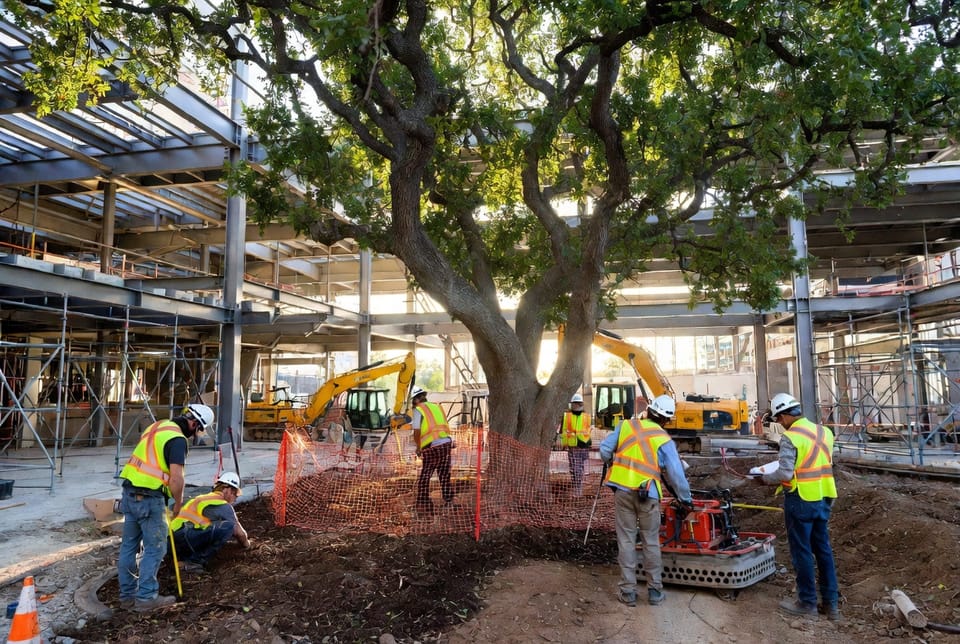
In today’s fast-growing cities, urban tree preservation stands as a vital practice that harmonizes modern development with the irreplaceable value of mature trees. These towering giants provide shade, improve air quality, boost property values, and support local ecosystems. Yet construction projects often place them at risk. With thoughtful planning and proven strategies, property owners and developers can protect these living assets while advancing building goals.
Protect Your Mature Trees – Call Now!
At our tree service, we specialize in safeguarding mature trees during construction. Proper tree protection prevents costly decline and ensures long-term health. This comprehensive guide explores how construction impacts trees, the science behind critical root zones, and effective protection methods every project manager should know.
Why Mature Trees Matter in Urban Development
Mature trees are more than landscaping features — they are community cornerstones. A single established tree can sequester hundreds of pounds of carbon annually, reduce stormwater runoff, and moderate urban heat islands. Studies show neighborhoods with healthy tree canopies enjoy higher resident satisfaction and increased real estate appeal.
However, rapid urban expansion frequently places these trees in the path of progress. Without intervention, construction activities can compromise tree stability and vitality within months. The good news? Strategic preservation allows developers to meet timelines while retaining these natural benefits for future generations.
Understanding the Threats Construction Poses to Mature Trees
Construction activities introduce multiple stresses that most homeowners and site planners underestimate. Heavy machinery, excavation, and material storage can quickly damage root systems that have taken decades to develop.
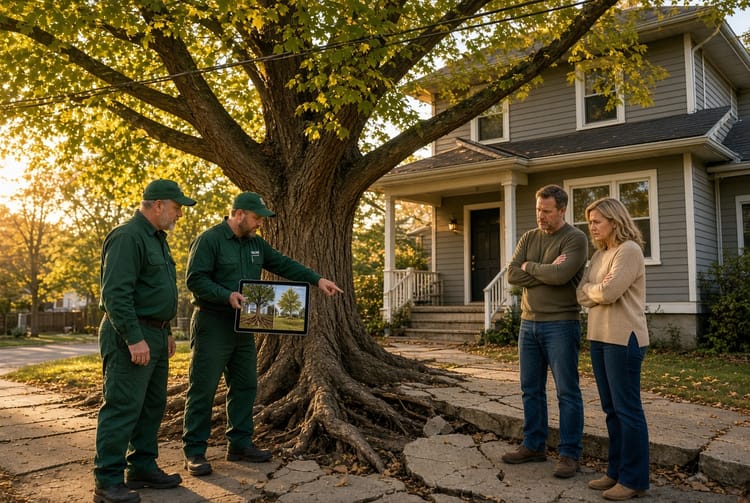
Soil compaction ranks among the most common and insidious risks. When equipment repeatedly drives over the root area, soil particles compress, reducing pore space. This limits oxygen and water movement to roots, essentially suffocating the tree from below. Even light traffic during the early phases of a project can initiate long-term decline.
Excavation for foundations, utilities, or grading further endangers trees. Cutting through major roots severs the tree’s lifeline for water and nutrients. Grade changes — either raising or lowering soil levels — disrupt natural drainage patterns and expose or bury sensitive feeder roots.
Additional hazards include:
- Chemical exposure from concrete runoff or fuel spills
- Physical injury to the trunk and lower branches from equipment contact
- Vibration stress from pile driving or heavy demolition nearby
Left unaddressed, these issues manifest as thinning canopies, branch dieback, and increased susceptibility to pests and disease. Early intervention through professional assessment keeps trees thriving long after construction wraps up.
The Critical Root Zone: The Tree’s Lifeline Explained
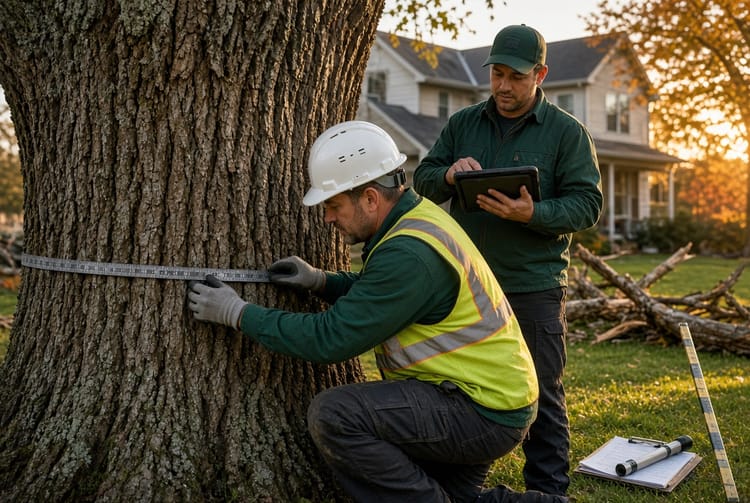
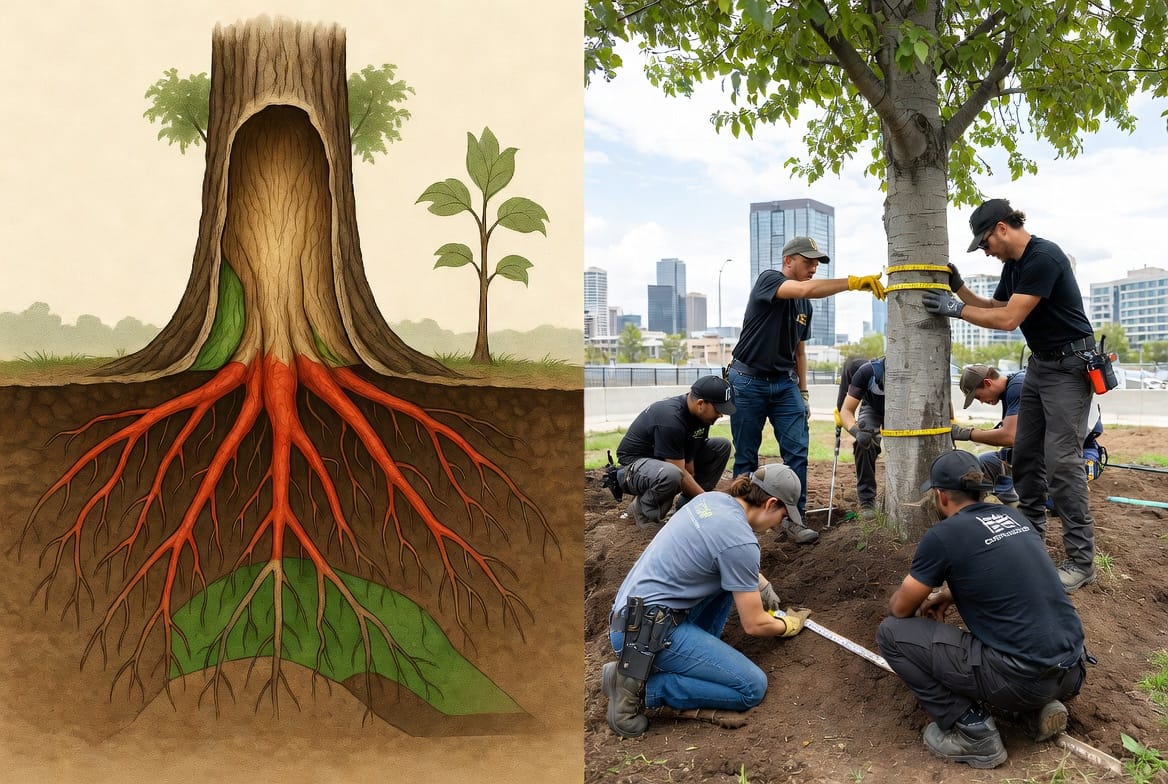
The critical root zone (CRZ) represents the most important area for tree survival. Extending outward from the trunk, this zone typically spans a radius equal to one foot per inch of trunk diameter measured at chest height. For a 24-inch diameter tree, the CRZ reaches 24 feet in every direction.
Within this zone lie the majority of absorbing roots responsible for water and nutrient uptake. Unlike deep taproots, most urban trees rely on a shallow, wide-spreading network just 6 to 18 inches below the surface. Construction that disturbs even 30 percent of the CRZ can trigger significant stress.
Professional arborists calculate the tree protection zone (TPZ) — an expanded buffer that accounts for both immediate roots and future growth needs. Maintaining this zone intact forms the foundation of every successful preservation plan.
How Soil Compaction Disrupts Tree Health
Soil compaction does more than restrict roots — it fundamentally alters the underground environment. Compressed soil holds less water yet drains poorly, creating alternating drought and waterlogging conditions. Oxygen levels drop dramatically, slowing root respiration and nutrient absorption.
Trees respond by producing fewer fine roots and redirecting energy from canopy growth to defense mechanisms. Over time, this leads to reduced leaf size, premature leaf drop, and weakened structural integrity. In severe cases, the tree becomes hazardous, increasing liability for property owners.
The reassuring reality is that targeted soil aeration and careful site planning can reverse early compaction damage when caught promptly.
Proven Strategies for Protecting Trees During Construction
Effective tree protection during construction requires coordination from project planning through final landscaping. Here are the essential measures every team should implement:
- Install robust fencing early: Erect sturdy barriers around the full TPZ before any equipment enters the site. Signage clearly communicates “Tree Protection Zone – No Entry” to all crews.
- Minimize root pruning: When limited root removal becomes unavoidable, certified arborists perform clean cuts with sharp tools and apply protective treatments to prevent decay.
- Aerate and amend compacted soil: Use specialized air tools to fracture dense areas and incorporate organic matter, restoring pore space without further disturbance.
- Apply deep-root watering schedules: Maintain consistent moisture with slow, deep irrigation systems placed outside the fenced zone. Avoid overwatering that could exacerbate compaction.
- Use mulch wisely: Spread 4–6 inches of organic mulch within the protected area to conserve moisture, moderate soil temperature, and discourage weed competition.
- Monitor tree health regularly: Schedule bi-weekly inspections by a qualified arborist to detect early stress signs and adjust protection tactics immediately.
- Coordinate with contractors: Hold pre-construction meetings to align all trades on protection protocols and establish clear communication channels.
These steps, when followed diligently, allow mature trees to remain healthy assets long after the project concludes. Our experienced crews have successfully preserved hundreds of urban trees using these exact techniques.
Regulatory Considerations and Long-Term Benefits
Many municipalities now require tree preservation plans as part of permitting. Compliance not only avoids fines but often qualifies projects for green building incentives and faster approvals. Preserved trees enhance stormwater management, reduce energy costs for nearby buildings, and contribute to community wellness.
Property owners who invest in protection enjoy immediate aesthetic benefits and substantial return on investment through increased property values. Healthy mature trees also support biodiversity, providing habitat for birds and beneficial insects that naturally control pests.
Partner with Experts for Successful Outcomes
The complexity of urban tree preservation demands professional expertise. Certified arborists understand local species requirements, soil conditions, and construction sequencing to develop customized protection plans.
By engaging qualified tree care professionals from the outset, developers minimize risks and maximize preservation success rates. Our team stands ready to assess your site, create detailed protection strategies, and oversee implementation from groundbreaking to project completion.
Get Professional Tree Protection Consultation Now