The Trauma-Informed Yoga: Healing Through Movement for Addiction Recovery

In the journey of addiction recovery, healing extends far beyond addressing physical dependence. Many individuals carry deep-seated trauma that fuels substance use as a coping mechanism. Trauma-informed yoga emerges as a powerful, specialized therapy that integrates mindful movement with emotional safety to support lasting recovery.
Begin Your Mindful Recovery Journey – Call Now
This approach recognizes the profound connection between body and mind, offering a pathway to rebuild trust in oneself while regulating the nervous system often dysregulated by both trauma and addiction. Unlike traditional wellness practices, it prioritizes safety, choice, and empowerment, creating space for individuals to reconnect with their bodies without overwhelm.
At our wellness program, we have witnessed how trauma-informed yoga helps participants reduce stress, improve mood, and foster a stronger body-mind connection. This article explores its unique principles, benefits, and practical applications for those on the path to recovery.
Understanding Trauma-Informed Yoga
Trauma-informed yoga is a therapeutic adaptation of yoga designed specifically for individuals with histories of trauma. Practitioners and instructors are trained to be aware of potential trauma triggers, avoiding practices that might cause overstimulation or loss of control.
Instead of pushing for perfect poses or intense physical challenges, the focus shifts to self-regulation and interoceptive awareness—the ability to sense and understand internal bodily signals. Movements are gentle, optional, and always at the individual's pace. Instructors use invitational language, such as "if it feels right for you" or "you may choose to..."
This creates an environment where participants feel in control, which is crucial for those whose sense of safety has been compromised. Sessions often incorporate dimmable lighting, clear exit paths, and modifications that honor personal boundaries.
In the context of addiction recovery, trauma-informed yoga addresses the root causes that traditional talk therapies might miss. It helps individuals who have used substances to numb emotions or escape bodily sensations gradually rebuild a positive relationship with their physical self.
How Trauma-Informed Yoga Differs from Regular Yoga
While both practices involve postures (asanas), breathing (pranayama), and mindfulness, the differences are significant and intentional.
Regular yoga often emphasizes achieving specific alignments, building strength, flexibility, or following a structured sequence. Classes may encourage closing eyes, holding challenging poses, or physical adjustments from instructors. The primary goal tends to be physical fitness or spiritual exploration.
Trauma-informed yoga, by contrast, prioritizes emotional safety and nervous system regulation. Key distinctions include:
- Choice and autonomy: Every element is optional. No pressure to perform or compete.
- Trigger awareness: Instructors avoid cues that could retraumatize, such as unexpected touch or prolonged eye closure.
- Internal focus: Emphasis on how the body feels rather than how it looks.
- Pacing: Slower, more intentional movements with plenty of time for rest and integration.
- Language: Empowering and non-directive, fostering self-compassion.
These adaptations make it particularly suitable for recovery populations, where hypervigilance, dissociation, or anxiety are common. Participants learn to listen to their bodies without fear, rebuilding trust that was often shattered by past experiences.
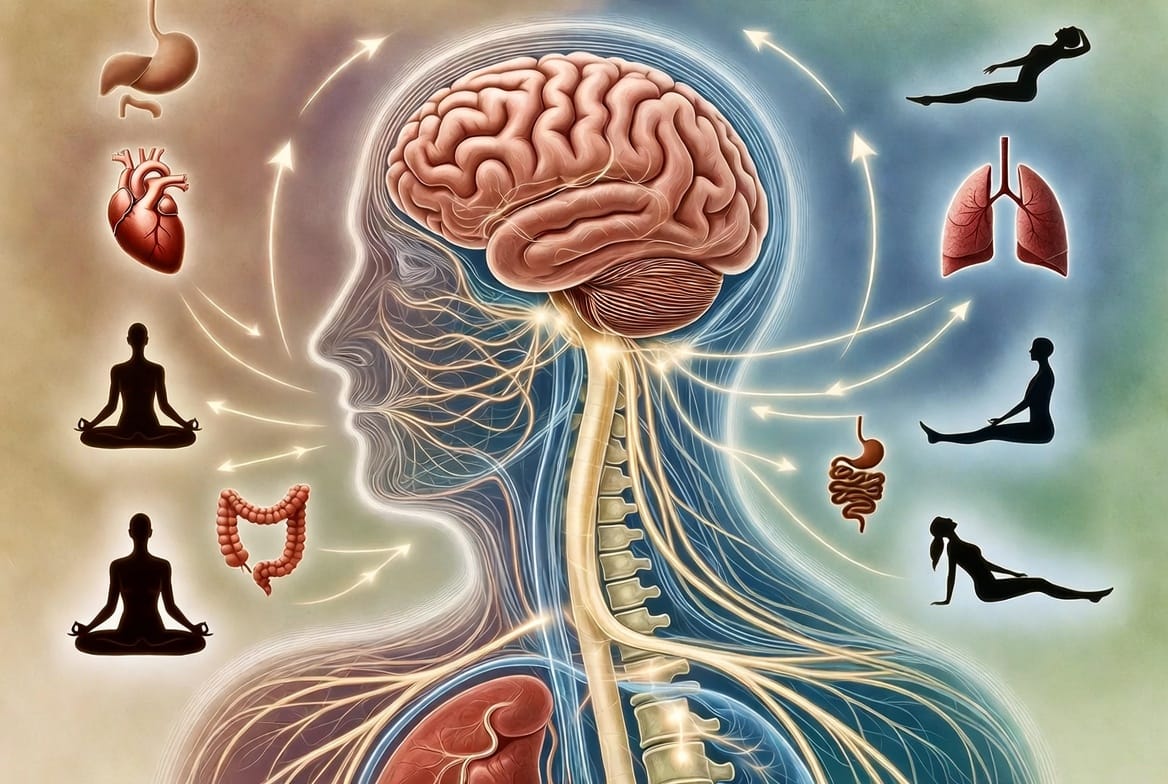
Trauma-Informed Yoga and the Nervous System
Trauma and chronic substance use often leave the nervous system stuck in a heightened state of alert. The sympathetic nervous system dominates, leading to anxiety, irritability, and cravings as the body seeks relief.
Trauma-informed yoga helps shift toward parasympathetic dominance—the "rest and digest" state. Through gentle movement and breathwork, it activates the vagus nerve, which plays a key role in calming the body and reducing stress hormones like cortisol.
Practitioners report feeling more grounded and present. Over time, this regulation improves emotional resilience, making it easier to navigate recovery challenges without turning to substances.
Studies and clinical observations support these effects, showing improvements in sleep, concentration, and emotional regulation among participants.
Core Practices in Trauma-Informed Yoga
Several foundational practices make this approach effective. These are accessible and adaptable.
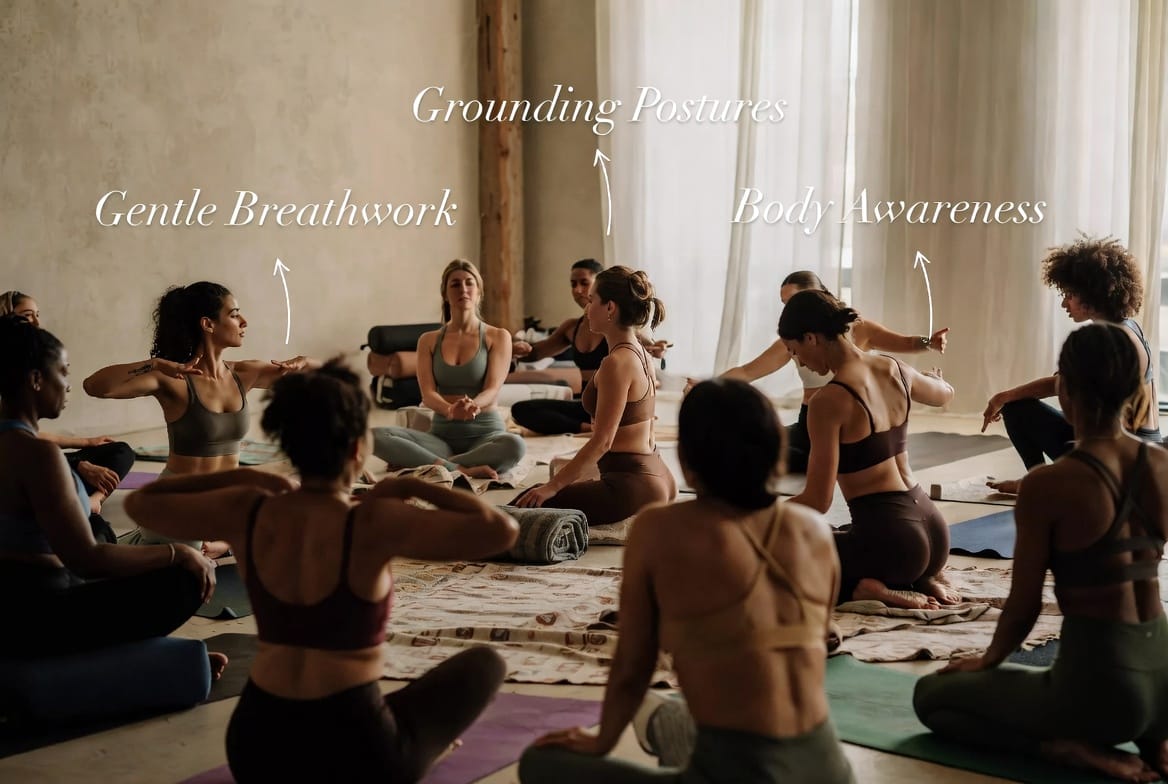
Grounding postures help individuals feel connected to the earth and present in their bodies. Examples include seated or supported child's pose variations, where one can choose to keep eyes open or softly focused.
Gentle breathing techniques emphasize slow, controlled breaths—such as extending the exhale longer than the inhale—to activate calming responses. No forced deep breathing that might feel overwhelming.
Body awareness exercises encourage noticing sensations without judgment. Participants might scan the body mindfully, observing tension and release at their own comfort level.
Other elements include:
- Restorative poses with props like blankets and bolsters for full support.
- Mindful movement sequences that flow slowly, allowing time to check in internally.
- Group sharing options that respect individual privacy.
Benefits for Addiction Recovery
The benefits of trauma-informed yoga in addiction recovery are multifaceted and profound.
It reduces stress and anxiety, common triggers for relapse. By lowering physiological arousal, individuals gain better tools to manage cravings.
Mood improvement comes from increased endorphins and serotonin, alongside a greater sense of agency and self-worth.
Body connection is restored, countering dissociation or numbness often experienced in addiction. This interoceptive awareness helps recognize early warning signs of emotional distress.
Additional advantages include:
- Better sleep quality, supporting overall healing.
- Enhanced emotional regulation and reduced reactivity.
- Complementary support for co-occurring conditions like PTSD, depression, or anxiety.
- Increased mindfulness that strengthens other recovery practices, such as therapy or support groups.
Participants often describe feeling more "at home" in their bodies, which reduces the urge to escape through substances.
Scientific and Clinical Support
Emerging research backs these experiences. Programs incorporating trauma-informed yoga have shown positive outcomes in emotional wellbeing, reduced PTSD symptoms, and greater engagement in recovery.
Neurobiologically, practices influence brain regions involved in stress response and emotion processing. Regular engagement can lead to measurable changes supporting long-term sobriety.
While not a standalone cure, it serves as a valuable adjunct to comprehensive treatment plans.
Integrating Trauma-Informed Yoga into Your Recovery Journey
Starting is simpler than many expect. Look for qualified instructors trained in trauma-sensitive approaches. Sessions can be individual or in small, supportive groups.
Combine with other modalities—such as counseling, nutrition, and community support—for holistic healing.
At home, begin with short practices: a few minutes of mindful breathing or gentle stretching while maintaining choice and safety.
Consistency matters more than intensity. Even brief daily sessions can yield significant benefits over time.
Real-World Transformations
Many in recovery share stories of renewed hope. One participant noted how learning to sit with discomfort on the mat translated to handling cravings off the mat. Another described rediscovering joy in movement after years of disconnection.
These transformations highlight the empowering nature of the practice.
Overcoming Common Concerns
Some worry yoga might feel too vulnerable or spiritual. Trauma-informed adaptations address this by focusing on practicality and personalization. It's about tools for your recovery, not any specific belief system.
Instructors respect all backgrounds and paces.
A Path Forward with Compassion
Trauma-informed yoga offers a compassionate, effective way to heal through movement. By honoring the body's wisdom and prioritizing safety, it supports profound shifts in addiction recovery.
It builds resilience, fosters self-compassion, and strengthens the foundation for a healthier future.
If you or a loved one is navigating recovery, consider how mindful movement can complement your journey. Heal body and mind through mindful movement.
Our team is here to support you with personalized guidance and a safe, welcoming environment.
Experience Gentle Healing in Recovery – Call Now