The Nutrition Therapy: Eating for Mental Health in Recovery

In the journey of recovery, every tool matters. While therapy, support groups, and medical care form the foundation, nutrition therapy emerges as a powerful, often overlooked ally for mental health. Eating strategically can stabilize mood, reduce cravings, and rebuild brain chemistry damaged by substance use. This practical approach empowers individuals to take control of their healing from within.
Start Nutrition Therapy Today – Call Now
At its core, nutrition therapy in recovery recognizes that what you eat directly influences how you feel, think, and respond to challenges. A well-designed eating plan supports neurotransmitter production, balances blood sugar, and provides essential nutrients for repairing neural pathways. This article explores how targeted nutrition becomes a cornerstone of lasting sobriety and emotional resilience.
Understanding the Gut-Brain Connection in Recovery
The relationship between food and mental health runs deep. Your gut microbiome communicates constantly with your brain through the vagus nerve and various biochemical signals. In recovery, this connection becomes even more critical as the body works to restore balance after prolonged substance exposure.
Many people in early recovery experience intense mood swings, anxiety, and depression. These symptoms aren't just psychological — they often stem from nutritional deficiencies and disrupted brain chemistry. By focusing on nutrient-dense foods, you provide the raw materials your body needs to rebuild.
Key benefits of nutrition therapy include:
- Reduced mood instability and irritability
- Improved sleep quality and energy levels
- Stronger resistance to cravings and relapse triggers
- Enhanced cognitive clarity and emotional regulation
This isn't about strict diets or quick fixes. It's about sustainable, compassionate eating that honors your body's healing process.
How Blood Sugar Swings Impact Mood and Cravings
One of the most immediate ways nutrition affects recovery is through blood sugar regulation. Substances often cause dramatic fluctuations in blood glucose, leaving the brain and body in a cycle of highs and crashes.
When blood sugar spikes rapidly — often from refined sugars or simple carbohydrates — you might feel a temporary rush of energy or euphoria. But the inevitable drop brings fatigue, anxiety, irritability, and intense cravings. In recovery, these crashes can feel dangerously similar to withdrawal symptoms or emotional triggers.
Stable blood sugar supports mental health by:
- Preventing energy crashes that fuel negative thinking
- Reducing impulse-driven decisions that lead to relapse
- Maintaining consistent neurotransmitter function
To combat this, prioritize complex carbohydrates like whole grains, legumes, and starchy vegetables. Pair them with proteins and healthy fats to slow absorption and create steady energy throughout the day. Small, frequent meals also help maintain equilibrium, making this a practical daily strategy rather than overwhelming restriction.
The Role of Amino Acids in Neurotransmitter Production
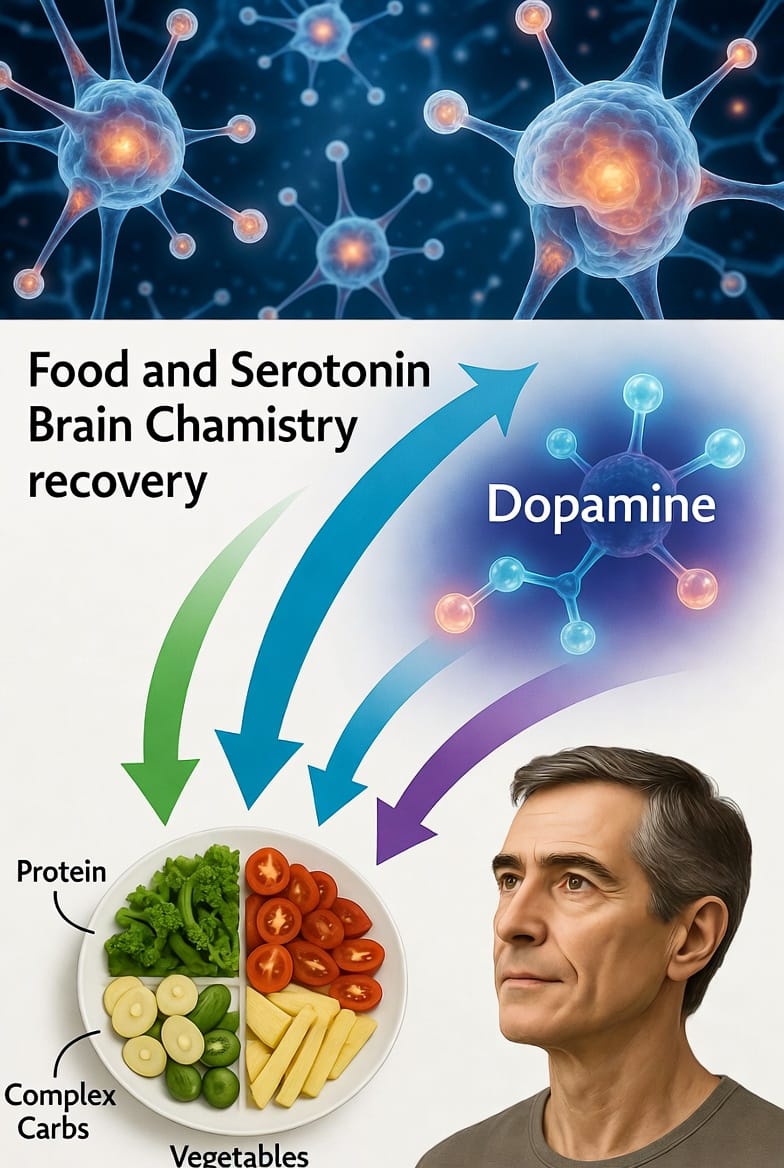
Your brain relies on specific building blocks to produce feel-good chemicals. Amino acids from dietary protein are essential for synthesizing key neurotransmitters often depleted in addiction.
Tryptophan serves as the precursor for serotonin, the neurotransmitter responsible for mood stability, sleep regulation, and feelings of well-being. Low serotonin levels commonly contribute to depression and anxiety during recovery. Foods rich in tryptophan help restore this balance naturally.
Tyrosine, another important amino acid, supports dopamine production. Dopamine governs motivation, pleasure, and reward pathways — systems heavily impacted by addictive substances. Adequate tyrosine intake helps rebuild healthy reward responses, making everyday activities more satisfying without substances.
Practical ways to support neurotransmitter health:
- Include high-quality proteins in every meal
- Combine protein sources with complex carbs to improve absorption
- Consider timing — morning meals rich in tyrosine can boost daytime focus and motivation
This biochemical support provides a reassuring foundation: your body has the capacity to heal when given the right nutrients.
Essential Nutrients for Emotional Stability
Beyond amino acids, several key nutrients play starring roles in mental health recovery:
Omega-3 fatty acids, particularly EPA and DHA found in fatty fish, reduce inflammation in the brain and support cell membrane health. They have been linked to lower rates of depression and improved emotional regulation.
B vitamins, especially B6, B9 (folate), and B12, are crucial for energy metabolism and neurotransmitter synthesis. Deficiencies can worsen fatigue and mood disorders common in recovery.
Magnesium acts as nature's relaxant, helping calm the nervous system and improve sleep. Many people in recovery are deficient due to poor diet and substance effects.
Zinc supports immune function and helps regulate dopamine. Leafy greens provide folate, which works alongside B vitamins for mood support.
A balanced approach focuses on whole foods rather than isolated supplements, though professional guidance can help address specific deficiencies safely.
Building a Recovery-Friendly Meal Framework
Creating sustainable eating habits doesn't require perfection. Start with a simple framework that emphasizes variety and consistency:
- Breakfast: Focus on protein and complex carbs to set stable blood sugar for the day. Think eggs with spinach and whole-grain toast, or Greek yogurt with berries and nuts.
- Lunch and Dinner: Center meals around lean proteins, colorful vegetables, and whole grains. Salmon, chicken, beans, quinoa, and leafy greens provide comprehensive nutrient support.
- Snacks: Bridge gaps with nutrient-dense options like apple slices with almond butter, carrot sticks with hummus, or a handful of mixed nuts.
Hydration deserves special attention. Dehydration exacerbates anxiety and cognitive fog. Aim for consistent water intake throughout the day, perhaps enhanced with electrolyte-rich foods like coconut water or vegetable broth.
Meal planning reduces decision fatigue — a common recovery challenge — and ensures steady nutrient delivery.
Addressing Common Nutritional Challenges in Recovery
Early recovery often brings appetite changes, digestive issues, or financial constraints. These are normal and manageable:
- Low appetite: Opt for nutrient-dense smoothies or smaller, frequent meals.
- Digestive sensitivity: Introduce fermented foods gradually for gut health support.
- Budget considerations: Focus on affordable staples like eggs, beans, seasonal produce, and oats.
Working with nutrition professionals experienced in recovery can personalize these strategies while addressing co-occurring conditions.
Long-Term Benefits of Nutrition Therapy
As weeks and months progress, consistent nutrition yields compounding rewards. Many individuals report:
- Sharper mental clarity and better memory
- More stable, resilient mood
- Reduced intensity of cravings
- Improved physical energy for rebuilding life
This creates a positive feedback loop: better nutrition supports better choices, which reinforce recovery.

Implementing Nutrition Therapy in Your Recovery Journey
Start small. Choose one or two changes this week, such as adding protein to breakfast or swapping sugary snacks for whole-food alternatives. Track how these shifts affect your mood and energy in a simple journal.
Remember that nutrition therapy complements — rather than replaces — other recovery tools. Combine it with therapy, exercise, and community support for comprehensive healing.
The path to recovery involves nurturing every aspect of yourself, including through the foods you choose daily. Your brain and body possess remarkable healing capacity when supported properly.
Heal Your Brain with Proper Nutrition
Nutrition therapy offers a practical, empowering tool for mental health in recovery. By understanding blood sugar management, leveraging amino acids for neurotransmitter production, and embracing a balanced diet rich in essential nutrients, you build emotional stability from the inside out.
Ready to harness the power of food for your healing? Learn about our nutrition program today.
Your journey toward lasting wellness begins with the choices you make today — including what you put on your plate. Embrace nutrition therapy as a reliable ally, and experience the difference it can make in your mental health and overall recovery.
Boost Mood & Mental Health Naturally – Call Today