The Family Support Group: Engaging Loved Ones in the Recovery Process
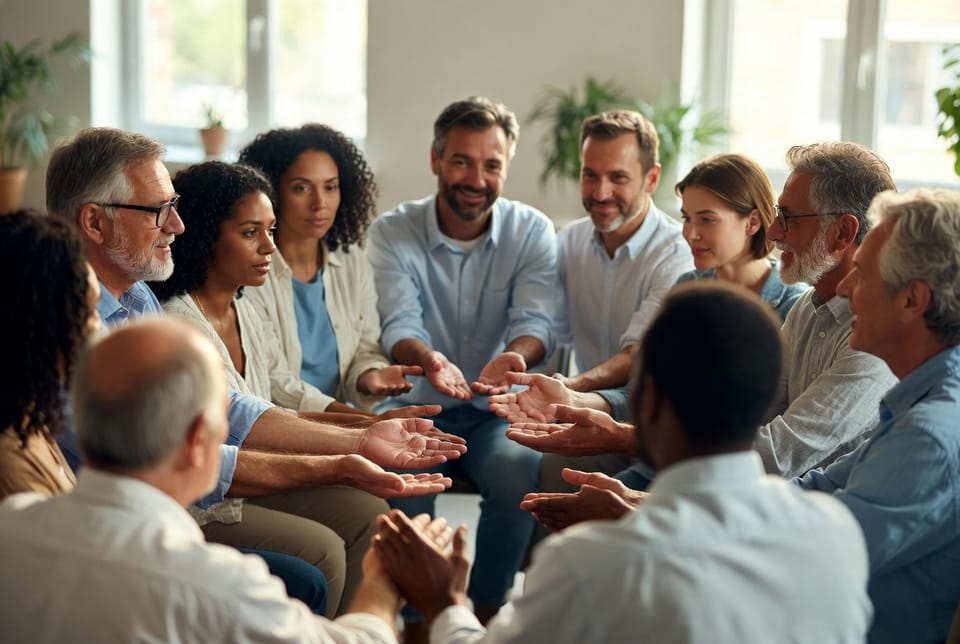
Addiction recovery is a journey that extends far beyond the individual. Family support groups play a vital role in creating lasting healing by involving loved ones as active participants. At our program, the Family Support Group serves as a cornerstone component, empowering families to understand, contribute to, and thrive alongside their loved one’s recovery.
Learn How Families Heal Together – Call Now
This structured yet compassionate approach helps transform confusion and pain into knowledge, skills, and renewed connection. Families learn they are not alone—and that their involvement can significantly strengthen recovery outcomes for everyone.
Why Family Involvement Matters in Recovery
Addiction affects the entire family system. Loved ones often experience stress, anxiety, fear, and disrupted relationships. Without guidance, these challenges can unintentionally hinder progress.
Family support groups address this by providing a dedicated space for education and growth. They teach that addiction is a treatable medical condition, not a moral failing. This shift in perspective reduces blame and opens the door to constructive support.
Participation helps families develop practical tools while fostering their own emotional well-being. Research and clinical experience consistently show that engaged families contribute to higher rates of sustained sobriety and healthier home environments.
Understanding Addiction as a Family Disease
One of the first and most important lessons in family support groups is recognizing addiction’s impact on the family unit. It is often described as a family disease because it alters dynamics, communication patterns, and emotional health for everyone involved.
In group sessions, participants explore how enabling behaviors, codependency, or unresolved trauma may have developed over time. This education is delivered with care and without judgment, emphasizing that these patterns emerge from love and a desire to help.
Key insights shared include:
- Addiction changes brain chemistry and behavior, making it difficult for the individual to stop without professional support.
- Family members may develop their own coping mechanisms that require attention and healing.
- Recovery is a shared process—when the family heals, the individual’s foundation for sobriety becomes stronger.
This understanding creates empathy and reduces isolation, setting the stage for positive change.
Key Components of Our Family Support Group Program
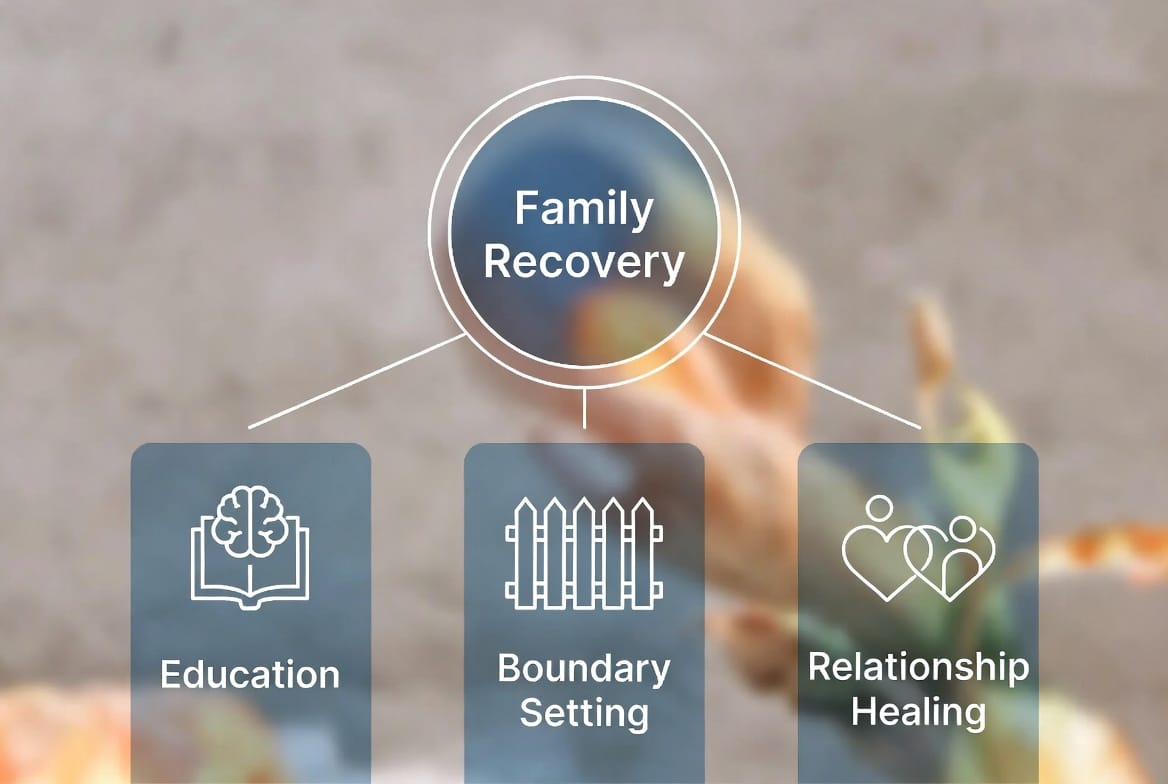
Our family support groups focus on four essential areas that equip loved ones with actionable skills.
Education About Addiction as a Disease
Participants receive clear, evidence-based information about the science of addiction. Sessions cover how substances affect the brain’s reward system, the role of genetics and environment, and why willpower alone is rarely sufficient.
Understanding the disease model helps families move from frustration to compassion. They learn to recognize early warning signs, support treatment adherence, and celebrate progress without unrealistic expectations.
Developing Effective Communication Skills
Healthy communication is often strained during active addiction. Support groups teach practical techniques such as:
- Using “I” statements to express feelings without blame.
- Active listening to truly hear and validate experiences.
- Expressing concerns constructively while maintaining respect.
These skills reduce conflict and help families collaborate more effectively during recovery.
Setting and Maintaining Healthy Boundaries
Boundary setting is one of the most empowering tools taught. Families learn to distinguish between support and enabling. They practice saying “no” with confidence when needed, while still showing love and commitment to the recovery process.
Clear boundaries protect everyone’s well-being and create a stable environment that supports long-term sobriety. Group members share experiences and role-play scenarios in a safe setting, building confidence over time.
Healing and Rebuilding Relationships
Recovery offers an opportunity to repair damaged trust. Support groups guide families through this delicate process with patience and structure. Topics include forgiveness (both giving and receiving), rebuilding routines, and creating new positive memories together.
Healing does not happen overnight, but consistent participation leads to deeper connections and a more resilient family unit.
Proven Models Guiding Our Approach
Our program draws from respected, established frameworks while tailoring content to individual family needs.
Al-Anon principles help families focus on their own growth and serenity, regardless of their loved one’s current stage of recovery. Participants learn the value of detachment with love and the importance of self-care.
CRAFT (Community Reinforcement and Family Training) offers practical strategies for encouraging treatment engagement while improving family relationships. This model emphasizes positive reinforcement and effective problem-solving.
By blending these approaches, our family support groups provide comprehensive support that is both compassionate and results-oriented.
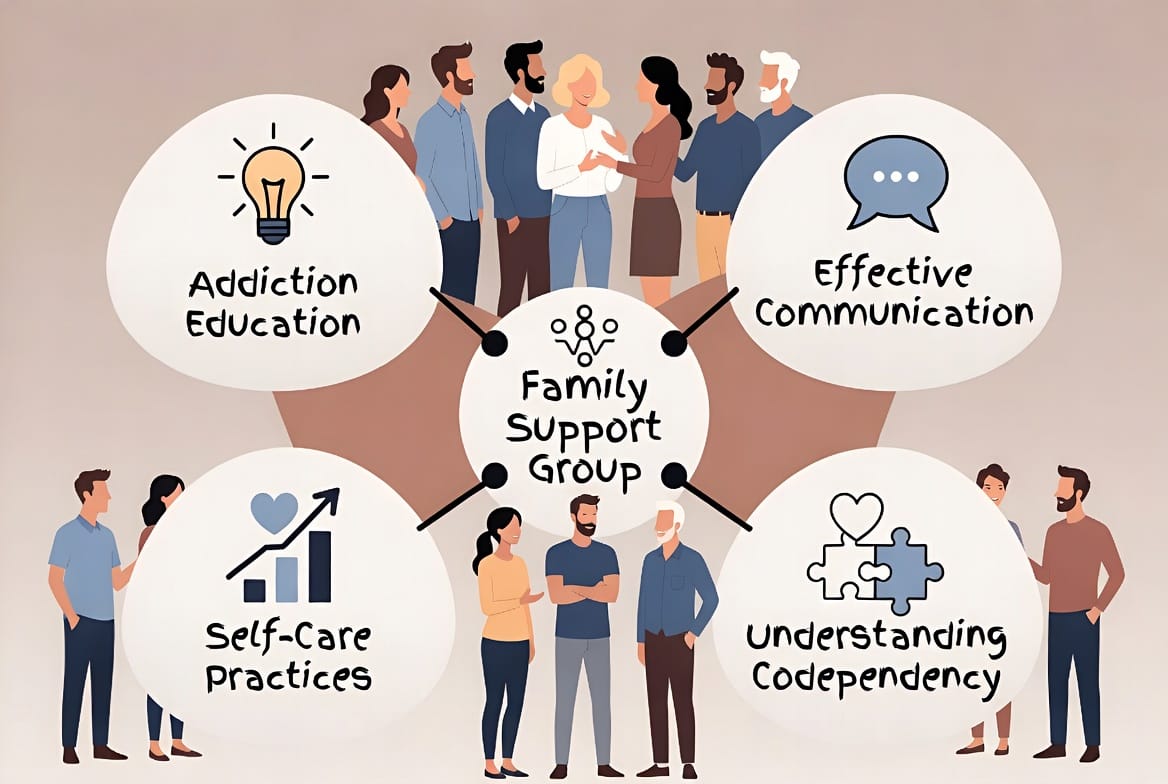
Additional Topics Covered in Support Groups
Beyond the core pillars, sessions address important related areas:
- Self-care strategies for preventing burnout and maintaining personal health.
- Recognizing and addressing codependency patterns.
- Navigating setbacks and celebrating milestones as a family.
- Preparing for potential challenges during different stages of recovery.
- Building a supportive network beyond the group itself.
These comprehensive discussions ensure families feel equipped for the full recovery journey.
The Benefits Families Experience
Participating in family support groups leads to measurable improvements:
- Reduced anxiety and depression among loved ones.
- Stronger, more authentic relationships.
- Increased confidence in supporting recovery without losing oneself.
- Better overall family functioning and communication.
- Higher likelihood of sustained recovery for the individual.
Countless families report feeling hopeful and empowered after regular attendance. The group setting normalizes experiences and provides ongoing encouragement from others who truly understand.
Getting Started with Family Support
Engaging in this program is straightforward. We offer flexible scheduling and a welcoming environment where all family members are encouraged to participate at their own pace. No prior knowledge is required—only a willingness to learn and grow.
Sessions are facilitated by experienced professionals who create a safe, confidential space. Whether your loved one is just beginning treatment or has been in recovery for some time, the family support group provides valuable tools.
Families Heal Together
Recovery is not a solitary path. When loved ones actively participate through structured family support groups, everyone benefits. Education replaces fear, skills replace confusion, and healing replaces brokenness.
Our program is designed to guide families through this transformative process with expertise and compassion.
Families heal together. Your family’s brighter future starts with that first step.
Get Family Support for Lasting Recovery – Call Now